Filing an insurance claim can feel stressful, especially when you are already dealing with a hospital bill, an accident, or a family emergency. The good news is that a well-prepared insurance claim is often much easier to process. If you know what to do early, keep the right papers ready, and follow the policy terms carefully, you can reduce delays and avoid common mistakes.
The exact process changes by insurer and by product type such as health, life, or motor insurance. Even so, the core steps are similar: intimate the insurer on time, submit correct documents, and track the claim until settlement. Always remember that claim approval is subject to the terms, conditions, exclusions, and waiting periods in your policy document.
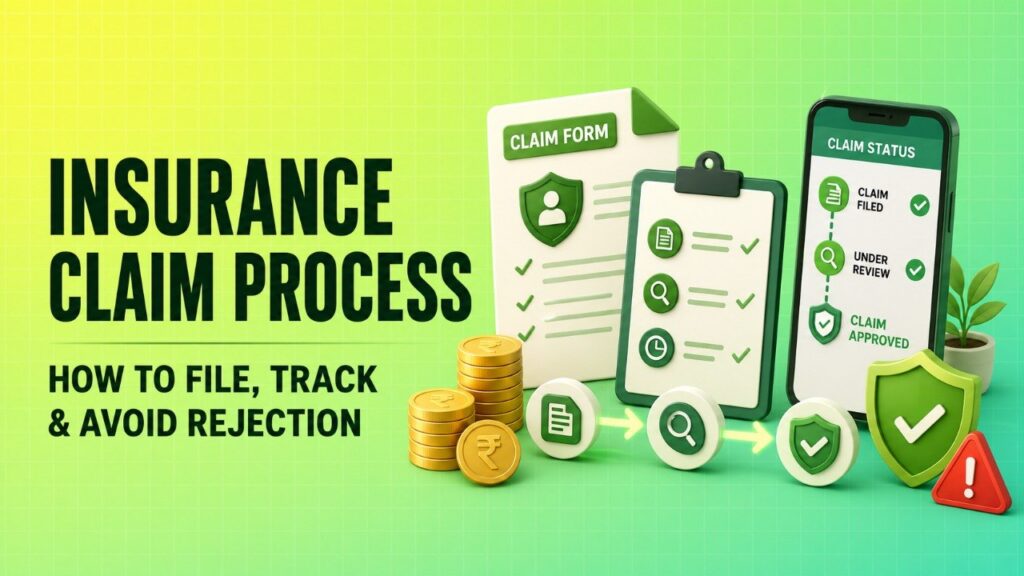
Step-by-Step: How to File Your Insurance Claim
 The insurance claim process usually starts the moment the event happens. Whether it is hospitalisation, death benefit, or car damage, the first few actions matter a lot. If you are wondering how to claim car insurance or how a health claim moves forward, the flow below will help.
There are two broad claim models you will hear about often:
- Cashless claim: The insurer settles eligible expenses directly with the network hospital or garage, subject to policy terms and approval.
- Reimbursement claim: You pay first, then submit bills and documents to get the eligible amount back later.
Cashless claims are common in health insurance and motor insurance repairs. Reimbursement is common when cashless is not available or when treatment or repair happens outside the network.
Step 1: Immediate Intimation
The first step is claim intimation, which means informing your insurer as soon as possible after the incident. Many policies ask for intimation within 24 to 48 hours for emergencies like accidents or hospitalisation, though the exact timeline depends on the policy wording.
For a motor claim, you should inform the insurer right after the accident or theft complaint. For a health claim, intimation should ideally happen before planned hospitalisation or soon after emergency admission. For a life insurance claim, the nominee or family member should notify the insurer after the insured person’s death.
Keep your policy number, name, mobile number, and incident details ready. If you miss the deadline, do not assume the claim is over. Some insurers may consider a delayed intimation if there is a valid reason, but this is not automatic.
Step 2: Documentation Preparation
Most delays happen because one document is missing or incomplete. Read the policy wording and the exclusions section carefully, because they usually tell you what documents are required and what is not covered.
Common documents include:
- Policy copy or policy number
- Claim form, properly filled and signed
- ID proof of the insured or nominee
- Hospital discharge summary, diagnosis papers, or doctor’s advice for health claims
- Repair estimate and photos for motor claims
- FIR, police report, or theft report if the case requires it
- Death certificate and nominee proof for life insurance claims
- Original bills, receipts, prescriptions, and supporting records for reimbursement claims
For motor insurance, an insurer may appoint a surveyor to inspect the vehicle and assess the damage. For health insurance, a TPA, or Third Party Administrator, may be involved in checking documents and coordinating the claim. For life insurance, the insurer usually verifies the claim directly with the submitted papers.
Step 3: Submission and Verification
Once the documents are ready, submit them through the insurer’s claims channel. This may be the insurer’s branch, website, mobile app, email, hospital desk, or TPA portal, depending on the policy type.
After submission, the insurer or its appointed representative checks the documents, confirms whether the claim falls under the policy, and asks for clarifications if needed. In motor claims, the surveyor’s inspection report is important. In health claims, the hospital pre-authorisation and final bills are checked. In life claims, the insurer verifies the cause of death and beneficiary details before settlement.
If the insurer asks for additional documents, reply quickly. A late response often slows the claim more than the actual verification process.
How to Track Your Insurance Claim Status
Once the claim is filed, tracking it regularly helps you catch missing document requests or status changes early. Most insurers now offer multiple ways to check claim progress.
- Mobile app: Many insurers show claim status inside their app after login.
- Website portal: You can usually check the latest update using your claim reference number.
- Customer care: Call the helpline and keep your policy number and claim number ready.
- Email: Useful if you want a written trail of every update.
Always note the claim reference number or complaint number. It helps when you follow up, escalate, or check whether the file has moved to survey, verification, approval, or payment stage.
If the claim is taking longer than expected, ask these simple questions: Is any document pending? Has the surveyor submitted the report? Is the claim under query? Is there any exclusion issue? Clear questions often get better answers than repeated general follow-ups.
Why Insurance Claims Get Rejected (And How to Avoid It)
Many rejections happen because the insurer believes the claim does not match the policy terms, or because the documents are incomplete. The table below shows common reasons for rejection and how to reduce the risk.
| Reason for Rejection | Preventive Step | What to Check in Policy |
|---|---|---|
| Late claim intimation | Inform the insurer immediately after the event | Intimation timeline and delay condonation rules |
| Missing or unclear documents | Use a checklist and keep scanned copies of all papers | Claim form requirements and supporting document list |
| Pre-existing condition not disclosed | Disclose all medical history honestly while buying the policy and during claim review | Proposal form, waiting periods, and disclosure clause |
| Exclusion not covered | Read exclusions before filing, especially for specific diseases, events, or vehicle use cases | Exclusions page and policy wording |
| Waiting period not completed | Check whether the policy has a waiting period before coverage starts | Waiting period section and disease-specific terms |
| Incorrect information in claim form | Fill dates, names, hospital details, and incident facts carefully | Claim declaration and verification clause |
| Policy lapsed due to non-payment | Pay premiums on time and check grace period dates | Premium due date, grace period, and renewal terms |
| Motor claim without required FIR or police report | File police complaint where required, especially for theft or major accidents | Motor claim procedure and accident/theft documentation |
For motor insurance, another important term is IDV, or Insured Declared Value. If a vehicle is damaged beyond repair or stolen, the settlement may depend on the policy’s IDV and applicable conditions. For health insurance, the sum insured is the maximum amount payable, subject to the policy rules.
What To Do If Your Claim Is Rejected
If your insurance claim is rejected, do not panic and do not assume the insurer’s first response is final. Start by reading the rejection letter carefully. The insurer should mention the reason, the clause involved, and the documents or facts they relied on.
Here is the usual escalation path:
- Contact the insurer’s grievance redressal team or GRO with your insurance claim number, policy number, and a written explanation.
- Share supporting proof such as hospital papers, repair bills, discharge summary, survey reports, or earlier emails.
- Ask for a clause-based review instead of a verbal reassurance. The issue should be checked against the policy wording.
- Escalate to the Insurance Ombudsman if the grievance is not resolved within the insurer’s process or if you remain unhappy with the final response.
The Insurance Ombudsman route is meant for policyholders who need an independent review of a dispute. Complaints can usually be filed through the official complaint channels available under the current IRDAI and Ombudsman framework. Since processes can change, always verify the latest filing method on the official insurer or IRDAI-related sources before submitting.
Keep your communication factual and polite. Attach copies, not originals, unless the insurer specifically asks for them. Also keep a timeline of every call, email, and document submission. That record becomes useful if the matter goes to escalation.
Helpful Interactive Tool: Claim Documentation Checklist
 How the tool should work:
- User selects Health, Motor, or Life insurance.
- The page filters and shows only the documents relevant to that claim type.
- Users can tick items before submitting the claim.
- A print or download option can help them carry the list to a hospital, garage, or branch office.
General checklist idea: This is a general checklist. Always refer to your specific policy document for mandatory documentation required by your insurer.
| Insurance Type | Common Documents to Keep Ready |
|---|---|
| Health | Policy copy, claim form, ID proof, hospital admission note, discharge summary, prescriptions, bills, test reports, bank details |
| Motor | Policy copy, driving licence, RC copy, claim form, accident photos, FIR if needed, repair estimate, surveyor report, bills |
| Life | Policy copy, death certificate, nominee ID proof, bank proof, claim form, medical records if asked, employer certificate if relevant |
If you want to build this as a small HTML box in WordPress, the structure can be simple: a dropdown for insurance type, a checklist area, and a button to reset or print. Keep the design clean so it works well on mobile devices.
Pro-Tips for a Smoother Claim Experience
A smooth claim is usually less about luck and more about discipline. A few simple habits can reduce the chances of disputes and delays.
- Disclose everything honestly: Do not hide pre-existing conditions, vehicle modifications, prior claims, or medical history. Non-disclosure can create avoidable disputes later.
- Read exclusions before filing: Many claim disputes come from events that are specifically excluded in the policy wording.
- Keep digital copies: Scan policy papers, hospital bills, claim forms, police documents, and email communication in one folder.
- Use the exact claim process mentioned in the policy: Some insurers want portal upload, while others require branch or TPA submission.
- Renew on time: A lapsed policy can weaken or end your claim rights. Check the premium due date and grace period carefully.
- Ask for written updates: Written replies help if you later need to escalate the matter.
For health insurance, check whether your treatment is inside the network for cashless settlement or outside it for reimbursement. For motor insurance, understand whether the repair can be cashless or whether you must pay the garage first. For life insurance, make sure the nominee details, bank account, and KYC are up to date.
Claim settlement is subject to the terms, conditions, exclusions, and documentation requirements of your specific policy document. Always consult your insurer’s official guidelines and verify current rules from the insurer or IRDAI before relying on any claim timeline or process detail.
FAQs
Can I file a claim if I missed the intimation deadline?
Yes, in some cases you may still be able to file it if you give a valid reason for the delay. This is often called condonation of delay. The insurer may accept it if the delay did not affect the claim assessment, but approval is not guaranteed.
What is the difference between Cashless and Reimbursement claims?
In a cashless claim, the insurer pays the eligible amount directly to the network hospital or garage, subject to approval. In a reimbursement claim, you pay first and later ask the insurer to refund the eligible amount after document verification.
How long does it take for a claim to be settled?
Settlement time depends on the insurance type, document completeness, and insurer verification. Straightforward claims may move faster, while claims needing survey, medical review, or extra documents can take longer. Check the latest turnaround timelines mentioned by the insurer and the applicable IRDAI guidance.
Is it mandatory to have an original policy document to file a claim?
Usually, no. Many insurance claim accept the policy number or a digital policy copy. However, you should check the insurer’s claim rules because some documents may still need original receipts, original bills, or notarised papers in specific cases.
What happens if my claim is denied for a reason I don’t agree with?
First, ask the insurer for a written reason with the relevant policy clause. Then raise the issue with the insurer’s grievance redressal officer. If the matter remains unresolved, you can escalate to the Insurance Ombudsman through the official complaint process.
Do I need a lawyer to challenge a claim rejection?
Not usually. Many claim disputes are resolved through the insurer’s grievance process or the Insurance Ombudsman. A lawyer may be helpful in complex or high-value disputes, but most policyholders start with the formal grievance route first.