What Is a Personal Loan Sanction Letter?
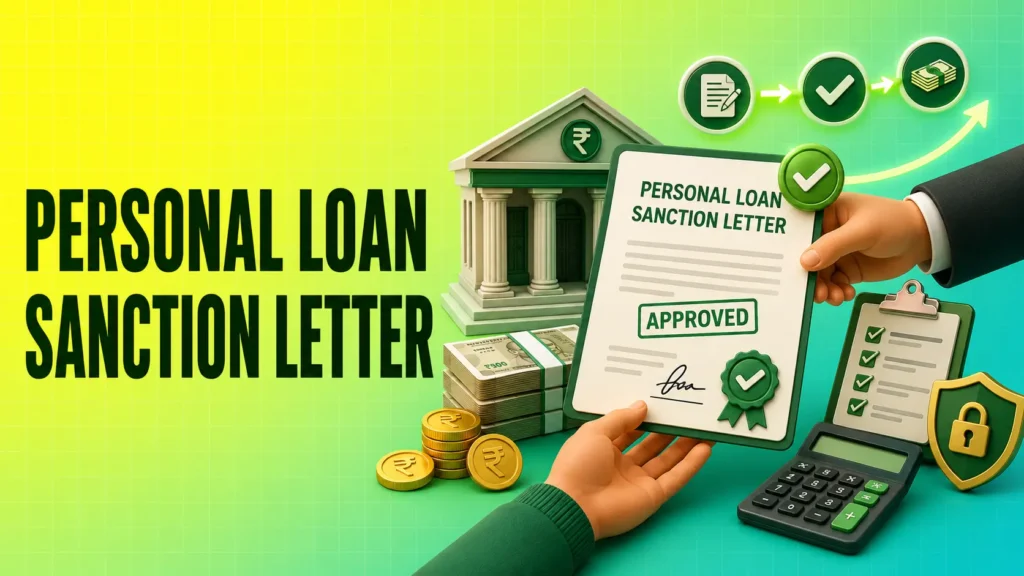
A personal loan sanction letter is a formal approval document issued by a lender after reviewing your loan application, income, credit score, repayment capacity, and other eligibility criteria.
The sanction letter confirms that the lender is willing to provide the loan based on specific terms and conditions. However, it does not mean the loan has already been disbursed. The loan amount is usually released only after you accept the sanction terms and complete any remaining documentation or verification required by the lender.
In simple words, a personal loan sanction letter is an official loan offer that clearly outlines the approved loan details before the money is transferred to your account.
Why Is a Personal Loan Sanction Letter Important?
A personal loan sanction letter is much more than an approval notification. It serves as an important reference document for both the borrower and the lender.
1. Confirms Loan Approval
The sanction letter officially confirms that your loan application has been approved after the lender completes its evaluation process.
Instead of relying on verbal communication, you receive written confirmation containing all the approved loan details.
2. Provides Complete Loan Transparency
Before accepting the loan, you can carefully review:
- Approved loan amount
- Interest rate
- EMI
- Loan tenure
- Processing fees
- Other applicable charges
- Terms and conditions
This transparency allows you to compare loan offers from different lenders before making your final decision.
3. Helps You Plan Your Finances
Knowing your monthly EMI and repayment schedule in advance helps you determine whether the loan comfortably fits within your budget.
Proper financial planning can reduce the chances of missed EMIs and help maintain a healthy credit score.
4. Prevents Future Misunderstandings
Since all major loan conditions are documented in writing, both the borrower and the lender clearly understand the agreed terms.
This minimizes confusion regarding repayment obligations, interest rates, applicable charges, or other loan conditions.
5. Serves as an Official Loan Record
The sanction letter acts as an official record of the lender’s approved loan offer. You can refer to it whenever you need to verify the approved terms before or during the loan process.
Key Benefits of a Personal Loan Sanction Letter
Receiving a sanction letter offers several benefits beyond simply confirming loan approval.
Clear Understanding of Loan Terms
The document clearly explains your financial obligations, enabling you to make an informed borrowing decision.
Easier Loan Comparison
If you receive loan offers from multiple lenders, sanction letters make it easier to compare:
- Interest rates
- Processing fees
- Loan tenure
- EMI
- Overall borrowing cost
This helps you choose the most suitable loan offer.
Better Financial Planning
Knowing your repayment obligations before loan disbursement allows you to manage your monthly expenses more effectively.
Greater Confidence
A written loan approval provides confidence that your application has successfully passed the lender’s evaluation, subject to completing the remaining formalities.
Fewer Last-Minute Surprises
Since fees, charges, and repayment conditions are disclosed in advance, borrowers are less likely to encounter unexpected costs during loan disbursement.
Personal Loan Sanction Letter vs. Loan Agreement
Many borrowers assume that a sanction letter and a loan agreement are the same document. However, they serve different purposes during the loan process.
| Personal Loan Sanction Letter | Loan Agreement |
|---|---|
| Issued after loan approval. | Signed before loan disbursement. |
| Contains the approved loan terms and conditions. | Creates the legal contract between the borrower and the lender. |
| Can be accepted or declined by the borrower. | Becomes legally binding after both parties sign it. |
| Does not guarantee immediate loan disbursement. | Must be signed before the approved loan amount is released. |
| Summarizes the approved loan offer. | Includes detailed legal rights, repayment obligations, default clauses, and other contractual terms. |
In simple terms: A sanction letter informs you that your loan has been approved under certain conditions, while a loan agreement is the final legal document you sign before receiving the loan amount.
What Should You Check Before Accepting a Personal Loan Sanction Letter?
Before accepting the lender’s offer, carefully review every detail mentioned in the sanction letter. Spending a few extra minutes reviewing the document can help you avoid future disputes and unnecessary expenses.
1. Approved Loan Amount
Ensure that the sanctioned amount matches the amount you requested or adequately meets your financial needs.
2. Interest Rate
Check whether the interest rate is:
- Fixed
- Floating
Also, compare it with offers from other lenders to ensure you are getting a competitive rate.
3. Loan Tenure
A longer repayment tenure may reduce your monthly EMI but increase the total interest payable over the life of the loan.
Choose a tenure that balances affordable EMIs with the overall borrowing cost.
4. EMI Amount
Verify that the monthly EMI comfortably fits within your budget without affecting your essential monthly expenses.
5. Processing Fees and Other Charges
Review all applicable charges, including:
- Processing fees
- Documentation charges
- Foreclosure or prepayment charges
- Late payment penalties
- EMI bounce charges (if applicable)
Understanding these costs helps you calculate the actual cost of borrowing.
6. Terms and Conditions
Read all terms carefully, paying close attention to:
- Repayment rules
- Default clauses
- Prepayment conditions
- Cancellation policy
- Any additional lender requirements
Never accept a sanction letter without fully understanding these conditions.
7. Validity Period
Most sanction letters remain valid only for a specified period. If you fail to accept the offer within this period, the lender may require you to submit a fresh application or undergo another assessment.
Common Mistakes Borrowers Should Avoid
Many borrowers focus only on the approved loan amount while overlooking other important details.
Avoid these common mistakes:
- Accepting the sanction letter without reading all the terms and conditions.
- Ignoring processing fees and other applicable charges.
- Choosing a loan simply because it offers the highest sanctioned amount.
- Failing to compare loan offers from multiple lenders.
- Overlooking foreclosure or prepayment charges.
- Missing the sanction letter’s validity period.
- Assuming that loan approval means immediate loan disbursement.
Conclusion
A personal loan sanction letter is an important milestone in the borrowing process because it confirms that your loan application has been approved based on the lender’s assessment. More importantly, it provides a detailed overview of the approved loan amount, interest rate, repayment tenure, EMI, fees, and other important terms before any funds are released.
However, borrowers should remember that a sanction letter is not the final loan agreement and does not guarantee immediate loan disbursement. Carefully reviewing the document, comparing loan offers, understanding all applicable charges, and completing the lender’s remaining requirements will help you make an informed financial decision.
By understanding the purpose and contents of a personal loan sanction letter, you can avoid misunderstandings, choose the most suitable loan offer, and manage your repayments confidently throughout the loan tenure.