Taking a loan can help you achieve important financial goals, whether you’re buying a home, funding your education, expanding your business, or managing unexpected expenses. But what happens if your financial situation improves and you decide to repay the entire loan before its scheduled tenure ends?
While closing a loan early may seem like a smart financial decision, many borrowers are surprised to learn that some lenders charge a loan foreclosure fee. These charges can increase the cost of closing your loan and may reduce the savings you expected from paying it off early.
However, foreclosure charges don’t apply to every loan in the same way. They vary depending on the type of loan, the lender’s policies, the interest rate structure, and regulatory guidelines. Understanding these charges before making an early repayment decision can help you avoid unexpected costs and make a financially sound choice.
In this guide, you’ll learn what loan foreclosure charges are, why lenders impose them, how they’re calculated, the difference between foreclosure and prepayment, and the key factors you should consider before closing your loan.
What Are Loan Foreclosure Charges?
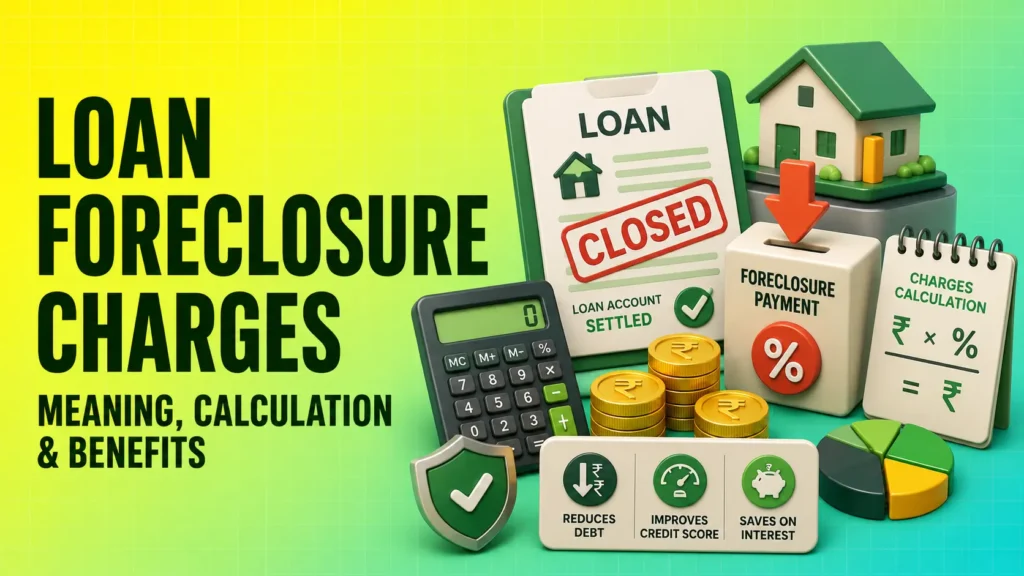
Loan foreclosure charges are fees that some banks and financial institutions may charge when you repay your loan before the agreed loan tenure ends.
From a lender’s perspective, interest earned over the loan tenure is part of their expected revenue. When a borrower closes the loan early, the lender may lose some of that expected interest income. To compensate for this, certain lenders impose foreclosure charges.
These charges are generally calculated as a percentage of the outstanding loan amount, although the exact amount depends on the lender’s policy and the type of loan.
Key Highlights
- Applicable when the entire loan is repaid before maturity.
- Usually calculated on the outstanding principal amount.
- Varies from one lender to another.
- Depends on the loan agreement and loan type.
- May not apply to every borrower or every loan.
Why Do Lenders Charge Foreclosure Fees?
Many borrowers wonder why they have to pay extra for clearing a loan early. The answer lies in how lenders structure their lending business.
Here are some common reasons:
Recovery of Expected Interest Income
Banks expect to earn interest throughout the agreed loan tenure. Early closure reduces that income.
Administrative Costs
Processing a foreclosure request involves documentation, account settlement, and issuing loan closure certificates.
Business Planning
Lenders manage their lending portfolios based on expected repayment schedules. Early loan closure can affect these financial projections.
Loan Foreclosure vs Loan Prepayment
Many borrowers confuse loan foreclosure with loan prepayment, but they are different.
| Feature | Loan Foreclosure | Loan Prepayment |
|---|---|---|
| Loan Status | Closed completely | Continues after payment |
| Outstanding Balance | Paid in full | Reduced partially |
| Future EMI | Ends completely | Continues with lower balance or shorter tenure |
| Purpose | Close the loan early | Reduce interest burden gradually |
| Frequency | One-time | Can be done multiple times (subject to lender rules) |
Which One Saves More?
If you have enough funds to clear the entire outstanding amount and the foreclosure charges are reasonable, foreclosure may help you become debt-free sooner.
However, if the foreclosure fee is high, making periodic prepayments could be a more cost-effective option.
How Are Loan Foreclosure Charges Calculated?
There is no single formula used by every lender. Most lenders calculate Loan foreclosure charges as a percentage of the outstanding principal balance.
Example Calculation
| Details | Amount |
|---|---|
| Outstanding Loan Amount | ₹4,00,000 |
| Foreclosure Charge | 3% |
| GST (if applicable) | Extra |
| Foreclosure Fee | ₹12,000 (+ applicable taxes) |
In this example, if your lender charges 3%, you’ll pay ₹12,000 as a foreclosure fee, along with any applicable taxes.
Before foreclosing your loan, always request a foreclosure statement from your lender to understand the exact amount payable.
Types of Loans That May Have Foreclosure Charges
Foreclosure policies vary depending on the type of loan.
Personal Loans
Personal loans are unsecured loans, and many lenders may charge foreclosure fees if the loan is closed before the agreed tenure.
Home Loans
Foreclosure rules for home loans often depend on whether the interest rate is fixed or floating. The lender’s policy and applicable regulations also play an important role.
Business Loans
Business loans may include foreclosure charges, especially if they are repaid soon after disbursement.
Vehicle Loans
Some vehicle loans include a lock-in period during which foreclosure charges may apply.
Loan Against Property
These loans may also have foreclosure conditions based on the lender’s agreement and repayment terms.
Real-Life Example
Let’s compare two borrowers who decide to close their loans early.
| Details | Borrower A | Borrower B |
|---|---|---|
| Outstanding Loan | ₹5,00,000 | ₹5,00,000 |
| Foreclosure Charge | 2% | Nil |
| Foreclosure Fee | ₹10,000 | ₹0 |
| Interest Saved | Moderate | Higher |
| Overall Benefit | Depends on savings | Maximum savings |
In this example, Borrower B saves more because there are no foreclosure charges. Borrower A still benefits from reducing future interest payments, but should compare the interest saved against the foreclosure fee before making a decision.
Factors That Affect Loan Foreclosure Charges
Foreclosure charges are not the same for every borrower. The amount you may have to pay depends on several factors, including the type of loan, the lender’s policies, and the stage at which you decide to close the loan. Understanding these factors can help you estimate the total cost of foreclosure before making a decision.
1. Type of Loan
The type of loan plays a major role in determining whether Loan foreclosure charges apply. For example, personal loans and business loans often have foreclosure fees, while home loan rules may differ depending on the interest rate and lender guidelines.
2. Outstanding Loan Amount
Many lenders calculate foreclosure charges as a percentage of the remaining principal. The higher your outstanding balance, the higher the foreclosure fee may be.
3. Loan Tenure Completed
Some lenders allow foreclosure only after you have completed a minimum number of EMIs or a specified lock-in period. Closing the loan too early may attract higher charges.
4. Interest Rate Type
Whether your loan has a fixed or floating interest rate can also affect foreclosure rules. Always review your loan agreement before making a repayment decision.
5. Lender’s Policy
Every bank or financial institution has its own foreclosure policy. Charges, eligibility, and processing requirements can vary, so it’s important to read the loan terms carefully.
Benefits of Loan Foreclosure
Closing your loan before the scheduled tenure can offer several financial advantages when done at the right time.
Save on Future Interest
The biggest benefit of foreclosure is reducing the total interest you would have paid over the remaining loan period.
Become Debt-Free Earlier
Paying off your loan early removes a long-term financial obligation and gives you greater financial freedom.
Improve Monthly Cash Flow
Once the loan is closed, you no longer have to pay monthly EMIs. This frees up money for savings, investments, or other financial goals.
Reduce Financial Stress
Being free from debt can provide peace of mind, especially if you have multiple financial commitments.
Disadvantages of Loan Foreclosure
Although foreclosure has several benefits, it may not always be the right financial decision.
Foreclosure Charges
Some lenders charge a fee for closing the loan early, which can reduce the overall savings.
Reduced Emergency Savings
Using all your available funds to close a loan may leave you with insufficient emergency reserves.
Better Investment Opportunities
If your investments can generate returns higher than your loan interest rate, investing the money instead of foreclosing the loan might be a better option.
Impact on Financial Planning
Using a large amount of money to repay a loan early could delay other important financial goals.
When Should You Foreclose Your Loan?
Foreclosure may be a good decision if:
- You have enough savings after maintaining an emergency fund.
- The interest you’ll save is greater than the foreclosure charges.
- You want to reduce your debt burden.
- You are planning for major financial goals such as retirement or buying another property.
- You prefer living debt-free.
When Should You Avoid Loan Foreclosure?
You may consider delaying foreclosure if:
- The foreclosure fee is too high.
- You have limited savings.
- Your loan interest rate is relatively low.
- Your investments are earning better returns than the loan cost.
- You may need liquidity for future expenses.
Common Mistakes Borrowers Should Avoid
Many borrowers make costly mistakes while planning early loan closure.
Not Checking Foreclosure Charges
Never assume that closing your loan early is free. Always request a foreclosure statement from your lender.
Ignoring Hidden Costs
Apart from foreclosure fees, there may be taxes or other charges that increase the total payment.
Emptying All Your Savings
Avoid using your entire savings to close a loan. Keep enough money for emergencies.
Not Comparing Interest Savings
Calculate how much future interest you’ll save before deciding to foreclose.
Forgetting to Collect Closure Documents
After repayment, make sure you receive all required documents, including the No Objection Certificate (NOC), loan closure letter, and any original documents submitted to the lender.
Expert Tips Before Closing Your Loan
To make a smart foreclosure decision, keep these practical tips in mind:
- Request a foreclosure statement from your lender before making payment.
- Compare foreclosure charges with the interest you can save.
- Maintain an emergency fund before using your savings.
- Read your loan agreement carefully to understand all conditions.
- Collect all closure documents immediately after repayment.
- Verify that your loan account has been marked as closed.
Conclusion
Loan foreclosure can be an effective way to reduce your overall borrowing cost and become debt-free sooner, but it isn’t always the right choice for every borrower. Before making a decision, compare the interest you can save with the foreclosure charges, review your loan agreement carefully, and ensure that early repayment won’t affect your financial stability.
A well-planned foreclosure can improve your cash flow, reduce long-term debt, and provide greater financial flexibility. However, if the charges are high or you need to preserve your savings for future expenses, continuing with your regular EMI schedule may be the more practical option.
The best approach is to evaluate your financial goals, understand your lender’s foreclosure policy, and make an informed decision that supports your long-term financial well-being.