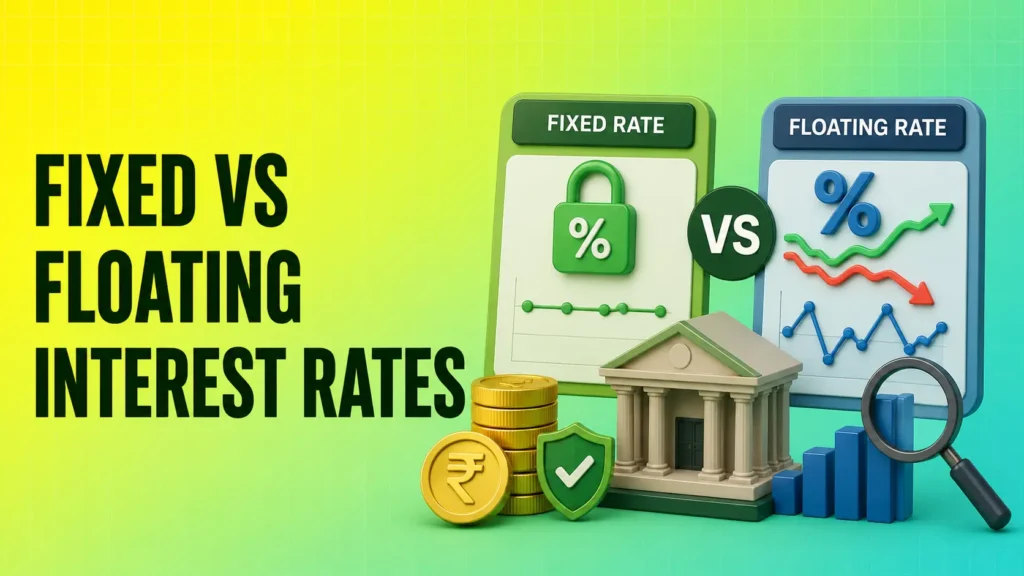
Choosing a loan is not just about finding the lowest interest rate—it’s about selecting an option that fits your financial goals. One of the biggest decisions every borrower faces is whether to choose a fixed interest rate or a floating interest rate.
At first glance, both may seem similar because they determine the cost of borrowing. However, they work very differently. A fixed rate keeps your monthly EMI stable throughout the loan tenure, while a floating rate changes according to market conditions. This difference can impact your monthly budget, total interest paid, and overall financial planning.
For example, imagine taking a ₹30 lakh home loan for 20 years. If market interest rates increase in the future, a floating-rate loan could result in higher EMIs or a longer repayment period. On the other hand, if rates fall, you could save money. A fixed-rate loan avoids these fluctuations but may start with a slightly higher interest rate.
So, which option is better?
The answer depends on factors such as your income stability, loan tenure, risk tolerance, and future financial plans. In this guide, we’ll explain everything you need to know about fixed and floating interest rates, compare their features, discuss their advantages and disadvantages, and help you decide which one is right for your needs.
What Is a Fixed Interest Rate?
A fixed interest rate is an interest rate that remains unchanged throughout the loan tenure. Whether market rates increase or decrease, the interest rate mentioned in your loan agreement stays the same.
As a result, your monthly EMI remains constant, making it easier to manage your household budget and long-term financial planning.
Example
Suppose you borrow ₹25 lakh for a home loan at an interest rate of 8.60% for 20 years.
Even if market interest rates increase to 9.5% or decrease to 7.5%, your loan will continue at 8.60%, and your EMI will remain the same until the loan is fully repaid.
What Is a Floating Interest Rate?
A floating interest rate, also known as a variable interest rate, changes over time based on market conditions and benchmark lending rates.
Unlike a fixed rate, it is not constant throughout the loan tenure. If benchmark interest rates rise, your loan interest rate may also increase. Similarly, if benchmark rates decline, your interest rate may decrease.
As a result, your EMI or loan tenure may change during the repayment period.
How Does a Floating Interest Rate Work?
Floating interest rates are usually linked to a benchmark lending rate. Whenever the benchmark changes, the lender reviews your loan and adjusts the applicable interest rate.
For example:
- Initial Interest Rate: 8.10%
- Benchmark Rate Falls
- Revised Interest Rate: 7.80%
In this case, your EMI may decrease or your loan tenure may become shorter.
If the benchmark rate increases:
- Initial Interest Rate: 8.10%
- Revised Interest Rate: 8.90%
Your EMI may increase, or the repayment period may be extended.
Fixed vs Floating Interest Rates: Key Differences
| Feature | Fixed Interest Rate | Floating Interest Rate |
|---|---|---|
| Interest Rate | Remains constant | Changes with market conditions |
| EMI | Fixed throughout the tenure | Can increase or decrease |
| Financial Planning | Easy and predictable | Less predictable |
| Initial Interest Rate | Usually higher | Usually lower |
| Market Risk | Very low | Moderate |
| Benefit from Falling Rates | No | Yes |
| Best For | Stable income earners | Long-term borrowers |
Fixed vs Floating: Real-Life Example
Let’s understand the difference with a practical example.
Rahul and Neha each take a ₹30 lakh home loan for 20 years.
| Details | Rahul (Fixed Rate) | Neha (Floating Rate) |
|---|---|---|
| Loan Amount | ₹30,00,000 | ₹30,00,000 |
| Interest Rate | 8.70% | 8.15% (Initial) |
| EMI | Fixed | Changes if market rates change |
| Risk | Low | Moderate |
| Savings Opportunity | Limited | Higher if rates fall |
Initially, Neha pays a lower EMI because her loan starts with a lower interest rate. However, if market rates increase after a few years, her EMI could rise or her loan tenure may become longer.
Rahul, on the other hand, pays a slightly higher EMI from the beginning, but his repayment remains stable throughout the loan period, regardless of market conditions.
This example highlights that the better option depends on your financial priorities rather than just the starting interest rate.
How to Choose Between Fixed and Floating Interest Rates
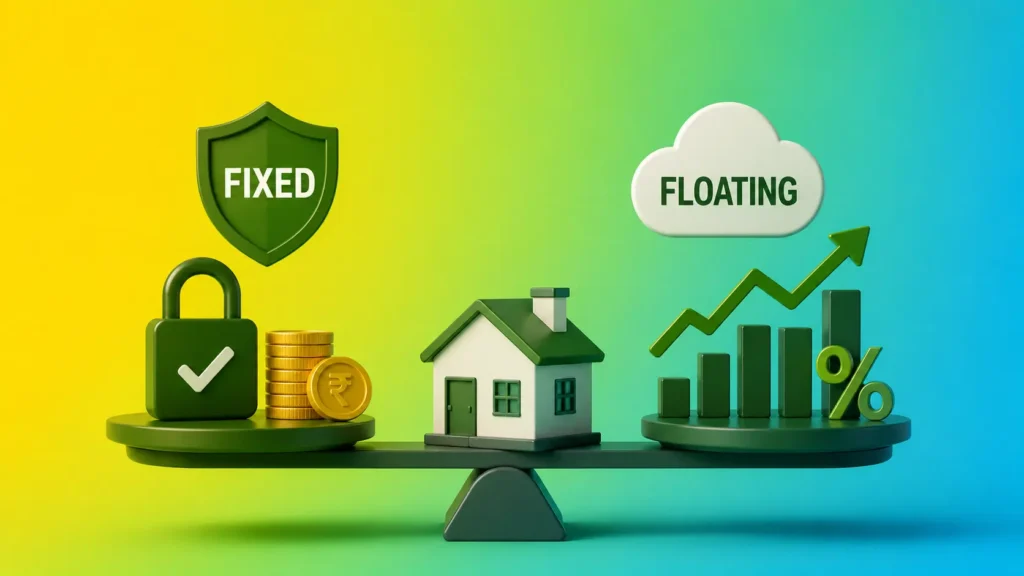
Before selecting any loan, ask yourself these important questions:
- Is my monthly income stable?
- Can I afford a higher EMI if interest rates increase?
- How long will I keep this loan?
- Am I planning to repay the loan early?
- Do I prefer certainty or flexibility?
Your answers will help you determine which interest rate option is more suitable.
Choose a Fixed Interest Rate If…
A fixed interest rate is usually the better option if you:
- Have a stable monthly salary.
- Prefer predictable EMIs.
- Want easy financial planning.
- Expect interest rates to rise.
- Don’t like financial uncertainty.
- Are taking a short- or medium-term loan.
Example
Priya works in a government job with a fixed monthly income. She wants to manage her household budget without worrying about changing EMIs. A fixed-rate home loan is the right choice because it offers stability and peace of mind.
Choose a Floating Interest Rate If…
A floating interest rate may be a better choice if you:
- Can handle occasional EMI changes.
- Expect interest rates to fall.
- Are taking a long-term home loan.
- Plan to make part-prepayments.
- Have flexible or growing income.
Example
Amit owns a business with increasing annual income. Since he plans to make regular prepayments and is comfortable with market fluctuations, a floating-rate loan helps him benefit if interest rates decrease.
Fixed vs Floating Interest Rates for Different Loan Types
Not every loan requires the same interest rate option. Here’s a quick comparison:
| Loan Type | Best Option | Reason |
|---|---|---|
| Home Loan | Floating (Long Term) | Lower starting rates and potential long-term savings. |
| Personal Loan | Fixed | Short tenure and predictable EMIs. |
| Business Loan | Depends on cash flow | Businesses with variable income may prefer floating rates. |
| Education Loan | Depends on lender | Compare both options before deciding. |
| Loan Against Property | Fixed or Floating | Choose based on repayment capacity and market outlook. |
Factors That Affect Your Interest Rate
Several factors influence the interest rate a lender offers you.
1. Credit Score
A good credit score improves your chances of getting a lower interest rate.
2. Income Stability
Borrowers with stable income are generally considered less risky.
3. Loan Amount
Higher loan amounts may qualify for better interest rates, depending on the lender.
4. Loan Tenure
Longer tenures often result in lower EMIs but increase the total interest paid.
5. Type of Loan
Secured loans, such as home loans, usually have lower interest rates than unsecured personal loans.
Common Mistakes Borrowers Should Avoid
Avoid these mistakes when selecting an interest rate:
Choosing Only Based on the Lowest Rate
A lower starting interest rate doesn’t always mean a lower overall borrowing cost.
Ignoring Loan Tenure
A small difference in interest rates can significantly impact the total repayment amount over long loan tenures.
Not Comparing Multiple Lenders
Always compare loan offers before making a final decision.
Ignoring Additional Charges
Processing fees, documentation charges, and foreclosure costs can increase the overall cost of borrowing.
Not Reading Loan Terms
Understand the loan agreement carefully before signing, especially the clauses related to interest rate revisions and prepayment.
Conclusion
Choosing between a fixed and floating interest rate is one of the most important financial decisions you’ll make when taking a loan. The right choice depends on your personal financial situation—not just the interest rate offered by the lender.
If you prefer stability and predictable monthly payments, a fixed interest rate can provide peace of mind. If you’re comfortable with some uncertainty and want the opportunity to reduce your borrowing cost when market rates fall, a floating interest rate may be the smarter option.
Before applying for any loan, compare lenders, calculate your EMI under different scenarios, and choose the option that aligns with your long-term financial goals. A well-informed decision today can help you save thousands—or even lakhs—over the life of your loan.