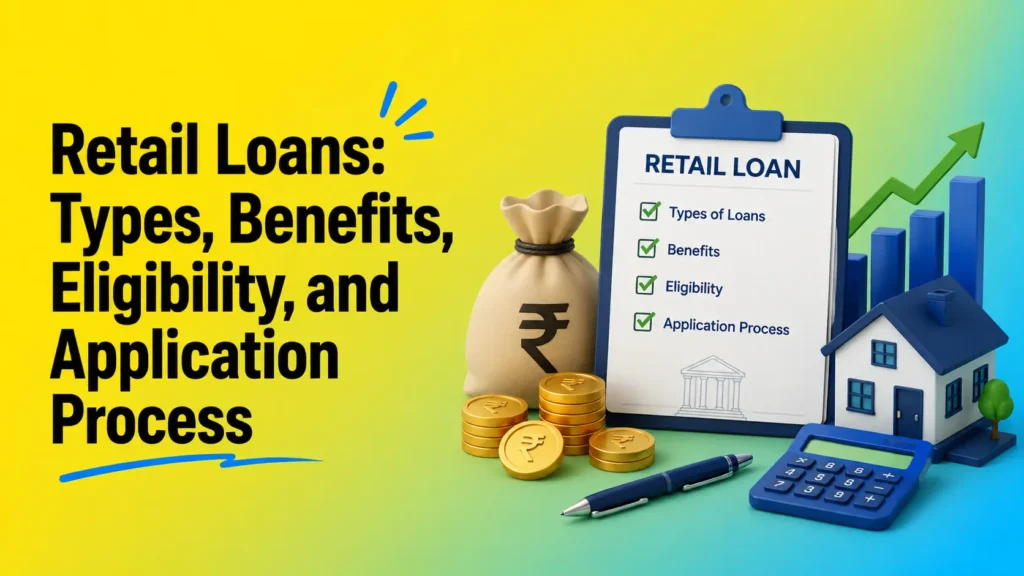
Retail loans are among the most widely used financial products offered by banks, credit unions, and non-banking financial companies (NBFCs). Whether you’re buying your first home, purchasing a new vehicle, funding higher education, renovating your house, or covering emergency expenses, retail loans can provide the financial support you need.
In recent years, retail lending has changed significantly. Many lenders now offer fully digital loan applications, paperless verification, instant eligibility checks, AI-assisted credit assessments, and faster loan approvals. These improvements have made borrowing more convenient while also helping lenders make quicker and more accurate lending decisions.
However, taking a loan is a major financial commitment. Before applying, borrowers should understand the different types of retail loans, their benefits, eligibility requirements, repayment terms, and the factors that influence approval.
This comprehensive guide explains everything you need to know about retail loans in a simple and beginner-friendly way
What Are Retail Loans?

Retail loans are consumer lending products designed specifically for individuals rather than businesses. Unlike corporate loans, which finance business operations, retail loans are intended to meet personal financial requirements.
These loans are available through traditional banks, digital banks, cooperative banks, credit unions, and licensed financial institutions. Today, many lenders allow customers to complete the entire borrowing process online, from submitting documents to receiving loan approval.
The amount you can borrow depends on several factors, including:
- Your monthly income
- Credit history
- Existing financial obligations
- Employment stability
- Loan purpose
- Repayment capacity
Borrowers agree to repay the loan over a specified period along with applicable interest and charges.
Why Are Retail Loans Important?
Retail loans play an important role in improving financial accessibility. Instead of waiting years to save enough money, individuals can purchase valuable assets or manage urgent expenses immediately while repaying the amount gradually.
Some common situations where retail loans are useful include:
- Buying your first home
- Purchasing a new or used vehicle
- Paying college or university fees
- Managing medical emergencies
- Financing home renovations
- Consolidating existing debts
- Purchasing consumer electronics
- Covering wedding expenses
- Funding professional certifications
Responsible borrowing can also help borrowers build a stronger credit history when repayments are made on time.
Retail Loans vs Corporate Loans
Many people confuse retail loans with corporate loans. Although both are lending products, they serve different purposes.
| Feature | Retail Loans | Corporate Loans |
|---|---|---|
| Borrower | Individual consumers | Businesses and companies |
| Purpose | Personal financial needs | Business operations and expansion |
| Loan Size | Usually smaller | Often much larger |
| Repayment | Monthly EMIs | Customized repayment schedules |
| Risk Assessment | Income, credit score, repayment ability | Business financial statements, cash flow, assets |
| Examples | Home loan, personal loan, auto loan | Working capital loan, business expansion loan |
Types of Retail Loans
Retail lending includes several loan categories, each designed for a specific financial need.
1. Home Loans
Home loans are among the most popular retail loans. They help individuals purchase, build, or renovate residential properties.
Common features include:
- Higher borrowing limits
- Long repayment periods
- Competitive interest rates
- Flexible repayment options
Many lenders also provide home improvement and balance transfer facilities.
Personal loans are unsecured loans that can be used for almost any legitimate personal expense.
2. Personal Loans
Popular uses include:
- Medical emergencies
- Weddings
- Travel
- Home repairs
- Debt consolidation
- Emergency expenses
Because these loans do not usually require collateral, lenders rely heavily on income and creditworthiness when making approval decisions.
3. Auto Loans
Auto loans help finance the purchase of:
- New cars
- Used cars
- Motorcycles
- Electric vehicles
Many financial institutions now offer special financing programs for electric vehicles as sustainable transportation becomes more popular.
4. Education Loans
Education loans help students finance:
- Tuition fees
- Hostel expenses
- Books
- Study materials
- International education
- Professional courses
Several lenders also provide repayment flexibility after course completion.
5. Gold Loans
Gold loans allow borrowers to pledge eligible gold jewelry as collateral.
Advantages include:
- Fast processing
- Lower interest rates compared to many unsecured loans
- Minimal documentation
- Quick access to funds
6. Consumer Durable Loans
These loans help finance everyday products such as:
- Smartphones
- Laptops
- Televisions
- Refrigerators
- Air conditioners
- Washing machines
- Home appliances
Many retailers offer instant financing at the point of purchase through lending partners.
7. Loan Against Property
Borrowers can use residential or commercial property as collateral to obtain larger loan amounts.
These loans are commonly used for:
- Business expansion
- Higher education
- Medical expenses
- Debt restructuring
- Major personal investments
Secured vs Unsecured Retail Loans
Retail loans generally fall into two categories.
| Secured Loans | Unsecured Loans |
|---|---|
| Require collateral | No collateral required |
| Lower interest rates | Usually higher interest rates |
| Higher borrowing limits | Lower borrowing limits |
| Longer repayment periods | Shorter repayment periods |
| Home loan, gold loan, loan against property | Personal loan, many consumer loans |
Choosing between secured and unsecured borrowing depends on your financial needs, available assets, and repayment capacity.
Benefits of Retail Loans
Retail loans offer several advantages when used responsibly.
1. Easy Access to Financ
Borrowers can obtain funds without waiting years to accumulate savings.
2. Flexible Loan Amounts
Different lenders offer varying loan amounts depending on the applicant’s income and financial profile.
3. Affordable Monthly Payments
Most retail loans are repaid through Equated Monthly Installments (EMIs), making repayment more manageable.
4. Faster Digital Approval
Modern lending platforms now support:
- Online applications
- Digital document uploads
- Electronic identity verification
- Instant eligibility checks
- Faster approval decisions
5. Better Financial Planning
Rather than making a large one-time payment, borrowers can spread costs over several years6. Credit Score Improvement
Making every EMI payment on time demonstrates responsible borrowing behavior and can contribute to a stronger credit profile over time.
How Retail Loans Benefit Different Borrowers
| Borrower | Suitable Loan |
|---|---|
| First-time home buyer | Home Loan |
| College student | Education Loan |
| Salaried employee | Personal Loan |
| Vehicle buyer | Auto Loan |
| Homeowner | Loan Against Property |
| Consumer purchasing electronics | Consumer Durable Loan |
Selecting the appropriate loan type can help reduce borrowing costs and improve repayment flexibility.
Latest Retail Lending Trends in 2026
Retail lending continues to evolve as financial institutions invest in technology and improve customer experience.
AI-Assisted Credit Assessment
Many lenders now use artificial intelligence to support credit evaluation by analyzing financial data more efficiently. Human oversight and regulatory requirements still apply, but AI tools can help speed up the decision-making process.
Digital Loan Applications
Borrowers increasingly prefer applying online through secure websites and mobile apps, reducing paperwork and shortening processing times.
Paperless Verification
Electronic Know Your Customer (e-KYC) and secure digital document verification allow eligible applicants to complete much of the application process remotely where supported by local regulations.
Open Banking Integration
In regions where Open Banking frameworks are available, borrowers may choose to securely share financial data with lenders, helping simplify affordability assessments and potentially speeding up approvals.
Green Financing
Financial institutions are expanding loan products that support environmentally friendly purchases such as electric vehicles, solar energy systems, and energy-efficient home improvements.
Stronger Fraud Protection
Banks and lenders continue to enhance security through multi-factor authentication, biometric verification, and AI-supported fraud detection to better protect customers from identity theft and financial fraud.
Retail Loan Eligibility Criteria
Every bank and financial institution has its own lending policy, but most lenders evaluate applicants using similar eligibility requirements. Meeting these criteria improves your chances of receiving loan approval and may also help you secure better interest rates.
Common Eligibility Requirements
Most lenders consider the following factors:
- Minimum age (typically 18–21 years, depending on local regulations)
- Maximum age at loan maturity
- Stable source of income
- Good repayment capacity
- Satisfactory credit history
- Employment or business stability
- Valid identity and address proof
- Compliance with the lender’s internal policies
For secured loans, the value and condition of the pledged asset may also be assessed.
Documents Required for Retail Loans
Keeping your documents ready before applying can help speed up the approval process.
Identity Proof
Examples include:
- Passport
- National ID Card
- Driver’s License
- Other government-issued identification
Address Proof
Accepted documents may include:
- Utility bills
- Bank statements
- Government-issued address proof
- Rental agreement (where accepted)
Income Proof
Salaried applicants may need:
- Recent salary slips
- Bank statements
- Employment certificate (if required)
Self-employed applicants may need:
- Business registration documents
- Income tax returns
- Business financial statements
- Bank statements
Additional Documents
Depending on the loan type, lenders may also request:
- Property documents
- Vehicle quotation
- College admission letter
- Gold valuation certificate
- Passport-size photographs
Some digital lenders allow applicants to upload these documents securely through online portals or mobile applications.
Step-by-Step Retail Loan Application Process
Applying for a retail loan has become much easier thanks to digital banking. While the exact process varies by lender, the following steps are common.
Step 1: Determine Your Financial Need
Borrow only the amount you genuinely require. Taking a larger loan than necessary increases your repayment burden.
Step 2: Compare Different Lenders
Compare:
- Interest rates
- Processing fees
- Loan tenure
- Repayment flexibility
- Customer service
- Prepayment options
Never choose a lender based only on the advertised interest rate.
Step 3: Check Your Eligibility
Most financial institutions provide online eligibility calculators that give an estimate based on your income and financial profile.
Step 4: Prepare Required Documents
Ensure all documents are accurate and up to date before submitting your application.
Step 5: Submit Your Loan Application
Applications can usually be completed:
- Online
- Through a mobile banking app
- At a bank branch
Provide accurate information to avoid delays.
Step 6: Verification Process
The lender may verify:
- Identity
- Employment
- Income
- Credit history
- Existing financial obligations
Some lenders may also conduct additional verification if necessary.
Step 7: Loan Approval
If your application meets the lender’s requirements, you will receive a loan offer detailing:
- Approved loan amount
- Interest rate
- EMI amount
- Repayment tenure
- Applicable fees and charges
Read the agreement carefully before accepting it.
Step 8: Loan Disbursement
After acceptance and completion of formalities, the approved loan amount is disbursed according to the lender’s process.
Understanding Retail Loan Interest Rates
Interest rates determine the overall borrowing cost. They vary based on multiple factors and differ from one lender to another.
Factors That Influence Interest Rates
- Credit score
- Income level
- Employment stability
- Loan amount
- Loan tenure
- Type of loan
- Collateral (if applicable)
- Overall market conditions
Applicants with stronger financial profiles often qualify for more competitive rates.
Fixed vs Floating Interest Rates
| Feature | Fixed Rate | Floating Rate |
|---|---|---|
| EMI Stability | Usually remains the same | May change over time |
| Predictability | High | Moderate |
| Impact of Market Changes | Limited | Can increase or decrease |
| Best For | Stable budgeting | Borrowers comfortable with market fluctuations |
Before choosing either option, understand how rate changes may affect your monthly repayments.
Factors Affecting Loan Approval
Loan approval is based on a complete financial assessment rather than a single factor.
1. Credit History
A positive repayment record demonstrates responsible borrowing.
2. Income Stability
Stable and consistent income helps lenders evaluate repayment ability.
3. Existing Debt
High existing loan obligations may reduce borrowing capacity.
4. Employment History
Long-term employment or stable business operations generally strengthen an application.
5. Loan Amount Requested
Requesting an amount that matches your income level improves approval chances.
6. Repayment Capacity
Lenders assess whether the monthly EMI fits comfortably within your available income.
Hidden Charges to Watch For
Many borrowers focus only on interest rates and overlook additional costs.
Possible charges may include:
- Processing fees
- Documentation charges
- Late payment penalties
- EMI bounce charges
- Foreclosure or prepayment charges
- Loan cancellation fees
- Insurance costs (if applicable)
Always request a complete fee schedule before accepting a loan.
Common Reasons for Loan Rejection
Applications may be declined for several reasons, including:
- Poor credit history
- Low or unstable income
- Incomplete documentation
- Incorrect application details
- High debt compared to income
- Frequent loan applications within a short period
- Failure to meet the lender’s eligibility requirements
Understanding these factors can help you strengthen future applications.
Common Borrowing Mistakes to Avoid
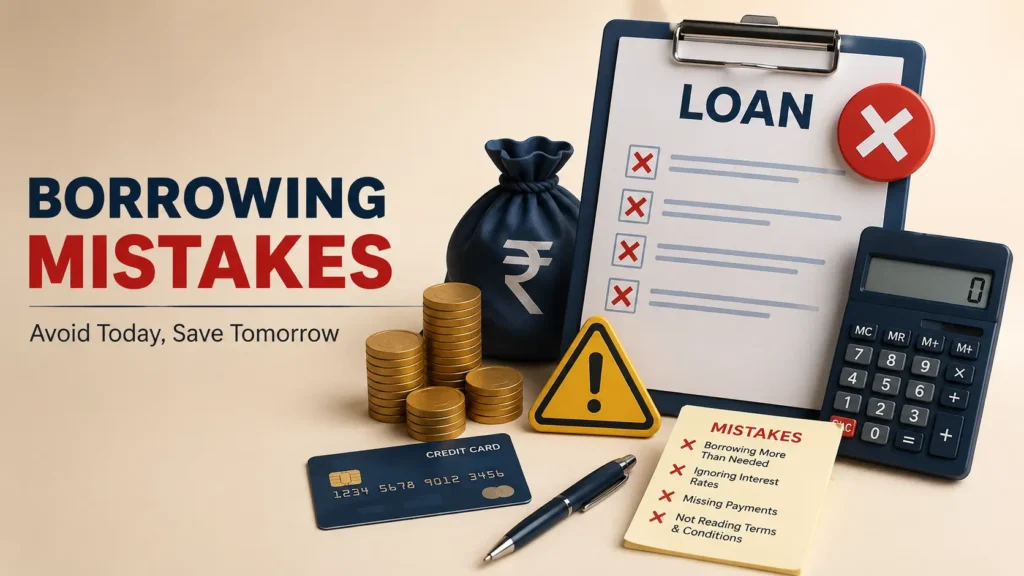
Avoid these common mistakes when applying for a retail loan:
- Borrowing more than necessary
- Ignoring the total borrowing cost
- Missing EMI payments
- Applying to multiple lenders simultaneously
- Failing to compare loan offers
- Not reading the loan agreement
- Overlooking additional fees and charges
Conclusion
Retail loans can be valuable financial tools when used responsibly. They help individuals achieve important goals such as purchasing a home, financing education, buying a vehicle, or managing unexpected expenses. However, every loan represents a financial commitment that should be evaluated carefully.
Before applying, compare lenders, understand the complete cost of borrowing, review the repayment schedule, and ensure that the monthly installments fit comfortably within your budget. Responsible borrowing, combined with timely repayments, can strengthen your financial profile and support future financial opportunities.