A comprehensive car insurance policy can still leave you with a sizeable repair bill. Depreciation on replaced parts, engine damage after water ingress, towing charges and small consumable items may remain payable from your pocket.
The right car insurance add ons can reduce these expenses. Each add-on covers a specific financial risk, so buying every available cover may increase your premium without giving you much practical benefit.
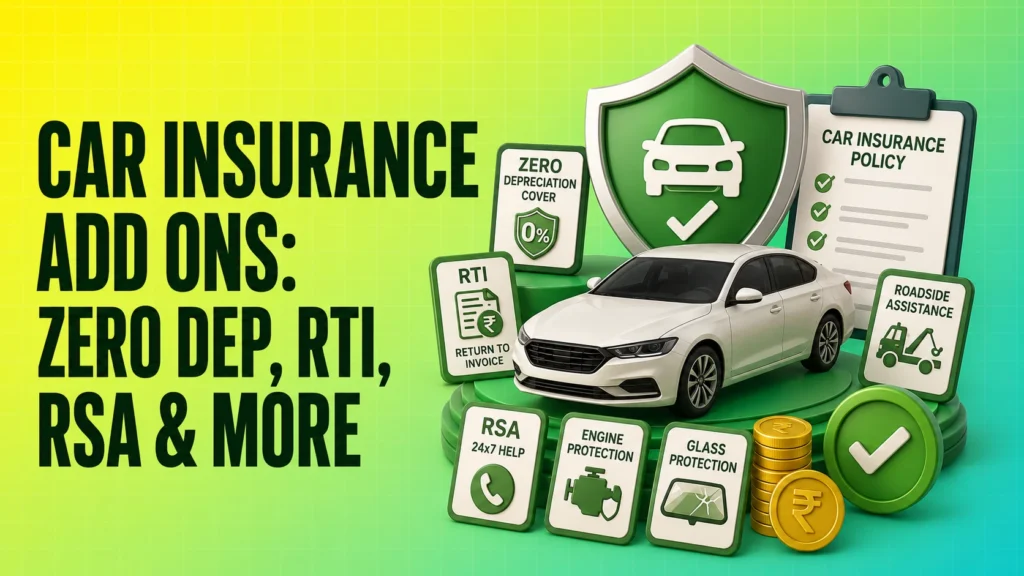
This guide compares zero depreciation, return to invoice, engine protection, roadside assistance and consumables cover. The comparison will help you choose add-ons based on your car’s age, value, location and usage.
Car Insurance Add-Ons Compared
| Add-on | Main purpose | Useful claim situation | Suitable for |
|---|---|---|---|
| Zero depreciation | Removes or reduces depreciation deductions on eligible replaced parts | Partial damage and repair claims | New, luxury and high-value cars |
| Return to invoice | Covers the gap between IDV and invoice-related value | Theft, total loss or constructive total loss | New cars with a large IDV gap |
| Engine protection | Covers eligible consequential engine and gearbox damage | Water ingress, oil leakage or hydrostatic lock | Cars used in flood-prone areas |
| Roadside assistance | Provides emergency services after a breakdown | Flat tyre, dead battery, towing or fuel shortage | Highway users and frequent drivers |
| Consumables cover | Pays for eligible oils, fluids and small repair items | Admissible accident repair claim | New cars and cars with costly repairs |
Coverage, vehicle-age limits, claim frequency and exclusions differ between insurers. Check the policy wording before adding any cover.
Also Read: What Are the Types of Car Insurance in India?
Zero Depreciation Cover
Car parts lose value as they age. During an admissible own-damage claim, the insurer may deduct depreciation from the cost of replaced plastic, rubber, fibre, metal or other parts.
A zero depreciation car insurance add-on reduces or removes this deduction for eligible parts. It can lower the amount you pay during accident repairs, especially when a bumper, body panel, headlamp assembly or plastic component needs replacement.
What zero depreciation may cover
Depending on the policy wording, the cover may apply to depreciation deducted from:
- Plastic and rubber parts
- Fibre components
- Metal parts
- Eligible body panels
- Other listed replaced components
Some policies apply separate conditions to tyres, tubes, batteries or specific parts. Claim limits may also apply during the policy year.
Expenses you may still have to pay
Zero depreciation does not automatically make every repair free. You may still pay:
- Compulsory and voluntary deductibles
- Non-covered repair items
- Mechanical or electrical breakdown costs
- Normal wear and tear
- Consumables, unless a consumables add-on is included
- Damage caused by an excluded event
- Repair costs exceeding policy limits
Who should consider zero depreciation?
Zero dep cover usually makes more financial sense for:
- A new or relatively young car
- A luxury car with expensive replacement parts
- A car driven regularly in congested traffic
- An owner who wants lower repair-related expenses
- A vehicle with costly plastic, fibre or electronic components
For an older, low-value car, compare the extra premium with the likely claim benefit. Insurers may restrict zero depreciation cover after a specified vehicle age.
Return to Invoice Cover
A standard total-loss or theft claim is generally linked to the car’s insured declared value, or IDV. The IDV falls as the car ages, so it can be lower than the amount originally paid for the vehicle.
Return to invoice cover may settle an eligible theft, total-loss or constructive-total-loss claim using the invoice-related value defined in the policy. Depending on the insurer, this may include the ex-showroom price, registration charges and road tax.
RTI does not apply to dents, bumper damage or normal repair claims.
RTI vs zero depreciation
| Point | Return to invoice | Zero depreciation |
|---|---|---|
| Main claim type | Theft or total loss | Partial repair claim |
| Value protected | Invoice-related value | Depreciation on eligible parts |
| Minor accident repairs | Not applicable | May apply |
| Theft claim | May apply | Does not replace RTI |
| Best suited for | Newer cars | New and relatively young cars |
| Main limitation | Restricted claim situations and vehicle age | Deductibles and policy exclusions still apply |
RTI and zero depreciation cover different losses. A new car owner may choose both when the premium remains affordable.
Read our detailed guide on return to invoice in car insurance to understand IDV, invoice value and claim conditions.
Who should consider RTI?
RTI may suit you when:
- Your car is new
- The difference between invoice value and IDV is high
- The car has an active loan
- The vehicle has a high theft risk
- Replacing the car after a total loss would strain your finances
Check how the insurer defines invoice value. Registration cost, road tax, insurance cost and accessories may be treated differently across policies.
Engine Protection Cover
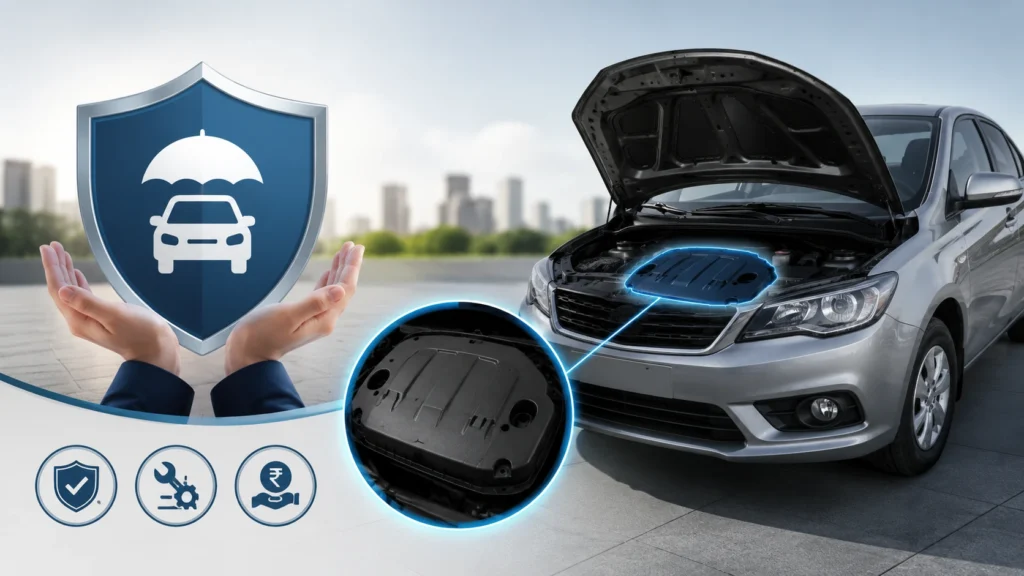
Engine repairs can be expensive, especially when water enters the engine or lubricant leakage damages internal components.
A standard own-damage policy may cover direct accidental damage. Consequential engine or gearbox damage caused by water ingress, coolant leakage or lubricating-oil leakage may require an engine protection cover.
Damage the cover may pay for
Subject to the insurer’s wording, engine protection may cover:
- Internal engine damage caused by water ingress
- Hydrostatic lock
- Damage caused by lubricating-oil leakage
- Eligible gearbox or differential damage
- Repair or replacement of listed internal parts
- Labour, machining and related repair costs
- Eligible lubricants or coolant used during covered repairs
When an engine claim can fail
An engine protection claim may be rejected when:
- The driver tries to restart a waterlogged car
- The vehicle continues running after oil leakage
- Damage results from normal wear and tear
- Maintenance requirements were ignored
- The repair begins before claim intimation or inspection
- The loss falls outside the listed insured events
- The car was driven without valid documents or under excluded conditions
Do not attempt to restart a car that has stopped in deep water. Switch off the ignition, move to a safe location and contact the insurer or roadside assistance provider.
Who should buy engine protection?
Consider this cover when:
- You live in a flood-prone or waterlogging-prone city
- Your parking area is vulnerable to flooding
- Your car has an expensive engine or automatic gearbox
- You drive during heavy monsoon conditions
- A major engine repair would create a serious financial burden
Engine cover becomes less useful when the car is old, the add-on is unavailable or the additional premium is too high compared with the car’s value.
Roadside Assistance Cover
Roadside assistance, or RSA, arranges emergency support when a car breaks down or becomes immobilised.
RSA is mainly a service cover. It may arrange help at the location or tow the car to a nearby garage. It does not automatically pay for every part or repair needed after the breakdown.
Services commonly included under RSA
Depending on the insurer, the cover may include:
- Emergency towing
- Battery jump-start
- Flat tyre assistance
- Minor roadside repairs
- Emergency fuel delivery
- Lost-key or spare-key support
- Taxi or travel assistance
- Hotel accommodation
- Message relay to family members
- Removal of the wrong fuel
Fuel, spare parts, replacement batteries and repairs may be charged separately. The service itself may be covered, while the material used remains payable by the policyholder.
RSA limits to check
Review these conditions before buying:
- Maximum towing distance
- Number of service requests allowed
- Geographical coverage
- Highway and remote-area availability
- Waiting period for assistance
- Labour-charge limits
- Charges for fuel and spare parts
- Accommodation or taxi limits
- Exclusions for repeated breakdowns
- Whether manufacturer-provided RSA already covers your car
Who needs RSA?
RSA may suit:
- Drivers who travel long distances
- People who frequently use highways
- Owners who drive at night
- Families travelling with children or elderly passengers
- Owners of cars outside the manufacturer’s RSA period
- Drivers with limited mechanical knowledge
Check whether your car manufacturer already gives roadside assistance. Paying for the same service through the insurer may create duplicate coverage.
Consumables Cover
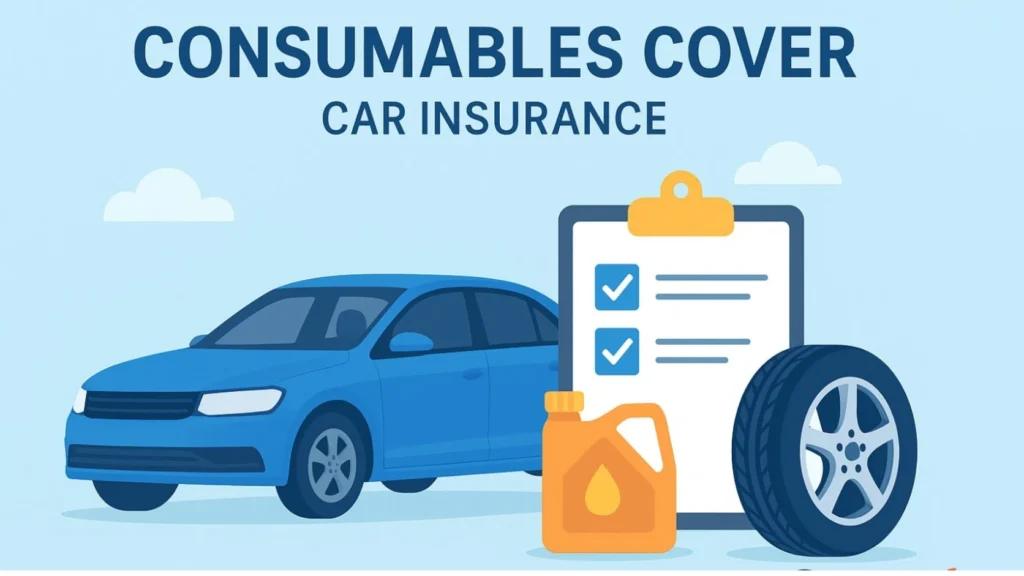
A car repair bill contains more than major replacement parts. Garages may use engine oil, coolant, brake fluid, grease, nuts, bolts, washers, filters and other small items during the repair.
These costs can remain excluded from a normal claim. A consumables cover in car insurance pays for eligible items used during an admissible repair claim.
Consumable items that may be covered
The list can include:
- Engine oil
- Gearbox oil
- Brake fluid
- Coolant
- Grease and lubricants
- Nuts, bolts and screws
- Washers and bearings
- Oil filters
- AC refrigerant
- Clips and small repair fittings
The add-on usually applies when the main damage is covered under the own-damage policy. It does not normally pay for routine servicing, oil changes, worn-out components or preventive maintenance.
Zero dep vs consumables cover
Zero depreciation applies to depreciation deductions on eligible replaced parts. Consumables cover applies to small items, fluids and materials used during an admissible repair.
One does not automatically include the other. Buying both may reduce separate parts of your out-of-pocket repair bill.
Example: A claim may include a replaced bumper, plastic parts, engine oil, coolant, nuts and clips. Zero dep may reduce depreciation deducted from eligible parts. Consumables cover may pay for listed oils, fluids and fittings.
For a complete list of included items and exclusions, read what consumables are in car insurance.
Which Car Insurance Add-Ons Should You Choose?
The right combination depends on the financial loss you want the policy to absorb.
| Your situation | Add-ons to consider |
|---|---|
| New car | Zero dep, RTI, engine cover and consumables |
| Car used in a flood-prone city | Engine protection and RSA |
| Regular highway travel | RSA and zero dep |
| Luxury or high-value car | Zero dep, engine cover and consumables |
| Car with an active loan | RTI and zero dep |
| Older car | RSA, subject to premium and availability |
| Limited insurance budget | Cover the largest likely repair or replacement risk |
These combinations are starting points. Check the additional premium, vehicle age, claim restrictions and policy wording before making a decision.
Insurers can offer the same add-on under different conditions. Compare cashless garages, add-on limits and claims support when reviewing the best car insurance companies in India.
How to Compare Add-Ons Before Buying
Use the following checks at purchase or renewal:
Compare the same policy structure
Compare quotes using the same IDV, deductible, coverage type and add-ons. A cheaper quote may have a lower IDV or fewer covers.
Check vehicle-age eligibility
Insurers may restrict RTI, zero depreciation, engine protection and consumables cover after a specified vehicle age. The limit is not the same across all policies.
Read claim limits
Check whether the add-on allows unlimited claims or a fixed number of claims during the policy year.
Check exclusions and deductibles
An add-on extends selected parts of the policy. General exclusions, deductibles and claim conditions can still apply.
Avoid duplicate services
Manufacturer RSA, extended warranty and insurer add-ons may cover some of the same situations. Compare their limits before paying twice.
Review the policy schedule after purchase
The add-on must appear in the policy schedule. A quotation, payment screen or verbal confirmation is not enough.
You can check your car insurance online to confirm the policy type, IDV, renewal date and selected add-ons.
Reassess the covers at every renewal
Your car’s value, usage and repair risk change over time. An add-on that made sense for a brand-new vehicle may become expensive or unavailable later.
Which Add-On Gives the Most Useful Coverage?
Zero depreciation can reduce the owner’s share in partial repair claims. RTI protects against the value gap after theft or total loss. Engine protection addresses specified consequential engine damage. RSA deals with breakdown emergencies, and consumables cover pays for listed repair materials.
For many new-car owners, zero depreciation gives the most frequently usable protection. RTI becomes relevant for severe losses. Engine protection deserves priority in flood-prone locations. Regular highway users may get more practical use from RSA.
Choose add-ons based on the largest realistic expense you would struggle to pay yourself. Read the policy wording before purchase and keep proof that each selected add-on appears in your schedule.
If an accident occurs, timely intimation and correct documentation can affect settlement. Follow the insurance claim process before authorising major repairs.