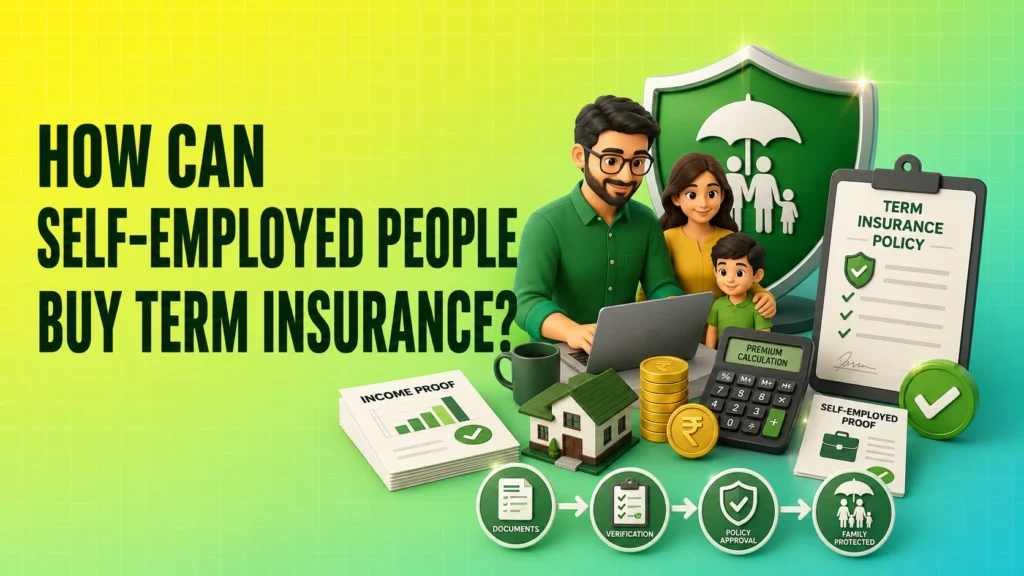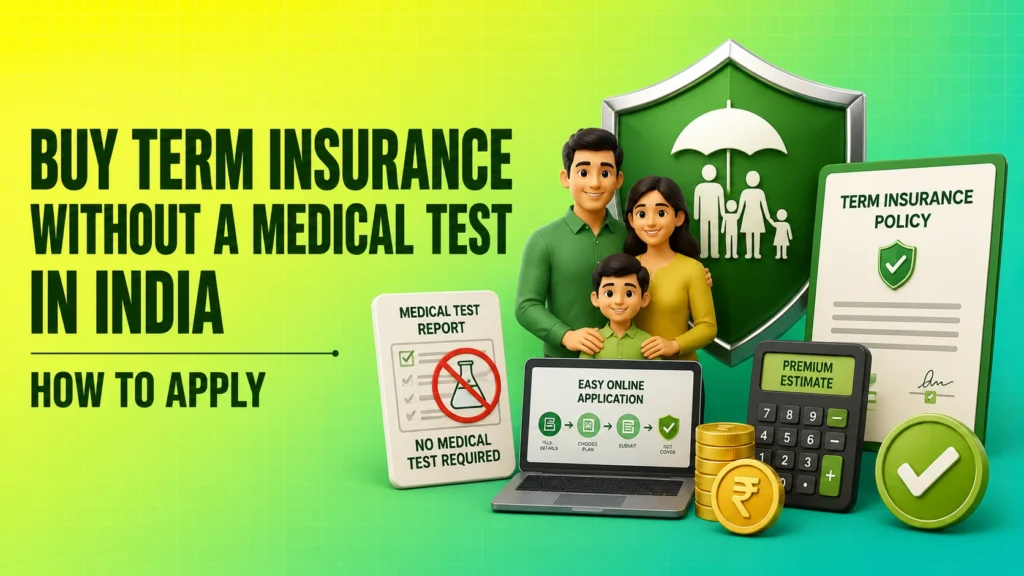
Many people delay buying term insurance because they expect a long medical examination process. However, some applicants may qualify for term insurance without medical test, depending on their age, health, income, lifestyle and required life cover.
This does not mean that the insurer will issue the policy without checking your risk. You must still complete a health declaration, provide the required documents and go through underwriting. The insurer may also request a telemedical interview, previous health reports or fresh medical tests after reviewing your application.
Here is how term insurance without a medical test works, who may qualify and how to apply without creating problems during a future claim.
Can You Buy Term Insurance Without a Medical Test?
Yes, you may be able to buy term insurance without undergoing a physical medical examination. However, this option is available only when the insurer is satisfied with the information provided in your application.
The decision may depend on:
- Your age
- Required sum assured
- Current health
- Previous illnesses
- Smoking and tobacco use
- Occupation
- Income
- Existing life insurance
- Family medical history
The insurer can approve your application without tests, ask for additional information, charge a different premium or require medical tests before making a final decision.
No medical test does not mean no underwriting, no health questions or guaranteed approval.
How Does Term Insurance Without a Medical Test Work?
When you apply for a regular term insurance plan, the insurer assesses your risk before issuing the policy. Medical tests are one way to complete this assessment, but they are not the only source of information.
The process usually works as follows:
- You complete the online proposal form.
- You provide personal, financial, lifestyle and medical details.
- The insurer checks your eligibility and required life cover.
- A telemedical interview or additional documents may be requested.
- The insurer decides whether physical tests are necessary.
- Your application is approved, modified, postponed or declined.
When the insurer can assess your risk using the proposal form, available records and supporting documents, it may issue the policy without a physical examination.
However, selecting a “no medical test” option online does not guarantee that tests will be waived.
Who May Qualify for Term Insurance Without Medical Tests?
Eligibility rules differ across insurers. There is no universal age or sum-assured limit that applies to every term plan.
Your chances may be better if you:
- Are relatively young
- Have no major pre-existing illness
- Have a healthy body mass index
- Do not smoke or use tobacco
- Have a lower-risk occupation
- Require a moderate sum assured
- Have regular, verifiable income
- Have no major history of hospitalisation
- Have not faced previous insurance rejection
- Provide complete and consistent information
A minor health condition does not always mean that your application will be rejected. The insurer may still approve it without tests, request medical records or ask you to complete an examination.
Similarly, being young and healthy does not guarantee automatic approval. Every application is assessed individually.
How to Apply for Term Insurance Without a Medical Test
1. Calculate the Life Cover You Actually Need
Start by calculating how much money your family may require if you are no longer there to support them.
Consider:
- Annual household expenses
- Outstanding home, personal or vehicle loans
- Children’s education
- Future family goals
- Financial support for parents
- Existing savings and investments
- Current life insurance cover
For example, avoiding a medical test is not useful if it limits you to a sum assured that cannot repay your loans or support your family.
Do not reduce essential life cover only to qualify for a faster application process.
2. Compare Suitable Term Insurance Plans
Compare policies based on more than the premium.
Important factors include:
- Available sum assured
- Policy term
- Premium-payment term
- Eligibility conditions
- Payout options
- Exclusions
- Medical-test requirements
- Claim support
- Available optional benefits
Check whether the plan provides enough protection for the period during which your family depends on your income.
An insurer may advertise an online application process, but medical requirements are generally decided only after your proposal is assessed.
3. Complete the Proposal Form Yourself
The proposal form is the basis on which the insurer evaluates your application. Complete it carefully and verify every answer before submission.
You may be asked about:
- Current illnesses
- Previous medical conditions
- Hospitalisation and surgery
- Medicines taken regularly
- Blood pressure or diabetes
- Smoking and tobacco use
- Alcohol consumption
- Height and weight
- Family medical history
- Existing insurance policies
- Hazardous occupations or hobbies
- Applications rejected or postponed earlier
Do not ask an agent or another person to hide information to make the application appear safer.
Even when someone assists you with the form, you remain responsible for checking that the answers are accurate.
4. Submit the Required Documents
The documents required may vary by insurer and application profile.
Commonly requested documents may include:
- PAN card
- Aadhaar card or another identity proof
- Address proof
- Age proof
- Recent photograph
- Salary slips
- Bank statements
- Income-tax returns
- Form 16
- Existing insurance details
- Previous medical reports, when applicable
Income proof helps the insurer assess whether the requested life cover is reasonable in relation to your earnings and financial responsibilities.
Submit clear and current documents to avoid unnecessary delays.
5. Complete the Underwriting Process
After receiving your form and documents, the insurer reviews your risk profile.
The insurer may:
- Approve the application without physical tests
- Arrange a telemedical interview
- Request previous medical records
- Ask questions about a disclosed illness
- Require blood, urine or other medical tests
- Offer the policy at a higher premium
- Approve a lower sum assured
- Postpone the application
- Decline the proposal
A telemedical interview is not the same as a physical examination. It usually involves answering health and lifestyle questions over a phone or video call.
Answer the interview questions consistently with the information given in the proposal form.
6. Review the Policy After It Is Issued
Do not assume that the policy is correct simply because you received the document.
Check:
- Your full name
- Date of birth
- Smoking status
- Occupation
- Sum assured
- Policy term
- Premium-payment term
- Nominee details
- Payout option
- Health declarations
- Optional benefits
- Exclusions
Contact the insurer immediately if the policy contains incorrect information.
Also keep a copy of the completed proposal form, payment receipt, policy document and all communication with the insurer. Your nominee should know where these documents are stored.
When Can an Insurer Ask for Medical Tests?
An insurer may ask for medical tests when it needs more information to assess your health risk.
Tests may be required because of:
- Higher applicant age
- High sum assured
- Diabetes or high blood pressure
- Previous surgery
- History of hospitalisation
- Heart, kidney or liver conditions
- Smoking or tobacco use
- Unusual height-to-weight ratio
- Hazardous occupation
- Risky hobbies
- Adverse family medical history
- Incomplete or inconsistent answers
- Previous insurance rejection or postponement
The insurer may also request tests when your existing life cover combined with the new application is high compared with your income.
Medical requirements are product- and applicant-specific. Do not rely on a universal rule such as “everyone below 40 can buy without tests” or “tests are required only above ₹1 crore.”
Term Insurance With vs Without a Medical Test
| Factor | Without a Medical Test | With a Medical Test |
|---|---|---|
| Physical examination | May be waived | Required by the insurer |
| Underwriting | Still required | Still required |
| Application time | May be shorter | May take longer |
| Health assessment | Based mainly on declarations, records and available data | Supported by current test results |
| Sum assured | May be limited in some cases | Higher cover may be easier to assess |
| Premium | May be higher for some profiles | Healthy applicants may receive better pricing |
| Health disclosure | Compulsory | Compulsory |
| Approval | Not guaranteed | Not guaranteed |
A plan requiring medical tests is not necessarily a poor option. Tests can provide the insurer with clearer health information and may help a healthy applicant obtain adequate coverage at suitable pricing.
The right option is the one that provides enough life cover on acceptable terms.
Benefits of Term Insurance Without Medical Tests

Term insurance without a physical medical examination can offer several practical benefits to eligible applicants.
These may include:
- Faster application processing
- No visit to a diagnostic centre
- No blood or urine sample collection
- Convenient online application
- Less disruption to your schedule
- Simpler processing for low-risk applicants
However, these benefits should not be confused with instant or guaranteed approval. The insurer must still complete its underwriting process.
Limitations and Risks You Should Consider
A no-test application may appear convenient, but it can have limitations.
Lower Life Cover
Some insurers may restrict the sum assured when detailed medical information is unavailable. The approved amount may not be enough for your family’s needs.
Higher Premium
The insurer may price the policy conservatively when it has limited information about your current health.
Tests Can Still Be Requested
An online application may begin without medical tests, but the insurer can request them after reviewing your answers or documents.
Approval Is Not Guaranteed
Your proposal may be approved, modified, postponed or declined. Paying an initial amount or completing the online form does not guarantee policy issuance.
Incorrect Disclosure Can Affect the Claim
If important information is hidden or answered incorrectly, the nominee may face claim investigation, delays or disputes according to the policy terms and applicable law.
Convenience should never be prioritised over accurate disclosure or adequate coverage.
Why Full Medical Disclosure Still Matters
The absence of a physical test does not remove your responsibility to disclose material facts.
Suppose an applicant regularly uses tobacco but declares themselves a non-smoker to receive a lower premium. If the incorrect statement is discovered during a claim investigation, it can create difficulties for the nominee.
Similarly, do not hide:
- Diabetes
- High blood pressure
- Previous heart problems
- Regular medication
- Mental-health treatment
- Previous surgery
- Kidney or liver conditions
- Smoking, vaping or tobacco use
- Hazardous work
- High-risk sports
- Earlier insurance rejection
Do not assume that an illness is unimportant because it is currently under control. Answer every question exactly as asked.
When you are unsure whether something should be disclosed, provide the information and allow the insurer to decide its relevance.
A higher premium or medical examination is usually safer than leaving your family with a disputed claim.
Should You Choose Term Insurance Without Medical Tests?
A no-test term plan may be suitable when:
- The insurer offers adequate life cover
- The premium is affordable
- The policy term meets your needs
- You qualify through normal underwriting
- You have completed all disclosures honestly
- The policy does not include unsuitable restrictions
A medically tested plan may be better when:
- You need a high sum assured
- The no-test option offers insufficient cover
- You are healthy and may qualify for better pricing
- The insurer needs more information about your health
- The no-test policy has restrictive conditions
- You want a detailed health assessment to support underwriting
Do not treat medical tests as a reason to avoid a policy. In many cases, the insurer arranges and pays for the required examination.
Your priority should be adequate and reliable protection, not merely an application with fewer steps.
Conclusion
Buying term insurance without medical test is possible in India, but only in selected cases. The insurer decides whether tests can be waived after reviewing your age, income, lifestyle, health declarations and required sum assured.
No physical examination does not mean no underwriting. You may still need to complete a health questionnaire, attend a telemedical interview or provide previous medical records.
Apply for enough life cover, complete the proposal form honestly and review the issued policy carefully. Never hide an illness or lifestyle habit simply to avoid medical tests.
A convenient application is useful, but adequate coverage and complete disclosure are far more important for your family’s financial protection.
FAQs
Can I get ₹1 crore term insurance without a medical test?
It may be possible for some applicants, but ₹1 crore no-test cover is not universally available. Eligibility depends on your age, income, health declaration, lifestyle, existing insurance and the insurer’s underwriting rules. The insurer can request tests after reviewing the proposal.
Can a smoker buy term insurance without medical tests?
A smoker may qualify in some cases, but tobacco and nicotine use must be disclosed correctly. The insurer may charge a higher premium, limit the available cover or request medical tests before approving the policy.
Can the insurer ask for tests after I complete the online application?
Yes. Starting an online application without medical tests does not guarantee that they will be waived. The insurer can request tests, reports or additional information during underwriting.
Is term insurance without a medical test more expensive?
It can be more expensive for certain applicants because the insurer has less current medical information. However, pricing depends on the applicant, product and insurer. Compare the premium and approved coverage instead of assuming that one option is always cheaper.
Can a claim be rejected because no medical test was conducted?
The absence of a medical test alone does not automatically make a death claim invalid. However, material non-disclosure, incorrect statements, exclusions and other policy conditions can affect claim assessment. The applicant should provide complete and accurate information even when tests are waived.