Many people buy life insurance expecting one product to provide family protection, tax savings and attractive long-term returns. The problem is that these goals do not always work equally well inside the same plan. A policy may offer maturity benefits but provide lower life cover, while a pure investment may build wealth but offer no financial protection to dependants.
This creates an important question: is life insurance a good investment, or should insurance and investment be handled separately?
The right answer depends on your main objective. Life insurance is primarily designed to protect your family from the financial impact of your death. Investment plans are designed to grow money for goals such as retirement, children’s education or buying a home. Some policies combine insurance and investment, but they should be assessed carefully before you commit to a long premium term.
Life Insurance vs Investment Plans: Which Is Better?

Life insurance is generally the better option when your priority is protecting dependants and replacing income after your death. Investment plans are more suitable when your priority is wealth creation, liquidity or achieving a specific financial goal.
Insurance-cum-investment products may be suitable for people who want structured long-term savings with some life cover. However, they are not automatically better than buying term insurance and investing separately. The decision should be based on cover, expected returns, costs, flexibility and risk—not merely on tax benefits or the maturity amount.
| Factor | Life insurance | Investment plans |
|---|---|---|
| Main purpose | Financial protection | Wealth creation |
| Life cover | Included | Usually not included |
| Returns | Depend on the policy type | Depend on the selected product |
| Liquidity | Often restricted during the policy term | Varies by product |
| Risk | Low to market-linked, depending on the plan | Low to high, depending on the investment |
| Costs | Premium and policy-related charges may apply | Product and management charges may apply |
| Best suited for | People with financial dependants | People saving for future financial goals |
The comparison is not simply insurance vs investment. You may need both, but each should perform its intended role effectively.
Is Life Insurance a Good Investment?
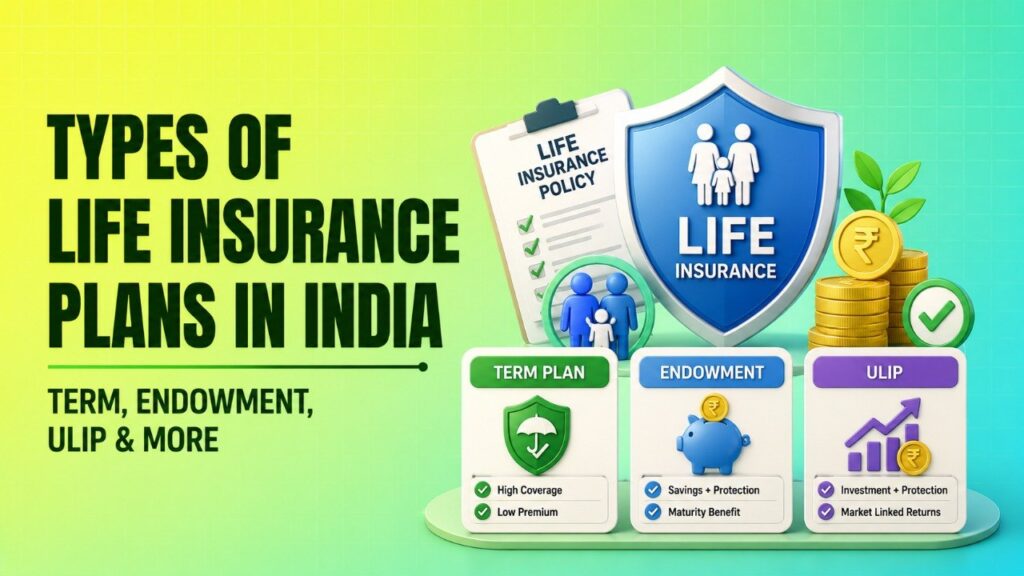
Life insurance can support long-term financial planning, but not every policy should be treated as an investment. The answer depends mainly on the policy you are considering. Understanding the different types of life insurance in India can help you separate pure protection products from plans that include savings or market-linked benefits.
Term Insurance
Term insurance is designed to provide a large death benefit for a relatively affordable premium. It normally does not provide a maturity benefit if the policyholder survives the term.
This does not make term insurance a poor financial decision. Its value comes from transferring a major financial risk to the insurer. If the insured person dies during the policy term, the payout can help the family:
- Replace lost income
- Repay a home or personal loan
- Fund children’s education
- Cover regular household expenses
- Protect existing investments from being withdrawn
Term insurance should therefore be judged by the protection it provides, not by the return received at maturity.
People comparing traditional LIC policies with pure protection plans can also read this detailed guide on LIC or term insurance before deciding which structure better matches their needs.
Endowment and Money-Back Plans
Endowment and money-back policies combine life cover with long-term savings. Depending on the policy, benefits may include guaranteed amounts, bonuses or periodic payouts.
These plans may appeal to conservative buyers who prefer structured premium payments and predictable benefits. However, the premiums are normally higher than those of pure term insurance for the same amount of life cover.
Before buying, examine:
- The guaranteed maturity value
- Non-guaranteed bonuses or additions
- Effective annual return
- Available life cover
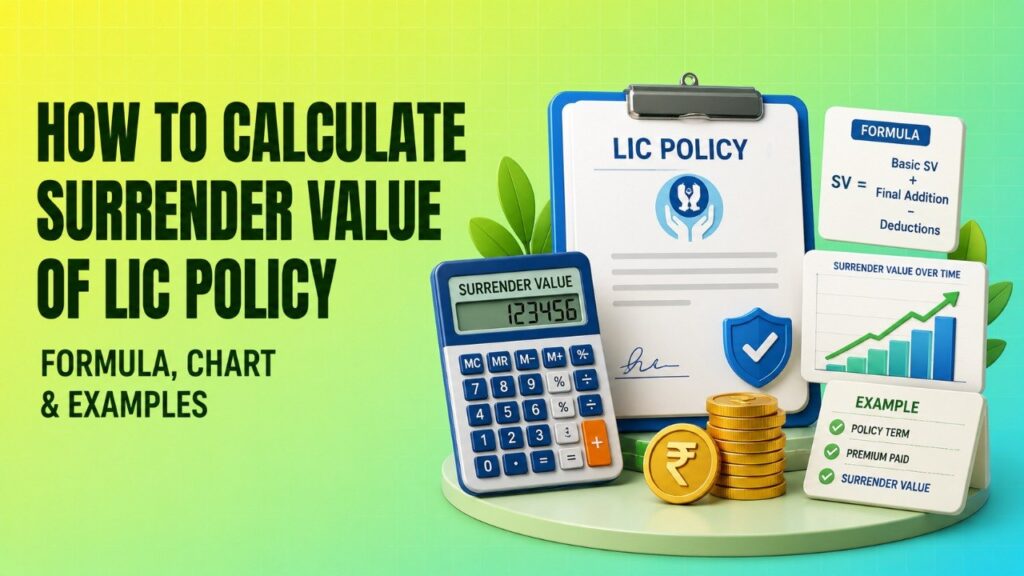
- Surrender value
- Premium-payment commitment
- Loan or withdrawal options
Do not evaluate the plan only by looking at the final maturity amount. A large maturity value may appear attractive, but it must be compared with the total premiums paid over several years and the time value of money.
Unit-Linked Insurance Plans
A Unit-Linked Insurance Plan, or ULIP, combines life cover with market-linked investment. A portion of the premium is used for insurance and applicable charges, while the investible portion is allocated to selected funds.
ULIP returns are not guaranteed because their value depends on market performance and the funds chosen by the policyholder. The investment risk is borne by the policyholder.
A ULIP should be assessed on:
- Mortality charges
- Fund-management charges
- Policy administration charges
- Premium allocation charges, where applicable
- Available fund options
- Switching facilities
- Lock-in rules
- Discontinuance conditions
- Life cover
- Long-term return potential
A ULIP may suit someone who understands market risk and wants investment and insurance within one product. However, it should still be compared with term insurance and mutual funds purchased separately.
How Life Insurance and Investment Plans Compare
Financial Protection
Life insurance protects against the risk of the policyholder dying before completing important financial responsibilities. Standalone investments do not normally provide an additional death benefit beyond their accumulated value.
Suppose a person has investments worth ₹10 lakh but their family would require ₹1 crore to replace income and repay liabilities. The existing investment corpus alone may not be sufficient. An appropriate life insurance policy can cover that gap.
This is why investment assets should not be considered a complete replacement for life cover, especially during the early working years.
Returns
Investment plans such as mutual funds, fixed deposits, PPF and NPS have different return and risk profiles. Market-linked products may offer higher long-term growth potential, but their value can fluctuate. Guaranteed products generally offer greater predictability but may provide comparatively modest returns.
Life insurance returns depend on the policy:
- Term insurance is not purchased for investment returns.
- Traditional savings policies may provide guaranteed and non-guaranteed benefits.
- ULIPs offer market-linked returns after applicable charges.
When comparing products, calculate the effective return rather than relying on illustrations, bonus assumptions or the maturity figure alone.
Readers who want to explore alternatives can compare investment plans based on their financial goals, risk tolerance and investment period before committing their savings to an insurance policy.
Liquidity
Liquidity is important because financial needs can change before the policy or investment matures.
Long-term life insurance policies may impose restrictions or provide a low surrender value during the initial years. Missing premiums can also affect the policy’s benefits.
Standalone investments offer different levels of access:
- Fixed deposits may allow premature withdrawal with a penalty.
- Open-ended mutual funds may usually be redeemed, subject to applicable exit loads and tax.
- PPF and NPS have long-term withdrawal restrictions.
- Emergency savings in a bank or liquid instrument are more accessible.
Money that may be required for emergencies should not be locked into a long-term insurance policy merely to earn a maturity benefit.
Costs and Transparency
Every financial product has costs, but they may appear in different forms.
Insurance-related costs can include:
- Mortality charges
- Policy administration charges
- Fund-management charges
- Premium allocation charges
- Rider premiums
- Surrender or discontinuance charges
Investment-related costs can include:
- Expense ratios
- Brokerage
- Transaction charges
- Exit loads
- Advisory fees
- Account-maintenance charges
Ask for a complete benefit illustration and read the policy document. Separate guaranteed benefits from projected benefits and check what happens if you stop paying premiums early.
Tax Treatment
Life insurance premiums may qualify for a deduction under Section 80C when the taxpayer, chosen tax regime and policy satisfy the applicable conditions. However, the overall Section 80C limit is shared with several other eligible payments and investments.
Life insurance proceeds are also not automatically tax-free in every case. Tax treatment can depend on factors such as the policy issue date, premium, sum assured and the nature of the payout.
Similarly, the taxation of investment plans depends on the product, holding period and applicable tax rules.
Tax benefits should support a suitable financial decision. They should not be the main reason for purchasing a policy that provides inadequate cover, low flexibility or unsuitable returns.
Should You Buy Term Insurance and Invest Separately?

The approach of buying term insurance and investing the remaining amount separately is often called “buy term and invest the difference.”
It can work well when you:
- Need substantial life cover at an affordable cost
- Want to choose investments according to individual goals
- Prefer flexibility to change investments
- Can invest consistently without withdrawing impulsively
- Understand the risk of the selected investment
- Want greater transparency between insurance costs and investment value
People who can maintain investment discipline may purchase adequate term cover and invest separately through a SIP for long-term financial goals. This keeps protection and wealth creation easier to track.
A combined insurance-investment policy may be considered when you:
- Prefer a structured long-term commitment
- Have a low or moderate risk tolerance
- Value predictability
- Understand the surrender conditions
- Can continue premiums for the full required period
- Already have adequate life cover
Neither approach is universally correct. The real risk arises when a person buys an expensive savings policy, receives inadequate insurance protection and has too little money left to invest for future goals.
An Illustrative Comparison
Assume a person can allocate ₹1,00,000 annually towards insurance and long-term investment.
Option 1: Term Insurance and Separate Investment
A portion of the annual budget is used to purchase adequate term cover. The remaining amount is invested in a product selected according to the person’s time horizon and risk tolerance.
Possible advantages include:
- Higher life cover
- Greater investment choice
- Easier portfolio tracking
- Flexibility to increase or change investments
- Clear separation between protection and growth
The final investment value will depend on the amount invested, charges and actual returns.
Option 2: Insurance-Cum-Investment Plan
The entire annual amount is paid as the policy premium. The policy provides life cover and maturity benefits according to its terms.
Possible advantages include:
- One combined product
- Structured premium discipline
- Predictable benefits in selected plans
- Limited need to manage investments separately
However, the buyer must check whether the available life cover is sufficient and whether the expected return justifies the long commitment.
This example does not prove that one option will always produce more money. Actual results depend on age, policy terms, premium, charges, investment performance and how consistently the person follows the strategy.
Which Option Should You Choose?
Your decision should begin with the financial problem you want to solve.
| Your priority | More suitable starting point |
|---|---|
| Protecting spouse, children or parents | Term life insurance |
| Replacing income after death | Term life insurance |
| Repaying major liabilities after death | Adequate life insurance |
| Building an emergency fund | Accessible savings |
| Creating long-term wealth | Goal-based investment plan |
| Earning predictable long-term benefits | Compare guaranteed plans with PPF and fixed deposits |
| Seeking market-linked growth | Compare ULIPs with mutual funds |
| Planning retirement | Compare NPS, mutual funds, annuities and other retirement options |
| Saving tax | Choose according to the financial goal and applicable tax rules |
A practical sequence is:
- Calculate how much life cover your family needs.
- Purchase sufficient protection within an affordable premium.
- Build an emergency fund.
- Select separate investments for retirement and other goals.
- Consider a combined product only after understanding its costs, lock-in and expected benefits.
What to Check Before Buying
Before choosing life insurance for wealth creation or purchasing any long-term investment plan, verify:
- Required sum assured
- Policy term
- Premium-payment term
- Total premiums payable
- Guaranteed maturity benefit
- Non-guaranteed projected benefits
- Effective return
- Lock-in period
- Surrender value
- Partial-withdrawal rules
- Applicable charges
- Claim exclusions
- Tax conditions
- Investment risk
- Insurer and intermediary credentials
Do not rely only on verbal promises. Study the official life insurance benefit illustration to understand how premiums, guaranteed benefits, projected values and surrender amounts may change over the policy term.
Conclusion
Life insurance and investment plans solve different financial needs. Life insurance is mainly intended to protect your dependants, while investment products are intended to build money for future goals.
Term insurance is not a poor investment simply because it does not normally provide a maturity amount. It serves the important purpose of protecting the family against a financial loss that may otherwise be difficult to manage.
Endowment plans, money-back policies and ULIPs can combine protection with savings or investment, but they should be chosen only after comparing life cover, charges, expected returns, liquidity and long-term commitments.
For many people, adequate term insurance with separate goal-based investments offers greater clarity and flexibility. A combined policy can still be suitable when its features genuinely match the buyer’s needs. The better option is the one that provides sufficient protection without weakening your ability to save and invest for other goals.
FAQs
Can life insurance provide better returns than mutual funds?
The answer depends on the type of policy and mutual fund. Traditional insurance plans may provide predictable benefits, while equity mutual funds offer market-linked growth with higher volatility. ULIPs are also market-linked but include insurance costs and policy conditions. Compare risk, effective return, costs and life cover rather than returns alone.
Is term insurance a waste of money if I survive the policy term?
No. Term insurance provides financial protection during the years when your family depends on your income. The premium pays for risk coverage, not for creating a maturity corpus. Its value lies in the financial loss it can protect your family from if you die during the policy term.
How can I calculate the return from an insurance policy?
List every premium as an outgoing cash flow and all guaranteed survival or maturity benefits as incoming cash flows. You can then calculate the internal rate of return. Calculate non-guaranteed bonuses separately because projected benefits may not be received at the illustrated level.
Is a ULIP better than a mutual fund with term insurance?
A ULIP combines insurance and market-linked investment in one policy. Term insurance with mutual funds separates the two goals and may offer greater investment flexibility. Compare life cover, charges, lock-in, fund choices, tax treatment and your ability to manage investments before deciding.
Should I purchase life insurance only for tax benefits?
No. Tax treatment can change and depends on the policy and applicable rules. Life insurance should first provide adequate protection. A tax deduction does not make a policy suitable when its cover, premium commitment, returns or liquidity do not match your financial needs.