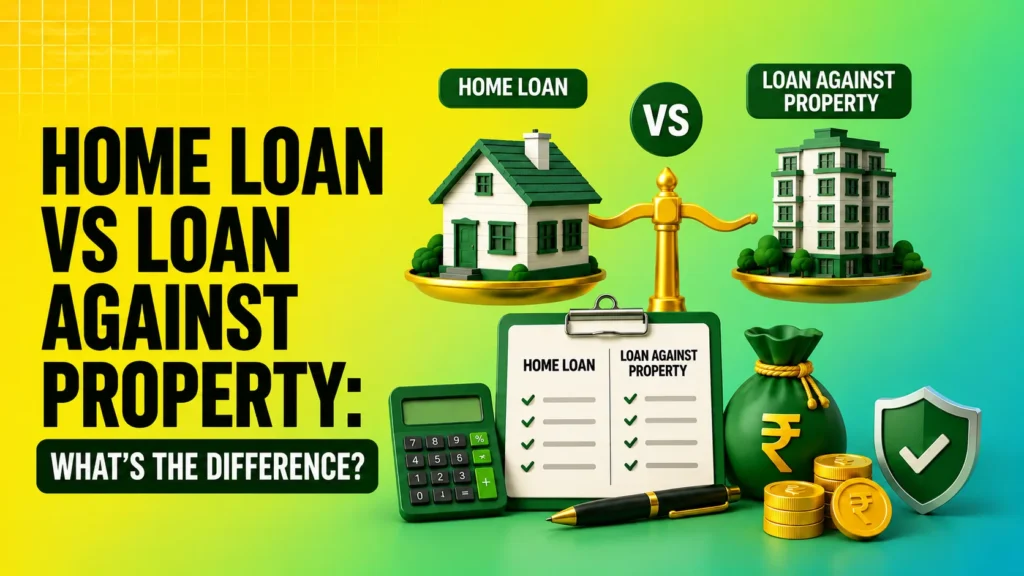
What is a Home Loan?
A home loan is a secured loan designed specifically to buy a new residential property, purchase a resale flat, construct a house on a plot, or renovate an existing home. The property you buy or build becomes the collateral. Banks and housing finance companies disburse the money directly to the seller or builder in most cases.
Home loans usually come with longer repayment periods (up to 30 years) and relatively lower interest rates because the government and RBI actively support housing. Tax benefits under Sections 80C and 24 make them even more attractive for salaried and self-employed borrowers.
What is a loan against property?
A loan against property, also called a mortgage loan or LAP, allows you to borrow money by pledging an existing residential or commercial property that you own. The funds can be used for almost any legal purpose, including business expansion, education, medical expenses, weddings, debt consolidation, or even travel.
Unlike a home loan, there are no end-use restrictions. The loan amount depends mainly on the current market value of the property being mortgaged and the repayment capacity. Interest rates are typically higher than those of home loans, and the maximum tenure is shorter (usually up to 15–20 years).
Read Also: Secured vs Unsecured Loan
Home Loan vs Loan Against Property: Key Differences
Here is a clear side-by-side comparison of the most important factors.
| Parameter | Home Loan | Loan Against Property (LAP) |
|---|---|---|
| Purpose | Buying, constructing or renovating a house | Any personal or business need |
| Collateral | Property being purchased | Existing owned property |
| Loan-to-Value (LTV) | Up to 80–90% of property value | Usually 60–75% of property value |
| Interest Rate | Lower (typically starts from around 7.5–9%) | Higher (usually 9–12% or more) |
| Maximum Tenure | Up to 30 years | Up to 15–20 years |
| Tax Benefits | Strong benefits under 80C & 24 | Limited; mainly if used for house construction |
| Processing Time | Relatively faster | Longer (due to property valuation & legal checks) |
| Flexibility of Use | Restricted to property-related purposes | Completely flexible |
1. Purpose and Usage
This is the most significant difference. Home loans must be used only for property purchases or construction. Diverting funds can lead to serious issues for lenders. However, a loan against property has no such restrictions. You can use the money however you need to.
2. Interest Rates
Home loans enjoy lower rates because of the government ’sfocus on affordable housing. Loan against property carries a higher rate because the end-use is open-ended and the risk profile is different. Even a 1–1.5% difference can significantly increase the total interest paid over the years.
3. Loan Amount (LTV Ratio)
With a home loan, you can often finance 80–90% of the property value. For loan against property, lenders are more conservative and usually offer 60–75% of the current market value of the property pledged. Higher value properties or commercial properties may get slightly better LTV in some cases.
4. Repayment Tenure
Home loans provide the comfort of longer tenures (up to 30 years), which keeps EMIs lower. Loan against property tenures are shorter; therefore, monthly instalments tend to be higher for the same loan amount.
5. Tax Benefits
Home loans offer clear tax advantages.
- Principal repayment up to ₹1.5 lakh under Section 80C
- Interest up to ₹2 lakh under Section 24
Tax benefits are limited for loans against properties. Interest may be claimed as a business expense if the funds are used for business or under Section 24 if used to buy or construct another house. Usually, there is no Section 80C benefit for the principal.
6. Documentation and Processing
Home loan documentation is relatively standard. Loans against property require detailed property valuation, legal title verification, and sometimes additional checks on the end-use of funds. This often makes the process longer.
Which one should you choose?
Choose a home loan if:
- You want to buy or construct a residential property
- You want the lowest possible interest rate and longest tenure
- Tax savings are important to you
Choose a loan against property if:
- You already own a property with clear title
- You need funds for business, education, medical needs, or other purposes
- You want higher flexibility in how you use the money
Many people also use a top-up facility on an existing home loan when they need extra funds. This can sometimes be cheaper than a fresh loan against property, depending on the lender policy.
Important Points to Keep in Mind in 2026
Interest rates and LTV ratios can change with RBI policy and lender risk appetite. Always check the latest rates and processing fees. Property valuation is critical for a loan against property — a lower valuation directly reduces the amount you can borrow. Credit score still matters for both products, but for LAP, property quality and legal clearances carry extra weight.
Also remember that in both cases the property is at risk if you default. Never take a loan without a clear repayment plan.
Read Also: Fixed vs Floating Interest Rates
Final Thoughts
The choice between a home loan and a loan against property is not about which product is better overall. It is about which product matches your exact needs. If your goal is to own a home, go for a home loan. If you already own property and need flexible funds, a loan against property can be a powerful tool.
Carefully compare interest rates, processing fees, prepayment charges, and tax impact. Use an EMI calculator for both options and compare the monthly outflow and total cost. When in doubt, speak to a loan advisor who can assess your complete financial picture.
Making an informed decision today can save you lakhs of rupees over the loan term. Choose wisely.