When you apply for a loan, one of the first decisions you’ll face is whether to choose a secured loan or an unsecured loan. While both help you borrow money, they work very differently in terms of collateral, interest rates, approval process, and financial risk.
Understanding these differences can help you choose a loan that fits your financial situation and repayment ability.
In this guide, we’ll explain the difference between secured and unsecured loans, their advantages and disadvantages, interest rates, eligibility requirements, and how to decide which option is right for you.
Table of Contents
What Is a Secured Loan?
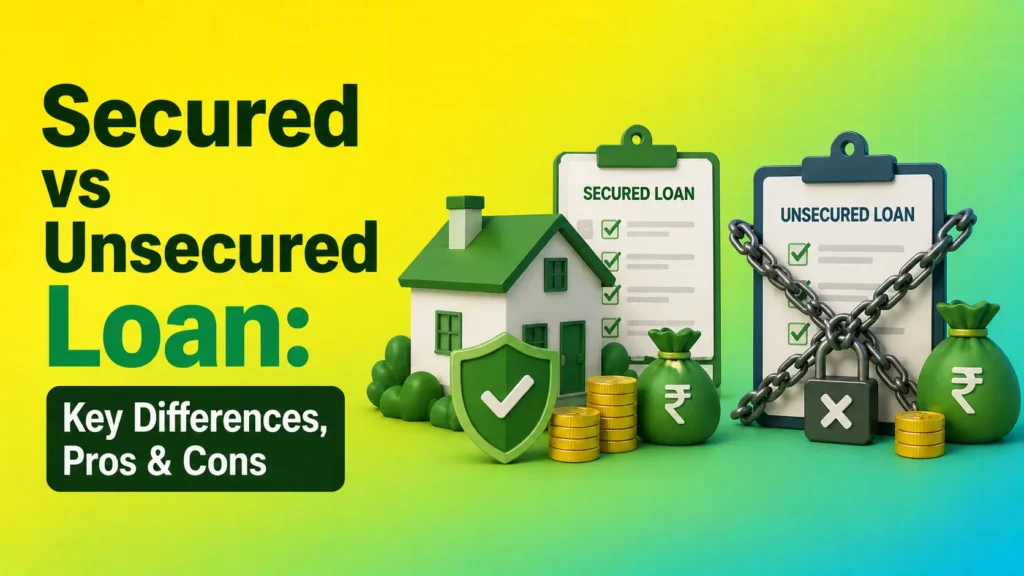
A secured loan is a type of loan that requires the borrower to pledge an asset (called collateral) as security. If the borrower fails to repay the loan according to the agreed terms, the lender may have the legal right to recover the outstanding amount by taking possession of the pledged asset, subject to applicable laws and the loan agreement.
Common assets used as collateral include:
- House or property
- Car or vehicle
- Fixed Deposit (FD)
- Gold
- Land
- Other eligible financial assets
Since the lender’s risk is lower, secured loans generally offer lower interest rates and higher borrowing limits.
Read Also: Personal Loan EMI Calculator
Examples of Secured Loans
Some common secured loans include:
- Home Loan
- Loan Against Property
- Gold Loan
- Car Loan
- Loan Against Fixed Deposit
- Loan Against Securities
What Is an Unsecured Loan?
An unsecured loan is a loan that does not require collateral. Instead, lenders evaluate your creditworthiness using factors such as your credit score, income, employment stability, existing debt, and repayment history.
Because the lender takes on more risk, unsecured loans generally have higher interest rates than secured loans.
Read Also: RBI Approved Loan Apps in India 2026: Safe Instant Loan Apps List
Examples of Unsecured Loans
Common unsecured loans include:
- Personal Loan
- Credit Card Loan
- Education Loan (in many cases)
- Consumer Durable Loan
- Small Business Loan (depending on lender requirements)
Secured vs Unsecured Loan: Key Differences
| Feature | Secured Loan | Unsecured Loan |
|---|---|---|
| Collateral | Required | Not Required |
| Interest Rate | Usually Lower | Usually Higher |
| Loan Amount | Higher | Lower to Moderate |
| Approval | Depends on collateral and eligibility | Depends mainly on credit profile |
| Credit Score Importance | Important | Very Important |
| Processing Time | May take longer | Usually Faster |
| Risk to Borrower | Asset may be at risk if repayment terms are not met | No pledged asset, but missed payments can affect your credit profile |
| Best For | Large borrowing needs | Short-term or urgent financial needs |
Advantages of a Secured Loan
Choosing a secured loan offers several benefits.
Lower Interest Rates
Since collateral reduces the lender’s risk, secured loans often come with lower interest rates.
Higher Loan Amount
Borrowers may qualify for larger loan amounts because the loan is backed by an asset.
Longer Repayment Period
Many secured loans offer flexible repayment terms, making monthly installments more manageable.
Easier Approval for Some Borrowers
If you have valuable collateral, it may strengthen your loan application, depending on the lender’s requirements.
Disadvantages of a Secured Loan
Secured loans also have some drawbacks.
- You must provide an eligible asset as collateral.
- Approval and documentation may take longer.
- The pledged asset could be affected if the borrower fails to meet the loan agreement.
Advantages of an Unsecured Loan
Unsecured loans are popular because they are simple and convenient.
No Collateral Required
You do not need to pledge your property, gold, or other assets.
Faster Approval
Many lenders offer quicker approval for eligible applicants because collateral valuation is not required.
Simple Documentation
The documentation process is often shorter compared to many secured loans.
Suitable for Emergency Expenses
Personal loans are commonly used for medical emergencies, weddings, home renovation, education, or travel expenses.
Disadvantages of an Unsecured Loan
Before applying, consider these limitations.
- Higher interest rates
- Lower borrowing limits
- Strong credit score often improves approval chances
- Monthly repayments may be higher due to interest rates
Which Loan Has a Lower Interest Rate?
In most cases, secured loans have lower interest rates because the lender has collateral as security.
Unsecured loans generally cost more because the lender assumes greater lending risk.
However, the exact interest rate depends on factors such as:
- Credit score
- Income
- Loan amount
- Loan tenure
- Lender’s policies
- Market conditions
Who Should Choose a Secured Loan?
A secured loan may be suitable if you:
- Need a large loan amount
- Own eligible assets
- Want lower interest rates
- Need a longer repayment period
Examples include buying a home, financing property, or borrowing against existing assets.
Who Should Choose an Unsecured Loan?
An unsecured loan may be suitable if you:
- Need funds quickly
- Do not want to pledge assets
- Need a relatively smaller loan
- Have a good credit score and stable income
Factors to Consider Before Choosing a Loan
Before applying for any loan, think about:
- Why do you need the loan?
- How much money do you need?
- Can you provide collateral?
- What monthly EMI can you comfortably afford?
- What interest rate are you eligible for?
- What is your current credit score?
Answering these questions can help you choose a loan that matches your financial goals.
Conclusion
Understanding the difference between secured and unsecured loans is important before borrowing money.
A secured loan can be a good choice if you need a larger amount and can provide eligible collateral, while an unsecured loan may be more suitable if you need quick funds and prefer not to pledge assets.
Instead of focusing only on interest rates, compare the total borrowing cost, repayment terms, eligibility, and your financial situation before making a decision. Choosing the right loan can help you manage debt more effectively and achieve your financial goals.
FAQs
What is the main difference between a secured and unsecured loan?
A secured loan requires collateral, while an unsecured loan does not. This difference affects interest rates, loan approval, and borrowing limits.
Which loan is easier to get?
It depends on the lender’s eligibility criteria. Borrowers with strong credit profiles may find unsecured loans easier, while borrowers with valuable collateral may qualify more easily for certain secured loans.
Which loan has lower interest rates?
Secured loans generally offer lower interest rates than unsecured loans because the lender’s risk is lower.
Can I get a secured loan without collateral?
No. A secured loan requires eligible collateral. Without collateral, you would typically need to apply for an unsecured loan.
Does an unsecured loan affect my credit score?
Yes. Making repayments on time can support a healthy credit history, while missed payments may negatively affect your credit profile.