What Is a CIBIL Score?
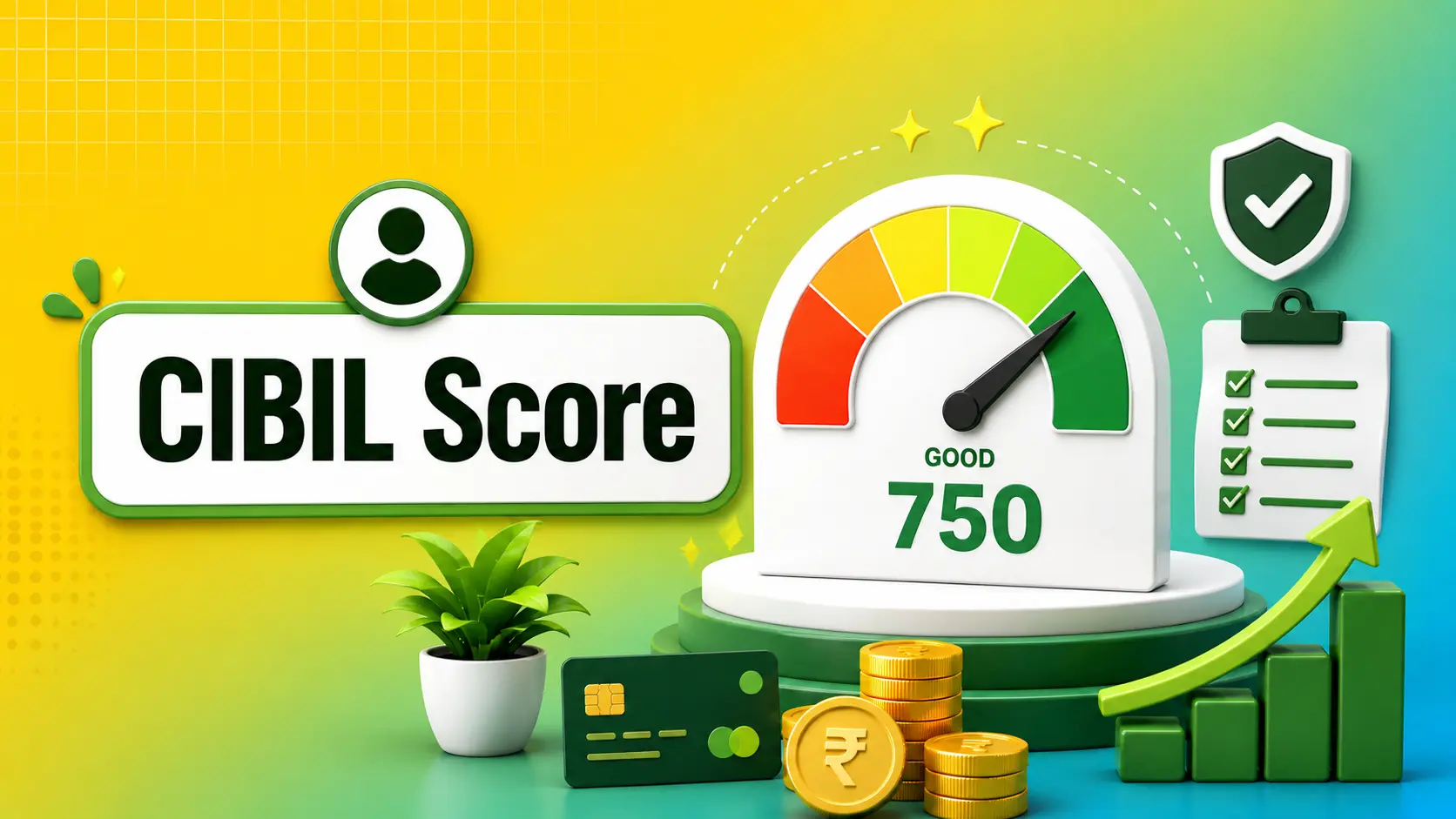
A CIBIL Score is a three-digit number ranging from 300 to 900 that reflects your creditworthiness. It is calculated based on your borrowing and repayment history.
Generally:
| CIBIL Score | Rating |
|---|---|
| 800–900 | Excellent |
| 750–799 | Very Good |
| 700–749 | Good |
| 650–699 | Average |
| Below 650 | Needs Improvement |
Most banks and NBFCs prefer applicants with a 750 or higher CIBIL score, although approval also depends on factors such as income, employment stability, existing debt, and lender policies.
Read Also: CIBIL score 700 is good or bad
Why Is Your CIBIL Score Important?
A high CIBIL score offers several financial benefits.
Easier Loan Approval
Banks view borrowers with higher credit scores as lower-risk customers.
Better Interest Rates
A higher score can help you qualify for lower interest rates on loans.
Higher Credit Card Limits
Responsible credit behavior often results in higher credit limits.
Faster Loan Processing
Many lenders process applications more quickly for customers with strong credit profiles.
Better Negotiation Power
Applicants with excellent credit scores may receive better loan terms and offers.
How Is a CIBIL Score Calculated?
Your score depends on several important factors.
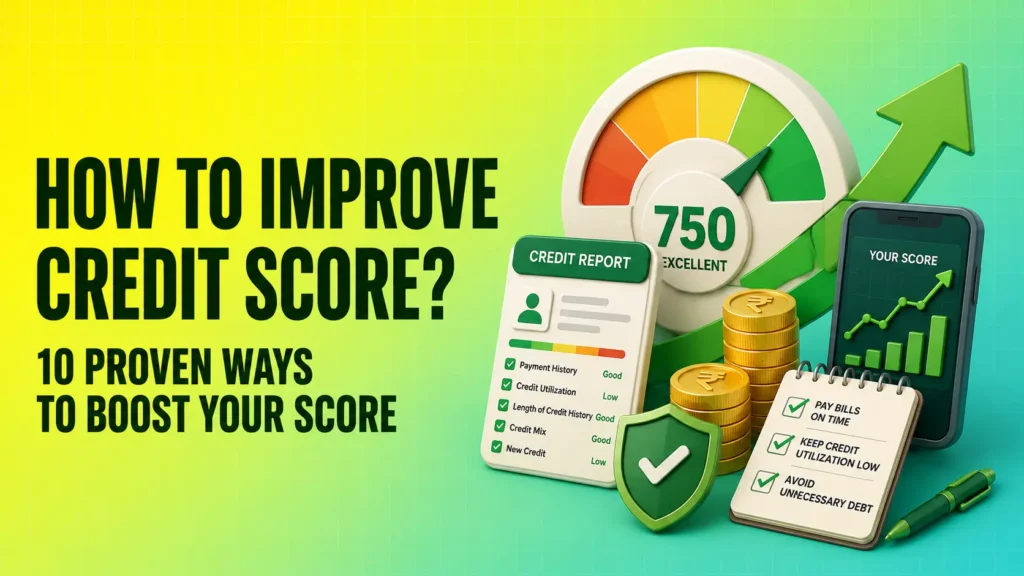
1. Payment History (Most Important)
Paying EMIs and credit card bills on time has the biggest impact on your credit score.
Late payments stay on your credit report and may affect your score for years.
2. Credit Utilization Ratio
This is the percentage of your available credit that you use.
Example
Credit Card Limit = ₹1,00,000
Outstanding Balance = ₹25,000
Credit Utilization = 25%
Experts generally recommend keeping utilization below 30%.
3. Credit History Length
Older credit accounts usually improve your score because they demonstrate long-term responsible credit usage.
4. Credit Mix
A healthy combination of:
- Home Loan
- Personal Loan
- Car Loan
- Credit Card
can positively impact your score when managed responsibly.
5. Hard Credit Enquiries
Every time you apply for multiple loans or credit cards, lenders perform a hard inquiry.
Too many hard inquiries within a short period may temporarily reduce your score.
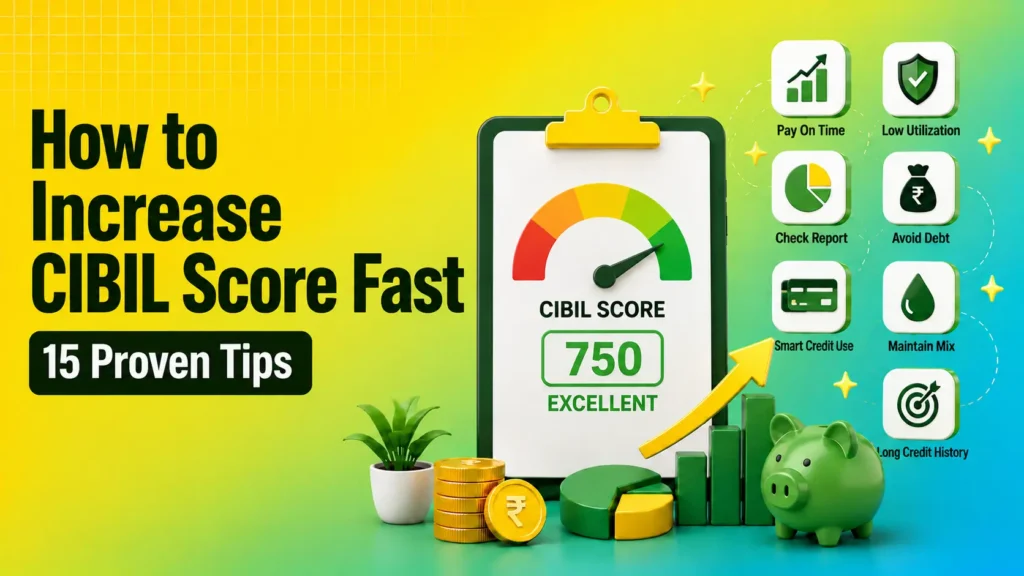
15 Proven Tips to Increase CIBIL Score Fast
1. Always Pay EMIs and Credit Card Bills on Time
This is the fastest and most effective way to improve your CIBIL score.
Even a single missed EMI or delayed credit card payment can negatively affect your credit profile.
Best Practices
- Enable AutoPay
- Set payment reminders
- Pay before the due date
- Never skip minimum payments
Pro Tip: Paying the full outstanding amount instead of only the minimum due is better for your financial health and helps avoid high interest charges.
2. Keep Your Credit Utilization Below 30%
Your credit utilization ratio directly affects your credit score.
Suppose:
Credit Limit = ₹2,00,000
Outstanding = ₹1,60,000
Utilization = 80%
This signals higher credit dependence.
Instead, aim for:
Outstanding = ₹40,000
Utilization = 20%
Lower utilization demonstrates responsible credit management.
3. Check Your Credit Report Regularly
Many people are unaware that their credit report may contain incorrect information.
Common errors include:
- Incorrect loan status
- Duplicate loan entries
- Wrong payment records
- Closed loans still marked active
- Incorrect personal details
Reviewing your credit report regularly helps identify such issues early. If you find any inaccuracies, raise a dispute with the credit bureau and inform the lender so the information can be corrected after verification.
4. Avoid Applying for Multiple Loans at the Same Time
Submitting several loan or credit card applications within a short period can result in multiple hard enquiries.
This may make lenders think you’re urgently seeking credit.
Instead:
- Compare lenders first.
- Apply only when necessary.
- Space out new applications whenever possible.
Quality matters more than quantity.
5. Do Not Close Your Old Credit Card Without a Good Reason
Many people believe closing an old credit card will improve their CIBIL score.
In reality, closing your oldest card may:
- Reduce your average credit history length.
- Increase your credit utilization ratio if your total available credit decreases.
- Slightly affect your credit profile.
If the card has no annual fee and you’re able to manage it responsibly, keeping it active with occasional small transactions may be more beneficial than closing it.
Read Also: Best Credit Cards in India
Key Takeaways So Far
✔ Pay every EMI and credit card bill on time.
✔ Keep credit utilization below 30%.
✔ Check your credit report regularly for errors.
✔ Avoid multiple loan applications in a short period.
✔ Maintain older credit accounts whenever appropriate.
6. Increase Your Credit Limit
If you consistently pay your credit card bills on time, your bank may offer a higher credit limit.
A higher limit can improve your credit utilization ratio, provided your spending remains the same.
Example
Before Limit Increase
- Credit Limit: ₹50,000
- Monthly Spending: ₹20,000
- Utilization: 40%
After Limit Increase
- Credit Limit: ₹1,00,000
- Monthly Spending: ₹20,000
- Utilization: 20%
A lower utilization ratio signals responsible credit management and can support a healthier credit profile over time.
7. Maintain a Healthy Mix of Credit
Lenders often prefer borrowers who have experience managing different types of credit responsibly.
Secured Credit
- Home Loan
- Car Loan
- Loan Against Property
- Gold Loan
Unsecured Credit
- Personal Loan
- Credit Card
- Consumer Durable Loan
A balanced mix of secured and unsecured credit, along with timely repayments, reflects disciplined borrowing behavior.
Avoid taking unnecessary loans just to improve your credit mix. Borrow only when you genuinely need credit.
8. Don’t Settle a Loan Unless It’s the Last Option
If you’re unable to repay a loan, the lender may offer a loan settlement.
A settlement means you pay less than the total amount due. While it may help resolve the immediate debt, it can also affect how future lenders evaluate your repayment history.
Why It Matters
Many lenders view settled accounts differently from fully repaid accounts.
If you’ve already settled a loan:
- Clear any remaining dues if applicable.
- Ask the lender whether the account can be updated after full resolution (subject to the lender’s policies).
- Continue maintaining excellent repayment behavior on all active accounts.
The positive impact of good repayment habits accumulates over time.
9. Avoid Becoming a Loan Guarantor Without Careful Consideration
When you become a guarantor or co-applicant, the loan may influence your credit profile.
If the primary borrower:
- Misses EMIs
- Defaults on payments
- Delays repayment
your credit profile may also be affected, depending on the loan arrangement and reporting.
Before agreeing to become a guarantor, ensure you understand the financial responsibility involved.
10. Keep Existing Loan Accounts Active Until They Are Properly Closed
After repaying a loan:
- Confirm that the lender has officially closed the account.
- Obtain a No Dues Certificate or Loan Closure Letter if available.
- Verify that your credit report reflects the updated status after the lender reports it.
Maintaining your records can help if any discrepancy arises later.
11. Correct Errors in Your Credit Report
Credit report inaccuracies are uncommon but can happen.
Examples include:
- Incorrect outstanding balance
- Duplicate loan records
- Wrong payment status
- Closed loans showing as active
- Personal information errors
If you notice an issue:
- Raise a dispute with the credit bureau.
- Inform the lender.
- Keep supporting documents ready.
- Track the dispute until it is resolved.
A corrected report helps ensure lenders assess your credit profile accurately.
12. Limit Frequent Credit Card Applications
Every new application may result in a hard enquiry.
Applying for several credit cards within a short period can indicate higher credit demand.
Instead:
- Apply only when needed.
- Compare products before applying.
- Avoid applying just because of promotional offers.
Thoughtful applications help maintain a healthier credit profile.
13.Don’t Miss Even a Single EMI
Missing one payment can affect your repayment history.
If you think you may miss an EMI:
- Contact your lender as early as possible.
- Discuss available repayment options, if any.
- Resume timely payments as soon as you can.
Practical ways to avoid missed payments:
- Enable AutoPay.
- Keep sufficient account balance before the due date.
- Set reminders on your phone or calendar.
Consistency matters more than occasional large payments.
14.Build Credit History if You’re New to Credit
If you’ve never taken a loan or used a credit card, you may have little or no credit history.
To begin building one responsibly:
- Use a credit card for essential expenses only.
- Pay the full bill on time every month.
- Keep utilization low.
- Avoid unnecessary borrowing.
Responsible usage over time helps establish a positive repayment record.
15.Be Patient and Stay Consistent
One of the biggest myths is that a CIBIL score can increase dramatically within a few days.
In reality:
- Timely repayments
- Low credit utilization
- Fewer unnecessary applications
- Responsible borrowing
all contribute gradually to a stronger credit profile.
Improving a credit score is a long-term process built on consistent financial discipline.
Common Mistakes That Can Reduce Your CIBIL Score
Avoid these common errors:
- Missing EMI or credit card payments.
- Paying only after repeated delays.
- Frequently maxing out your credit card.
- Applying for multiple loans together.
- Ignoring errors in your credit report.
- Defaulting on loans.
- Becoming a guarantor without understanding the risks.
- Borrowing more than you can comfortably repay.
Even small mistakes, if repeated, can affect your credit profile over time.
Latest Updates (2026)
India’s credit ecosystem continues to become more transparent and digital. While the core factors that determine your CIBIL score remain the same, borrowers should be aware of these important developments:
1. Faster Credit Information Updates
Most banks, NBFCs, and financial institutions now report borrower data to credit bureaus more frequently than before. This means:
- Timely EMI payments may reflect sooner in your credit history.
- Loan closures and credit card repayments can also be updated faster, depending on the lender’s reporting cycle.
- If you miss a payment, it may also appear more quickly on your credit report.
What this means for you: Maintaining consistent repayment discipline is more important than ever.
2. Easier Access to Credit Reports
Borrowers can regularly check their credit reports to monitor:
- Active loans
- Closed loans
- Credit card balances
- Payment history
- Hard enquiries
- Personal information
Reviewing your report periodically helps identify errors or suspicious activity early.
3. Stronger Focus on Responsible Lending
Banks today evaluate more than just your CIBIL score. Along with your score, lenders may also consider:
- Monthly income
- Existing EMIs
- Debt-to-income ratio
- Employment stability
- Overall repayment capacity
This means that even with a good score, maintaining healthy finances remains essential.
How Often Should You Check Your CIBIL Score?
Checking your score regularly is a good financial habit.
A practical approach is:
- Before applying for any loan.
- Before applying for a new credit card.
- Every few months to monitor your credit profile.
- Whenever you notice unexpected loan or credit activity.
Final Thoughts
Improving your CIBIL score isn’t about finding a shortcut—it’s about building consistent financial habits.
Simple actions such as paying EMIs on time, keeping credit card utilization low, avoiding unnecessary loan applications, and reviewing your credit report regularly can strengthen your credit profile over time.
Remember that a high CIBIL score doesn’t just improve your chances of getting approved for a loan. It can also help you access better interest rates, higher credit limits, and more favorable borrowing terms.
If your current score isn’t where you’d like it to be, start with one improvement today. Small, consistent steps often lead to meaningful long-term results.