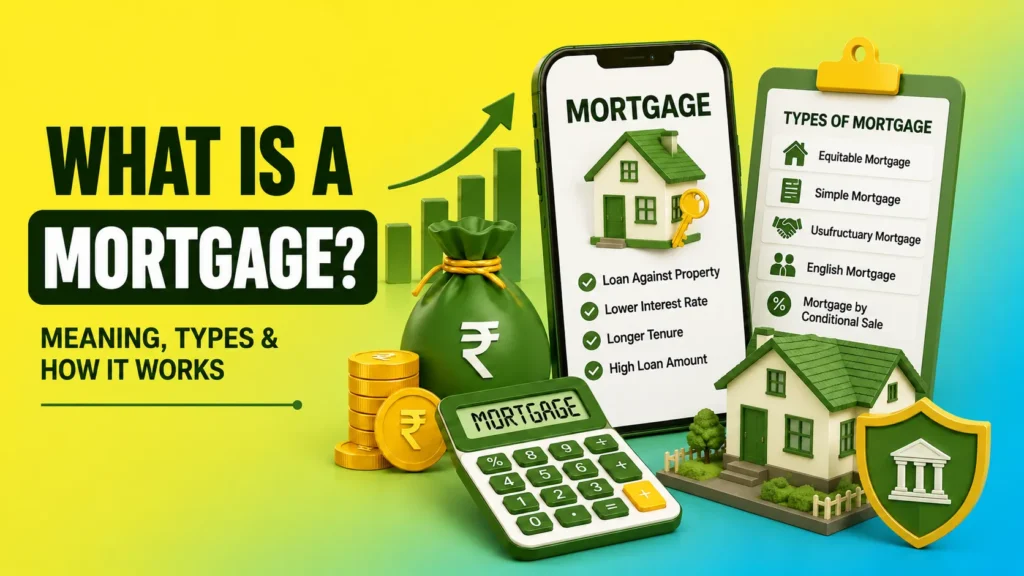
What Is a Mortgage? A Clear Definition
A mortgage is a secured loan used to purchase real estate. The borrower receives funds from a lender to purchase a property and agrees to repay the loan over time, usually through regular monthly repayments. The property itself serves as collateral for the loan. This means that the lender holds a legal claim to the property until the loan is fully repaid.
If the borrower fails to make payments as agreed, the lender has the right to take possession of the property through a legal process known as foreclosure and sell it to recover the outstanding debts.
In simple terms, you borrow money to buy a home, the home acts as security for the loan, and you repay the amount plus interest over an agreed period.
Meaning of Mortgage in Everyday Terms
The word “mortgage” comes from old legal language meaning a “dead pledge.” The pledge ends (becomes “dead”) when the debt is paid or when the property is taken due to nonpayment.
Today, the meaning is practical and straightforward.
- The borrower retains the right to live in and use the property.
- The lender holds a security interest until the loan is paid off.
- The borrower retains ownership of the property, subject to the mortgage terms.
- Once the final payment is made, the lender releases its claim, and the borrower owns the property free and clear.
This arrangement allows people to buy homes without paying the full price upfront, while giving lenders a lower-risk way to lend large sums of money.
Read Also: Personal Loan EMI Calculator
How Does a Mortgage Work
Mortgages follow a structured process designed to protect both borrowers and lenders. Here is how it typically works from the start to the finish:
- Application The borrower applies to a lender and submits financial information, including their income, employment details, credit history, and details of the property being purchased.
- Assessment and Approval The lender evaluates the borrower’s ability to repay (income, debts, and credit score) and assesses the value of the property through an appraisal. If everything meets the lender’s criteria, the loan is approved.
- Loan Agreement and Closing: Both parties sign the documents. The lender disburses the funds (usually directly to the seller or the previous lender). A legal registered on the property.
- Repayment The borrower makes regular payments, most commonly on a monthly basis. Each payment usually includes the following:
- Principal (the original amount borrowed)
- Interest (the cost of borrowing)
- Sometimes taxes and insurance (collected in an escrow or impound account)
- Loan Completion When the final payment is made, the lender releases to the borrower. The borrower then holds full and unencumbered ownership of the property.
Throughout the loan term, the borrower remains responsible for maintaining the property, paying property taxes, and keeping insurance in place as required by the lender.
Types of Mortgages
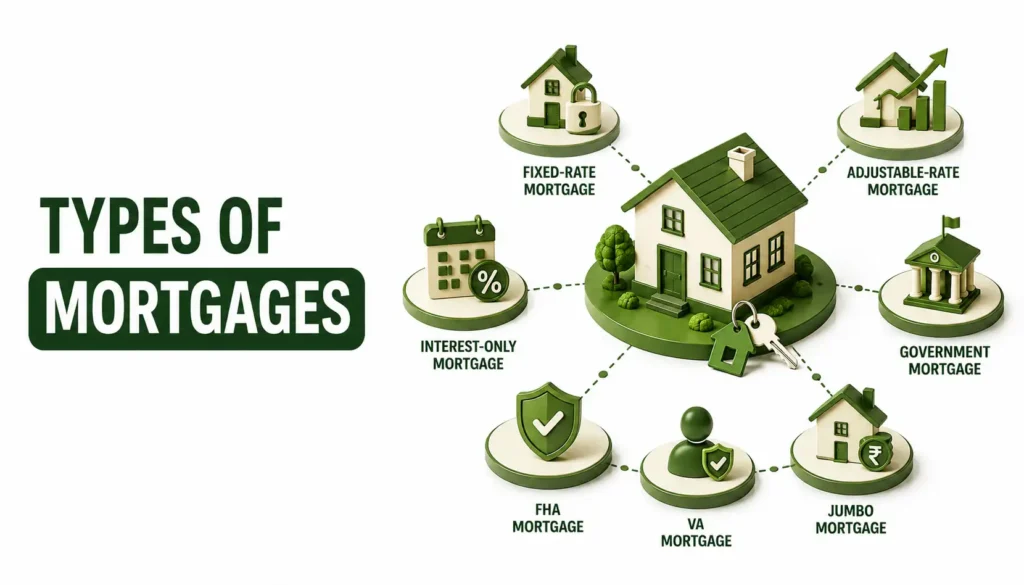
Mortgages are not one-size-fits-all solutions. They differ mainly in terms of interest rate structure, repayment term, and purpose.
Based on Interest Rate
- Fixed-rate mortgage The interest rate remains the same for the entire loan term. Monthly payments are predictable. This type is popular among borrowers who prefer stability.
- Adjustable-rate mortgage (ARM) The interest rate is fixed for an initial period (for example, 5 or 7 years) and then adjusted periodically based on a market index. Initial rates are often lower, but payments can increase or decrease later.
Based on Loan Term
Common terms include 30-year, 20-year, 15-year, and sometimes 10-year .Longer terms usually mean lower monthly payments but higher total interest paid over the life of the loan. Shorter terms have higher monthly payments but lower overall interest costs than longer terms.
Based on Purpose or Special Features
- Purchase mortgage: Used to buy a new property.
- Refinance mortgage: Replaces an existing , often to obtain a better rate or change the loan terms.
- Government-backed mortgages: In some countries, these include loans with guarantees from government agencies (for example, FHA, VA, or USDA loans in the United States). They often have more flexible qualification requirements than other countries.
- Jumbo mortgages – Loans that exceed the standard size limits set by secondary market agencies.
- Interest-only mortgages: The borrower pays only interest for a set period before the principal repayment begins. These carry a higher risk and are less common for primary residences.
The right type depends on the borrower’s income stability, how long they plan to stay in the home, their risk tolerance, and current market rates.
Key Elements That Define Every Mortgage
A few core components appear in almost every mortgage.
- Principal: The amount originally borrowed.
- Interest rate: The cost of borrowing, expressed as a percentage.
- Term: The length of time over which the loan must be repaid.
- Amortization: A schedule that shows how each payment reduces the principal over time.
- Collateral: The property securing the loan.
- Equity: The portion of the property’s value that the borrower owns (current value minus remaining loan balance).
Understanding these elements makes it easier to compare offers and calculate the long-term costs.
Why Understanding Mortgages Matters
A mortgage is usually the largest financial commitment that most people make. Clear knowledge of the meaning, different types, and step-by-step process reduces the chance of unexpected costs or unsuitable loan choices. It also helps borrowers ask better questions when speaking with lenders and review documents more carefully before signing them.
Read Also: What Is Business Loan
Final Thoughts
A mortgage is a secured loan that uses real estate as collateral, allowing buyers to purchase property while repaying their debt over time. Its meaning centers on the legal pledge of the property, its types vary mainly by rate structure and term, and the process follows a clear sequence from application to final repayment.
Understanding these fundamentals provides a solid foundation for evaluating any specific offer. Always review the exact terms, compare the options carefully, and seek clarification on any unclear points before committing.