Buying health insurance may look simple. You compare the premium, sum insured, insurer, and benefits, then choose a policy. But one important detail can make a major difference when you actually need to file a claim: the waiting period.
A health insurance policy may be active from the date it begins, but certain illnesses, treatments, or conditions may not be covered immediately. The insurer may require you to complete a specified period before those claims become eligible.
Understanding the waiting period before buying a policy can help you avoid unpleasant surprises at claim time.
Short Answer
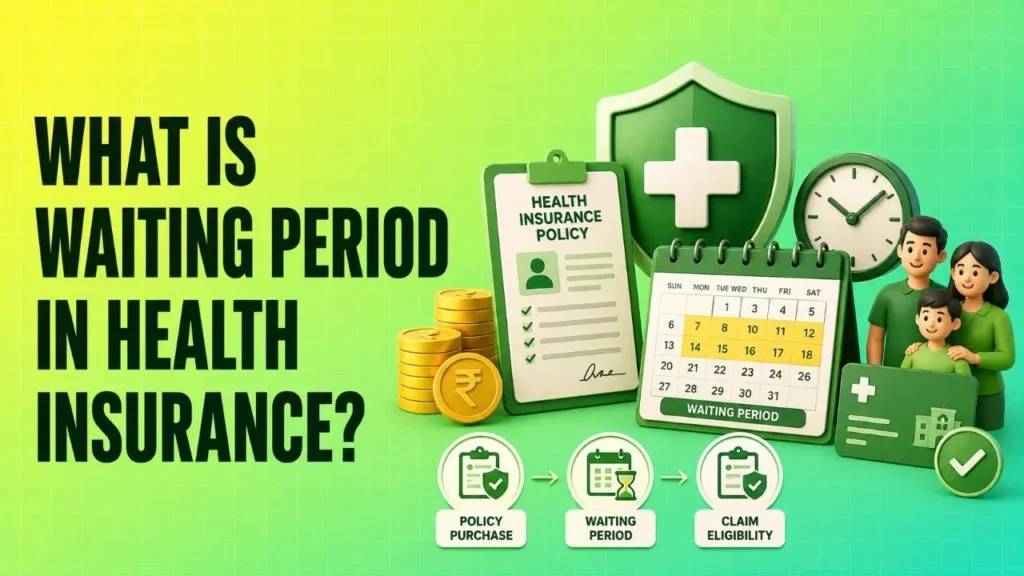
A waiting period in health insurance is the period during which certain illnesses, treatments, or conditions are not covered under the policy. The length of the waiting period depends on the type of coverage and the policy terms.
For many health insurance policies, the initial waiting period is 30 days, while waiting periods for pre-existing diseases and specific diseases or procedures can be longer. Under the current IRDAI framework, the maximum waiting period, including the waiting period for pre-existing diseases and specific waiting periods, is up to 36 months.
What Is Waiting Period in Health Insurance, Really?

A health insurance policy does not necessarily cover every medical condition from day one.
For example, your policy may state that a particular disease or treatment will be covered only after you complete 12, 24, or 36 months of continuous coverage.
That period is known as the waiting period.
Why Do Health Insurance Policies Have Waiting Periods?
Waiting periods help insurers manage risks associated with people buying insurance shortly before a known or expected medical treatment.
For example, suppose a person buys a policy after a planned medical procedure has already been recommended. Without applicable waiting periods, the insurer could face claims for conditions that were already known or expected at the time of purchase.
Waiting periods therefore form part of the policy’s risk-management and coverage structure.
Simple Example of a Waiting Period
Suppose Rohan buys a health insurance policy on June 1.
His policy has a 30-day initial waiting period for illnesses.
If he requires treatment for an illness during this initial period, the claim may not be payable under the policy. However, accident-related hospitalisation is generally treated differently under the initial waiting-period provision, subject to the policy terms.
This is why knowing the waiting period is important before you buy a policy.
Why Waiting Period Matters More Than Just Premium
When comparing health insurance plans, many buyers focus mainly on:
- Premium
- Sum insured
- Room-rent limits
- Network hospitals
- No-claim benefits
These are important, but waiting periods can also significantly affect the usefulness of a policy.
For example:
- A pre-existing disease may not be covered immediately.
- Certain listed treatments may have a separate waiting period.
- Maternity benefits may be subject to a policy-specific waiting period.
- A claim for an illness during the initial waiting period may not be payable.
A policy with a slightly higher premium can sometimes offer more suitable coverage terms than a cheaper plan with longer waiting periods.
Also Read: What Is Cashless Health Insurance? How Does It Work?
Types of Waiting Period in Health Insurance
Waiting periods vary by insurer and policy. The major types include the following.
1. Initial Waiting Period
A 30-day initial waiting period is generally applicable to new health insurance policies for illnesses. During this period, treatment for illnesses may not be covered. Claims arising from accidents are generally not subject to this waiting period, subject to policy terms. The waiting period generally does not apply again in the same way to subsequent renewals when continuity is maintained.
Example
Suppose your policy starts on January 1.
-
- An illness requiring hospitalisation on January 10 may fall within the initial waiting period.
- Hospitalisation resulting from an accident may be treated differently and can be covered from the beginning, subject to the policy terms.
Always check the exact wording of your policy before relying on coverage.
2. Pre-Existing Disease (PED) Waiting Period
A pre-existing disease (PED) refers to a condition, ailment, injury, or disease that was diagnosed by a physician, or for which medical advice or treatment was recommended or received, within the applicable period before the policy’s effective date.
Under the current IRDAI framework, the waiting period for pre-existing diseases can be up to 36 months. The exact period applicable to a condition depends on the policy.
For example, if a policy has a 24-month PED waiting period and diabetes is accepted as a pre-existing condition, expenses related to that condition may become eligible only after the applicable waiting period has been completed, subject to the policy terms.
What Happens If You Do Not Disclose a Health Condition?
You should disclose relevant pre-existing health conditions honestly when applying for health insurance.
IRDAI advises policyholders to disclose pre-existing health problems because concealment can lead to claim disputes and may result in rejection of a claim or cancellation of the policy.
3. Specific Disease or Procedure Waiting Period
Some health insurance policies have a separate waiting period for specified diseases, conditions, or procedures.
Examples may include:
-
- Cataract
- Hernia
- Certain ENT procedures
- Piles or fistula
- Some orthopaedic procedures
- Other diseases or treatments listed in the policy
Under the current IRDAI framework, the specific waiting period can be up to 36 months. The exact list and duration depend on the policy wording.
An important point is that a specific waiting period can apply even when the condition develops after the policy begins, depending on the terms of the policy. IRDAI’s explanation of specific waiting periods also notes that such waiting periods generally do not apply to claims arising from accidents.
4. Maternity Waiting Period
Maternity coverage is usually subject to specific policy conditions, including a waiting period.
The duration can vary significantly between health insurance products. Some policies may have a comparatively short waiting period, while others may require a longer period before maternity-related expenses become eligible.
Therefore, do not assume that maternity expenses are covered immediately after purchasing a policy.
Before buying a plan, check:
-
- Maternity waiting period
- Coverage for normal delivery
- Coverage for C-section
- Coverage for pregnancy-related complications
- Maximum maternity benefit
- Any sub-limits or other conditions
The policy wording should be treated as the final source for eligibility.
Also Read: Best Health Insurance Plans for Family
Waiting Period vs Survival Period vs Permanent Exclusion
These terms are often confused, but they mean different things.
| Point | Waiting Period | Survival Period | Permanent Exclusion |
|---|---|---|---|
| Meaning | Period during which specified coverage is not available | Period an insured person must survive after a covered diagnosis/event before a benefit becomes payable | Condition or treatment that is not covered under the policy |
| Usually applies to | Health insurance conditions or treatments | Certain critical illness or benefit-based covers | Specific exclusions stated in the policy |
| Time starts from | Usually policy commencement or as specified in the policy | Usually the date of diagnosis or insured event | Not time-based |
| Outcome | Claim may not be payable during the waiting period | Benefit may become payable after the required survival period | Claim remains excluded while the exclusion applies |
A waiting period does not automatically mean that a condition will never be covered. It usually means coverage becomes available after the specified period, subject to the policy terms.
Also Read: Critical Illness Benefit in Insurance: Meaning, Coverage & Should You Buy It?
Important IRDAI Rules You Should Know
The current IRDAI framework introduced important changes in health insurance terminology and limits.
Maximum Waiting Period: 36 Months
IRDAI states that the maximum waiting period under a health insurance policy should not exceed 36 months. The same maximum applies to waiting periods for pre-existing diseases and specific waiting periods.
Moratorium Period: 60 Continuous Months
The current moratorium period is 60 continuous months of coverage.
This is different from a waiting period. A moratorium relates to the insurer’s ability to contest a claim or policy on certain grounds after the required period, subject to the applicable rules and exceptions, including established fraud.
Read the Policy Wording
IRDAI advises policyholders to carefully understand policy terms and pay particular attention to waiting periods for pre-existing diseases, waiting periods for specified diseases, exclusions, sub-limits, and other coverage restrictions.
How to Check Waiting Period Before Buying a Policy
Do not rely only on an agent’s explanation or a short comparison chart.
Step 1: Read the Policy Documents
Check the policy brochure, customer information sheet, and detailed policy wording.
Search for terms such as:
- Waiting period
- Pre-existing disease
- Specific disease
- Maternity
- Exclusions
- Permanent exclusion
- Survival period
Step 2: Match the Waiting Period to Your Situation
Think about the conditions and treatments that are most relevant to you.
For example:
- Have a pre-existing medical condition? Check the PED waiting period.
- Planning a family? Check the maternity waiting period.
- Buying health insurance for older family members? Check PED and specific disease waiting periods carefully.
- Concerned about a particular treatment? Search for that treatment in the policy’s list of specific waiting periods.
Step 3: Compare Policies Beyond Premium
Create a simple comparison table before making a decision.
| Condition / Benefit | Plan A | Plan B |
|---|---|---|
| PED waiting period | 36 months | 24 months |
| Cataract | 24 months | 12 months |
| Maternity | As per policy | As per policy |
| Specific diseases | As listed | As listed |
The actual durations should always be taken from the latest policy documents of the respective insurers.
Common Mistakes That Can Lead to Claim Problems
1. Not Disclosing Existing Health Conditions
Trying to hide a health condition may create problems during claim assessment. Always provide accurate information when filling out the proposal form.
2. Looking Only at the Premium
A low premium does not automatically mean better coverage. Check waiting periods, exclusions, sub-limits, co-payments, and other policy conditions.
3. Buying Maternity Coverage Too Late
Maternity benefits generally come with policy-specific eligibility conditions and waiting periods. Check these before purchasing rather than assuming immediate coverage.
4. Assuming “Zero Waiting Period” Means Everything Is Covered From Day One
Marketing terms such as “zero waiting period” or “day-one coverage” may apply only to particular conditions or benefits.
The complete policy wording determines what is actually covered.
5. Depending Entirely on Employer Health Insurance
Employer-provided group health insurance can be useful, but its terms can change depending on the employer and policy arrangement.
A personal health insurance policy can provide continuity independent of employment, subject to its own terms and waiting periods.
Can You Reduce or Bypass the Waiting Period?
There is no universal way to remove every waiting period.
However, some insurers may offer products or optional features with shorter waiting periods, subject to underwriting and policy terms.
You can also consider portability when switching insurers. Applicable waiting-period credits may be carried forward under portability rules, subject to the conditions of the new policy and the portability process.
Some group health insurance policies may also have different waiting-period terms from individual policies.
The important point is to check the exact policy conditions rather than assuming that a waiting period can always be waived.
How Waiting Period Affects Different Buyers
Young and Healthy Buyers
Buying health insurance early can help you complete applicable waiting periods before you actually need coverage for future conditions.
At the time of purchase, focus not only on the premium but also on the policy’s waiting periods and exclusions.
People With Existing Health Conditions
The PED waiting period becomes especially important.
Disclose your medical history accurately and compare policies based on the waiting period applicable to your conditions.
People Planning a Family
Maternity waiting periods and maternity sub-limits can be particularly important.
Check these terms before choosing a policy rather than assuming maternity expenses will be covered immediately.
Parents and Older Family Members
For older insured members, it is especially important to review:
- PED waiting periods
- Specific disease waiting periods
- Coverage limits
- Co-payments
- Exclusions
- Network hospital availability
Also read: Health Insurance Claim Process: Cashless & Reimbursement
Key Takeaways
Waiting period is one of the most important terms to check before buying health insurance.
A policy can be active while certain claims remain subject to waiting periods.
The key points to remember are:
- Many new health insurance policies have a 30-day initial waiting period for illnesses.
- Waiting periods for pre-existing diseases can be up to 36 months under the current IRDAI framework.
- Specific disease or procedure waiting periods can also be up to 36 months.
- Maternity waiting periods vary by policy and should be checked in the policy wording.
- A waiting period is different from a survival period and a permanent exclusion.
- The current moratorium period is 60 continuous months of coverage.
- Always disclose relevant pre-existing health conditions accurately.
Ultimately, the best health insurance policy is not necessarily the one with the lowest premium. It is the one whose coverage, waiting periods, exclusions, limits, and other terms match your actual needs.
Before buying or renewing a policy, read the latest policy wording and customer information sheet carefully.