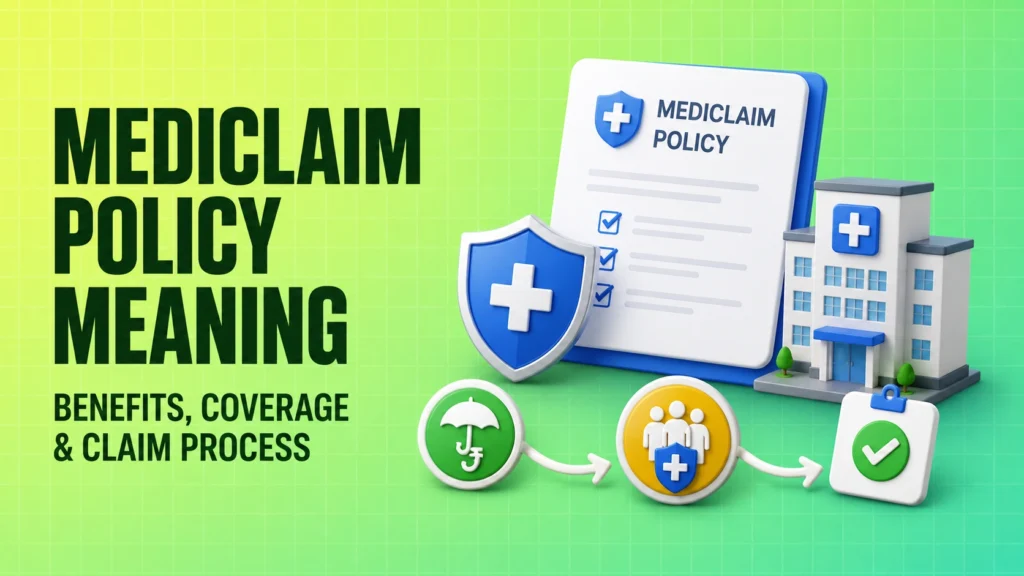
A mediclaim policy is a type of health insurance that helps pay for hospitalisation expenses when you need medical treatment as an in-patient. Its main purpose is simple: to protect your savings from large medical bills during emergencies. For many Indian families, it acts as a financial cushion when a sudden illness, accident, or surgery leads to hospital costs.
People often use the terms “mediclaim” and “health insurance” interchangeably, but they are not always the same in practice. A mediclaim policy usually refers to an indemnity-based plan that reimburses actual hospital expenses up to the sum insured. Before you buy or claim, always read the policy wording and table of benefits carefully, because the insurer’s terms decide what is covered, what is excluded, and how claims are settled.
To make the difference clearer, here is a simple comparison of mediclaim policy and comprehensive health insurance.
| Feature | Mediclaim Policy | Comprehensive Health Insurance |
|---|---|---|
| Coverage | Mainly hospitalisation expenses up to the insured amount | Wider coverage that may include hospitalisation, daycare, pre- and post-hospitalisation, maternity, OPD, and more, depending on the plan |
| Cost | Usually more basic and lower-priced | Often higher premium because of broader benefits |
| Scope | Focused on actual medical bills and inpatient care | More extensive protection, subject to policy terms |
| Claim style | Indemnity-based: pays actual expenses as per rules | Can be indemnity-based or include more benefits, depending on product design |
Always remember that the final decision depends on the specific product document. Insurance terms can vary widely from one insurer to another, and rules can change based on IRDAI updates and policy wording.

Understanding Mediclaim: What Exactly Is It?
A mediclaim policy is a contract between you and the insurer where the insurer agrees to indemnify, or reimburse, eligible hospitalization costs up to a fixed sum insured. In simple words, if you are admitted to a hospital and incur covered expenses, the policy helps pay those bills subject to the plan rules.
This is mainly meant for in-patient care, which means treatment that requires admission to a hospital for at least one day. It is not the same as paying a fixed lump sum for any illness. That is an important difference, especially when comparing it with benefit-based products such as critical illness plans. A mediclaim policy only pays for actual expenses incurred and approved under the policy.
In India, the phrase “health insurance meaning” is often used broadly, but mediclaim is usually the basic form of health cover people first understand. It is designed to reduce the financial shock of hospital bills, not to generate returns or act as an investment.
Key Benefits of Having a Mediclaim Policy
The most obvious benefit is financial protection during a medical emergency. Hospital treatment can become expensive quickly, especially if surgery, ICU care, or a longer stay is involved. A mediclaim policy helps reduce the amount you may need to pay from your emergency fund.
Cashless hospitalization is another major advantage. If you go to a network hospital and the claim is approved, the insurer may settle the eligible bill directly with the hospital through the cashless process. This can reduce stress when you are already dealing with a health issue.
There is also a tax angle. Premiums paid for eligible health insurance policies may qualify for deduction under Section 80D of the Income Tax Act, subject to the applicable rules for the relevant financial year. The deduction limit can change, so readers should verify the latest limits from the Income Tax Department or check with a tax professional before filing.
Beyond money and tax benefits, many people value the peace of mind. A medical emergency should not force you to drain savings meant for school fees, home loans, or daily expenses. Health insurance benefits are valuable because they reduce that pressure and make hospitalisation less financially disruptive.
What Does a Mediclaim Policy Typically Cover?
A mediclaim policy usually covers eligible medical expenses related to hospitalisation. The exact list depends on the policy wording, but common inclusions often include:
- Room rent and boarding charges, subject to plan limits
- Nursing and hospital service charges
- Surgeon, anaesthetist, and doctor fees
- Diagnostic tests and investigations during hospitalisation
- Medicines and consumables used while admitted
- Pre-hospitalisation expenses for a specified period, if included
- Post-hospitalisation expenses for a specified period, if included
- Daycare procedures that do not require 24-hour admission, if covered by the policy
For example, if a policy covers pre-hospitalisation for 30 days and post-hospitalisation for 60 days, some related medical expenses before admission and after discharge may be payable, but only if they are listed as eligible in the terms. The insurer will usually ask for bills, prescriptions, and supporting documents.
Coverage does not mean “everything is paid.” It means the plan will pay for covered hospital expenses up to the allowed limits, after checking exclusions, waiting periods, sub-limits, and co-payment clauses.
Important Limitations to Be Aware Of
Many first-time buyers focus only on the sum insured and ignore the fine print. That is where claim surprises often happen. Three common limitations matter the most: sub-limits, co-payment, and waiting periods.
| Feature | What It Means | Impact on User |
|---|---|---|
| Sub-limits | Caps on specific expenses, such as room rent, ICU charges, or certain treatments | You may have to pay part of the bill yourself if expenses cross the cap |
| Co-payment | A fixed share of the claim that the policyholder must bear | Even a valid claim is not paid fully by the insurer |
| Waiting period | A period during which some conditions are not covered, especially pre-existing diseases | Claims for those conditions may be rejected until the waiting period ends |
Sub-limits are a common pain point. For example, a plan may cover room rent only up to a certain amount per day. If the hospital room costs more, you may have to bear the difference, and that can affect other linked charges as well.
Co-payment means you and the insurer share the cost in a pre-decided ratio. For example, if a policy has a 20% co-pay and the eligible bill is ₹1 lakh, the insurer may pay ₹80,000 and you may need to pay ₹20,000, subject to the policy terms.
Waiting periods are especially important for pre-existing diseases and some specific treatments. Claims related to those conditions are usually payable only after the waiting period is completed, if the policy allows it. IRDAI-regulated products and insurer policies may have different waiting periods, so always confirm the exact clause in the policy wording.
Mediclaim Claim Process: A Step-by-Step Guide
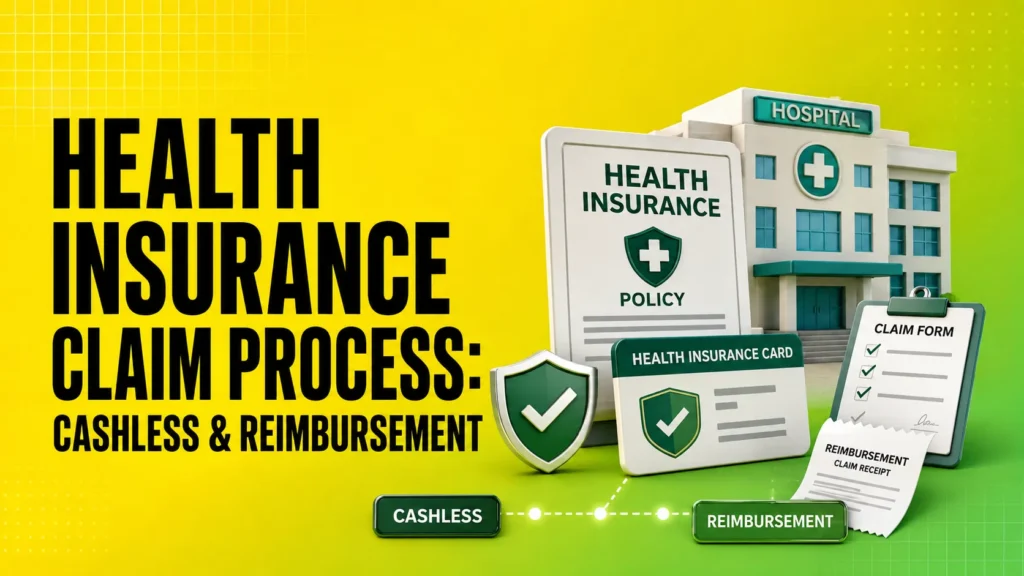
The mediclaim claim process generally works in two ways: cashless and reimbursement. The right route depends on the hospital, the insurer’s network, and the policy conditions.
Before any hospitalisation, inform the insurer as soon as possible. In emergency cases, hospitals usually assist with the intimation process. In planned admission, the insurer may ask for pre-authorisation before treatment begins.
How Cashless Claims Work
Cashless claims are processed through the insurer’s network hospital system and often involve a TPA, or Third Party Administrator. A TPA acts as a service link between the insurer, the hospital, and the policyholder for claim processing and documentation.
Here is the usual cashless claim flow:
- Choose a network hospital that supports cashless treatment.
- Show your health card or policy details at the insurance desk.
- Fill and submit the pre-authorisation form through the hospital.
- The hospital sends the request to the insurer or TPA for approval.
- The insurer reviews the case against policy terms, exclusions, and limits.
- If approved, the hospital raises the bill directly to the insurer for eligible expenses.
- You pay only non-covered items, if any, at discharge.
Cashless settlement is convenient, but it is not automatic approval. The insurer still checks the claim against the policy wording, waiting periods, and documents. If the treatment or expense is not covered, the cashless amount may be reduced or denied.
How Reimbursement Claims Work
In a reimbursement claim, you pay the hospital bill first and then ask the insurer to repay the eligible amount later. This usually happens when the hospital is not in the network, when cashless approval is not available, or when the claim is filed after emergency treatment.
The reimbursement process usually includes these steps:
- Inform the insurer within the timeline mentioned in the policy.
- Complete the treatment and collect all original bills and medical records.
- Obtain the discharge summary, prescriptions, investigation reports, and invoices.
- Fill the claim form and attach the required documents.
- Submit the claim to the insurer within the specified time limit.
- The insurer verifies the documents and policy coverage.
- If approved, the eligible amount is transferred to your bank account.
For reimbursement, document accuracy matters a lot. Missing bills, unreadable invoices, or late submission can delay the claim or create objections. It is a good habit to keep scanned copies of everything from the day of admission.
| Claim Type | How It Works | What You Need |
|---|---|---|
| Cashless | Hospital and insurer settle eligible bills directly | Policy details, network hospital access, pre-authorisation, and hospital documents |
| Reimbursement | You pay first and the insurer repays eligible expenses later | Original bills, discharge summary, prescriptions, reports, claim form, and bank details |
Common Mistakes When Choosing or Claiming a Policy
One of the biggest mistakes is not disclosing your medical history correctly when buying the policy. If you hide a pre-existing disease or past treatment, the insurer may dispute the claim later. Full and honest disclosure is essential.
Another mistake is ignoring exclusions. Every policy has conditions that are not covered, such as cosmetic procedures, non-medical expenses, or treatment linked to specific exclusions. Reading the policy wording is not optional if you want to avoid surprises.
Many claims also face trouble because the policyholder delays intimation. Some insurers require prompt notice for planned or emergency hospitalisation. If you wait too long, the claim process can become harder even if the treatment itself was valid.
Other common errors include choosing only the cheapest plan without checking sub-limits, assuming every hospital bill is fully covered, and not keeping proper records. Insurance is a contract, so the exact terms in the document matter more than general assumptions.
Helpful Comparison: Cashless vs. Reimbursement
If you are new to health insurance, this quick comparison can make the claim process easier to understand.
| Point | Cashless Claim | Reimbursement Claim |
|---|---|---|
| Payment at hospital | Insurer pays eligible amount directly to the hospital | You pay the bill first |
| Best suited for | Network hospitals and planned admissions | Non-network hospitals or situations where cashless is not available |
| Documentation burden | Moderate, handled partly through the hospital desk | Higher, because you submit original bills and records |
| Cash flow impact | Lower immediate out-of-pocket burden | Higher upfront payment required |
| Approval factor | Depends on pre-authorisation and policy terms | Depends on documents and policy terms |
For most people, cashless is easier if it is available. Still, reimbursement is equally valid under many policies when handled properly. The key is to know which route applies and what documents the insurer wants.
Also keep in mind that IRDAI regulates the insurance sector in India, but each insurer’s product terms can differ. Claim settlement timelines, exclusions, and document requirements can change by policy and by insurer. Always check the latest official policy wording and insurer communication for the most current instructions.
FAQs
Is Mediclaim the same as Health Insurance?
No. Mediclaim is generally a subset of health insurance. It usually refers to an indemnity-based policy that pays for eligible hospitalisation expenses up to the sum insured, while comprehensive health insurance may offer wider benefits depending on the product.
Can I claim mediclaim if I have a pre-existing disease?
Yes, but usually only after the waiting period mentioned in the policy is completed. The exact waiting period and conditions depend on the insurer’s policy wording and the specific product document.
What is a TPA in a mediclaim policy?
TPA stands for Third Party Administrator. It helps process cashless and reimbursement claims by coordinating between the insurer, the hospital, and the policyholder, subject to the insurer’s procedures.
Can I get a tax deduction for mediclaim?
Yes, premiums paid for eligible health insurance can qualify for deduction under Section 80D, subject to the current tax rules and limits. Since tax rules can change, verify the latest deduction limit before filing your return.
What happens if my claim is rejected?
If a claim is rejected, check the reason carefully against the policy wording. You can ask the insurer for a written explanation, submit additional documents if allowed, and use the insurer’s grievance redressal process. If needed, you may also escalate through the formal complaint mechanism prescribed by the insurer and regulator.