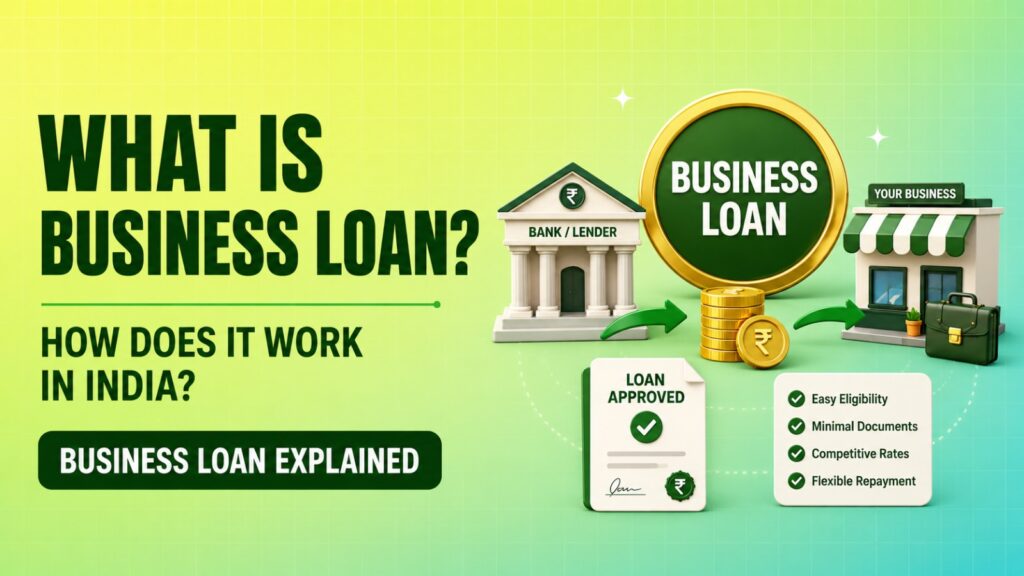
A business loan is a credit facility taken by a business owner to fund growth, day-to-day operations, machinery purchase, working capital, inventory, expansion, or cash flow gaps. If you are searching for what is business loan, the simplest answer is this: it is borrowed money meant for business use, not personal spending.
In India, business loans are offered by banks, non-banking financial companies (NBFCs), small finance banks, fintech lenders, and government-supported credit channels. These loans are different from personal loans because the lender studies not only the borrower’s profile but also the health of the business. Your sales, bank statements, tax filings, profit, existing loans, business age, and repayment behaviour all matter.
A business loan can support useful growth, but it is still debt. It must be repaid with interest and charges as per the sanction terms. Before applying, business owners should understand the type of loan, eligibility, documentation, repayment structure, and risks. Rates, fees, limits, and approval rules can change, so always verify the latest details from the lender’s official website, the sanction letter, and relevant regulatory sources such as the RBI where applicable.
What Is a Business Loan and How Does It Function?
A business loan is a debt instrument provided to a business by a bank, NBFC, or other regulated lender. The borrower receives funds for a business purpose and agrees to repay the amount with interest within a defined period or as per usage, depending on the facility type.
The basic working cycle is easy to understand:
- Application: The business owner applies with KYC, business proof, financial documents, and bank statements.
- Assessment: The lender checks the business’s cash flow, turnover, profitability, industry risk, existing debt, credit history, and documents.
- Sanction: If the lender is satisfied, it issues a loan sanction letter with the approved amount, interest rate, tenure, fees, security requirements, and repayment conditions.
- Disbursement: The loan amount is transferred to the business account or made available through a credit line, overdraft, or working capital facility.
- Repayment: The borrower repays through EMIs, interest payments, or usage-based repayment, depending on the loan structure.
For example, a small manufacturer may take a term loan to buy a new machine. A trader may use an overdraft facility to manage seasonal inventory purchases. A service business may take an unsecured business loan to bridge a temporary cash flow gap after raising invoices.
The key point is that a formal business loan is structured credit. It is different from informal borrowing from private moneylenders, which may carry very high costs, unclear terms, and legal risks. For safety, business owners should prefer regulated lenders and read all loan documents carefully.
Secured vs. Unsecured Business Loans
Business loans in India are commonly divided into secured and unsecured loans. The difference depends mainly on collateral and the level of risk taken by the lender.
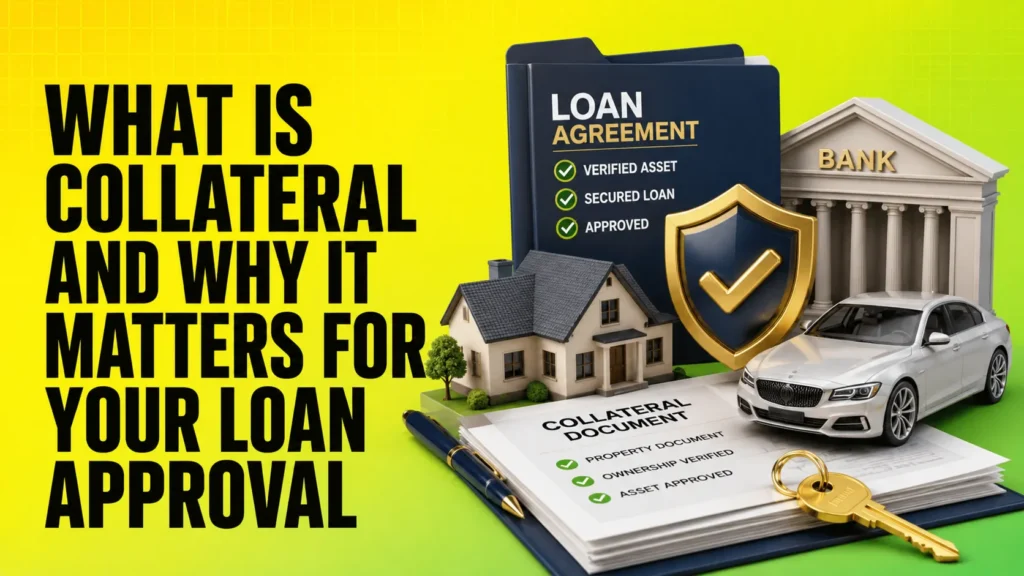
Secured business loan: A secured business loan is backed by collateral. Collateral may include property, machinery, fixed deposits, stock, receivables, or other acceptable assets. Because the lender has security, the interest rate may be lower compared with an unsecured loan, but approval can take longer due to valuation, legal checks, and documentation.
Unsecured business loan: An unsecured business loan does not require physical collateral. The lender relies on business vintage, turnover, cash flow, bank statements, GST or ITR records, repayment history, and credit profile. These loans may be faster to process, but the interest rate can be higher because the lender takes more risk.
Unsecured loans are not “easy money”. The lender still checks whether the business can repay. If cash flow is weak, documents are inconsistent, or existing EMIs are high, approval may be difficult even without collateral requirements.
In many small businesses, the owner’s personal and business finances are closely linked. This is especially true for sole proprietorships and partnership firms. A delay or default in business loan repayment may affect the owner’s personal credit profile, including CIBIL score, depending on the loan structure and borrower obligations.
Key Factors Lenders Evaluate Before Approval
Unlike a personal loan, where salary and personal credit history may be the main focus, a business loan depends heavily on business health. Lenders want to know whether the business generates enough cash to repay the loan regularly.
Business vintage: Business vintage means how long the business has been operating. Many lenders prefer businesses with at least some operating history because past sales and bank transactions help them assess repayment capacity. A very new business may face stricter conditions unless it has strong collateral, promoter background, confirmed orders, or support under eligible schemes.
Turnover and profitability: Turnover shows business activity, but profit shows whether the business is actually earning after expenses. Lenders often review Income Tax Returns, profit and loss statements, balance sheets, GST records where applicable, and bank statements. Clean financial statements and timely tax filing improve credibility.
Creditworthiness: Lenders may check the proprietor’s or partners’ personal CIBIL score and may also check a company credit report or commercial credit score for entities. CIBIL is one of the credit information companies in India, and other credit bureaus also operate under RBI-regulated frameworks. A strong repayment record can support approval, while defaults, frequent late payments, cheque bounces, and multiple recent hard enquiries can create concerns.
Cash flow: Cash flow is often more important than paper profit. A business may show sales, but if customers pay late and expenses are immediate, repayment pressure can rise. Lenders review bank credits, average balance, EMI obligations, invoice cycles, and seasonal fluctuations to judge whether the business can handle the proposed loan.
Nature of industry: Some industries are considered more volatile due to seasonality, regulatory changes, high competition, or uncertain margins. For example, a lender may evaluate a construction subcontractor differently from a pharmacy, wholesaler, or established professional services firm. This does not mean a business in a riskier sector cannot get a loan, but the lender may ask for more documents, collateral, or a stronger repayment buffer.
Existing debt: If the business already has several loans, credit card dues, overdraft utilisation, or unpaid vendor liabilities, the lender will check whether another loan is affordable. Hiding existing debt is risky because lenders can identify many obligations through credit reports, bank statements, and financial statements.
The Typical Application and Documentation Process
The business loan process usually starts with a basic eligibility check. The lender may ask about the business type, age, turnover, requested loan amount, end use, collateral availability, and existing obligations. After this, the applicant submits documents for verification and credit assessment.
Formal credit requires documentation. For many business owners, this feels time-consuming, but these documents protect both the lender and borrower. They help ensure that the loan amount is suitable for the business and that repayment expectations are realistic.
Common steps include:
- Initial enquiry: Compare lenders, loan type, estimated rate, processing fee, tenure, and repayment method.
- Application form: Submit borrower details, business details, loan purpose, and requested amount.
- KYC and business verification: Provide identity, address, business registration, and ownership documents.
- Financial assessment: Submit ITRs, bank statements, profit and loss account, balance sheet, GST returns where applicable, and existing loan details.
- Collateral checks, if applicable: For secured loans, the lender may conduct valuation, legal due diligence, and property or asset verification.
- Sanction letter review: Check interest rate, fees, EMI, security, prepayment rules, default charges, and covenants before accepting.
- Disbursement: Funds are released after documents are signed and conditions are met.
| Document Type | Why Lenders Need It | Key Tip for Applicants |
|---|---|---|
| KYC documents | To verify identity and address of the owner, partners, directors, or authorised signatories. | Ensure PAN, Aadhaar, address proof, and contact details match lender records. |
| Business proof | To confirm the existence and nature of the business. | Keep registration certificates, GST registration, shop licence, Udyam registration, partnership deed, or company documents ready where applicable. |
| Bank statements | To assess cash flow, average balance, receipts, payments, cheque bounces, and loan repayments. | Maintain clean banking habits and avoid frequent unexplained cash movements. |
| Income Tax Returns | To verify declared income, turnover, and tax compliance. | File ITRs on time and avoid inflating numbers only for loan eligibility. |
| Financial statements | To study profit, assets, liabilities, working capital, and debt position. | Prepare accurate profit and loss statements and balance sheets with professional help if needed. |
| Existing loan details | To calculate total repayment burden and debt capacity. | Disclose all running loans, EMIs, credit lines, and guarantees honestly. |
| Collateral documents | Required for secured loans to verify ownership and legal acceptability of the asset. | Check title documents, valuation, encumbrance status, and lender-specific requirements. |
If you are registered as an MSME, lenders may also consider MSME classification and priority sector lending norms where applicable. MSME definitions and limits can change, so business owners should verify current criteria from the official Ministry of Micro, Small and Medium Enterprises or Udyam registration portal. Priority sector lending does not mean automatic approval; lenders still assess repayment ability and documents.
Understanding Costs Beyond Interest Rates
Many borrowers compare only the advertised interest rate. This can be misleading because the total cost of a business loan includes several charges. A loan with a slightly lower rate but high fees may be more expensive than it first appears.
Interest rate: This is the cost charged on the borrowed amount. It may be fixed or floating. In a floating-rate loan, the rate can change based on the lender’s benchmark and policy. Business loan rates are influenced by credit score, business vintage, cash flow, collateral, industry risk, loan amount, tenure, and overall lender policy.
Processing fee: Lenders commonly charge a processing fee for evaluating and processing the loan. It may be a percentage of the sanctioned amount or a fixed amount. This fee may be non-refundable in some cases, so confirm before applying.
Documentation and legal charges: Secured loans may involve legal opinion, property valuation, stamp duty, mortgage creation, registration, and other documentation costs. These charges vary based on the asset and location.
Prepayment or foreclosure charges: If you repay the loan early, the lender may charge a fee, especially in certain business loan structures. Rules vary depending on whether the rate is fixed or floating, the borrower type, and lender policy. Read the terms before assuming that early repayment is free.
Penal charges: Delayed EMI, cheque bounce, mandate failure, overlimit usage, or breach of loan conditions may attract charges. Late payments can also harm credit history.
Effective Annual Percentage Rate: The Effective Annual Percentage Rate, often called APR, gives a broader view of loan cost because it considers interest and certain charges. When comparing loans, ask for the full cost of borrowing, not only the interest rate. Also check whether the quoted rate is reducing balance, flat rate, monthly rate, or annual rate.
For example, suppose two lenders offer similar loan amounts. One has a lower interest rate but a high processing fee and foreclosure charge. The other has a slightly higher rate but lower upfront and exit charges. The better choice depends on loan tenure, repayment plan, and actual total cost. This is why reading the sanction letter matters.
Helpful Interactive Tool or Visual to Add
Use this simple Business Loan Eligibility Checklist before applying. It is not a guarantee of approval. It only helps you identify whether your profile may be ready for formal lender assessment. Lender policies, rates, fees, and eligibility rules vary.
| Eligibility Check | Likely to Qualify | Areas to Improve |
|---|---|---|
| Business vintage | Business has a stable operating history, regular customers, and clear records. | Very new business with limited invoices, no banking history, or unclear ownership structure. |
| ITR filed | Recent ITRs are filed on time and match business activity. | ITRs are missing, delayed, inconsistent, or do not reflect actual business income. |
| CIBIL score or credit profile | Good repayment record, limited hard enquiries, and no recent defaults. | Frequent late payments, high credit utilisation, multiple recent applications, or unresolved report errors. |
| Existing loan EMIs | Current EMIs are manageable compared with monthly cash flow. | Existing debt is already high or repayments depend on irregular income. |
| Bank statement quality | Regular business receipts, sufficient balances, and few or no cheque bounces. | Frequent overdrawing, unexplained transfers, low balances, or mandate failures. |
| Loan purpose | Funds will be used for inventory, machinery, expansion, working capital, or another clear business need. | Loan is mainly to cover continuing losses or repay expensive debt without a turnaround plan. |
Self-assessment note: If most items fall under “Likely to Qualify,” your application may be stronger. If several items fall under “Areas to Improve,” consider improving records, reducing debt, filing pending returns, correcting credit report errors, or building cash flow before applying. This checklist does not guarantee loan approval.
Common Mistakes to Avoid When Applying
A business loan application should be treated like a financial decision, not just paperwork. Small mistakes can lead to rejection, higher rates, or repayment stress.
Applying to many lenders at the same time: Multiple applications can create several hard enquiries on your credit report. This may make you look credit-hungry. Instead, compare eligibility broadly, shortlist suitable lenders, and apply carefully.
Hiding existing debt: Some applicants do not disclose running loans, credit card dues, informal borrowings, or guarantees. Lenders may still find obligations through credit reports and bank statements. Non-disclosure damages trust and may lead to rejection.
Inflating financial projections: Over-optimistic sales projections can create unrealistic repayment expectations. Lenders prefer realistic numbers backed by purchase orders, invoices, bank credits, past performance, and clear assumptions.
Using a business loan for personal spending: Diverting loan funds to personal expenses can weaken the business and make repayment difficult. A business loan should have a clear business purpose.
Ignoring the sanction letter: The sanction letter is one of the most important documents. Read the interest type, repayment schedule, processing fee, penal charges, foreclosure terms, collateral conditions, insurance requirements, and default clauses. Ask the lender to clarify anything unclear before signing.
Borrowing based only on eligibility: A lender may approve a certain amount, but that does not mean you should borrow the full amount. Borrow based on actual need, repayment ability, and expected business cash flow.
Choosing quick loans without checking cost: Some online offers highlight fast approval but may carry high interest, high fees, short tenure, or aggressive collection terms. Avoid unregulated or suspicious lenders. Verify the lender’s identity, read reviews carefully, and prefer regulated entities.
When Should You Opt for a Business Loan?
A business loan can be useful when it helps generate revenue, improve efficiency, or manage a genuine working capital cycle. It should not become a habit for covering repeated losses without fixing the underlying issue.
You may consider a business loan for:
- Working capital: Buying inventory, managing supplier payments, or handling seasonal demand.
- Capital expenditure: Purchasing machinery, equipment, delivery vehicles, or technology that improves capacity.
- Business expansion: Opening a new branch, adding a production line, or entering a new market after proper planning.
- Invoice or payment cycle gaps: Managing cash flow when customers pay after a delay but expenses are immediate.
- Upgrading operations: Investing in software, compliance, safety, packaging, or productivity improvements.
Be cautious if the loan is mainly being used to pay salaries during ongoing losses, repay old high-cost loans without a clear recovery plan, or fund speculative expansion. High-cost debt can trap a business if monthly cash flow is weak.
A practical rule is to ask: will this loan help the business earn, save, or stabilise cash flow enough to repay comfortably? If the answer is unclear, review your numbers again. You may need to cut costs, improve collections, renegotiate supplier terms, bring in equity, or seek professional advice before taking debt.
For startups, business loans can be harder to obtain because there is limited operating history. Some startups may depend more on founder capital, equity funding, incubator support, grants, or eligible government-backed schemes. Even under schemes, approval depends on eligibility, documents, lender assessment, and current rules. Check official scheme portals and lender websites for updated information.
No lender can honestly promise approval for every applicant. Business loan approval depends on credit profile, repayment capacity, business records, documents, collateral where required, and lender policy. Read the loan agreement carefully and avoid signing under pressure.
FAQ
Can I get a business loan without collateral?
Yes, you can get an unsecured business loan without collateral if the lender is satisfied with your business revenue, cash flow, credit history, bank statements, and repayment capacity. However, unsecured loans may carry higher interest rates and stricter eligibility checks.
Does a business loan affect my personal CIBIL score?
Yes, it can. This is especially common for sole proprietorships, partnerships, and loans where the owner or promoter is a co-borrower or guarantor. Late payments or defaults may affect personal credit history and future borrowing ability.
What is the difference between a Term Loan and an Overdraft?
A term loan gives a fixed loan amount that is usually repaid through regular EMIs over a set tenure. An overdraft allows you to withdraw funds up to an approved limit, and interest is generally charged only on the amount used for the period of usage.
How long does the approval process take?
Approval time varies by lender, loan type, documents, and collateral requirements. Some unsecured loans may be processed in a few days if documents are complete. Secured loans can take longer because legal checks, valuation, and collateral documentation are required.
Can a startup get a business loan easily?
It is usually difficult for a very new startup to get a regular business loan because lenders prefer operating history, revenue records, and proven cash flow. Startups may explore founder funding, equity investment, incubators, grants, or eligible government-supported schemes, subject to current rules and lender assessment.