When you purchase life, health, motor or another insurance policy, the insurance company cannot create every rule on its own. Insurers, agents, brokers and other intermediaries must operate within a regulated system supervised by IRDAI.
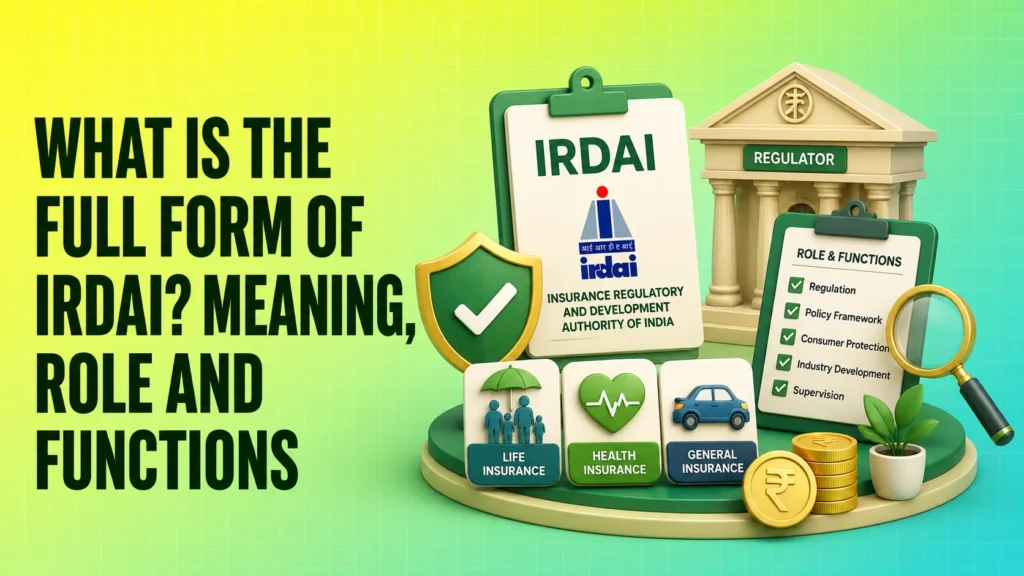
The IRDAI full form is Insurance Regulatory and Development Authority of India. It is responsible for regulating India’s insurance sector, protecting policyholders and supporting the orderly development of insurance and reinsurance businesses.
This article explains what IRDAI is, its main functions and how policyholders can escalate an unresolved insurance complaint.
What Is the Full Form of IRDAI?
IRDAI stands for Insurance Regulatory and Development Authority of India. It is the statutory authority that regulates and supervises the insurance industry in India while protecting the interests of policyholders.
Its responsibilities extend to life insurance, health insurance, general insurance, reinsurance and regulated insurance intermediaries.
What Is IRDAI?
IRDAI is India’s insurance regulator. It creates regulations and supervises insurance companies and intermediaries operating in the country.
Its work includes:
- Registering eligible insurance companies
- Protecting policyholder interests
- Regulating insurance intermediaries
- Monitoring the financial health of insurers
- Setting standards for insurance business
- Inspecting regulated entities
- Supporting the development of the insurance market
- Taking regulatory action when rules are violated
In simple terms, IRDAI performs a regulatory role in insurance similar to the role RBI performs in banking and SEBI performs in the securities market. However, each authority operates under a different legal framework and has separate powers.
IRDA vs IRDAI: Is There Any Difference?
IRDA and IRDAI generally refer to the same insurance regulator.
IRDA is the older and commonly used abbreviation for the Insurance Regulatory and Development Authority. IRDAI is the current official acronym for the Insurance Regulatory and Development Authority of India.
You may still see phrases such as “IRDA rules,” “IRDA licence” or “IRDA guidelines” on older websites and documents. In current content, IRDAI is the more accurate term.
Why Was IRDAI Established?
Before private companies entered the Indian insurance market, the sector was largely controlled by public-sector insurers. Economic reforms created a need for an independent authority that could regulate new and existing insurers, protect customers and support competition.
The Insurance Regulatory and Development Authority Act, 1999 provided the statutory basis for the authority. IRDA was constituted in 1999 and became a statutory body in April 2000.
Its creation supported the entry of private insurers while placing them within a common regulatory framework.
What Is the Main Role of IRDAI?
IRDAI’s main role is to regulate, promote and ensure the orderly growth of insurance and reinsurance businesses in India.
Its responsibilities can be grouped into three broad areas:
- Protecting policyholders
- Regulating insurers and intermediaries
- Supporting the stable development of the insurance sector
IRDAI must balance customer protection with the financial stability and growth of the insurance industry.
Main Functions of IRDAI
The duties, powers and functions of IRDAI are mainly defined under Section 14 of the Insurance Regulatory and Development Authority Act, 1999.
Registers and Regulates Insurance Companies
An insurance company cannot begin operating in India merely by registering itself as a normal business. It must meet the applicable insurance-registration requirements.
IRDAI can:
- Issue a certificate of registration
- Renew or modify registration
- Suspend registration
- Withdraw or cancel registration
- Monitor compliance after registration
Registration does not mean that IRDAI guarantees the performance of every product offered by an insurer. It means that the company has been permitted to operate subject to applicable laws and regulations.
Protects the Interests of Policyholders
Policyholder protection is one of IRDAI’s most important responsibilities.
Its regulatory framework covers areas such as:
- Assignment and nomination
- Policy terms and conditions
- Surrender value
- Claim settlement
- Grievance handling
- Product disclosures
- Insurance advertisements
- Sales practices
- Customer communication
Insurers must provide customers with relevant policy information and follow applicable standards when selling, servicing and processing claims.
However, IRDAI regulation does not mean that every submitted claim must be approved. Claim decisions still depend on policy coverage, exclusions, disclosures and supporting documents.
Regulates Insurance Intermediaries
Insurance products are distributed and serviced through different intermediaries.
These may include:
- Individual insurance agents
- Insurance brokers
- Corporate agents
- Web aggregators
- Third-party administrators
- Insurance marketing firms
- Surveyors and loss assessors
IRDAI sets applicable eligibility, registration, training and conduct requirements for these entities.
For example, an insurance agent must follow prescribed standards and should not misrepresent policy benefits merely to complete a sale.
Monitors the Financial Health of Insurers
An insurance company collects premiums today in return for a promise to pay eligible claims in the future. It must therefore maintain adequate financial resources.
IRDAI monitors areas such as:
- Solvency requirements
- Financial reporting
- Investment of insurance funds
- Accounts and regulatory returns
- Risk-management practices
The solvency margin indicates whether an insurer has sufficient financial resources relative to its liabilities and risks.
Policyholders do not need to calculate the solvency ratio themselves, but they should understand that financial supervision is an important part of insurance regulation.
Regulates Insurance Products and Market Conduct
IRDAI establishes the framework under which insurers design, market and sell their products.
This can include requirements relating to:
- Product filing
- Policy wording
- Benefit disclosures
- Exclusions
- Advertisements
- Sales material
- Customer Information Sheets
- Distribution practices
- Product withdrawal or modification
IRDAI does not necessarily examine and manually approve every individual policy sold to every customer. It sets the regulatory system within which insurers must create and offer products.
Promotes Insurance Growth and Inclusion
IRDAI is not limited to controlling insurers. It also has a development role.
It supports:
- Wider access to insurance
- Insurance awareness
- Rural and social-sector coverage
- Digital insurance services
- Product innovation
- Market competition
- Efficient distribution
- Growth of reinsurance
The aim is to increase insurance access while maintaining customer protection and financial stability.
Inspects and Investigates Regulated Entities
IRDAI can call for information from insurers and insurance intermediaries.
It may also:
- Conduct inspections
- Order enquiries
- Investigate suspected violations
- Review records
- Conduct or require audits
- Issue regulatory directions
These powers help the authority monitor whether regulated entities are following insurance laws and regulations.
Takes Action for Regulatory Violations
When an insurer or intermediary violates applicable rules, IRDAI can take regulatory action.
Depending on the nature and seriousness of the violation, this may include:
- Issuing a warning
- Giving directions
- Imposing a financial penalty
- Suspending registration
- Cancelling registration
- Requiring corrective action
The action taken depends on the law, evidence and circumstances of the case.
How Does IRDAI Protect Policyholders?
IRDAI protects policyholders mainly by creating and enforcing standards that insurers and intermediaries must follow.
| Policyholder concern | IRDAI’s regulatory role |
|---|---|
| Misleading policy information | Sets disclosure, advertising and sales-conduct standards |
| Important exclusions not explained | Requires relevant policy information and documents |
| Delay in claim processing | Sets claim-handling and grievance requirements |
| Unfair conduct by an agent | Regulates the conduct of applicable intermediaries |
| Weak financial position of an insurer | Monitors solvency and financial reporting |
| Unresolved complaint | Provides a regulatory grievance-escalation system |
Policyholder protections may include a free-look period for eligible policies, access to a Customer Information Sheet, prescribed communication standards and a structured grievance process.
These protections do not remove the customer’s responsibility to:
- Read the policy wording
- Provide accurate information
- Pay premiums on time
- Understand exclusions
- Submit required claim documents
- Check the suitability of the policy before purchase
Which Insurance Categories Are Regulated by IRDAI?
IRDAI’s regulatory responsibilities cover major insurance and reinsurance activities in India.
These include:
- Life insurance
- Health insurance
- Motor insurance
- Travel insurance
- Home and property insurance
- Personal accident insurance
- Commercial insurance
- Marine insurance
- Agricultural insurance
- Liability insurance
- Reinsurance
IRDAI regulates the insurance market and entities operating within it. It does not recommend one company or policy as the best option for every buyer.
Customers must compare coverage, exclusions, premiums, waiting periods, claims support and their personal requirements before purchasing a policy.
What IRDAI Does Not Do
Understanding IRDAI’s limitations is as important as understanding its functions.
IRDAI does not:
- Sell insurance policies
- Operate as an insurance company
- Work as your individual insurance agent
- Select a policy on your behalf
- Guarantee returns offered under a market-linked product
- Guarantee that every insurance claim will be approved
- Replace the insurer’s grievance department
- Automatically award compensation when a complaint is filed
- Decide every individual dispute like a civil court
IRDAI regulates insurers and monitors complaints within its regulatory framework. An individual dispute may sometimes require the Insurance Ombudsman, a consumer commission, arbitration or a court, depending on the circumstances.
How to File a Complaint Against an Insurance Company
A policyholder should normally approach the insurance company first before escalating the complaint.
Step 1: Contact the Insurer
Submit the complaint to the insurer’s grievance-redressal officer or customer-service department.
Provide:
- Policy number
- Claim number, if applicable
- Description of the problem
- Copies of relevant documents
- Previous emails or letters
- The resolution you are seeking
Keep the complaint reference number and copies of all communication.
Do not rely only on a verbal conversation with an agent or customer-care representative. Submit a written complaint through an official channel.
Step 2: Escalate Through Bima Bharosa
When the insurer does not resolve the grievance satisfactorily, the policyholder can register or escalate it through IRDAI’s Bima Bharosa grievance-management system.
Bima Bharosa allows policyholders to:
- Register an insurance grievance
- Escalate an unresolved complaint
- Track the complaint
- Create a formal record of the grievance
- Help IRDAI monitor insurer grievance handling
IRDAI can forward and monitor the complaint within its regulatory framework. However, Bima Bharosa is not a court and does not automatically order payment of every disputed claim.
Step 3: Approach the Insurance Ombudsman
An eligible complainant may approach the Insurance Ombudsman when:
- The complaint was first made to the insurer or insurance broker
- The complaint was rejected or not resolved satisfactorily
- No response was received within the prescribed period
- The dispute falls within the Ombudsman’s jurisdiction
- The complaint is filed within the applicable time limit
- The claim value falls within the permitted monetary limit
The Insurance Ombudsman provides an alternative dispute-resolution mechanism for eligible insurance complaints. It is separate from the insurer and should not be described as a department of IRDAI.
Step 4: Consider Other Legal Remedies
Depending on the nature and value of the dispute, a policyholder may also consider:
- Consumer commission
- Arbitration, where applicable
- Civil court
- Another legally available forum
Professional legal advice may be useful when the dispute involves a high claim value, complex policy interpretation or allegations of fraud or non-disclosure.
Why Is IRDAI Important for India’s Insurance Sector?
Insurance is based on trust. Customers pay premiums with the expectation that the insurer will honour an eligible claim in the future.
IRDAI supports that trust by:
- Protecting policyholder interests
- Supervising insurance companies
- Regulating intermediaries
- Monitoring financial stability
- Setting market-conduct standards
- Promoting fair competition
- Encouraging wider insurance access
- Taking action against regulatory violations
- Maintaining a formal grievance framework
Without an insurance regulator, customers would have fewer protections against misleading sales, weak financial practices and unfair market conduct.
At the same time, regulation cannot remove every insurance dispute. Customers must still choose suitable coverage, disclose information honestly and understand the policy before buying.
Conclusion
The IRDAI full form is Insurance Regulatory and Development Authority of India. It is the statutory regulator responsible for supervising and developing India’s insurance and reinsurance sectors.
Its main functions include registering insurers, protecting policyholders, regulating intermediaries, monitoring financial health, inspecting regulated entities and taking action against violations.
For an unresolved insurance complaint, the policyholder should first approach the insurer. The complaint can then be escalated through Bima Bharosa and, where eligible, taken to the Insurance Ombudsman or another appropriate legal forum.
IRDAI creates the regulatory framework, but customers should still read the policy terms, compare coverage and provide accurate information before buying insurance.
FAQs
What is the full form of IRDAI?
IRDAI stands for Insurance Regulatory and Development Authority of India. It is the statutory authority responsible for regulating and developing India’s insurance sector and protecting policyholder interests.
What is the difference between IRDA and IRDAI?
Both terms generally refer to the same insurance regulator. IRDA is the older and commonly used abbreviation, while IRDAI is the current official acronym for the Insurance Regulatory and Development Authority of India.
Is IRDAI a government body?
IRDAI is a statutory regulatory authority established under the Insurance Regulatory and Development Authority Act, 1999. It regulates India’s insurance and reinsurance industries under powers provided by law.
Does IRDAI settle insurance claims directly?
IRDAI does not normally investigate and decide every claim like a court. It regulates insurers and monitors grievance handling. A policyholder must first complain to the insurer and may then use Bima Bharosa, the Insurance Ombudsman or another appropriate legal forum.
How can a policyholder complain to IRDAI?
The policyholder should first submit a written complaint to the insurer. If the issue remains unresolved or the response is unsatisfactory, the complaint can be registered or escalated through IRDAI’s Bima Bharosa grievance-management system.