Taxes are an essential part of every country’s economy. They provide governments with the revenue needed to build roads, fund healthcare and education, maintain public safety, improve transportation, and support economic development. Whether you’re an employee, business owner, investor, student, or traveler, understanding how taxes work can help you make smarter financial decisions.
However, tax systems vary significantly from one country to another. Some countries rely heavily on income taxes, while others generate most of their revenue through consumption taxes such as Value Added Tax (VAT) or Goods and Services Tax (GST). A few countries even have little or no personal income tax, making them attractive destinations for professionals and businesses.
In this guide, you’ll learn about the most common types of taxes, how global tax systems differ, why tax rates vary between countries, and the key concepts everyone should understand before working, investing, or living abroad.
What Are Taxes?

Taxes are mandatory payments collected by governments from individuals and businesses. These funds are used to finance public services, maintain infrastructure, support healthcare and education, strengthen national security, and fund social welfare programs.
The amount of tax you pay depends on several factors, including your income, business profits, purchases, property ownership, and the tax laws of your country.
Simply put, taxes help governments provide services that benefit society as a whole.
Why Do Countries Have Different Tax Systems?
Every country has different economic priorities, government policies, public spending requirements, and natural resources. As a result, each nation develops its own tax structure.
For example:
- Countries with strong social welfare programs often collect higher taxes.
- Some countries use lower tax rates to attract foreign investment and businesses.
- Resource-rich nations may rely on oil or natural gas revenues instead of personal income taxes.
- Developing countries often depend more on indirect taxes because they are easier to collect.
This is why tax rates and tax rules vary across the world.
Direct vs. Indirect Taxes
Taxes are generally divided into two categories:
Direct Taxes
Direct taxes are paid directly to the government and cannot be transferred to someone else.
Examples:
- Income Tax
- Corporate Tax
- Property Tax
- Capital Gains Tax
- Wealth Tax
Example: If you earn a salary, you may pay income tax directly to your country’s tax authority.
Indirect Taxes
Indirect taxes are charged on goods and services. Businesses collect these taxes from customers and then pay them to the government.
Examples:
- VAT (Value Added Tax)
- GST (Goods and Services Tax)
- Sales Tax
- Excise Duty
- Customs Duty
Example: When you buy a smartphone or dine at a restaurant, part of the amount you pay may include VAT, GST, or sales tax.
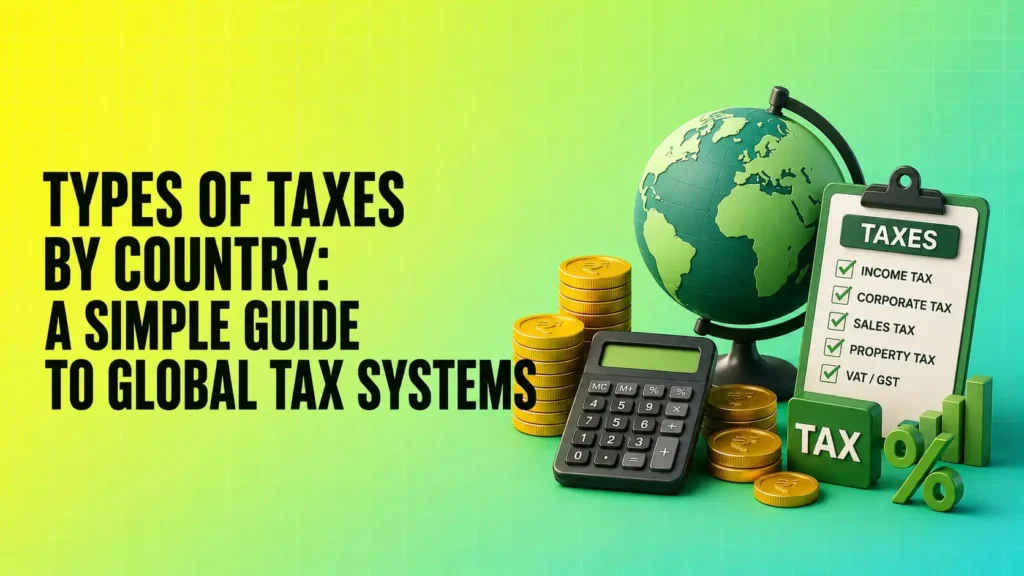
Common Types of Taxes by Country
1. Income Tax
Income tax is one of the most common taxes worldwide. It applies to salaries, wages, business income, rental income, and investment earnings. Many countries use a progressive tax system, where higher earners generally pay higher tax rates.
2. Corporate Tax
Corporate tax is imposed on the profits earned by companies. Businesses often consider corporate tax rates when deciding where to establish offices or expand operations.
3. VAT (Value Added Tax)
VAT is collected at multiple stages of production and distribution before reaching the final consumer. It is widely used across Europe, the Middle East, Africa, and many Asian countries.
4. GST (Goods and Services Tax)
GST is a comprehensive indirect tax applied to many goods and services. Countries such as India, Australia, Canada, New Zealand, and Singapore use GST to simplify their indirect tax systems.
5. Sales Tax
Sales tax is generally charged once when goods or services are sold to the final consumer. Unlike VAT, it is commonly applied at the state or local level in countries such as the United States.
6. Property Tax
Property owners may pay annual taxes based on the value of their land or buildings. These funds are often used by local governments to support schools, roads, emergency services, and community development.
7. Capital Gains Tax
Capital gains tax applies to profits earned from selling investments such as stocks, real estate, or other capital assets. Tax rates and exemptions vary depending on local laws.
Progressive vs. Flat Tax Systems
Progressive Tax System
Under a progressive tax system, tax rates increase as income increases. Higher earners pay a larger percentage of their income in taxes. Many developed countries follow this approach.
Flat Tax System
A flat tax system applies the same tax rate to all taxpayers regardless of income. Some countries adopt this model because it simplifies tax administration.
What Is Tax Residency?
Tax residency determines which country’s tax laws apply to your worldwide income.
Generally:
- Residents may pay tax on worldwide income.
- Non-residents are usually taxed only on income earned within that country.
Understanding tax residency is especially important for expatriates, remote workers, international students, and investors.
How Tax Systems Differ Around the World
Note: The table below provides a simplified overview of how major tax systems work in different countries. Tax rates, exemptions, and regulations vary by jurisdiction and may change over time. Always refer to the official tax authority of the respective country for the latest information.
| Country | Main Tax System |
|---|---|
| United States | Income Tax + State Sales Tax |
| United Kingdom | Income Tax + VAT |
| Canada | Income Tax + GST/HST |
| Australia | Income Tax + GST |
| India | Income Tax + GST |
| Germany | Income Tax + VAT |
| Japan | Income Tax + Consumption Tax |
| Singapore | Low Income Tax + GST |
| UAE | No Personal Income Tax (for most residents) |
Countries With No Personal Income Tax
A few countries do not impose personal income tax on most residents:
- United Arab Emirates (UAE)
- Qatar
- Bahrain
- Kuwait
These countries often generate government revenue from natural resources, tourism, business activities, or other indirect taxes instead of personal income taxes.
How Taxes Affect Everyday Life
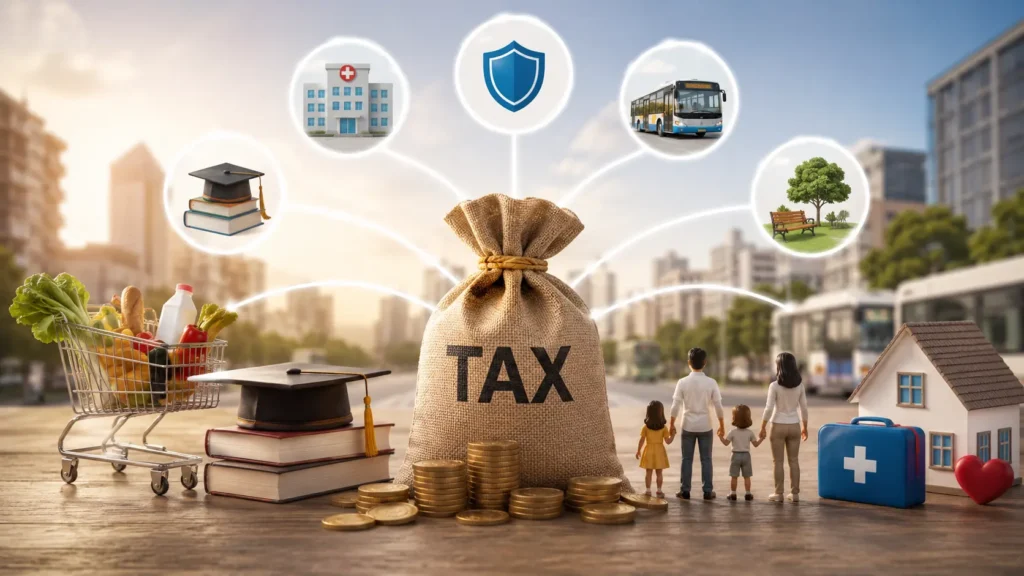
Taxes influence many financial decisions people make every day. They affect:
- Your take-home salary.
- The price of goods and services.
- Property ownership costs.
- Business profitability.
- Investment returns.
- International relocation decisions.
Understanding these effects helps individuals and businesses plan their finances more effectively.
Tips for Understanding Global Tax Systems
- Learn the difference between direct and indirect taxes.
- Understand your country’s tax residency rules.
- Keep accurate financial records.
- Review tax laws before investing or relocating.
- Consult a qualified tax professional for international tax matters.
- Refer to official government guidance whenever tax laws chang
Trusted Sources
For the most accurate and up-to-date tax information, always refer to official government tax authorities and internationally recognized organizations.
- OECD (Organisation for Economic Co-operation and Development) – International tax policies and research.
- World Bank – Global economic and taxation insights.
- International Monetary Fund (IMF) – Fiscal policy and international taxation resources.
- Internal Revenue Service (IRS) – United States – Official U.S. federal tax guidance.
- HM Revenue & Customs (HMRC) – United Kingdom – Official UK tax regulations.
- Canada Revenue Agency (CRA) – Canadian tax information and services.
- Australian Taxation Office (ATO) – Australia’s official tax authority.
- Income Tax Department of India – Official information on Indian income tax laws.
- National tax authorities of your country for the latest rules, deadlines, and compliance requirements.
Conclusion
Although tax systems differ across countries, their primary purpose remains the same: funding public services and supporting economic growth. Whether a country relies on income tax, VAT, GST, corporate tax, or property tax, understanding these systems can help individuals and businesses make informed financial decisions.
If you’re planning to work abroad, invest internationally, or expand a business globally, learning how different tax systems operate is essential. Staying informed and following official tax guidance can help you remain compliant while making smarter financial choices.
Understanding how different tax systems work is valuable for employees, freelancers, business owners, investors, and anyone planning to live, work, or invest internationally. Since tax laws evolve regularly, staying informed through official government sources can help you remain compliant, avoid unnecessary tax issues, and make better financial decisions.