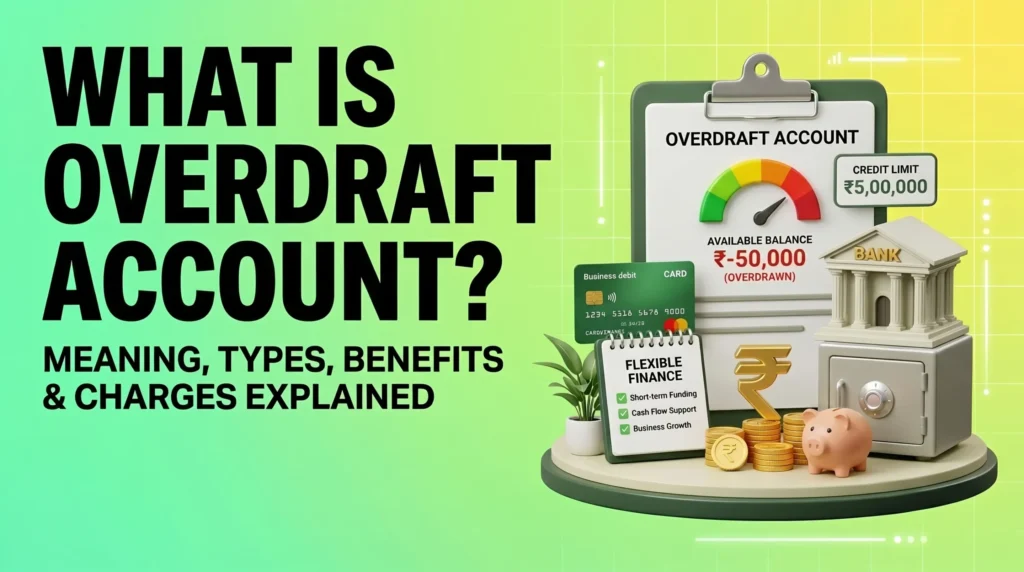
Managing money becomes easier when you have quick access to extra funds during emergencies. This is where an overdraft account becomes useful. Many people in India search for terms like “What is overdraft account?”, “Overdraft meaning in banking”, “OD account benefits”, and “Difference between overdraft and loan”.
An overdraft facility helps individuals and businesses withdraw money even when their bank balance is low or zero. It is one of the most flexible short-term financing options offered by banks and financial institutions.
In this detailed guide, you will learn:
- Overdraft account meaning
- How overdraft works
- Types of overdraft accounts
- Interest rates and charges
- Benefits and disadvantages
- Difference between overdraft and loan
- Who should use overdraft facilities
This article is written in a simple, user-friendly, and SEO-optimized format to help readers understand overdraft accounts easily.
What is an Overdraft Account?
An overdraft account is a banking facility that allows customers to withdraw more money than the available balance in their account.
In simple words, if your bank account balance becomes zero, the bank still allows you to continue withdrawing money up to a pre-approved limit.
This extra amount is called an overdraft limit.
Banks usually provide overdraft facilities to:
- Salaried employees
- Business owners
- Self-employed professionals
- Companies
- Account holders with good banking history
Overdraft is mainly used for short-term financial needs and emergency cash flow management.
Overdraft Meaning in Banking
In banking terms, an overdraft means borrowing money from the bank temporarily when your account balance is insufficient.
The bank charges interest only on the amount used, not on the entire overdraft limit.
For example:
- Your account balance = ₹5,000
- Overdraft limit = ₹50,000
- You withdraw ₹20,000
In this case, the bank will charge interest only on ₹15,000 because ₹5,000 was already available in your account.
This makes overdraft facilities more flexible compared to traditional loans.
How Does an Overdraft Account Work?
An overdraft account works like a backup financial facility attached to your bank account.
Here’s how it works step by step:
Bank Approves an Overdraft Limit
The bank checks:
- Income
- Credit score
- Banking history
- Salary records
- Business cash flow
Based on eligibility, the bank provides an overdraft limit.
Customer Uses Funds When Needed
You can withdraw money anytime within the approved limit, even if your account balance is low.
This money can be used for:
- Emergency expenses
- Business payments
- Utility bills
- Salary payments
- Medical emergencies
- Daily cash flow management
Interest is Charged on Used Amount Only
One of the biggest benefits of overdraft accounts is that interest applies only to the amount used.
This reduces unnecessary borrowing costs.
Repayment Process
Customers can repay the overdraft amount partially or fully depending on the bank’s terms.
Some overdraft facilities are renewable yearly.
Types of Overdraft Accounts
Banks offer different types of overdraft facilities depending on customer needs.
H3: Secured Overdraft
A secured overdraft is provided against collateral or security.
Banks may offer overdraft against:
- Fixed deposits
- Property
- Insurance policies
- Shares and investments
Secured overdrafts usually have lower interest rates because the bank has reduced risk.
Unsecured Overdraft
Unsecured overdraft facilities are provided without collateral.
These are mainly offered to:
- Salaried individuals
- Trusted account holders
- Businesses with strong financial records
Interest rates may be slightly higher because there is no security involved.
Salary Overdraft Account
Many banks offer overdraft facilities to salaried employees based on monthly income.
The overdraft limit is usually linked to salary amount and account history.
This type of overdraft is popular among working professionals for handling temporary financial shortages.
Business Overdraft Account
Business overdrafts help companies manage short-term cash flow issues.
Businesses often use overdrafts for:
- Employee salaries
- Supplier payments
- Inventory purchases
- Operational expenses
Business overdraft accounts are commonly used by small and medium-sized enterprises (SMEs).
Features of an Overdraft Account
Overdraft facilities offer several useful features.
Flexible Borrowing
Customers can use funds whenever needed within the approved limit.
Interest on Used Amount Only
Unlike loans, interest applies only to the amount utilized.
Quick Access to Funds
Overdraft facilities provide instant liquidity during emergencies.
Easy Repayment
Customers can repay funds according to their financial situation and bank terms.
Linked to Existing Bank Account
Most overdraft facilities are directly connected to savings or current accounts.
Benefits of Overdraft Account
Overdraft accounts provide multiple advantages for individuals and businesses.
Helps During Financial Emergencies
An overdraft can help manage sudden expenses such as:
- Medical emergencies
- Urgent travel
- Business losses
- Unexpected bills
Better Cash Flow Management
Businesses use overdrafts to maintain smooth daily operations without financial interruptions.
No Need for Separate Loan Application
Existing customers can often activate overdraft facilities quickly without lengthy documentation.
Flexible Usage
Customers can use overdraft money for any purpose unlike some restricted loan products.
Useful for Short-Term Borrowing
Overdrafts are ideal for temporary financial gaps rather than long-term borrowing.
Charges and Interest Rates in Overdraft Accounts
Banks charge certain fees and interest for overdraft facilities.
These may include:
Interest Charges
Interest rates vary depending on:
- Bank policies
- Credit score
- Account type
- Security provided
Processing Fees
Some banks charge overdraft processing fees during approval or renewal.
Renewal Charges
Certain overdraft accounts require yearly renewal fees.
Penalty Charges
Banks may charge penalties for:
- Delayed repayment
- Limit overuse
- Non-maintenance of account terms
Customers should always check all overdraft charges before activating the facility.
Difference Between Overdraft and Loan
Feature | Overdraft | Loan |
Purpose | Short-term needs | Long-term borrowing |
Interest | Charged on used amount | Charged on total loan |
Flexibility | High | Fixed |
Repayment | Flexible | Fixed EMI |
Usage | Anytime within limit | Lump sum amount |
Processing Time | Faster | Longer |
Overdrafts are better for temporary cash shortages, while loans are suitable for larger planned expenses.
Who Should Use an Overdraft Account?
Overdraft facilities are suitable for:
- Salaried employees
- Freelancers
- Small business owners
- Self-employed professionals
- Companies with irregular cash flow
People who need quick short-term funds often prefer overdraft accounts because of their flexibility.
Disadvantages of Overdraft Account
Although overdrafts are useful, they also have some drawbacks.
Higher Interest Rates
Some overdraft facilities may have higher interest compared to traditional loans.
Risk of Overspending
Easy access to funds may encourage unnecessary spending.
Additional Charges
Hidden fees and penalties may increase borrowing costs if not managed carefully.
Temporary Financial Solution
Overdrafts are not ideal for long-term borrowing needs.
Is Overdraft Facility Safe?
Yes, overdraft facilities from trusted banks are generally safe and useful when managed responsibly.
Customers should:
- Understand interest rates
- Check repayment terms
- Avoid unnecessary borrowing
- Monitor account usage regularly
Responsible usage helps maintain a healthy credit profile.
Tips Before Using an Overdraft Account
Before activating an overdraft facility, keep these points in mind:
- Compare bank interest rates
- Understand all charges
- Borrow only when necessary
- Repay quickly to reduce interest costs
- Maintain a good credit score
- Avoid crossing overdraft limits
These practices can help reduce financial stress and borrowing costs.
Final Thoughts
An overdraft account is one of the most flexible financial tools available for managing short-term cash flow needs. Whether you are a salaried employee, freelancer, or business owner, an overdraft facility can provide quick financial support during emergencies.
However, it is important to use overdrafts wisely because interest charges and fees can increase if repayments are delayed.
Understanding overdraft meaning, types, benefits, and charges can help you make smarter financial decisions and improve money management in daily life.
FAQs
What is an overdraft account?
An overdraft account allows customers to withdraw money even when their bank balance is insufficient.
Is overdraft better than a loan?
Overdrafts are better for short-term needs, while loans are suitable for long-term financing.
Does overdraft affect credit score?
Yes, improper repayment or excessive usage may impact your credit score.
Is interest charged on full overdraft limit?
No, banks usually charge interest only on the amount used.
Can salaried employees get overdraft facilities?
Yes, many banks provide salary overdraft facilities to salaried account holders.