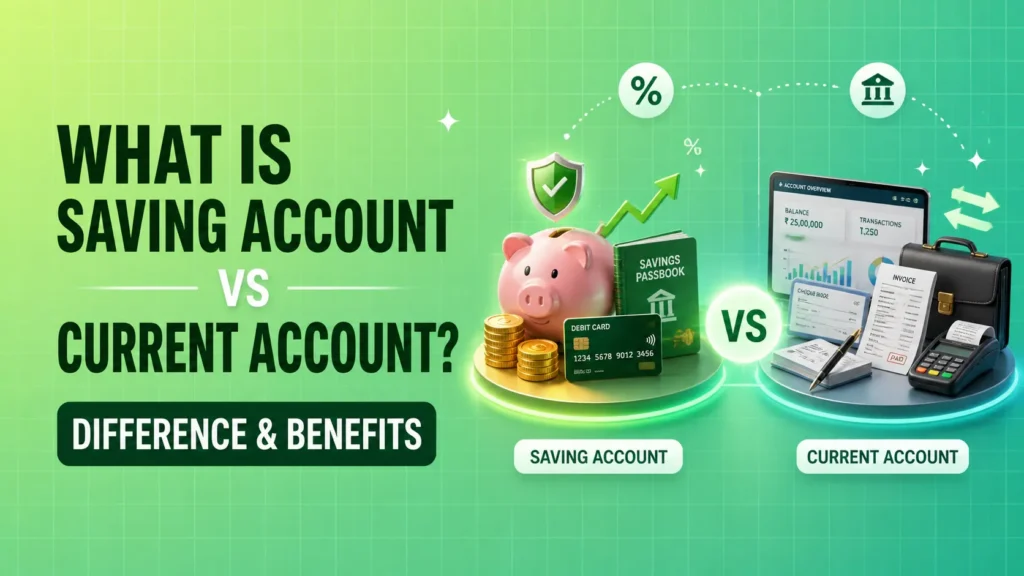
When you open a bank account, two common options you may hear about are current account and savings account. Both accounts help you deposit, withdraw, and manage money, but their purpose is different.
A savings account is mainly designed for individuals who want to save money, earn interest, and manage daily personal transactions. A current account, on the other hand, is mainly designed for businesses, firms, shop owners, freelancers, and professionals who need frequent transactions.
If you are confused between current vs savings account, this guide will help you understand the meaning, features, benefits, differences, and which account is better for your needs.
What is a Savings Account?
A savings account is a basic bank account designed for individuals who want to save money and manage personal financial transactions. It is suitable for salaried people, students, homemakers, senior citizens, and anyone who wants a safe place to keep money.
A savings account allows you to deposit money, withdraw cash, use a debit card, make UPI payments, transfer funds, and earn interest on the balance. This account is generally used for salary credit, monthly savings, bill payments, emergency funds, and daily expenses.
Unlike a current account, a savings account is not designed for heavy business transactions. It is mainly for personal use and saving habits.
What is a Current Account?
A current account is a bank account designed mainly for business and professional transactions. It is useful for people or companies that need to make and receive payments frequently.
Business owners, traders, companies, partnership firms, freelancers, shopkeepers, and service providers commonly use current accounts. This account allows smooth handling of high-volume transactions such as vendor payments, customer receipts, cheque payments, online transfers, and business expenses.
A current account usually does not offer interest on the account balance. However, it provides business-friendly features like higher transaction limits, overdraft facility, cheque book, payment collection support, and easy fund transfers.
In simple words, a current account is best for people who need a bank account for business activity rather than personal savings.
Savings Account vs Current Account: Quick Comparison
| Point | Current Account | Savings Account |
|---|---|---|
|
Main Purpose |
Business transactions |
Personal savings |
|
Best For |
Businesses, firms, traders, freelancers |
Individuals, salaried people, students |
|
Interest on Balance |
Usually no interest |
Interest is usually offered |
|
Transaction Limit |
Higher transaction flexibility |
Limited transaction flexibility |
|
Overdraft Facility |
Usually available |
Usually not available |
|
Minimum Balance |
Generally higher |
Generally lower |
|
Usage |
Business payments and collections |
Personal money management |
|
Account Nature |
Transaction-focused |
Saving-focused |
Differences Between Current Account and Savings Account
Purpose of Account
The main purpose of a current account is to support frequent business transactions. It helps businesses receive payments from customers and make payments to vendors, employees, suppliers, and service providers.
The main purpose of a savings account is to help individuals save money and manage personal finances. It is useful for salary deposits, emergency savings, online payments, and daily expenses.
Best Suitable For
A current account is best suitable for:
- Business owners
- Shopkeepers
- Companies
- Partnership firms
- Freelancers
- Self-employed professionals
- Traders and service providers
A savings account is best suitable for:
- Salaried individuals
- Students
- Homemakers
- Senior citizens
- Individuals managing personal money
- People who want to save and earn interest
Interest on Balance
One of the biggest differences between current account and savings account is interest.
A savings account usually provides interest on the money kept in the account. The interest rate depends on the bank and account type.
A current account generally does not provide interest because it is created for business transactions, not for saving money.
So, if your main goal is to earn interest on your balance, a savings account is usually better.
Transaction Limit
Current accounts usually offer higher transaction limits because businesses need to make frequent payments and receive money regularly. This makes current accounts useful for daily business operations.
Savings accounts may have certain transaction limits or restrictions depending on the bank and account type. They are suitable for normal personal transactions but not ideal for heavy business activity.
Overdraft Facility
A current account may offer an overdraft facility. Overdraft means the account holder can withdraw more money than the available balance, up to a limit approved by the bank.
This facility can be useful for businesses that need short-term working capital.
Savings accounts usually do not offer overdraft facility for regular users. Some banks may offer special facilities, but generally, overdraft is more common with current accounts.
Minimum Balance Requirement
Current accounts usually have a higher minimum balance requirement compared to savings accounts. This is because they offer more business-related services and transaction flexibility.
Savings accounts usually have a lower minimum balance requirement. Some banks also offer zero-balance savings accounts, depending on the account type and eligibility.
Charges and Fees
Current accounts may have higher charges because they provide business-focused services like cheque handling, high-value transactions, overdraft, and payment collection support.
Savings accounts generally have lower charges. However, banks may still charge fees for minimum balance non-maintenance, debit card usage, ATM withdrawals beyond limits, SMS alerts, or other services.
Before opening any account, always check the bank’s charges and terms.
Features of Current Account
A current account comes with several features that make business banking easier.
It allows frequent deposits and withdrawals, which is useful for businesses with daily cash flow. It also supports large transaction volumes, making it suitable for traders, companies, and shop owners.
Current accounts usually offer cheque book facility, NEFT, RTGS, IMPS, UPI, internet banking, and mobile banking. Many banks also provide payment gateway support, POS machine facility, QR payment collection, and bulk payment options.
Another important feature is the overdraft facility. This can help businesses manage temporary cash shortages.
Overall, a current account is built for smooth and professional money movement.
Features of Savings Account
A savings account is simple and easy to use. It is designed for personal banking and regular money management.
It allows you to deposit money safely, withdraw cash, make online payments, use debit cards, pay bills, and transfer money. Most savings accounts also support UPI, internet banking, mobile banking, ATM access, and auto-debit services.
A major feature of a savings account is that it usually offers interest on the balance. This helps your money grow slowly while staying easily accessible.
Savings accounts are also useful for maintaining emergency funds, receiving salary, managing monthly expenses, and saving for short-term goals.
Benefits of Current Account
A current account offers many benefits for business users.
The biggest benefit is transaction flexibility. Businesses can make and receive payments regularly without worrying about limited transaction usage.
Another benefit is professional banking. A current account helps separate business money from personal money. This makes accounting, tax filing, and cash flow tracking easier.
Current accounts also support cheque payments, online fund transfers, bulk payments, vendor payments, and customer collections. This makes business operations smoother.
The overdraft facility is another major benefit. It can help businesses manage short-term cash flow needs.
For business owners, a current account also builds financial credibility. It shows that the business is managing money through a proper banking channel.
Benefits of Savings Account
A savings account is useful for almost every individual.
The main benefit is safety. You can keep your money in a bank instead of holding cash. You can also access your money whenever needed through ATM, UPI, mobile banking, or branch banking.
Another benefit is interest earning. The balance in a savings account usually earns interest, which makes it better than keeping idle cash at home.
Savings accounts also help in building financial discipline. You can save money regularly, create an emergency fund, and manage personal expenses.
It is also useful for receiving salary, paying bills, shopping online, making UPI payments, and tracking your monthly spending.
Who Should Open a Current Account?
You should consider opening a current account if you are involved in business or professional work where frequent transactions are required.
A current account is suitable for you if:
- You run a shop or business
- You receive frequent customer payments
- You make vendor or supplier payments
- You need cheque book facility for business
- You want to separate personal and business money
- You need higher transaction limits
- You may need overdraft support
For example, if you are a shopkeeper receiving payments daily from customers and paying suppliers regularly, a current account is more suitable than a savings account.
Who Should Open a Savings Account?
You should open a savings account if your main goal is to save money and manage personal finances.
A savings account is suitable for you if:
- You are a salaried person
- You are a student
- You want to save money
- You want to earn interest on balance
- You need an account for UPI and daily payments
- You want to keep an emergency fund
- You do not have frequent business transactions
For example, if you receive a monthly salary and use your account for rent, bills, shopping, and savings, a savings account is the better option.
Which One Should You Choose? Current Account or Savings Account
The right account depends on your purpose.
If your goal is personal saving and daily money management, choose a savings account. It is simple, easy to maintain, and usually offers interest on balance.
If your goal is business transactions and professional payments, choose a current account. It gives better transaction flexibility and business banking features.
A simple rule is:
- For personal use — savings account.
- For business use — current account.
If you are running a business, avoid using your personal savings account for all business transactions. It can create confusion in accounting and may not be suitable for high transaction activity.
Common Mistakes to Avoid While Choosing an Account
One common mistake is choosing a savings account for regular business transactions. This may not be suitable if your business has frequent payments and receipts.
Another mistake is opening a current account when you only need a basic personal account. Current accounts may have higher minimum balance requirements and charges.
Many people also ignore bank charges. Before opening any account, check minimum balance rules, transaction charges, debit card fees, cheque book charges, and other service fees.
Another mistake is not separating business and personal money. If you are a business owner, keeping both in one account can make financial tracking difficult.
You should also compare different banks before opening an account. Features, charges, digital banking support, branch access, and customer service can vary from bank to bank.
Final Verdict
Both current account and savings account are useful, but they serve different purposes.
A savings account is best for individuals who want to save money, earn interest, receive salary, make daily payments, and manage personal finances.
A current account is best for businesses, firms, traders, professionals, and freelancers who need frequent transactions, higher limits, cheque facility, and business banking support.
So, before opening an account, first understand your purpose. If you need an account for personal savings, go with a savings account. If you need an account for business transactions, go with a current account.
Choosing the right account can help you manage money better and avoid unnecessary banking issues.
FAQs About Current Account vs Savings Account
What is the main difference between current account and savings account?
The main difference is purpose. A current account is mainly for business transactions, while a savings account is mainly for personal savings and daily money management.
Can an individual open a current account?
Yes, an individual can open a current account if they need it for business, professional, or self-employed work. However, the bank may ask for business-related documents.
Does current account give interest?
Usually, current accounts do not offer interest on the balance because they are designed for business transactions, not savings.
Is savings account good for business transactions?
A savings account is not ideal for regular business transactions. If you run a business or have frequent payment activity, a current account is usually more suitable.
Which account is best for daily use?
For personal daily use, a savings account is best. It is suitable for salary, UPI payments, bill payments, ATM withdrawals, and personal savings.