What Is Section 80C?
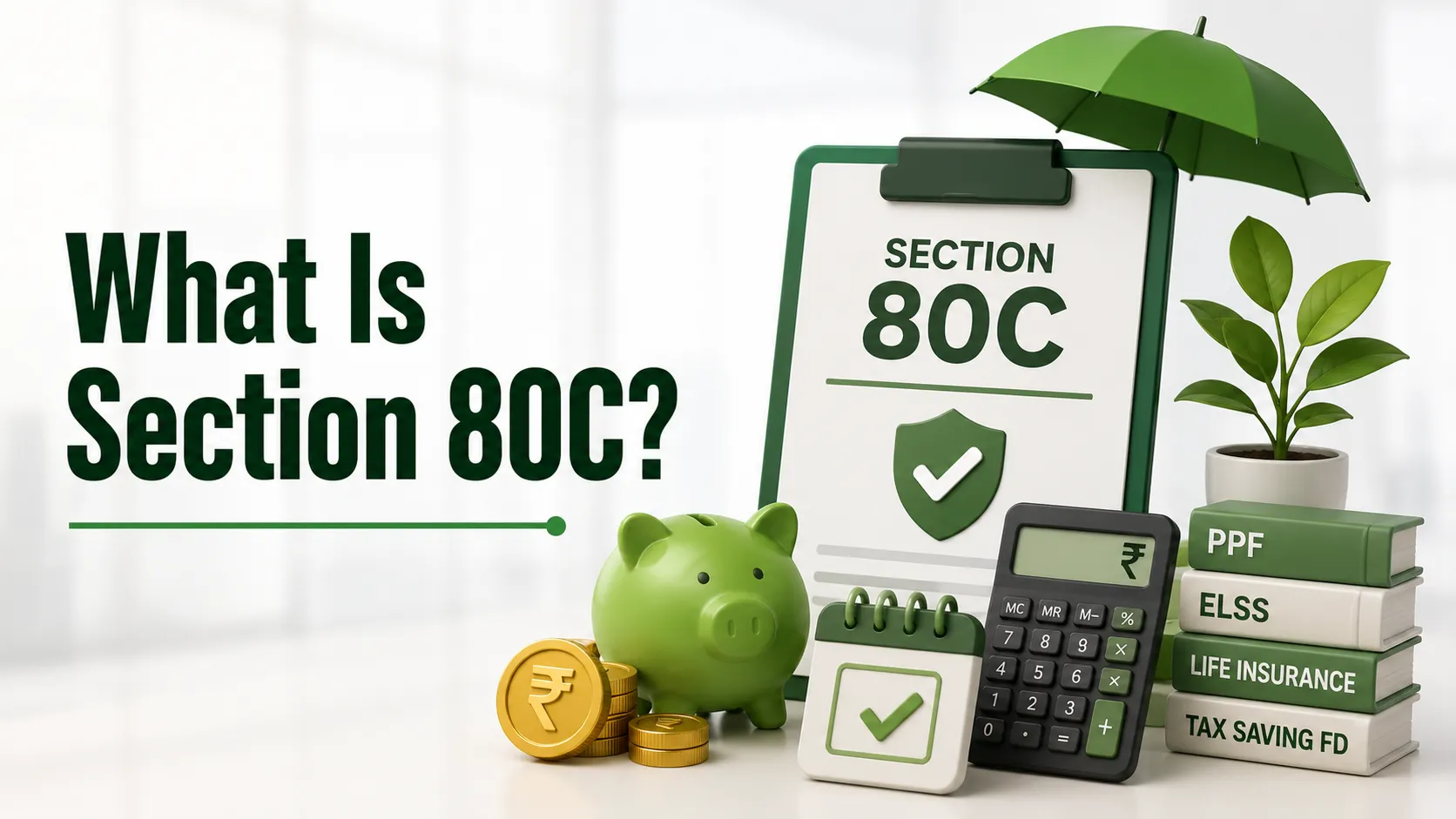
Section 80C of the Income Tax Act allows eligible taxpayers to claim tax deductions by investing in specified financial products or by making eligible payments. It is one of the most commonly used tax-saving provisions for individuals and Hindu Undivided Families (HUFs) in India.
Under the Old Tax Regime, taxpayers can claim deductions on eligible investments made under Section 80C, subject to the applicable deduction limit prescribed under the Income Tax Act.
The purpose of Section 80C is not only to encourage tax savings but also to promote disciplined investment and long-term financial security.
Why Should You Invest in Section 80C?
Investing under Section 80C offers more than just tax benefits. It helps create a structured financial plan while working towards important life goals.
Some key advantages include the following:
- Reducing taxable income through eligible investments.
- Building long-term wealth.
- Encouraging disciplined saving habits.
- Supporting retirement planning:
- They help achieve future financial goals, such as children’s education or home ownership.
Instead of making last-minute tax-saving investments at the end of the financial year, planning your investments early allows you to make better financial decisions.
Best Tax Saving Investments Under Section 80C

Below are some of the best tax-saving investments under Section 80C that are widely chosen by taxpayers in India.
1. Public Provident Fund (PPF)
The Public Provident Fund (PPF) is one of the safest long-term investment options available under Section 80C. As it is backed by the Government of India, many investors prefer it for capital safety and long-term savings.
PPF is particularly suitable for individuals seeking stable returns without taking market-related risks.
Key Features
- Government-backed investment
- Long-term wealth creation
- Low investment risk
- Interest rate notified periodically by the government
- Suitable for retirement planning
Who Should Invest?
PPF is ideal for:
- Salaried employees
- Self-employed individuals
- Conservative investors
- Long-term investors
Why Choose PPF?
Among the best tax-saving investments under Section 80C, the PPF remains a preferred choice because of its safety, disciplined investment structure, and long-term wealth creation potential.
2. Equity Linked Savings Scheme (ELSS)
The Equity Linked Savings Scheme (ELSS) is a tax-saving mutual fund that primarily invests in equity markets. Unlike traditional fixed-income investments, ELSS provides market-linked returns, making it suitable for investors who are comfortable with higher risks.
It is one of the most popular choices among investors seeking tax savings and wealth creation.
Read More: ELSS Funds in Mutual Funds
Key Features
- Equity-oriented mutual fund
- Professional fund management
- Market-linked returns
- Diversified portfolio
- Suitable for long-term investing
Who Should Invest?
ELSS is suitable for:
- Young investors
- Long-term wealth creators
- Investors with moderate to high risk tolerance
Why Choose ELSS?
When discussing the best tax-saving investments under Section 80C, ELSS is often considered by investors looking for higher return potential over the long term while also benefiting from tax deductions.
3. Employees’ Provident Fund (EPF)
The Employees’ Provident Fund (EPF) is one of the most important retirement savings schemes available to salaried employees. Employee contributions qualify for tax benefits under Section 80C, according to the applicable tax rules.
The EPF encourages regular savings throughout the working years and helps build a retirement corpus.
Key Features
- Retirement-focused savings
- Monthly contribution system
- Government-regulated scheme
- Suitable for salaried employees
Who Should Invest?
EPF is designed for:
- Salaried employees
- Long-term retirement planners
- Individuals seeking disciplined monthly savings
Why Choose EPF?
EPF continues to be one of the best tax-saving investments under Section 80C because it combines retirement planning with tax-saving benefits under eligible conditions.
4. National Savings Certificate (NSC)
The National Savings Certificate (NSC) is a government-backed savings scheme that offers fixed returns. It is available through post offices across India and is suitable for investors seeking low-risk investment options.
NSC is commonly chosen by conservative investors who prefer predictable returns to market-linked investments.
Read More: Best Investment Plan in India
Key Features
- Government-supported investment
- Fixed-income instrument
- Guaranteed maturity amount
- Easy availability
Who Should Invest?
NSC is suitable for:
- Risk-averse investors
- Individuals seeking fixed returns
- First-time investors
Why Choose NSC?
If safety is your primary concern, the NSC is considered one of the best tax-saving investments under Section 80C because it provides stability along with tax-saving benefits.
5. Tax Saver Fixed Deposit (Tax Saver FD)
Tax Saver Fixed Deposit is offered by scheduled banks and provides tax benefits under Section 80C. It is one of the simplest investment options for individuals who prefer guaranteed return.
Unlike regular fixed deposits, Tax Saver FDs come with a mandatory lock-in period, as prescribed under the applicable rules.
Key Features
- Guaranteed returns
- Low investment risk
- Fixed interest rate
- Available through banks
Who Should Invest?
Tax Saver Fixed Deposits are suitable for:
- Conservative investors
- Senior citizens looking for stability
- Individuals avoiding market-related risks
Why Choose a Tax Saver FD?
Among the best tax-saving investments under Section 80C, Tax Saver FD remain a popular option for investors seeking predictable returns and simple investment management.
6. Sukanya Samriddhi Yojana (SSY)
The Sukanya Samriddhi Yojana (SSY) is a government-backed savings scheme designed specifically for the financial future of a girl child. It is a popular option among parents who want to build a long-term fund for goals such as higher education and future financial needs.
Eligible investments made under this scheme can provide tax benefits under Section 80C, subject to the applicable rules.
Key Features
- Government-backed savings scheme
- Designed for a girl child’s future financial planning
- Long-term investment option
- Suitable for goal-based savings
- Tax benefits available under applicable conditions
Who Should Consider SSY?
The Sukanya Samriddhi Yojana is suitable for:
- Parents or guardians of an eligible girl child
- Individuals planning long-term savings
- Investors looking for government-supported schemes
Why Choose SSY?
For families planning long-term financial goals for a girl child, SSY can be considered among the best tax-saving investments under Section 80C because it combines disciplined savings with tax benefits and long-term financial planning.
7. Life Insurance Premium
Life insurance is mainly designed to provide financial protection to families in the event of an unfortunate event. Premiums paid towards eligible life insurance policies may qualify for tax deductions under Section 80C, subject to certain conditions.
However, insurance should primarily be selected based on protection requirements rather than only for tax-saving purposes.
Key Features
- Provides financial protection
- Helps secure family goals
- Can offer tax benefits on eligible premiums
- Supports long-term financial planning
Who Should Consider Life Insurance
Life insurance may be suitable for the following:
- Individuals with financial dependents
- People looking for family protection
- Long-term financial planners
Why Choose Life Insurance
While tax benefits are an advantage, the main purpose of life insurance is to provide financial security. It can be included in your list of the best tax-saving investments under Section 80C when it matches your protection needs and financial goals.
8. Unit Linked Insurance Plan (ULIP)
Unit-linked insurance plans (ULIPs) combine life insurance coverage with investment opportunities. A portion of the premium provides insurance coverage, and the remaining amount is invested in funds based on the policy structure.
ULIPs are generally considered long-term products and may provide tax benefits under the applicable Section 80C rules.
Key Features
- Insurance and investment combination
- Market-linked returns
- Long-term investment approach
- Different fund options available
Who Should Consider ULIPs?
ULIPs may be suitable for the following:
- Investors looking for insurance with investment
- Individuals with long-term financial goals
- Investors comfortable with market fluctuations
Why Choose ULIP?
ULIPs can be considered among the best tax-saving investments under Section 80C for investors who understand market risks and want an insurance-based investment option for long-term planning.
9. Home Loan Principal Repayment
Individuals who have taken a home loan may claim tax benefits on the repayment of the principal amount under Section 80C, subject to the applicable conditions.
This benefit encourages individuals to invest in residential properties while reducing their taxable income.
Key Features
- Available for eligible home loan principal repayments
- Helps reduce taxable income
- Supports home ownership goals
- Applicable under specified conditions
Who Can Benefit?
This option can be useful for the following:
- Home loan borrowers
- Individuals purchasing residential property
- Long-term property owners
Why Consider Home Loan Repayment?
For eligible homeowners, principal repayment can become one of the practical best tax-saving investments under Section 80C, as it combines tax benefits with progress towards owning a home.
10. Tuition Fees for Children’s Education
Certain tuition fee payments made for children’s education may qualify for a deduction under Section 80C, subject to applicable conditions.
This provision helps parents receive tax benefits while managing their important education-related expenses.
Key Features
- Available for eligible tuition fee payments
- Supports children’s education planning
- Helps reduce taxable income
Who Can Use This Benefit?
This option may be useful for the following:
- Parents paying eligible school or educational institution fees
- Individuals planning family finances
Comparison of Best Tax Saving Investments Under Section 80C
Selecting the right investment depends on a person’s financial situation. Before investing, consider the following factors:
1. Understand Your Financial Goals
Your investment should match your goals, such as retirement planning, children’s education, wealth creation and financial security.
2. Check Your Risk Capacity
Different investments carry different levels of risk. Market-linked options, such as ELSS and ULIPs, may offer growth potential but can experience market fluctuations.
3. Consider Investment Duration
Some investments require long-term commitment, whereas others have shorter lock-in periods. Choose options according to when you may need money.
4. Avoid Last-Minute Tax Planning
Many people invest only at the end of a financial year. Planning earlier provides more time to compare options and make suitable investment decisions.
Common Mistakes to Avoid While Choosing 80C Investments
Investing Only for Tax Saving
Tax benefits should not be the only reason for investing. Your investment should also support your financial goals.
Ignoring Lock-in Periods
Every investment option has different rules regarding withdrawals. Always understand the lock-in period before investing in mutual funds.
Choosing Products Without Understanding Risk
Market-linked investments require an understanding of market risks. Do not select an option only because it provides tax benefits to you.
Not Reviewing Investments
Financial goals and income situations can change over time. Regularly reviewing your investment choices can help maintain a balanced portfolio.
Conclusion
The best tax-saving investments under Section 80C depend on your financial goals, risk tolerance, and investment requirements. Options such as PPF, ELSS, EPF, NSC, Tax Saver FD, SSY, ULIP, and other eligible investments provide different benefits for different types of investors.
A good tax-saving strategy should not only focus on reducing taxes but also help build financial stability for the future. Before investing, understand the features, risks, and conditions of each option, and choose investments that fit your overall financial plan.