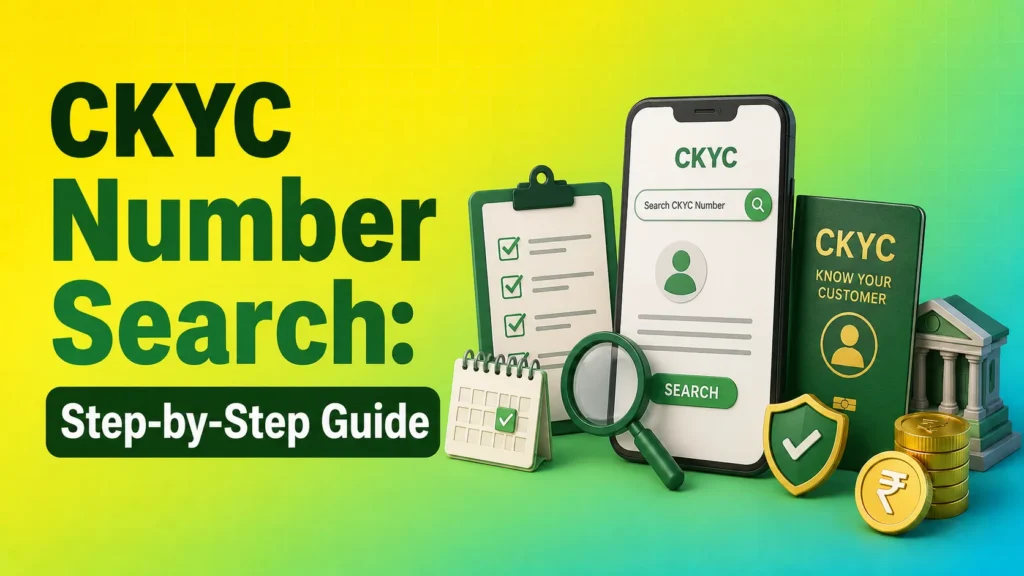
What Is a CKYC Number?

A CKYC Number, also known as the KYC Identifier (KIN), is a 14-digit unique identification number issued after your KYC details are successfully registered in the Central KYC Records Registry (CKYCRR).
Unlike traditional KYC, where you submit the same documents to every bank or financial institution, CKYC allows your verified KYC record to be reused by participating institutions. This makes opening financial accounts faster and reduces repetitive paperwork.
Read Also: KYC Full Form
Why Is a CKYC Number Important?
Having a CKYC Number offers several advantages.
| Benefit | Description |
|---|---|
| One-Time KYC | Complete KYC once and use it across participating institutions. |
| Faster Verification | Speeds up account opening and investment processes. |
| Less Paperwork | Avoid submitting the same documents repeatedly. |
| Easy Financial Access | Useful for banks, mutual funds, insurance companies, and other regulated financial services. |
| Better Record Management | Your KYC information is maintained in a centralized system. |
How to Search Your CKYC Number
If you don’t know your CKYC Number, try one of the following methods.
Method 1: Contact Your Bank
If your bank completed your KYC, it can usually help you retrieve your CKYC Number.
Steps
- Visit your bank branch or customer support.
- Provide your PAN Card or other identity details if requested.
- Complete the verification process.
- Ask the bank to check your CKYC/KIN details.
Read Also: LTV Full Form in Banking
Method 2: Contact Your Mutual Fund Company
If you’ve invested in mutual funds, the Asset Management Company (AMC) or distributor may be able to verify your CKYC status after confirming your identity.
- Keep these details ready:
- PAN Card
- Registered mobile number
- Date of Birth
Method 3: Contact Your Insurance Company
Insurance providers that completed your CKYC registration may also help you retrieve your CKYC Number after identity verification.
Documents You May Need
Depending on the institution, you may be asked for:
- PAN Card
- Aadhaar Card (if applicable)
- Registered Mobile Number
- Date of Birth
- Email Address
Always ensure the details you provide match the information submitted during your KYC registration.
What If You Can’t Find Your CKYC Number?
If your CKYC Number isn’t available, don’t worry. There could be several reasons.
Your CKYC Registration Is Still Pending
Sometimes the KYC process is completed, but the CKYC registration hasn’t yet been finalized.
Incorrect Personal Details
Small mistakes in your:
- Name
- PAN Number
- Date of Birth
- Mobile Number
can prevent successful verification.
Your KYC Was Never Registered Under CKYC
Not every KYC automatically becomes a CKYC record. In such cases, the financial institution may ask you to complete or update your CKYC.
Common Reasons Why CKYC Search Fails
| Reason | Solution |
|---|---|
| Incorrect PAN | Check your PAN details carefully. |
| Wrong Date of Birth | Ensure it matches your official records. |
| Mobile Number Mismatch | Use your registered mobile number. |
| Pending Verification | Wait until the institution completes the verification. |
| Technical Issue | Contact your bank or financial institution. |
CKYC vs Regular KYC
| CKYC | Regular KYC |
|---|---|
| Centralized record | Institution-specific record |
| One KYC for multiple institutions | Separate KYC for each institution (depending on requirements) |
| 14-digit KYC Identifier | No universal KIN |
| Helps reduce repeated documentation | Documents may need to be submitted again |
Conclusion
A CKYC Number makes it easier to access financial services by allowing your verified KYC information to be used across participating financial institutions. If you need your CKYC Number, start by contacting the bank, mutual fund company, insurance provider, or financial institution that processed your KYC.
Before searching, make sure your PAN details, mobile number, and personal information are accurate. If you’re unable to find your CKYC Number, contact the institution that handled your KYC and ask them to verify your registration status.
By understanding the CKYC search process and keeping your records updated, you can save time, reduce paperwork, and enjoy a smoother experience whenever you apply for banking, investment, or insurance products.