Table of Contents
A hospital stay can turn into a large expense, especially when treatment, medicines, tests and other medical costs add up. Health insurance helps you manage these expenses by providing financial coverage according to the terms of your policy.
You pay a premium to keep the policy active. If you need covered medical treatment, you can claim the eligible expenses through the insurer’s cashless or reimbursement process.
What Is Health Insurance?
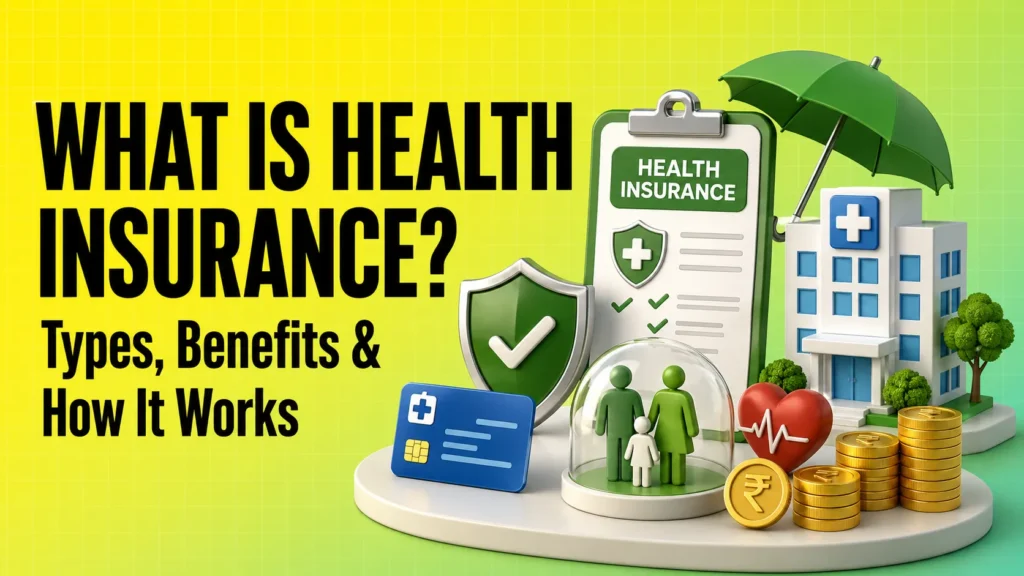
Health insurance is a type of insurance that provides financial coverage for eligible medical and hospitalisation expenses. You pay a premium to the insurance company, and the insurer pays covered expenses according to the policy terms.
The amount and type of coverage depend on the policy you choose. Important terms include:
- Premium: The amount you pay to keep the policy active.
- Sum insured: The maximum coverage available under the policy, subject to its terms and limits.
- Policy period: The period for which the policy provides coverage.
- Waiting period: A specified period during which certain conditions or treatments may not be covered.
- Network hospital: A hospital that has an arrangement with the insurer or its claims administrator for cashless treatment.
Some policies cover hospitalisation and related expenses, while others provide additional protection for specific conditions or situations.
How Does Health Insurance Work?
The basic process is simple:
- Choose a health insurance policy based on your coverage needs.
- Pay the premium to start or renew the policy.
- Receive medical treatment when required, subject to the policy terms.
- Raise a claim through the insurer or its claims process.
- Get eligible expenses covered through cashless treatment or reimbursement, depending on the claim process and policy.
With a cashless claim, you generally receive treatment at a network hospital without paying the entire eligible hospital bill upfront.
In a reimbursement claim, you pay the medical expenses first and then submit the required documents to the insurer for reimbursement of eligible expenses.
Types of Health Insurance
Different health insurance plans are designed for different needs.
Individual Health Insurance
An individual health insurance policy covers one person.
The sum insured is generally available for that insured person, subject to the policy terms.
It can be useful for people who want separate health coverage instead of depending only on an employer or family policy.
Family Floater Health Insurance
A family floater policy covers multiple family members under one shared sum insured.
For example, a family may have a ₹10 lakh floater policy. The covered members can use the available sum insured according to the policy terms.
The sum insured is shared among the insured family members rather than being separately available to each person.
Senior Citizen Health Insurance
These plans are designed for older individuals and may include coverage features suited to their healthcare needs.
Premiums, waiting periods, exclusions and eligibility conditions can vary significantly, so these details should be checked before buying a policy.
- Critical
Illness Insurance
Critical illness insurance provides benefits when the insured person is diagnosed with a specified critical illness covered by the policy.
The illnesses and conditions covered depend on the policy. Waiting periods and other conditions may also apply.
Group Health Insurance
Group health insurance covers a group of people under one policy.
Employers commonly provide group health insurance to employees. The coverage depends on the employer’s policy and terms.
If you rely on employer-provided health insurance, check what happens to the coverage when you change jobs or leave the organisation.
Top-Up and Super Top-Up Health Insurance
Top-up and super top-up plans provide additional health coverage above a specified deductible or threshold.
A top-up generally applies its deductible to an individual claim, while a super top-up can work based on eligible expenses accumulated during the policy period, depending on the policy terms.
These plans can be used to increase protection without buying a very large base policy.
Also read: What Is Super Top-Up Health Insurance?
Maternity Health Insurance
Maternity health insurance provides coverage for eligible maternity-related expenses according to the policy.
Such policies can have waiting periods, coverage limits and specific conditions. Check these details before buying the policy if maternity coverage is an important requirement.
What Does Health Insurance Cover?
Coverage depends on the policy. Common expenses that may be covered include:
- Hospitalisation expenses
- Pre-hospitalisation expenses, where covered
- Post-hospitalisation expenses, where covered
- Day-care procedures
- Ambulance expenses, where covered
- Certain medical treatments and procedures
A policy may also have exclusions, sub-limits, deductibles and waiting periods.
For example, a policy can have a sub-limit for a particular treatment. IRDAI policy documents define a sub-limit as a limit beyond which the insurer is not liable to pay for the specified expense.
So, don’t judge a health insurance policy only by its sum insured. Read the coverage conditions as well.
Benefits of Health Insurance
Protection Against Medical Expenses
Health insurance can reduce the financial impact of eligible hospitalisation and treatment expenses.
Instead of using a large part of your savings for a covered medical expense, you can use the insurance coverage according to the policy terms.
Cashless Treatment
If you receive treatment at a network hospital and the claim is approved, the insurer can settle eligible expenses directly with the hospital under the cashless process.
You may still need to pay expenses that are not covered by the policy.
Helps Protect Your Savings
A medical emergency can affect savings that you may have set aside for education, retirement, a home or other financial goals.
Health insurance provides a separate layer of financial protection for eligible medical expenses.
Coverage for Specific Medical Needs
Different policies can provide coverage suited to different needs, such as critical illness, maternity or senior citizen healthcare.
The actual benefits depend on the policy selected.
Tax Benefit
Eligible health insurance premiums can qualify for a deduction under Section 80D of the Income Tax Act, subject to applicable conditions and limits.
For AY 2026–27, the Income Tax Department lists a deduction limit of ₹25,000 for self, spouse or dependent children, increasing to ₹50,000 where the relevant insured person is a senior citizen. A separate limit applies to eligible premiums paid for parents.
Tax rules can change, so check the current Income Tax Department rules before claiming a deduction.
Also read: What Is Restoration Benefit in Health Insurance?
Why Do You Need Health Insurance?
Medical expenses can be difficult to predict. Even a single hospitalisation can require a significant amount of money.
Health insurance can help you manage this financial risk.
It can be particularly useful because:
- Medical treatment can be expensive.
- Your savings may not be enough for a major medical emergency.
- Employer-provided insurance may not provide all the coverage you need.
- Family members may have different healthcare needs.
- A separate policy can provide protection even when you change jobs, subject to its terms.
Buying insurance is not only about the premium. The coverage, exclusions, waiting periods and claim conditions also matter.
How to Choose the Right Health Insurance Plan?
Check the Sum Insured
Choose coverage that is suitable for your family size, location, healthcare needs and budget.
A very low sum insured may not provide enough protection against a large hospital bill.
Compare Premium and Coverage
Don’t select a policy only because it has the lowest premium.
Compare what you receive for that premium, including coverage, exclusions, deductibles, limits and waiting periods.
Check the Network Hospitals
Check whether hospitals you may prefer for treatment are part of the insurer’s network.
This can be important if you want to use the cashless claim facility.
Understand Waiting Periods
Some treatments and pre-existing conditions may have waiting periods.
Read these conditions before buying the policy so you know when specific coverage becomes available.
Check Exclusions and Sub-Limits
Exclusions tell you what the policy does not cover.
Sub-limits can restrict the amount payable for certain expenses. These conditions can affect the amount you actually receive during a claim.
Look at the Claim and Cashless Process
Understand how to inform the insurer, what documents are required and how cashless or reimbursement claims work.
A simple claims process can make things easier during a medical emergency.
Check Lifetime Renewability
If long-term coverage is your goal, check whether the policy provides lifetime renewability and understand the applicable terms.
Also read: Which Health Insurance Plan Is Best for Your Family in 2026?
Health Insurance vs Mediclaim
| Feature | Health Insurance | Mediclaim |
|---|---|---|
| Coverage | Can offer broader health-related coverage | Generally focuses on specified medical and hospitalisation expenses |
| Policy options | Individual, family floater, critical illness and other options | Usually focused on medical expense coverage |
| Coverage features | Can include different benefits depending on the policy | Depends on the specific plan |
| Best for | Broader health protection based on needs | Covering eligible medical expenses under the plan |
The terms are sometimes used interchangeably, but the actual coverage depends on the policy document. Always check what the specific plan covers rather than relying only on its name.
Conclusion
Health insurance helps protect your finances against eligible medical expenses. The right policy depends on your healthcare needs, family members, budget and the level of coverage you want.
Before buying a policy, compare the sum insured, premium, waiting periods, exclusions, sub-limits, network hospitals and claim process rather than looking at the premium alone.
Frequently Asked Questions
Q1. What is the difference between cashless and reimbursement claims?
In a cashless claim, you get treated at a network hospital and the insurer settles eligible expenses directly with the hospital (subject to approval). In a reimbursement claim, you pay the hospital first and then submit bills and documents to the insurer for repayment of eligible amounts.
Q2. Does health insurance cover pre-existing diseases?
Yes, but usually after a waiting period (commonly up to 3–4 years, depending on the policy and IRDAI norms). You must declare pre-existing conditions honestly at the time of buying. Non-disclosure can lead to claim rejection.
Q3. Is employer-provided group health insurance enough?
It is useful, but coverage often ends or reduces when you leave the job. Sum insured is usually lower (₹3–5 lakh is common). Many people keep an individual or family floater policy as a base so protection continues after job changes.
Q4. What is the tax benefit available on health insurance premiums?
Under Section 80D (old tax regime only), you can claim deduction on eligible premiums. Limits for AY 2026–27 are generally ₹25,000 for self, spouse and dependent children (₹50,000 if any of them is a senior citizen) and an additional limit for parents. Preventive health check-up expenses up to ₹5,000 are included within the overall limit. Tax rules can change; confirm the latest from the Income Tax Department.
Q5. What are common exclusions in health insurance policies?
Typical exclusions include pre-existing diseases during the waiting period, certain cosmetic procedures, self-inflicted injuries, treatment outside India (unless specified), and expenses beyond room-rent or procedure sub-limits. Always read the policy wording.