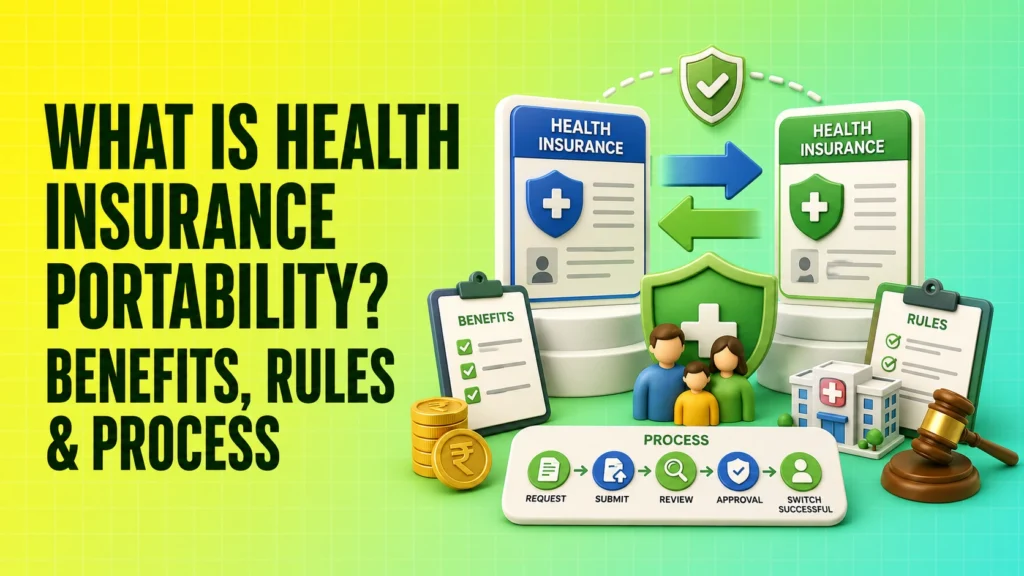
Your health insurance policy may have worked well when you first bought it. Over time, however, you may face higher premiums, poor claim support, restrictive room-rent limits or an inadequate cashless hospital network.
Buying a completely new policy can mean losing the continuity benefits earned under your existing cover. Health insurance portability provides another option. It allows you to switch to a different insurer while carrying eligible credits from your old policy.
However, portability does not guarantee the same premium, identical coverage or automatic acceptance. Before switching, you must compare the new policy carefully and complete the insurer’s underwriting process.
What Is Health Insurance Portability?
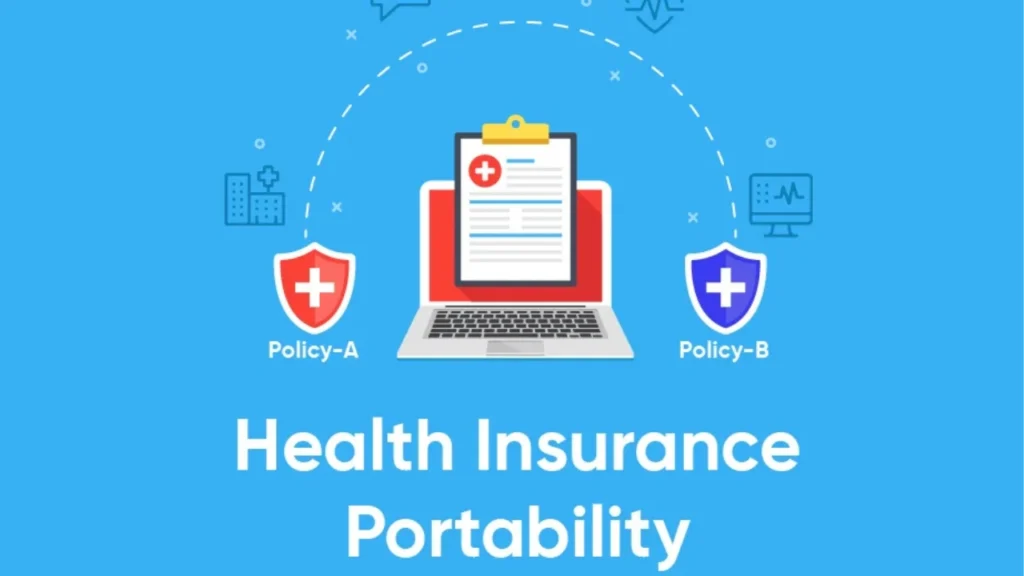
Health insurance portability allows a policyholder to move an indemnity-based health insurance policy from one insurer to another while carrying eligible continuity credits earned under the existing policy.
These credits may include:
- Base sum insured continuity
- No-claim bonus
- Completed specific-disease waiting periods
- Pre-existing disease waiting-period credit
- Moratorium-period credit
For example, suppose you have completed two years of a three-year pre-existing disease waiting period. If your portability request is accepted, you may receive credit for those two completed years instead of restarting the entire waiting period.
You can understand these continuity rules better by reading how the waiting period in health insurance works for pre-existing diseases and specific treatments.
The exact treatment depends on the coverage transferred, the new policy and its conditions.
Portability vs Migration
These two terms should not be confused.
| Term | Meaning |
|---|---|
| Portability | Moving a health insurance policy from one insurer to another |
| Migration | Moving from one policy to another policy offered by the same insurer |
Both facilities may preserve eligible continuity credits, but portability involves changing the insurance company.
Why Do People Port Health Insurance Policies?
People usually consider portability when their existing policy no longer meets their needs.
Common reasons include:
- Poor customer or claim support
- Limited cashless hospitals in their city
- Restrictive room-rent limits
- High mandatory co-payment
- Disease-wise sub-limits
- Inadequate sum insured
- Expensive renewal premium
- Better coverage available from another insurer
- Change in family or medical needs
- Repeated service-related problems
A renewal premium may sometimes increase because the policyholder enters a new health insurance premium age slab. Before porting only because of a price increase, ask the insurer whether the change is age-based, product-wide or related to your coverage.
A lower premium may appear attractive, but it should not be the only reason to switch. A cheaper policy may have stricter waiting periods, co-payment, exclusions or room-rent limits.
Port only when the new policy provides a meaningful improvement after considering all benefits and restrictions.
Benefits of Health Insurance Portability
Continuity of Waiting-Period Credits
One of the main benefits is the ability to carry forward eligible waiting-period credits.
If you have already completed part or all of a waiting period under the old policy, the completed period may be considered under the new policy, subject to portability rules and the coverage accepted by the new insurer.
Retention of Pre-Existing Disease Credit
A new policy normally applies a waiting period before covering pre-existing diseases. Through portability, credit for the period already completed under the existing policy may be retained.
This can be particularly important for people with diabetes, hypertension, asthma, thyroid conditions or previous surgeries.
Transfer of Eligible No-Claim Bonus
If your old policy has accumulated a no-claim bonus or increased coverage, eligible credit may be carried to the new insurer.
The exact treatment depends on how the old and new policies structure the bonus and sum insured.
Access to Better Policy Features
Portability gives you an opportunity to select a policy with:
- Fewer room-rent restrictions
- Lower or no co-payment
- Better restoration benefits
- Fewer disease-wise limits
- Wider treatment coverage
- Better cashless hospital access
- More suitable family coverage
Preservation of Policy Continuity
Maintaining uninterrupted coverage is important for waiting periods and the health insurance moratorium period.
Portability can help preserve eligible continuity instead of making you start again as a completely new policyholder.
Health Insurance Portability Rules
The main portability rules are summarised below.
| Rule | What It Means |
|---|---|
| Eligible policy | Portability applies to indemnity-based health insurance policies |
| Time of transfer | The switch is generally completed at renewal |
| Continuous coverage | Avoid a break between the existing and new policy |
| Underwriting | The receiving insurer can evaluate the application |
| Existing insurer’s timeline | Requested policy and claim information must be shared through the IIB portal within 72 hours |
| New insurer’s timeline | The receiving insurer must decide within five days of receiving the required information |
| Transferable credits | Eligible sum insured, no-claim bonus, waiting periods and moratorium credits may transfer |
| New premium | The premium will be based on the receiving insurer’s policy and pricing |
| Increased coverage | Additional waiting periods or underwriting may apply to the increased portion |
Start the process well before your renewal date. Many insurer procedures advise beginning approximately 45 to 60 days before renewal.
Do not wait until the existing policy has expired.
What Gets Transferred During Portability?
Health insurance portability transfers eligible continuity credits rather than the complete old policy.
Base Sum Insured Credit
Suppose your existing base sum insured is ₹5 lakh. If the new insurer accepts the portability request for ₹5 lakh, your continuity credits may be recognised up to that eligible amount.
No-Claim Bonus
Assume your ₹5 lakh policy has accumulated a ₹2 lakh no-claim bonus. The receiving insurer will consider the eligible accumulated credit under its policy structure and portability rules.
It does not necessarily have to provide the bonus in the same format as your old policy.
Pre-Existing Disease Waiting Period
The period already completed for pre-existing diseases may be credited.
For example:
- Old policy’s PED waiting period: Three years
- Period already completed: Two years
- New policy’s applicable waiting period: Three years
You may have to complete only the remaining applicable period, subject to acceptance and policy terms.
Specific-Disease Waiting Period
Credit may also apply to completed waiting periods for specified illnesses, surgeries or treatments.
Check the new policy carefully because its list of specified conditions may differ from your old policy.
Moratorium-Period Credit
The years of continuous coverage earned under the previous policy may count towards the applicable moratorium period after portability.
This makes it important to keep evidence of all previous policy renewals and avoid breaks in coverage.
What Does Not Automatically Transfer?
Portability does not copy every part of your old health policy.
The following do not automatically transfer unchanged:
- Existing premium
- Old policy features
- Room-rent eligibility
- Restoration conditions
- Add-ons and optional covers
- Hospital network
- Co-payment structure
- Deductibles
- Disease-wise sub-limits
- Claim-handling experience
- Benefits unavailable under the new product
The new Health Insurance Portability issues its own policy with its own wording, premium and conditions.
You must therefore compare the actual new policy rather than assuming it will be an improved version of the old one.
How to Port a Health Insurance Policy
Step 1: Review Your Existing Policy
Before contacting another insurer, collect and review:
- Current policy document
- Customer Information Sheet
- Latest renewal notice
- Base sum insured
- No-claim bonus
- Completed waiting periods
- Previous claim records
- Medical declarations
- Existing co-payment and sub-limits
This information will help you compare the new policy correctly.
Step 2: Identify Why You Want to Switch
Write down the main problems with your current policy.
For example:
- Your preferred hospital is not in the network.
- The policy has a room-rent limit.
- The premium is no longer affordable.
- The co-payment is too high.
- Your family needs a larger sum insured.
- Claim servicing has been poor.
Then search for a policy that directly solves those problems.
Switching to another insurer without clear requirements may leave you with similar or even stricter conditions.
Step 3: Compare the New Policy
Do not comp are Health Insurance Portability only by premium. Follow a structured process to choose the best health insurance company for your medical needs, city and preferred policy features.
Compare the following:
- Base sum insured
- Room-rent eligibility
- Pre-existing disease waiting period
- Specific-disease waiting periods
- Co-payment
- Deductibles
- Disease-wise sub-limits
- Restoration benefit
- Cashless hospitals
- Consumables coverage
- Modern treatment coverage
- Renewal premium
- Medical underwriting
Check whether your preferred hospital is currently included in the new insurer’s cashless health insurance network. A large national hospital count is not useful when dependable hospitals near your home are unavailable.
Step 4: Apply to the New Insurer
Submit the portability request to the insurer you want to join.
You may need to complete:
- Portability form
- New policy proposal form
- Health declaration
- Personal and family details
- Existing policy details
- Claim-history information
Apply well before renewal so there is enough time to complete underwriting and resolve document queries.
Step 5: Submit the Required Documents
Commonly requested documents may include:
- Current and previous policy documents
- Latest renewal notice
- Policy schedule
- No-claim bonus details
- Claim-settlement records
- Medical reports
- Discharge summaries
- Identity proof
- Address proof
- Age proof
- Portability and proposal forms
The receiving insurer may ask for additional information depending on your medical and claim history.
Step 6: Complete Medical Underwriting
Portability is a right to apply, not a guarantee of acceptance on the same terms.
After reviewing your application, the new insurer may:
- Accept the request
- Request medical reports
- Arrange medical tests
- Ask additional health questions
- Offer a different premium
- Accept the existing cover but restrict an increase
- Apply terms permitted under its underwriting policy
- Decline the proposal
Disclose all illnesses, medicines, surgeries and previous claims honestly. Portability does not remove your duty to provide accurate information.
Step 7: Review the New Policy Offer
Before paying, verify:
- Accepted sum insured
- Continuity date
- Transferred waiting-period credits
- Pre-existing disease terms
- Moratorium credit
- No-claim bonus treatment
- Co-payment
- Room-rent limit
- Permanent exclusions, if any
- Medical loading
- Add-ons
- Final premium
Ask the new insurer to explain in writing how previous waiting-period and coverage credits have been treated.
Step 8: Keep the Existing Policy Active
Do not cancel your old policy or allow it to expire until the new insurer formally accepts the application and issues the new policy.
If the portability decision is delayed close to renewal, contact both insurers immediately. Renewing the existing policy may be safer than allowing a break in coverage.
Can a Health Insurance Portability Request Be Rejected?

Yes. The receiving insurer may decline a portability request after underwriting.
Common reasons may include:
- Incomplete application
- Incorrect medical information
- Non-disclosure of previous claims
- Missing documents
- Break in policy continuity
- Late submission
- Significant adverse medical history
- High or repeated claims
- Requested cover not supported by underwriting
- Large increase in sum insured
- Product eligibility mismatch
Having made a previous claim does not automatically prevent you from applying for portability. However, the receiving insurer may examine the claim history while assessing the proposal.
If the new insurer rejects your request, continue or renew the existing policy to avoid losing continuity.
What Happens If You Increase the Sum Insured While Porting?
You can request a higher sum insured, but the increased portion may be treated differently from your existing coverage.
Suppose:
- Existing sum insured: ₹5 lakh
- New requested sum insured: ₹10 lakh
Eligible continuity credits may apply to the original ₹5 lakh. The additional ₹5 lakh may be subject to:
- Fresh underwriting
- A new pre-existing disease waiting period
- Specific-disease waiting periods
- Different approval conditions
Do not assume that the full enhanced amount will receive the same continuity credit as your previous cover.
Ask the receiving insurer for a written explanation of how the original and increased portions will be treated.
What Should You Check Before Porting?
Use this checklist before making the final decision:
- Is the new coverage meaningfully better?
- Are your preferred hospitals in the cashless network?
- Is there a room-rent restriction?
- Is co-payment compulsory?
- Are there disease-wise sub-limits?
- How will previous waiting-period credits be treated?
- Will additional waiting periods apply to enhanced coverage?
- Is medical loading being added?
- Are any permanent exclusions being proposed?
- How does the renewal premium compare?
- Does the policy provide a useful restoration benefit?
- Is the claim process clearly explained?
Also review the insurer’s health insurance claim settlement ratio together with its complaint record, policy conditions and local hospital availability. A high ratio alone does not guarantee a smooth claim experience.
Compare the Customer Information Sheet and complete policy wording instead of relying only on the sales brochure.
Portability vs Buying a Fresh Health Policy
| Factor | Portability | Buying a Fresh Policy |
|---|---|---|
| Change of insurer | Yes | Yes |
| Continuity credits | Eligible credits may transfer | Usually begin again |
| Medical underwriting | May apply | May apply |
| Waiting periods | Previous eligible period may be considered | Usually start from the beginning |
| Premium | Based on the new insurer’s rates | Based on the new insurer’s rates |
| Best suited for | Existing policyholders with useful continuity benefits | Buyers without continuity benefits or those seeking additional separate cover |
For an existing policyholder, portability may be more useful than cancelling the old policy and purchasing a completely fresh plan.
However, you can also keep your existing policy and purchase a separate top-up or super top-up when your main concern is insufficient coverage rather than poor policy conditions.
Is Health Insurance Portability Worth It?

Health insurance portability can be worthwhile when the new plan provides:
- Better coverage
- Suitable network hospitals
- Lower co-payment
- Fewer sub-limits
- Better room eligibility
- More affordable long-term premiums
- More responsive claim service
It may not be worthwhile when:
- The difference between policies is minor.
- The new insurer imposes restrictive underwriting terms.
- Valuable benefits from the old policy will not continue.
- The new hospital network is weaker in your city.
- The premium saving comes with higher out-of-pocket expenses.
- Your only concern is inadequate sum insured that can be addressed through a super top-up.
The right decision depends on the complete policy terms, not the insurer’s advertisement or premium alone.
Conclusion
Health insurance portability allows you to switch from one insurer to another while retaining eligible continuity credits earned under an existing indemnity policy.
These may include credits for the sum insured, no-claim bonus, specific waiting periods, pre-existing disease waiting periods and the moratorium period.
However, the old premium, policy features and hospital network do not transfer automatically. The receiving insurer can assess the application and offer its own terms.
Apply before renewal, disclose your medical history correctly and keep the existing policy active until the new policy is issued. Most importantly, port only when the new plan offers a genuine improvement in coverage, affordability and hospital access.