Table of Contents
You may have sent money to someone, but the payment has not reached the receiver yet. In such a situation, the bank may ask for the UTR number to identify and check the transaction.
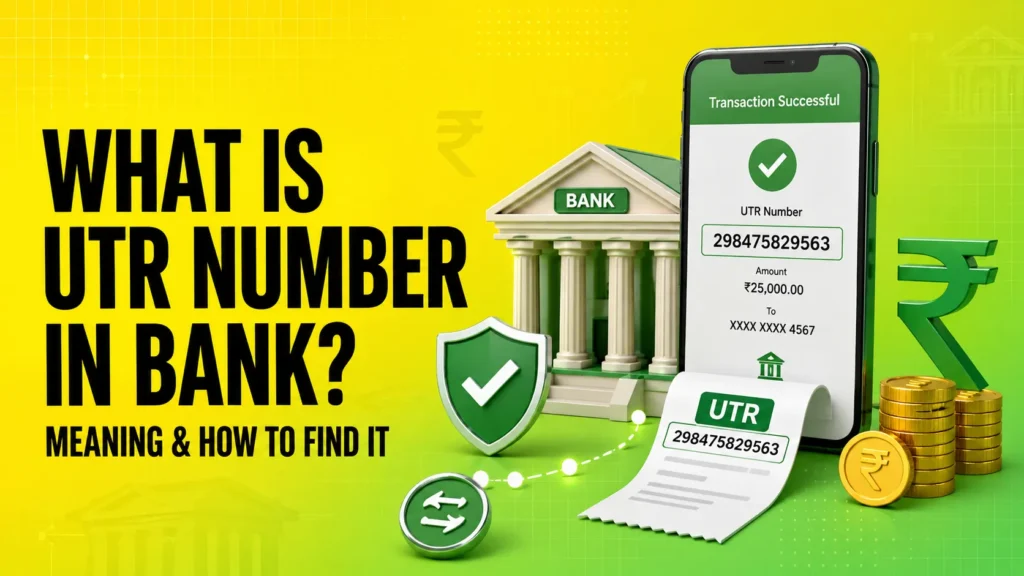
A UTR number is a unique reference linked to a bank transaction. It helps the bank identify a particular payment and is useful when checking transaction details or resolving a payment issue.
What is a UTR Number?
A UTR number stands for Unique Transaction Reference. It is a unique number or code used to identify a specific bank transaction in India.
Banks and payment systems use UTR or transaction reference numbers for payments made through methods such as NEFT, RTGS, IMPS and UPI. It helps banks find and verify a transaction when you need to check its status or report a payment issue.
What is a UTR Number Used For?
A UTR number is mainly useful for identifying and checking a specific transaction.
It can help you:
- Track a bank transfer
- Confirm transaction details
- Follow up on a delayed payment
- Resolve a payment-related issue
- Provide transaction details to the bank
- Maintain a record of a particular payment
For businesses, UTR numbers can also help match bank settlements with individual transactions during reconciliation.
Where Can You Find Your UTR Number?
You can usually find the UTR or transaction reference in your bank’s transaction details.
Common places include:
- Bank statement
- Passbook
- Internet banking
- Mobile banking app
- Transaction confirmation SMS
- Email confirmation
- Payment or UPI app
Banks may use different labels, such as UTR Number, Reference Number, Transaction Reference or Transaction ID.
How to Check UTR Number Online?
You can generally find your UTR number through internet banking or your bank’s mobile app.
Through Internet Banking
- Log in to your bank’s official internet banking website.
- Open Transaction History or Account Statement.
- Find the transaction you want to check.
- Open the transaction details.
- Look for the UTR Number, Reference Number or Transaction Reference.
The exact steps and labels can differ between banks.
Through Mobile Banking
- Open your bank’s official mobile banking app.
- Go to Transaction History or Account Statement.
- Select the relevant transaction.
- Open its details.
- Check for the UTR or reference number.
If you cannot find it, check your transaction SMS or email. You can also contact your bank through its official customer service channel.
UTR Number for NEFT, RTGS, IMPS and UPI
The reference associated with a transaction can differ depending on the payment system.
| Payment Method | Reference Used |
|---|---|
| NEFT | UTR / transaction reference |
| RTGS | UTR |
| IMPS | Transaction/reference number |
| UPI | UPI transaction reference/UTR |
For example, Razorpay’s current explanation notes that UTRs are used to identify transactions across payment methods, while banks and payment platforms may display the identifier differently.
For NEFT, the reference is commonly a 16-character alphanumeric UTR.
Do not assume that every bank will display the reference in exactly the same format.
Can You Track a Transaction With a UTR Number?
Yes, a UTR number can help the bank identify and check a particular transaction.
However, a UTR is not a live tracking number like a parcel tracking ID. It mainly acts as a unique reference for the payment.
If a transaction is delayed or the receiver has not received the money, you can provide the UTR along with:
- Transaction date
- Amount
- Sender’s account details
- Receiver’s details
- Payment method
The bank can then use the transaction reference to investigate the payment status.
UTR Number vs Transaction ID vs UPI Reference Number
These terms can be confusing because banks and payment apps may use different names.
| Term | Simple Meaning |
|---|---|
| UTR Number | Reference used to identify a particular financial transaction |
| Transaction ID | Identifier generated by a bank or payment platform for a transaction |
| UPI Reference Number | Reference associated with a UPI payment |
The label shown in your banking app may vary. So, when contacting your bank, provide the reference number shown in your transaction details along with the date and amount.
What to Do If a Transaction Is Not Received?
If money has been debited from your account but the receiver has not received it, don’t make another payment immediately.
Follow these steps:
- Check the transaction status in your banking app or internet banking.
- Find the UTR or transaction reference number.
- Check the transaction date and amount.
- Ask the receiver to check their bank account.
- Contact your bank if the payment is still unresolved.
- Provide the UTR, amount and transaction date when raising the complaint.
The UTR makes it easier for the bank to identify the exact transaction you are asking about.
What If You Cannot Find Your UTR Number?
If the UTR is not visible in your banking app, try these options:
- Check your bank statement.
- Check your passbook.
- Look at the transaction details in internet banking.
- Check the SMS or email received after the payment.
- Check the transaction details in your UPI/payment app.
- Contact your bank if you still cannot locate the reference.
Banks may use terms such as reference number or transaction reference instead of displaying the exact words “UTR Number.”
Conclusion
A UTR number is a unique reference used to identify a bank transaction. If you need to check a payment or report a delayed transaction, finding the UTR from your bank statement, app or transaction confirmation can make the process easier.
Keep the UTR and other transaction details safely available until an important payment has been successfully completed.
Frequently Asked Questions
Q1. What is a UTR number in bank?
A UTR number is a Unique Transaction Reference used to identify a specific financial transaction. It helps banks and customers locate and check transaction details.
Q2. What is the full form of UTR?
The full form of UTR is Unique Transaction Reference.
Q3. Where can I find my UTR number?
You can usually find it in your bank statement, transaction history, mobile banking app, internet banking, SMS or email confirmation. It may appear as a UTR, reference number or transaction reference.
Q4. Can I track a transaction using a UTR number?
Yes. A UTR helps the bank identify a particular transaction and check its status. If a payment is delayed or not received, provide the UTR to your bank along with the transaction date and amount.
Q5. Is UTR the same as a transaction ID?
Not always. Banks and payment platforms can use different identifiers and labels. A UTR specifically refers to a transaction reference, while “transaction ID” can be a broader term used by a bank or payment platform.