What Is Term Life Insurance?

Term life insurance is a type of life insurance policy that provides coverage for a specific period, known as the policy term. If the policyholder passes away during the policy period, the insurer pays the death benefit to the nominee, according to the policy terms.
Unlike permanent life insurance policies, term insurance generally focuses only on providing financial protection and does not usually include a cash-value component.
Key Features of Term Life Insurance
- Coverage available for a fixed period
- Usually lower premiums compared to permanent life insurance
- Provides a death benefit to beneficiaries
- Simple and easy-to-understand structure
- Designed mainly for financial protection
Benefits of Term Life Insurance
1. Affordable Premiums
- Term life insurance is usually cheaper than other types of life insurance.
- It provides life protection without an investment feature, which keeps the cost low.
- People can get good coverage at a lower price.
2. Higher Coverage Amount
- Since premiums are affordable, people can choose a higher insurance coverage amount.
- Higher coverage helps provide better financial security for the family.
3. Suitable for Income Replacement
- Term insurance helps replace the income of the insured person if they pass away.
- It supports family members with daily expenses, education costs, and other financial needs.
- It helps dependents manage their future expenses more easily.
What Is Whole Life Insurance?

Whole life insurance is a type of permanent life insurance that provides coverage for the policyholder’s entire life, provided that premiums are paid according to the policy terms.
Some whole life insurance policies may also include a cash value component that can grow over time, based on the policy structure and applicable conditions.
Read More: Types of Life Insurance Plans
Key Features of Whole Life Insurance
- Provides lifelong coverage
- May include a cash value component
- Premiums are generally higher than term insurance
- Designed for long-term financial planning
- Can provide benefits beyond basic protection
Benefits of Whole Life Insurance
Lifetime Coverage
Unlike term insurance, which covers a specific period, whole life insurance is designed to provide coverage throughout the policyholder’s lifetime.
Cash Value Growth
Some whole life policies build cash value over time. Depending on the policy terms, these values may provide additional financial benefits.
Estate and Legacy Planning
Whole life insurance can be used as part of long-term financial planning strategies, especially for individuals who want to leave a financial legacy to their heirs.
Term Life Insurance vs Whole Life: Key Differences
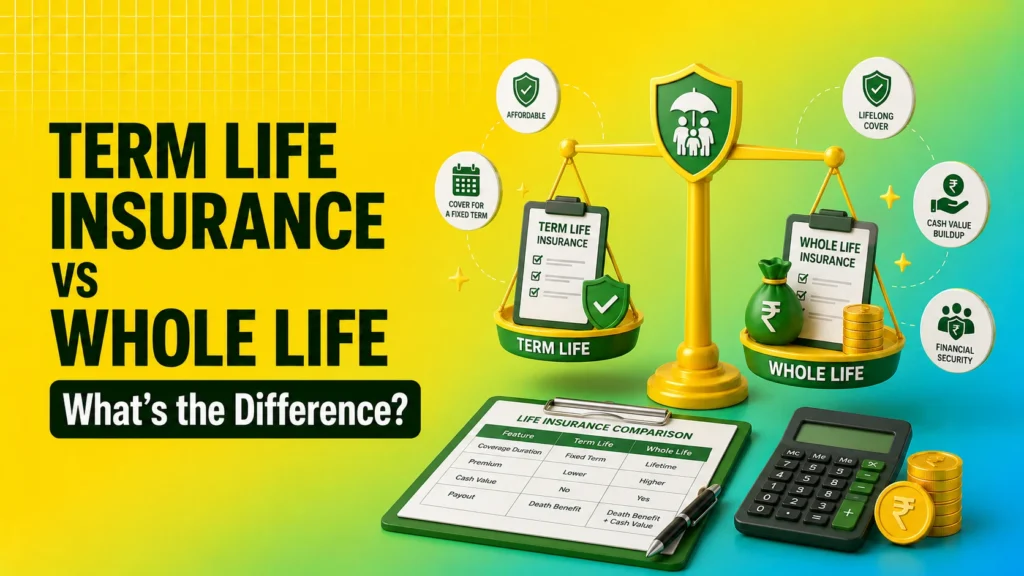
| Feature | Term Life Insurance | Whole Life Insurance |
|---|---|---|
| Coverage Period | Fixed policy term | Lifetime coverage |
| Premium Cost | Generally lower | Generally higher |
| Cash Value | Usually not included | May include cash value |
| Main Purpose | Income protection | Long-term financial planning |
| Complexity | Simple structure | More complex |
| Flexibility | Focused on protection | Includes additional features |
Term Life Insurance vs. Whole Life: Which Is More Affordable?
Cost is one of the biggest differences when comparing Term Life Insurance with Whole Life insurance.
Term life insurance is generally more affordable because it provides pure protection without savings or investment components. This allows individuals to obtain higher coverage at a lower premium.
Whole life insurance typically costs more because it provides lifelong coverage and may include additional features, such as cash value accumulation.
The right choice depends on the financial situation, protection needs, and long-term objectives.
Who Should Consider Term Life Insurance?
Term life insurance may be suitable for individuals who:
- Have financial dependents
- Want affordable life coverage
- Need income replacement protection
- Have loans or major financial responsibilities
- Want simple insurance coverage
For example, a person with a family and long-term financial commitments may prefer term insurance because it provides substantial protection at a relatively low cost.
Read More: ULIP Advantages and Disadvantages
Who Should Consider Whole Life Insurance?
Whole life insurance may be suitable for individuals who
- Want lifelong coverage
- Prefer permanent insurance protection
- Are interested in legacy planning
- Have long-term financial goals
- Understand the higher premium commitment
However, individuals should carefully review the policy terms, fees, and benefits before choosing a whole life insurance plan.
Factors to Consider Before Choosing Life Insurance
1. Your Financial Goals
Before selecting a policy, consider why you need insurance coverage. Your goal may be to protect your family, plan for future financial needs, or create a legacy.
2. Your Budget
Premium affordability is an important consideration. Choose a policy that can be maintained comfortably over the long term.
3. Coverage Requirements
Consider your income, family responsibilities, debts, and future expenses when deciding on the required coverage amount.
4. Policy Duration
Determine whether you need coverage for a specific period or lifelong protection.
5. Understand Policy Terms
Policy documents, including exclusions, benefits, premium requirements, and withdrawal conditions, should be reviewed carefully.
Common Mistakes to Avoid When Buying Life Insurance
Choosing Only Based on Premium Price
The cheapest policy may not always provide adequate protection. Consider the coverage benefits and policy features.
Not Buying Enough Coverage
Selecting insufficient coverage may leave your family financially vulnerable to unexpected events.
Ignoring Policy Conditions
Always understand important terms, including exclusions and claims conditions.
Mixing Insurance and Investment Without Understanding
Some policies combine insurance and investment features to provide comprehensive coverage. Understand how they work before making decisions.
Conclusion
The comparison between Term Life Insurance and Whole Life insurance depends on individual financial goals, protection needs, and budget. Term life insurance generally focuses on affordable financial protection for a specific period, whereas whole life insurance provides lifelong coverage with additional features.
There is no single option that is best for all. The right choice depends on family responsibilities, financial plans, and long-term objectives.
Before purchasing any life insurance policy, compare options carefully, understand the policy terms, and choose coverage that supports your financial security.