Taxes play a vital role in every country’s economy by helping governments fund public services, infrastructure, healthcare, education, defence, and various welfare programmes. Whether you’re a salaried employee, business owner, investor, or consumer, you pay taxes in different forms throughout your life.
Taxes are broadly divided into Direct Tax and Indirect Tax. Although both generate government revenue, they differ significantly in terms of who pays the tax, how it is collected, and whether the tax burden can be transferred to another person.
Understanding the difference between direct and indirect taxes helps individuals make informed financial decisions, understand tax obligations, and improve overall financial awareness.
This guide explains the meaning of direct tax and indirect tax, their features, examples, advantages, disadvantages, and the key differences between them.
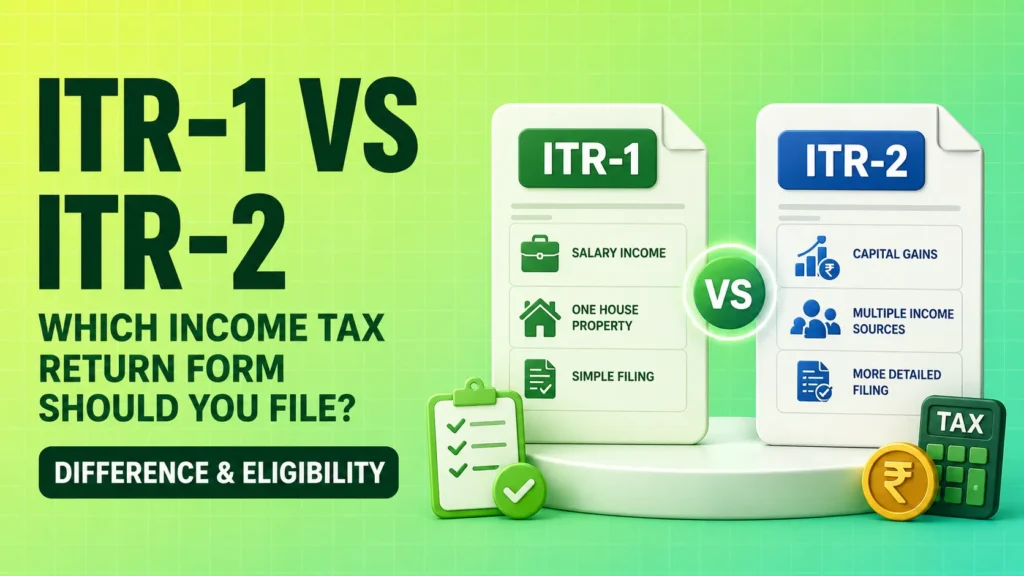
Read More: ITR-1 vs ITR-2
Table of Contents
What Is a Direct Tax?
A Direct Tax is a tax that is paid directly by an individual or organisation to the government. The person or business responsible for paying the tax cannot transfer the tax burden to someone else.
In simple terms, if you earn income, own taxable assets, or generate taxable profits, you pay the applicable direct tax yourself.
Direct taxes are generally based on a person’s income, profits, or wealth, making them directly linked to the taxpayer.
What Is an Indirect Tax?
An Indirect Tax is a tax collected on the sale of goods and services. Although businesses collect the tax and deposit it with the government, the actual tax burden is usually borne by the final consumer through the purchase price.
In other words, the seller acts as an intermediary, while the customer ultimately pays the tax when buying eligible goods or services.
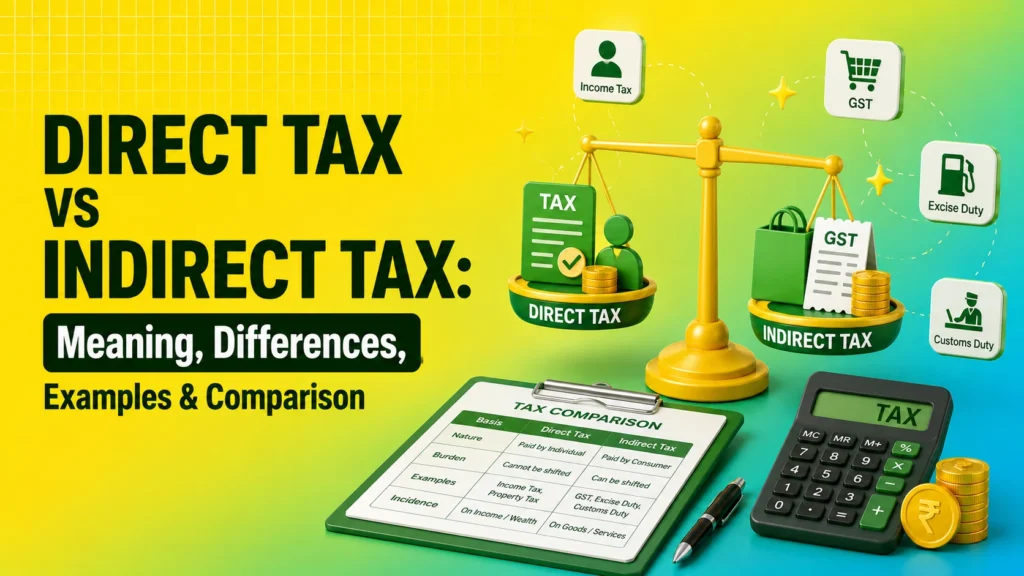
Direct Tax vs Indirect Tax: Quick Comparison
| Basis | Direct Tax | Indirect Tax |
|---|---|---|
| Meaning | Paid directly to the government by the taxpayer | Collected through the sale of goods and services |
| Tax Burden | Cannot generally be shifted | Usually passed on to the final consumer |
| Who Pays? | Individual or business earning income or profits | Consumer purchasing goods or services |
| Collected By | Government tax authority | Businesses on behalf of the government |
| Based On | Income, profits, or taxable assets | Consumption of goods and services |
| Payment Frequency | According to applicable tax rules | Paid whenever taxable goods or services are purchased |
| Visibility | Paid directly by the taxpayer | Included in the price paid by consumers |
| Main Objective | Tax income and profits | Tax consumption and spending |
Features of Direct Tax
Direct taxes have several important characteristics.
Paid Directly to the Government
The taxpayer pays the tax directly to the relevant government authority.
Based on Income or Profits
The amount of tax generally depends on taxable income, profits, or other taxable assets.
Burden Cannot Normally Be Shifted
The person liable for the tax is responsible for paying it and cannot usually transfer that liability to another person.
Supports Revenue Collection
Direct taxes contribute significantly to government revenue used for public services and development.
Features of Indirect Tax
Indirect taxes have a different structure.
Levied on Goods and Services
They apply when taxable goods or services are sold or supplied.
Paid by Consumers
The final consumer generally bears the tax through the purchase price.
Collected by Businesses
Businesses collect the applicable tax and remit it to the government according to the law.
Linked to Consumption
The more taxable goods and services a person purchases, the more indirect tax they may pay.
Examples of Direct Tax
Some common examples include:
- Income Tax
- Corporate Tax
- Capital Gains Tax
- Property Tax (where applicable under local laws)
- Inheritance or Estate Tax (in countries where applicable)
The exact taxes vary depending on the country’s tax laws.
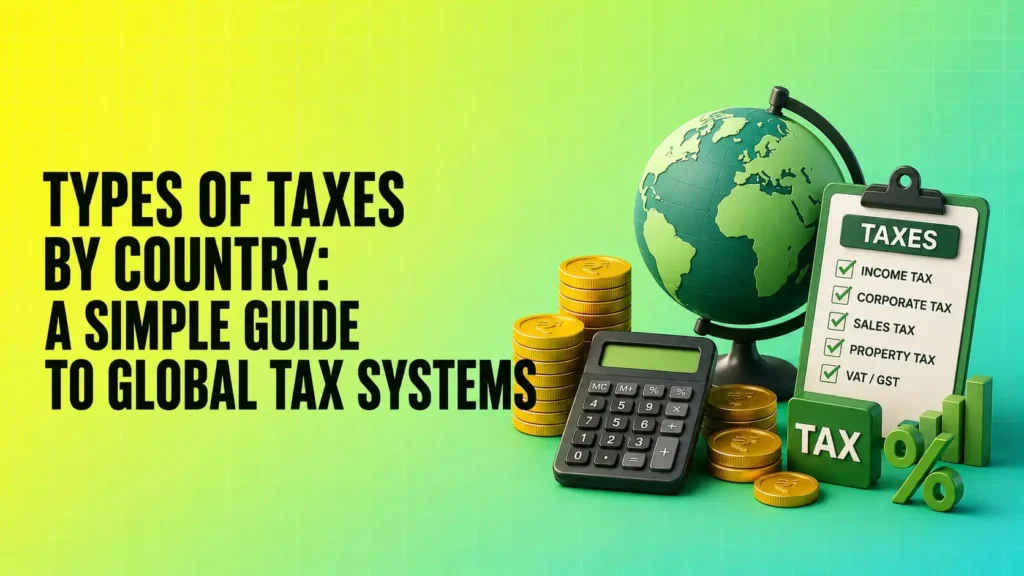
Read More: Types of Taxes by Country
Examples of Indirect Tax
Common examples include:
- Goods and Services Tax (GST)
- Value Added Tax (VAT)
- Sales Tax
- Excise Duty
- Customs Duty
The taxes applicable to consumers differ across countries and jurisdictions.
Advantages of Direct Tax
Fairer Tax System
Direct taxes are generally linked to taxable income or profits.
Stable Government Revenue
They provide an important source of revenue for governments.
Greater Transparency
Taxpayers know the amount they are paying.
Helps Economic Planning
Governments use direct tax revenue to fund public programmes and infrastructure.
Advantages of Indirect Tax
Easy to Collect
Businesses collect the tax during transactions.
Broad Tax Base
Almost everyone purchasing taxable goods or services contributes indirectly.
Regular Revenue
Governments receive continuous revenue through everyday economic activity.
Encourages Tax Compliance
Collection through registered businesses can simplify administration.
Disadvantages of Direct Tax
- Can reduce disposable income.
- Filing requirements may be more complex.
- Non-compliance can attract penalties under applicable laws.
- Tax planning requires proper understanding of regulations.
Disadvantages of Indirect Tax
- Consumers pay tax regardless of income level when purchasing taxable goods or services.
- It increases the final purchase price.
- Frequent tax changes may affect pricing.
- Businesses have compliance and reporting responsibilities.
Key Differences Between Direct Tax and Indirect Tax
The primary difference lies in who bears the tax burden.
In direct taxation, the taxpayer pays the tax directly to the government and is generally responsible for that liability.
In indirect taxation, businesses collect tax during the sale of goods or services, while the final consumer usually bears the cost.
Direct taxes focus on income and profits, whereas indirect taxes focus on consumption and spending.
Read More: How to Download GST Registration Certificate
Which Is Better: Direct Tax or Indirect Tax?
Neither direct tax nor indirect tax is universally better than the other.
Both serve different purposes within a country’s tax system.
Direct taxes help governments collect revenue based on taxable income and profits, while indirect taxes generate revenue through the consumption of goods and services.
A balanced tax system typically relies on both forms of taxation to support public finances.
Common Misconceptions
Direct Tax Means Only Income Tax
Incorrect. Direct taxes can include other taxes depending on a country’s laws, such as corporate tax or capital gains tax.
Indirect Tax Is Paid Only by Businesses
Incorrect. Businesses collect the tax, but the final consumer usually bears the tax through the purchase price.
Direct Tax and Indirect Tax Are the Same
No. They differ in their purpose, collection method, taxpayer responsibility, and tax burden.
Conclusion
Direct tax and indirect tax are two essential components of every modern tax system. While direct taxes are paid directly by individuals or businesses based on taxable income or profits, indirect taxes are collected through the purchase of taxable goods and services and are generally borne by the final consumer.
Understanding the meaning, features, examples, and differences between these two types of taxes helps individuals and businesses better understand how taxation works. Instead of viewing one type as better than the other, it is more useful to recognise that both play different but complementary roles in supporting government revenue and public services.
FAQs
What is the main difference between direct tax and indirect tax?
Direct tax is paid directly by the taxpayer to the government, whereas indirect tax is generally collected by businesses and ultimately borne by the consumer.
What are examples of direct taxes?
Examples include Income Tax, Corporate Tax, and Capital Gains Tax, depending on the country’s tax laws.
What are examples of indirect taxes?
Examples include GST, VAT, Sales Tax, Excise Duty, and Customs Duty.
Can direct tax be transferred to another person?
Generally, no. The taxpayer responsible for the liability pays the tax directly.
Why are indirect taxes included in product prices?
Indirect taxes are typically collected at the point of sale and form part of the final amount paid by the consumer.