P2P lending, or peer-to-peer lending, is a way of borrowing and lending money through an online platform that connects borrowers with lenders. Unlike a traditional loan, where a bank or NBFC provides the funds, a P2P platform facilitates the connection between people who need money and people willing to lend.
In India, P2P lending platforms operate under the Reserve Bank of India (RBI) framework for NBFC-P2P platforms. However, RBI regulation does not mean that lenders receive guaranteed returns or protection against borrower defaults
Also read: What is Retail Loan? Types of Retail Loans
What Is P2P Lending?
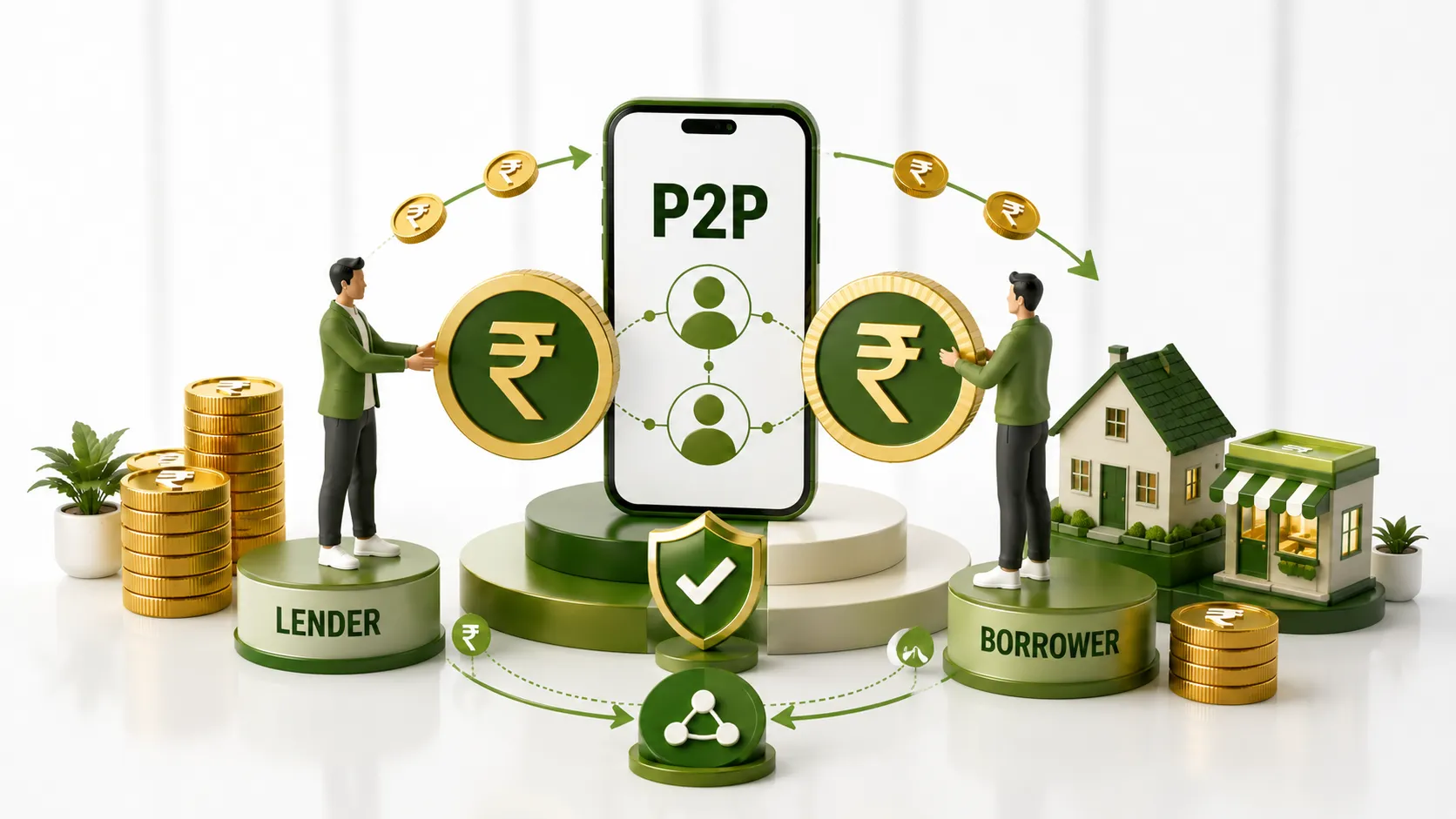
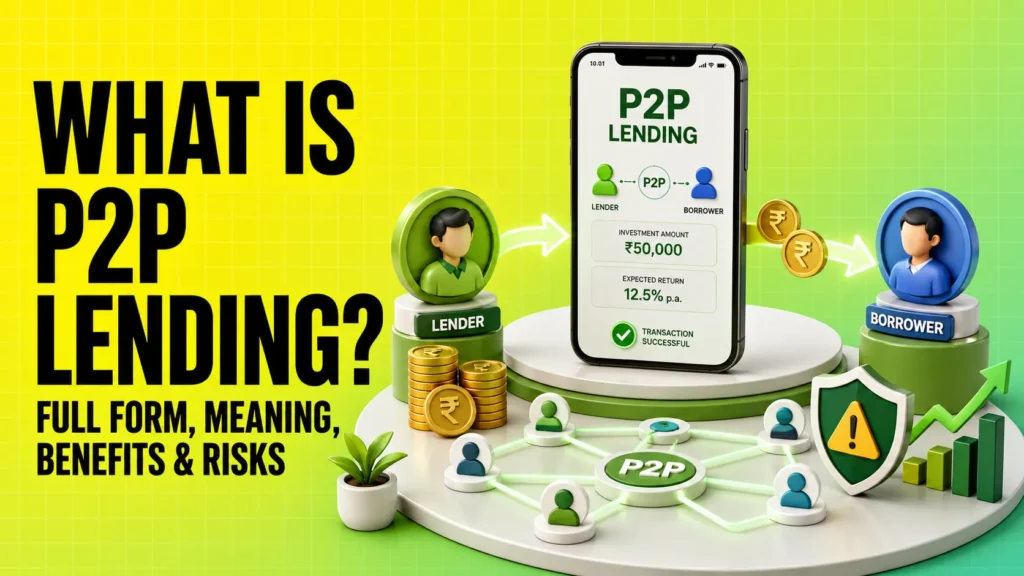
P2P lending stands for Peer-to-Peer lending. It is a lending model in which an online platform connects borrowers with lenders.
A borrower can apply for a loan through the platform, while lenders can choose lending opportunities based on the information and risk assessment provided by the platform.
P2P loans are generally unsecured, meaning they are not backed by collateral. This makes the borrower’s ability and willingness to repay particularly important for lenders.
For example, suppose a person needs a ₹1 lakh loan. Instead of receiving the money directly from a bank, the person may get the loan funded by one or more lenders through a P2P platform.
The platform acts as an intermediary and facilitates activities such as borrower assessment, documentation, disbursement, repayment and recovery.
How Does P2P Lending Work?
The P2P lending process generally works as follows:
- Borrower applies for a loan: The borrower registers on a P2P platform and provides the required information.
- Verification and assessment: The platform conducts KYC, due diligence and credit assessment.
- Loan details are presented: Eligible borrowers and their loan information are made available to potential lenders.
- Lenders provide funds: Lenders choose suitable lending opportunities based on their risk preferences.
- Loan is disbursed: The funds are transferred through the mechanism prescribed under the applicable RBI framework.
- Borrower repays: The borrower makes repayments according to the agreed schedule.
- Lender receives repayment: The applicable principal and interest are passed on to the lender.
An NBFC-P2P platform can facilitate loan documentation, disbursement, repayment and recovery. It also has responsibilities related to borrower credit assessment and risk profiling.
Also read: Personal Loan EMI Calculator
Is P2P Lending Legal in India?
Yes. P2P lending is legal and regulated in India.
The RBI brought P2P lending platforms under its regulatory framework in 2017 and established rules for the registration and operation of NBFC-P2P platforms. Such platforms require the appropriate RBI registration to operate as NBFC-P2Ps.
However, being RBI-regulated does not mean that a P2P loan or investment is risk-free. A P2P platform cannot simply guarantee repayment to lenders or remove the credit risk associated with the borrower.
This distinction is important: RBI regulation provides a framework for operating the platform; it does not guarantee a lender’s principal or return.
What Are the Benefits of P2P Lending?
P2P lending can offer benefits to both borrowers and lenders.
Benefits for Borrowers
- Alternative source of credit: P2P platforms provide another option besides traditional banks and NBFCs.
- Online process: Application and documentation can generally be completed through a digital platform.
- Multiple lending options: Depending on the platform, borrowers may be matched with different lenders.
- Access to formal lending: P2P platforms can provide an additional channel for people seeking credit.
Benefits for Lenders
- Potential interest income: Lenders can earn interest when borrowers repay their loans.
- Choice of borrowers: Platforms may provide information that helps lenders assess available lending opportunities.
- Portfolio diversification: Lenders may spread funds across multiple borrowers, subject to applicable rules and platform arrangements.
However, potential returns should not be confused with guaranteed returns.
What Are the Risks of P2P Lending?
The biggest risk for a P2P lender is borrower default.
If a borrower fails to repay, the lender can lose some or all of the principal and expected interest. RBI’s framework requires platforms to disclose that lenders can face the possibility of losing the entire principal in case of default.
Other risks include:
- Borrower default: The borrower may delay or stop repayments.
- Principal loss: A lender may not recover the full amount lent.
- No guaranteed returns: Interest income depends on successful repayment.
- Liquidity risk: Money lent through a P2P arrangement may not be as easily accessible as money kept in a savings account.
- Credit risk: The lender ultimately bears the credit risk associated with the loan.
For borrowers, the key risks include the cost of borrowing, repayment obligations and the consequences of missed payments.
What Are the RBI Rules for P2P Lending?
RBI has established specific rules for NBFC-P2P platforms in India.
Some important requirements include:
- P2P platforms need the required RBI registration to operate as NBFC-P2Ps.
- The platform acts as an intermediary rather than a traditional lender.
- An NBFC-P2P cannot provide a credit guarantee or credit enhancement for loans.
- The platform cannot assume the credit risk of loans facilitated through it.
- Platforms must conduct due diligence and credit assessment of participants.
- Relevant information must be provided to prospective lenders.
- Fund transfers must follow the prescribed escrow mechanism.
- Platforms must disclose relevant portfolio and loan-performance information.
The RBI framework has also faced closer supervision in recent years. In 2025, the government noted that RBI had updated its Master Directions and taken supervisory action against certain NBFC-P2P platforms for regulatory violations.
Can P2P Platforms Guarantee Returns?
No.
P2P lending platforms cannot present lending as a guaranteed-return product. The lender bears the credit risk of the borrower, and a default can result in loss of principal.
This is one of the most important differences between P2P lending and traditional bank deposits.
P2P Lending vs Personal Loan
| Feature | P2P Lending | Personal Loan |
|---|---|---|
| Main parties | Borrower and lender(s) | Borrower and bank/NBFC |
| Platform role | Facilitates lending | Bank/NBFC provides the loan |
| Funding | Individual or multiple lenders | Bank/NBFC funds the loan |
| Collateral | Generally unsecured | Usually unsecured |
| Credit risk | Lender bears borrower risk | Bank/NBFC bears lending risk |
| Guaranteed return | No | Not applicable |
A personal loan is a credit product provided by a bank or NBFC. P2P lending instead uses a platform to connect borrowers and lenders.
Is P2P Lending Safe?
P2P lending is regulated but not risk-free.
For borrowers, it can provide an alternative way to access credit. For lenders, it can provide an opportunity to earn interest, but the lender can lose money if the borrower defaults.
Before using a P2P platform, check:
- Whether it is an RBI-registered NBFC-P2P
- Fees and charges
- Risk disclosures
- Borrower assessment process
- Loan and portfolio performance information
- Default and recovery information
- Terms governing repayments and withdrawals
Avoid treating P2P lending as equivalent to a bank fixed deposit or any other product with guaranteed repayment.
Conclusion
P2P lending is an alternative lending model that connects borrowers and lenders through an online platform. In India, P2P platforms operate under the RBI’s NBFC-P2P regulatory framework.
For borrowers, P2P lending can provide another source of credit. For lenders, it can provide an opportunity to earn interest, but it comes with borrower default and principal-loss risk.
Before using a P2P platform, understand its fees, risk disclosures, repayment process and RBI registration status. Most importantly, remember that P2P lending returns are not guaranteed.