Insurance helps protect you and your family from unexpected financial losses. A sudden hospital bill, an accident, damage to your home or the loss of an earning family member can affect your savings. The right insurance policy can reduce this financial burden.
There are different types of insurance in India, and each one offers protection against a specific risk. Some policies cover medical expenses, while others protect your family, vehicle, home or travel plans.
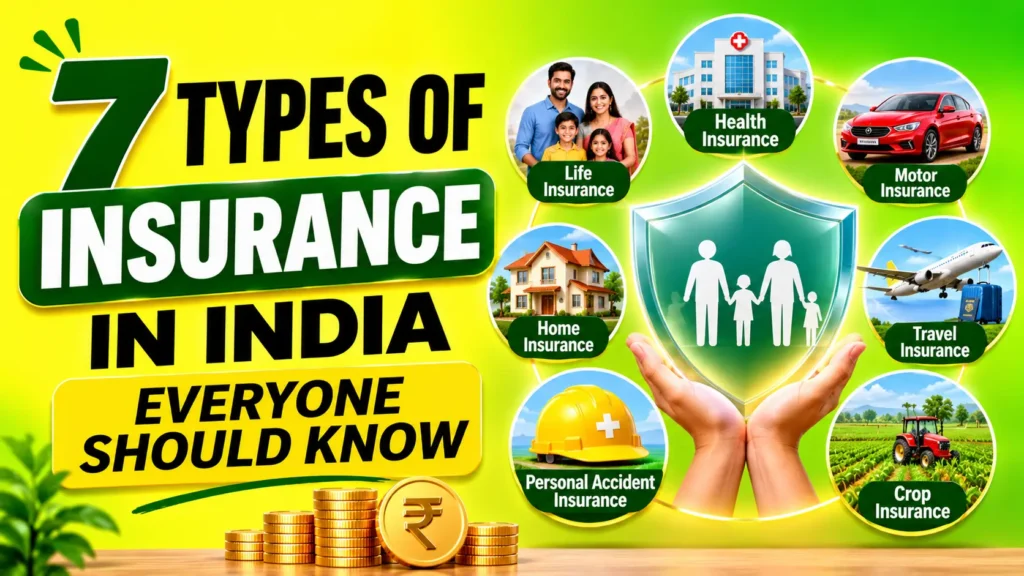
Let’s understand the 7 important types of insurance in simple words.
1. Term Insurance
Term insurance is a type of life insurance that provides financial protection to your family if you die during the policy period.
For example, if an earning member has a ₹50 lakh term insurance policy, the nominee may receive the sum assured if the insured person dies during the policy term, subject to policy conditions.
Who may need it? People who have financial dependants, such as a spouse, children or parents.
Also Read: Term Insurance Calculator: Estimate Cover & Premium
2. Health Insurance
Health insurance helps cover medical expenses when you are hospitalised due to an illness or accident. Depending on the policy, it may also cover expenses such as pre- and post-hospitalisation treatment.
For example, if your hospital bill is ₹2 lakh and your policy covers the treatment, the insurer may pay the eligible amount as per the policy terms.
Who may need it? Individuals, families and working professionals who want protection against unexpected medical expenses.
Also Read: What Is Health Insurance? Types, Benefits & How It Works
3. Life Insurance
Life insurance provides financial protection to your nominee if the insured person dies during the policy term.
Some life insurance policies also include a savings or investment component. For example, endowment and money-back plans may provide a maturity benefit if the policyholder survives the policy term, subject to the policy conditions.
Term insurance is also a type of life insurance. The main difference is that a pure term plan focuses on life cover, while savings-linked plans combine insurance with a savings benefit.
Who may need it? People looking for life cover along with a savings-related benefit. Compare the premium, life cover and maturity conditions before choosing a policy.
Also Read: What Is Surrender Value in Life Insurance? Formula, Calculation & Examples
4. Vehicle Insurance
Vehicle insurance protects you against certain financial losses related to your car, bike or other insured vehicle.
There are two common types:
Third-party insurance: Covers eligible legal liabilities for injury, death or property damage caused to a third party.
Comprehensive insurance: Generally includes third-party cover and own-damage cover for your insured vehicle, subject to policy terms.
In India, third-party motor insurance is legally mandatory for vehicles used in public places under the Motor Vehicles Act, 1988.
Who may need it? Every vehicle owner must maintain valid third-party insurance. You can consider additional own-damage cover to protect your vehicle.
Also Read: What Is Third-Party Car Insurance?
5. Travel Insurance
Travel insurance provides financial protection against certain unexpected problems during a trip. Depending on the policy, it may cover:
Emergency medical expenses during travel
Trip cancellation or interruption
Loss of checked-in baggage
Travel delays or missed connections
For example, if you fall ill during an international trip, travel insurance may cover eligible medical expenses.
Who may need it? People travelling within India or abroad, especially those taking international trips. Check the destination’s visa and insurance requirements before travelling.
Also Read: Travel Insurance: Coverage, Cost, Exclusions & Buying Tips
6. Home Insurance
Home insurance protects your house or household belongings against specific risks covered by the policy.
Depending on the plan, it may cover:
Damage to the building due to covered events such as fire or certain natural disasters.
Household items such as furniture, appliances and electronics.
Theft or burglary of insured belongings, if included in the policy.
For example, if a fire damages your insured home, the policy may cover eligible repair or replacement costs.
Who may need it? Homeowners who want to protect their property and belongings. Some policies also offer cover for tenants’ household contents.
7. Personal Accident Insurance
Personal accident insurance provides financial benefits if an insured person suffers accidental death or disability. The benefits depend on the policy and the type of injury.
For example, if an accident causes permanent disability, the policy may pay a benefit according to its coverage terms.
One government-backed option is the Pradhan Mantri Suraksha Bima Yojana (PMSBY).
Annual premium: ₹20 per person.
Eligibility: Individuals aged 18–70 years with an eligible bank or post office account.
Cover: ₹2 lakh for accidental death or specified permanent total disability, and ₹1 lakh for specified permanent partial disability.
The premium is generally deducted from the linked account through auto-debit. PMSBY is a one-year scheme that can be renewed annually.
Who may need it? People who want additional financial protection against accidental death or disability.
Which Type of Insurance Do You Need?
The right insurance depends on your age, income, family responsibilities and lifestyle.
Students: Health insurance and personal accident cover may be useful, depending on existing family coverage.
Working professionals: Health insurance and term insurance can help protect against medical costs and financial responsibilities.
Parents with children: Term insurance and family health insurance can help protect their family’s financial future.
Vehicle owners: Valid third-party motor insurance is mandatory. Additional cover can protect your own vehicle.
Homeowners: Home insurance can help protect the building and household belongings.
You do not need to buy every type of insurance at once. Start by understanding your financial responsibilities and the risks you want to cover.
Conclusion
Different types of insurance protect you against different financial risks. Health insurance covers eligible medical expenses, term insurance protects your family, and vehicle and home insurance help protect your valuable assets.
Before buying any policy, check its coverage, exclusions, waiting periods, premium and claim conditions. Choose insurance based on your actual needs rather than buying a policy only because it is popular.