If you own or drive a car in India, having valid motor insurance is a legal requirement for using the vehicle on public roads. Third-party car insurance, also known as third party vehicle insurance, provides basic liability protection required under Indian motor insurance rules.
This type of insurance does not generally cover damage to your own car. Instead, it protects you against covered legal liabilities arising from injury, death, or property damage caused to a third party by your vehicle.
In this article, we explain what third-party car insurance means, how it works, what it covers, what it does not cover, and when comprehensive insurance may be needed.
What Is Third-Party Car Insurance?
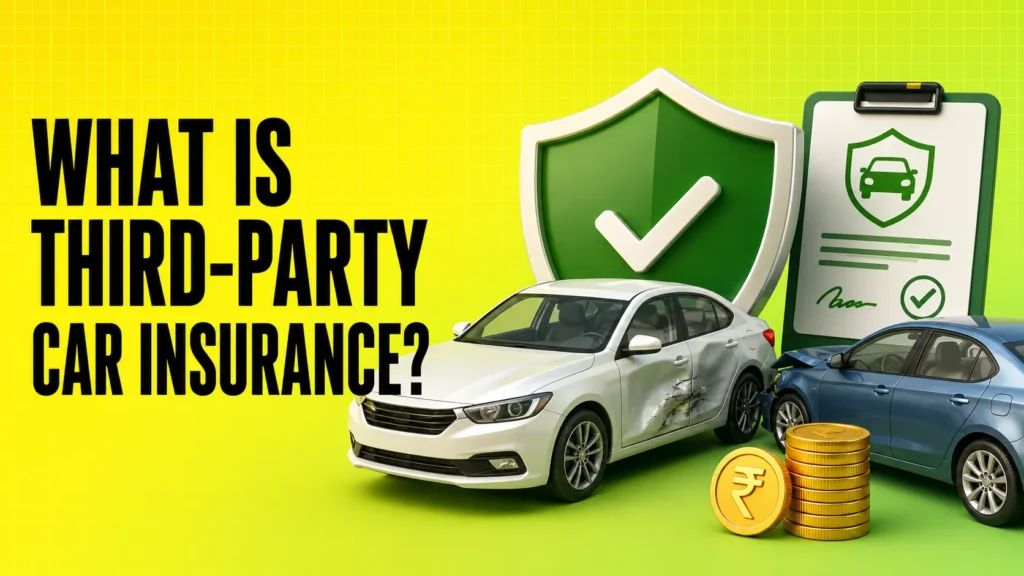
Third-party car insurance is a motor insurance policy that covers the policyholder’s legal liability to a third party arising from the use of the insured vehicle, subject to the policy terms and applicable law.
In simple terms:
- First party: The policyholder or insured.
- Second party: Insurance company.
- Third party: Another person who suffers injury, death, or property damage in connection with an accident involving the insured vehicle.
For example, if your car causes an accident that damages another person’s vehicle or injures another person, third-party insurance can protect you against liability.
It generally does not cover damage to your own car. For protection against damage to your own vehicle, you may need an own-damage or comprehensive policy.
How Does Third-Party Vehicle Insurance Work?
The basic process is as follows:
1. An Accident Occurs
Your vehicle is involved in an accident that causes injury, death, or property damage to another person.
2. A Third-Party Claim Is Made
The affected third party can initiate a claim for compensation through the applicable legal and claims processes.
3. The Insurer Handles the Covered Liability
Your insurance company deals with covered liability according to the policy terms and applicable law.
4. Compensation Is Determined
The compensation payable depends on the nature of the loss, applicable law, and relevant claims or legal processes.
Therefore, having valid third-party vehicle insurance can protect you from having to bear covered third-party liabilities entirely from your own funds.
What Does Third-Party Insurance Cover
Third-party car insurance primarily covers legal liability to third parties.
1. Third-Party Property Damage
If your vehicle damages another person’s property, the policy can cover the applicable liability, subject to the policy terms and legal limits.
This may include damage to the following:
- Another vehicle
- A wall, gate or building
- Certain public property
2. Bodily Injury or Death of a Third Party
Third-party insurance provides protection against legal liability arising from bodily injury or death caused to a third party by the insured vehicle.
3. Legal Liability
This policy provides financial protection against covered third-party liability claims arising from the use of the insured vehicle.
The exact extent of cover, exclusions, and claims process depend on the applicable policy wording and Indian motor insurance regulations.
What Third-Party Insurance Does Not Cover
Third-party vehicle insurance is limited to liabilities towards third parties. It does not generally cover damage to your vehicle.
This typically does not cover:
- Damage to your own car: Repairs after an accident may have to be paid by you.
- Theft of your car: A third-party-only policy does not generally compensate you if your vehicle is stolen.
- Fire or natural-event damage to your car: Own-vehicle losses from events such as fire or certain natural disasters require appropriate own-damage coverage.
- Your medical expenses: Third-party liability coverage should not be confused with personal accident or health insurance.
If you want protection for your own car, you may need comprehensive or own-damage insurance, depending on your requirements and circumstances.
Benefits of Third-Party Vehicle Insurance
1. Legal Compliance
Third-party motor insurance is the basic mandatory insurance requirement for vehicles on public roads in India.
2. Lower Premium
Third-party insurance generally has a lower premium than policies that provide own-damage protection.
This makes it suitable for drivers seeking basic liability protection at a relatively lower cost.
3. Protection Against Third-Party Liabilities
An accident can result in significant financial liability if another person is injured or their property is damaged.
Third-party insurance provides protection against covered liabilities under applicable policies and laws.
4. Peace of Mind
Having valid third-party vehicle insurance means that you have the required basic liability protection while driving on public roads.
Limitations of Only Having Third-Party Cover
Third-party insurance protects you against covered liabilities toward others, but it does not generally protect your own vehicle.
1. Your Car Repairs Are Not Covered
If your car is damaged in an accident, you may have to pay for the repairs yourself.
2. Theft and Own-Damage Risks Remain
If your car is stolen or suffers covered-type own damage, such as fire or certain natural events, a third-party-only policy generally will not compensate you.
3. May Not Suit New or High-Value Cars
For new or expensive cars, repair or replacement costs can be significant. In such cases, relying only on third-party cover may leave you with substantial financial exposure.
Third-Party vs Comprehensive Car Insurance
| Feature | Third-Party Insurance | Comprehensive Insurance |
|---|---|---|
| Third-party liability | Covered | Covered |
| Damage to own car | Generally not covered | Covered, subject to policy terms |
| Theft | Not covered | Generally covered, subject to policy terms |
| Fire/natural events | Not covered for own vehicle | Generally covered, subject to policy terms |
| Premium | Generally lower | Generally higher |
| Best suited for | Basic liability protection | Broader protection |
When Can Third-Party Insurance Be Sufficient?
Third-party-only insurance may be suitable if:
- Your car is older or has a lower market value than the average.
- You mainly want mandatory liability cover.
- You have a limited insurance budget.
- You are comfortable paying for your vehicle’s repairs.
When Should Comprehensive Insurance Be Considered?
Comprehensive insurance may be more suitable if:
- Your car is new or has a high value.
- You want protection against damage to your vehicle.
- The cost of repairing or replacing a car is difficult to manage.
- You seek broader protection beyond third-party liability.
How to Choose the Right Third-Party Vehicle Insurance Policy
Before purchasing a policy, consider more than just the premium.
Check the Insurer
Consider the insurer’s reputation, customer service, and claims-handling experience.
Read the Policy Terms
Check:
- Coverage
- Exclusions
- Conditions
- Claim process
- Applicable limits
Consider Additional Cover
Depending on your needs, you may also consider relevant personal accident or other optional coverage offered by the insurer.
Compare Before Buying
Compare premiums, policy terms, and insurer services rather than choosing only the cheapest option.
How to Buy Third-Party Car Insurance
Third-party car insurance can generally be purchased online or through an insurance intermediary.
Step 1: Keep Your Vehicle Details Ready
You may need:
- Vehicle registration number
- Make and model
- Registration details
- Previous policy details, if applicable
- Required personal and contact information
Step 2: Compare Available Policies
Compare the premium, insurer, and policy details before making a decision.
Step 3: Enter Your Details
Provide accurate vehicle and personal information in the proposal form.
Step 4: Make the Payment
Complete the payment using the available payment methods.
Step 5: Check Your Policy
Once the policy is issued, carefully check the vehicle details, policy period, and other information.
Please keep a digital copy of the policy for your records.
Common Myths About Third-Party Insurance
Myth 1: Third-Party Insurance Covers Everything
Not true. It primarily covers liabilities towards third parties. It does not generally cover damage to your own car.
Myth 2: The Cheapest Policy Is Always the Best
Not necessarily. Compare the insurer, policy terms, service, and claims process instead of looking only at the premium.
Myth 3: Careful Drivers Do Not Need Third-Party Insurance
Not true. Accidents can occur unexpectedly. Third-party insurance provides the required liability protection when covered circumstances occur.
Conclusion
Third-party car insurance provides basic liability protection against covered injuries, death, or property damage caused to third parties by your vehicle. It is also an important legal requirement for vehicles used on public roads in India.
Third-party-only insurance may suit owners who want basic liability protection, particularly when protecting the vehicle itself is a lower priority. For newer or high-value cars, comprehensive insurance may provide more suitable protection because it can also cover vehicle damage, subject to the policy terms.
Before driving, check that your third-party vehicle insurance is valid and understand exactly what your policy covers.
Frequently Asked Questions
Q1. Is third-party car insurance mandatory in India?
Yes. Third-party motor insurance is mandatory for vehicles used on public roads in India, subject to applicable motor vehicle laws.
Q2. Can I upgrade from third-party insurance to comprehensive insurance later?
You can generally choose a broader cover at renewal. Depending on the insurer and circumstances, additional requirements may apply if you want to add own-damage protection.
Q3. What are the consequences of driving without third-party insurance?
Driving without the required third-party insurance can result in penalties under the applicable law. You may also have to bear covered third-party liabilities from your own funds if an accident occurs.
Q4. How is the premium for third-party vehicle insurance determined?
Third-party motor insurance premiums for the applicable vehicle categories are regulated by the relevant regulatory framework. Factors such as vehicle type and engine capacity can affect the applicable premiums.