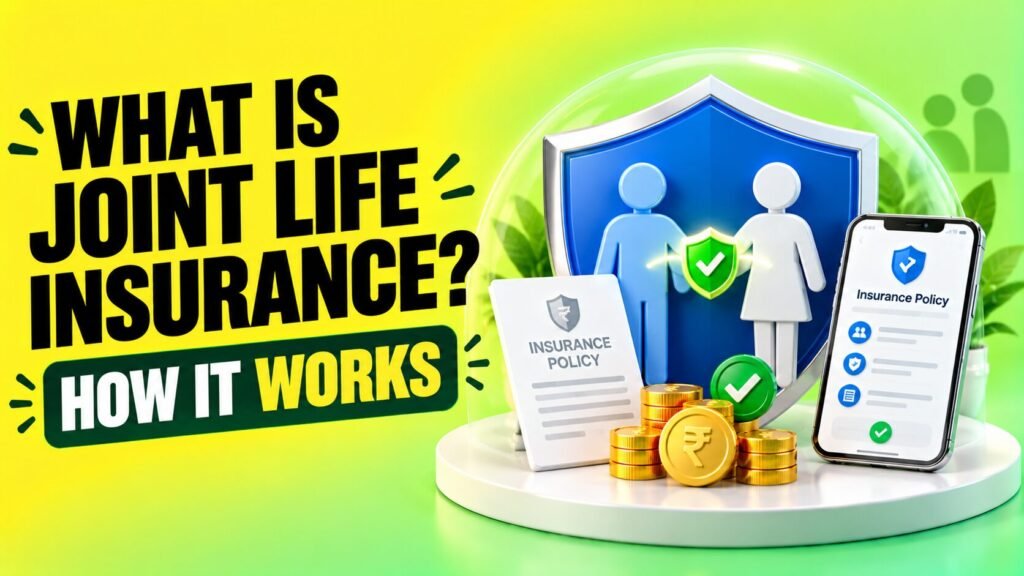
A joint life insurance policy covers two people under a single insurance contract. It is commonly considered by married couples and business partners who share financial responsibilities and want to protect their families or business interests.
Depending on the policy terms, the death benefit may be paid when the first insured person dies or after both insured individuals have died. Understanding these differences can help you decide whether joint coverage suits your financial goals.
Before choosing a plan, it is important to understand how joint life insurance works, the types available, its benefits and limitations, and the factors to consider when comparing policies.
What Is a Joint Life Insurance Policy?
A joint life insurance policy is a life insurance plan that covers two individuals under one policy. Instead of purchasing separate policies, both people are insured through a shared contract, subject to the insurer’s terms and conditions.
This type of insurance may be suitable for married couples who share household expenses, partners with joint financial commitments, or business partners who want to protect their business interests.
For readers exploring what is joint life policy, the key point is that the policy provides coverage for two people, but the payout depends on the specific plan selected.
How Does a Joint Life Insurance Policy Work?
The process generally involves the following steps:
-
Choose the policy: Both applicants select a suitable plan based on their financial responsibilities and coverage needs.
-
Submit applications: The insurer evaluates details such as age, health, lifestyle and other underwriting requirements.
-
Pay the premium: The policy premium is paid according to the agreed schedule.
-
Maintain coverage: Both insured individuals remain covered under the policy while its terms and conditions are satisfied.
-
Receive the death benefit: The insurer pays the applicable benefit when the event specified in the policy occurs and the claim is approved.
The payout structure is particularly important. Some joint policies pay the benefit after the first insured person dies, while others may provide a benefit after the second death. Not every insurer offers both structures, so applicants should review the policy wording carefully.
Types of Joint Life Insurance Policies
Joint life insurance policies generally follow one of two payout structures.
1. First-to-Die Joint Life Insurance
Under a first-to-die policy, the death benefit is generally paid when the first insured person dies. The surviving person or other designated beneficiary receives the benefit according to the policy terms.
This structure may help a surviving spouse manage household expenses, outstanding loans or other financial commitments after losing a partner’s income.
Applicants should check whether coverage ends after the first claim or whether any continuation or additional benefits apply.
2. Second-to-Die Joint Life Insurance
A second-to-die policy generally pays the death benefit after both insured individuals have died. Depending on the plan, this structure may be considered for estate planning or providing an inheritance to beneficiaries.
It does not usually provide an immediate payout to the surviving partner after the first death. Therefore, couples should consider how the surviving person will meet ongoing expenses.
Also read: Types of Life Insurance in India to understand how joint coverage compares with other life insurance options.
What Are the Benefits and Limitations of Joint Life Insurance?
A joint life insurance policy can simplify coverage for two people, but it may not be the right choice for every couple. The suitability depends on the payout structure, premium, financial responsibilities and individual protection needs.
Benefits of Joint Life Insurance
1. One Policy for Two People
A joint policy allows two individuals to be covered under one insurance contract. This can make policy administration more straightforward than managing two separate contracts.
2. Support for Shared Financial Responsibilities
Couples who share a home loan, household expenses or other financial obligations may consider joint coverage to help protect their financial plans if a covered event occurs.
3. Potential Cost Advantages
Some joint plans may offer a lower combined premium than purchasing two comparable individual policies. However, this is not guaranteed. Premiums depend on factors such as age, health, coverage amount and policy features, so comparing actual quotes is essential.
4. Convenient Policy Management
Both insured individuals can review the same policy documents, premium schedule and coverage conditions. This may make it easier to manage shared insurance arrangements.
Limitations of Joint Life Insurance
1. Coverage May End After the First Claim
Under some first-to-die policies, coverage ends after the death benefit is paid. The surviving partner may then need to purchase a separate policy, potentially at a higher premium because of their age or health.
2. Less Individual Flexibility
Two people may have different coverage needs, incomes and long-term goals. A joint policy may not provide the same flexibility as separate policies designed for each individual.
3. Policy Terms Can Be Complex
The payout conditions, exclusions, premium obligations and continuation rules vary by insurer and product. Applicants should read the policy documents before making a decision.
4. It May Not Be the Cheapest Option
A joint policy is not automatically more affordable than two individual policies. Comparing premiums and benefits on a like-for-like basis is important.
Also read: Why Life Insurance Is Important for Your Future to learn how life coverage can support long-term financial planning.
How to Choose the Right Joint Life Insurance Policy
Selecting a suitable joint life insurance policy requires more than comparing premium prices. Couples should evaluate how the policy fits their financial responsibilities and what happens under different circumstances.
1. Assess Your Financial Responsibilities
Calculate the financial support your household may need if one partner dies. Consider outstanding loans, regular household expenses, dependants’ needs and other long-term commitments.
The coverage amount should reflect these responsibilities rather than being selected solely because a particular premium seems affordable.
2. Compare the Payout Structure
Determine whether the policy pays after the first death or the second death. A first-to-die structure may be relevant when the surviving partner needs financial support, while a second-to-die structure may suit certain inheritance-planning objectives.
Choose based on your actual needs and confirm the payout conditions in writing.
3. Compare Joint and Individual Coverage
Before purchasing a joint plan, compare it with separate policies for each person. Individual coverage may offer more flexibility when partners have different income levels, health circumstances or protection requirements.
You can also review term life insurance vs whole life insurance to understand the differences between common coverage structures and policy durations.
4. Review Premiums and Policy Benefits
Compare the premium, sum assured, policy duration, exclusions and additional benefits. If you are estimating the cost of term coverage, a term insurance calculator can help you explore coverage and premium estimates. Keep in mind that a calculator may not estimate premiums for a specific joint policy.
Also review the benefits and rules of life insurance policies to better understand the terms that can affect your coverage.
5. Understand the Policy Roles and Conditions
Read the policy documents to identify the insured individuals, policyholder, nominee or beneficiaries, and the person responsible for paying premiums. These roles can differ depending on the contract.
Understanding the difference between insurer and insured can help clarify the responsibilities of the insurance company and the people covered.
6. Check What Happens After a Claim
Ask the insurer whether the policy terminates after a claim, whether the surviving person can continue coverage, and whether any further premiums are payable. Confirm how beneficiaries are determined and what documents are required to submit a claim.
Do not rely only on a sales explanation. Review the policy wording and obtain clarification from the insurer before purchasing.
Conclusion
A joint life insurance policy can be a practical option for couples or business partners who share financial responsibilities. It provides coverage for two people under one contract, but the payout depends on whether the policy follows a first-to-die or second-to-die structure.
Before choosing a plan, compare joint and individual policies, evaluate the premium and coverage amount, and understand what happens after the first or second death. Reviewing the policy conditions carefully can help you choose protection that aligns with your financial needs.
Frequently Asked Questions
Q1. What is a joint life insurance policy?
A joint life insurance policy covers two individuals under a single insurance contract. The death benefit is paid according to the policy’s payout structure and terms.
Q2. Can a married couple buy a joint life insurance policy?
Yes, some insurers offer joint life insurance plans for eligible couples. Availability, eligibility and coverage conditions depend on the insurer and the specific product.
Q3. Is joint life insurance cheaper than two individual policies?
It can be, but not always. Compare premiums, coverage amounts, policy duration and benefits for both options before deciding.
Q4. What happens when one person covered by a joint policy dies?
The outcome depends on the policy structure. A first-to-die policy generally pays a benefit after the first death, while a second-to-die policy generally pays after both insured individuals have died.
Q5. Is joint life insurance better than individual life insurance?
Neither option is universally better. Joint coverage may simplify shared protection, while individual policies may provide greater flexibility. The right choice depends on each person’s financial needs and the policy terms.