
Gold buyers in India often compare 22K and 24K gold before buying jewellery, coins or bars. The main difference is purity. 22K gold contains about 91.6% gold, while 24K gold refers to very high-purity gold, commonly 995 or 999 fineness depending on the product.
The higher purity of 24K gold makes it softer and more suitable for coins and bars. 22K gold contains alloy metals that make it harder, so it is widely used for jewellery. BIS permits 22K (916) and 24KS (995) grades for gold jewellery and artefacts.
Quick Overview
| Factor | 22K Gold | 24K Gold |
|---|---|---|
| Purity | 91.6% | Very high purity, commonly 995 or 999 |
| Common fineness | 916 | 995/999, depending on product |
| Other metals | Present | Very small amount |
| Durability | Higher | Lower |
| Jewellery use | Common | Less suitable for regular jewellery |
| Coins and bars | Available | Commonly preferred |
| Gold content per gram | Lower | Higher |
| Colour | Rich yellow | Brighter yellow |
| Main use | Jewellery | Coins, bars and high-purity gold |
22K vs 24K Gold: Short Summary
The difference between 22K and 24K gold mainly comes down to gold purity and the amount of alloy mixed with it.
22K gold has 22 parts gold out of 24. This equals about 91.67% gold, commonly expressed as 91.6% or 916 fineness.
24K represents the highest karat category. In Indian gold products, high-purity gold may be marked as 995 or 999 fineness depending on the product and applicable standard. BIS lists 24KS (995) among the permitted grades for gold jewellery and artefacts.
The practical choice depends on what you’re buying. 22K is generally more suitable for jewellery, while high-purity 24K gold is commonly used for coins and bars.
Why Does Gold Have Different Karats?
Karat tells you the proportion of gold in an alloy.
Gold purity is measured against 24 parts:
- 24K means 24 parts are gold.
- 22K means 22 parts are gold and the remaining 2 parts are other metals.
- 18K means 18 parts are gold and 6 parts are other metals.
For 22K gold:
22 ÷ 24 × 100 = 91.67%
This is why 22K gold is commonly associated with 916 fineness.
The remaining metal in 22K gold can include metals such as silver or copper. These metals increase hardness and make the material more practical for jewellery.
Also read: Gold Loan vs Personal Loan: Which is Better for You in 2026?
What Is 22K Gold?

22K gold contains about 91.6% pure gold.
The remaining portion consists of alloy metals. These metals give the jewellery greater strength than very high-purity gold.
22K gold is widely used for:
- Gold chains
- Bangles
- Rings
- Earrings
- Necklaces
- Wedding jewellery
- Traditional Indian jewellery
The common hallmark designation for 22K gold is 916, which indicates 916 parts of gold per 1,000 parts of the alloy.
Why is 22K gold popular for jewellery?
Jewellery needs to withstand regular handling, movement and occasional impact. The alloy content makes 22K gold harder than very high-purity gold.
It also retains the rich yellow appearance many Indian buyers prefer.
For intricate jewellery, the choice can depend on the design and the jeweller’s manufacturing method. Some designs may use lower karat gold when greater strength is required.
What Is 24K Gold?
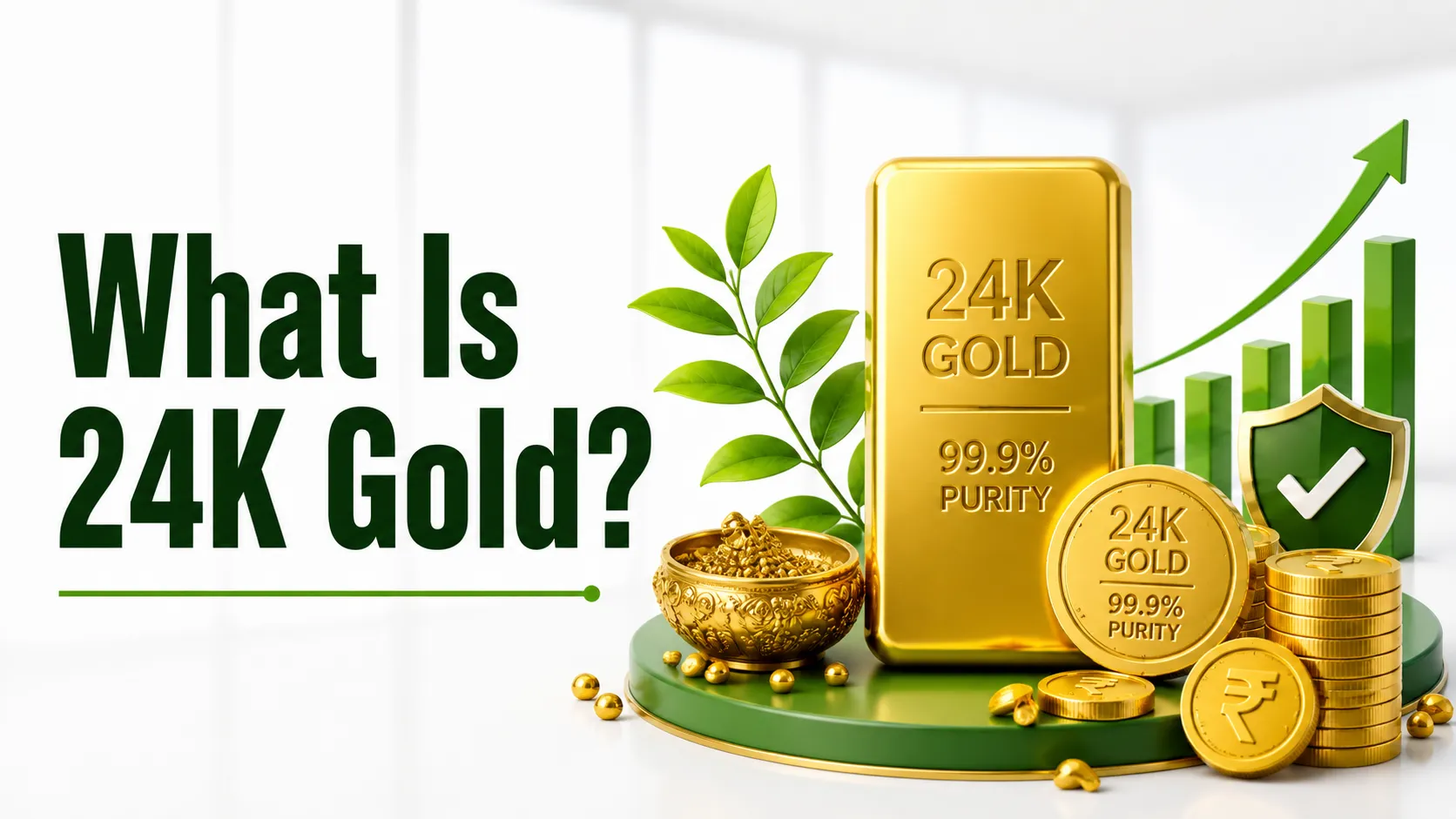
24K gold refers to very high-purity gold.
Depending on the product, you may see fineness such as 995 or 999. A 999 product contains 999 parts gold per 1,000 parts, or 99.9% gold.
24K gold has very little alloy content. That gives it a higher gold content per gram but also makes it softer.
It is commonly available as:
- Gold bars
- Gold coins
- Investment products
- Certain high-purity gold articles
BIS lists 24KS (995) as a permitted hallmarking grade for gold jewellery and artefacts.
22K vs 24K Gold: Detailed Comparison
1. Purity
Purity is the biggest difference.
22K gold: about 91.6% gold.
24K gold: very high purity, commonly 995 or 999 depending on the product.
The higher the fineness, the greater the proportion of actual gold in the item.
2. Durability
22K gold is harder because it contains alloy metals.
24K gold has very little alloy content and is softer. It can be more vulnerable to scratches, bending and surface damage.
This is one reason 22K gold is widely used for jewellery.
3. Colour
Both types have a strong yellow colour.
24K gold generally has a more intense yellow appearance because it contains a higher proportion of gold. 22K gold can have slight colour differences depending on the alloy metals used.
4. Jewellery use
22K gold is widely used for traditional Indian jewellery.
24K gold can also be made into jewellery, but its softness makes it less practical for many designs intended for regular wear.
5. Coins and bars
High-purity gold is commonly used for coins and bars.
A buyer interested in physical gold may prefer a high-purity product because more of each gram consists of gold.
6. Price
24K gold generally has a higher price per gram than 22K gold because it contains more gold.
However, the final price of jewellery depends on more than purity.
It can include:
- Gold value
- Making charges
- Stone charges
- Other applicable charges
- GST
So comparing only the displayed gold rate can give you an incomplete picture.
How Is the Price of 22K and 24K Gold Calculated?
Suppose a jeweller quotes a particular rate for 24K gold.
The theoretical gold value of 22K gold can be estimated using its purity:
22K rate ≈ 24K rate × 22 ÷ 24
For example, if the reference 24K rate is ₹10,000 per gram:
₹10,000 × 22 ÷ 24 = about ₹9,167 per gram
This is only a purity-based calculation. The actual market rate quoted by a jeweller can differ because of market pricing, product premiums and other charges.
Gold prices also change regularly, so use the current rate when making a purchase.
What Charges Are Added to Gold Jewellery?
The price of a gold ornament can include more than the value of its gold content.
Common components include:
- Gold value
- Making charges
- Stone or gemstone charges, where applicable
- GST
For jewellery sold to the end consumer, CBIC states that GST is charged at 3% of the total transaction value of the jewellery, whether making charges are shown separately or not.
For this reason, two jewellery pieces with the same weight can have different final prices.
Example
Suppose two 22K necklaces weigh 10 grams each.
One may have lower making charges because of a simple design. Another may have higher charges because it requires more detailed workmanship.
Their final prices can therefore differ even though both have the same purity and gross weight.
22K vs 24K Gold for Investment
The form of gold matters when you’re considering an investment.
High-purity gold is commonly available through coins and bars. These products can make it easier to track the value of the gold content.
Gold jewellery also contains gold, but the purchase price includes making charges and other costs. These charges can affect the amount you recover when you sell or exchange the jewellery.
For someone buying physical gold mainly for its gold content, a high-purity coin or bar may be easier to evaluate than jewellery.
Other gold investment options also exist, such as gold ETFs and other regulated financial products.
22K vs 24K Gold for Jewellery
For most traditional jewellery purchases, 22K gold is a common choice.
It provides a high gold content while having greater hardness than very high-purity gold.
22K can be suitable for:
- Wedding jewellery
- Gold chains
- Bangles
- Traditional necklaces
- Earrings
- Jewellery intended for regular use
The best purity can still depend on the design. Jewellery with gemstones or specific structural requirements may use another karat.
Is 24K Gold Suitable for Jewellery?
24K gold can be used to make jewellery, but its softness can make it less suitable for pieces that receive frequent wear.
It is more commonly associated with high-purity coins and bars.
If you are buying a 24K jewellery item, check its exact fineness instead of relying only on the term “24K.”
This matters because BIS’s jewellery standards distinguish between permitted fineness grades.
How to Check 22K or 24K Gold Before Buying
Follow these checks before paying for gold jewellery.
Step 1: Check the BIS hallmark
Look for the BIS hallmark on applicable hallmarked jewellery.
Step 2: Check the purity or fineness
For example, 916 indicates 22K gold.
For high-purity gold, the product may carry a different fineness marking such as 995 or 999, depending on the product.
Step 3: Check the HUID
Hallmarked gold jewellery carries a six-digit alphanumeric HUID.
BIS says customers can verify the HUID through the BIS Care App using the “Verify HUID” feature.
Step 4: Check the invoice
Make sure the bill clearly records important details about the purchase.
BIS says consumer bills should include details such as the article description, net precious-metal weight, purity/fineness and hallmarking charges.
Step 5: Check net gold weight
Jewellery may contain stones or other materials.
Gross weight and actual gold weight can therefore be different.
Ask the seller for the net gold weight before comparing prices.
Common Mistakes When Buying 22K or 24K Gold
Comparing only the price per gram
The lowest quoted rate may not mean the lowest final cost.
Check making charges, GST and other applicable charges.
Ignoring net gold weight
A heavy jewellery piece may contain stones or other materials.
Always check the net gold weight.
Buying without checking purity
Look for the applicable hallmark and fineness details.
For hallmarked jewellery, verify the HUID through the BIS Care App.
Assuming 24K is suitable for every purpose
Higher purity comes with lower hardness.
Your choice should match the intended use.
Ignoring the buyback policy
Before purchasing jewellery, ask the jeweller how the item will be valued during exchange or resale.
The terms can vary between sellers and products.
What Should You Check Before Buying Gold?
Use this checklist at the jewellery counter:
- Purity: Check the karat and fineness.
- BIS hallmark: Check the applicable hallmark.
- HUID: Verify it for hallmarked jewellery.
- Net gold weight: Separate gold weight from stones and other materials.
- Gold rate: Confirm the rate being used for your purity.
- Making charges: Ask how they are calculated.
- GST: Check the tax amount on the bill.
- Invoice: Keep the complete purchase invoice.
- Buyback policy: Understand the seller’s terms before purchase.
Which Is Better: 22K or 24K Gold?
The better option depends on what you’re buying.
For jewellery: 22K gold is generally more practical because it combines high gold purity with greater hardness.
For high-purity physical gold: 24K gold is commonly preferred, especially in coins and bars.
For daily wear: 22K can be a practical choice for traditional gold jewellery.
For coins and bars: High-purity 24K products are commonly used.
The purchase decision should include purity, net weight, charges, hallmarking and the seller’s terms.
Conclusion
The difference between 22K and 24K gold mainly comes down to purity, hardness and use.
22K gold contains about 91.6% gold and is widely used for jewellery. High-purity 24K gold contains very little alloy and is commonly used for coins and bars.
Before buying, check the fineness, BIS hallmark, HUID, net gold weight, making charges, GST and invoice. These details give you a clearer picture of what you’re actually paying for.