What Is SMA in Banking?
Also Read: SBI WhatsApp Banking
An SMA (Special Mention Account) is a loan account that has started showing signs of repayment stress because the borrower has not paid the loan dues on time. Although the account is overdue, it is identified early so that corrective action can be taken before the repayment problem becomes more serious.
Banks regularly monitor loan accounts to ensure borrowers are making payments according to the agreed schedule. If a payment is delayed, the account may be classified under different SMA categories depending on the number of overdue days.
The primary purpose of the SMA framework is to:
- Detect repayment stress at an early stage.
- Help borrowers avoid further financial difficulties.
- Enable banks to monitor risky loan accounts.
- Encourage timely repayment and loan restructuring where applicable.
- Reduce the chances of prolonged loan delinquency.
Types of SMA Accounts
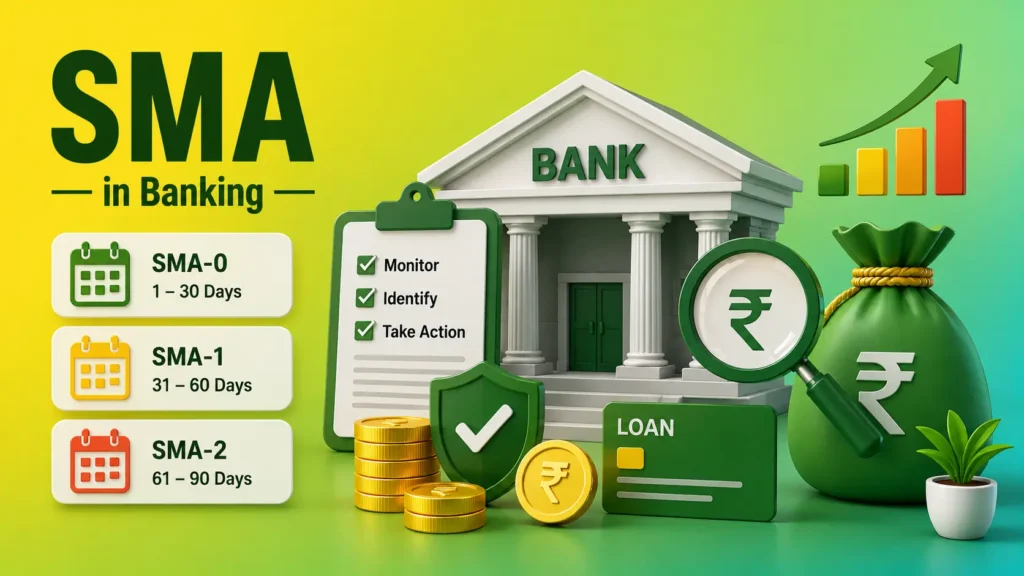
Banks classify SMA accounts into different categories based on how many days the loan repayment remains overdue.
| SMA Category | Overdue Period |
|---|---|
| SMA-0 | Up to 30 days |
| SMA-1 | 31–60 days |
| SMA-2 | 61–90 days |
Let’s understand each category in detail.
SMA-0
SMA-0 is the first warning stage. It indicates that the borrower has delayed the repayment, but the overdue period is still within 30 days.
At this stage:
- Banks begin monitoring the account closely.
- Borrowers should clear the overdue amount immediately.
- Prompt payment usually helps prevent further classification.
SMA-1
When the overdue period reaches 31 to 60 days, the account is classified as SMA-1.
At this stage:
- The repayment delay becomes more significant.
- Banks may contact the borrower for repayment.
- Additional monitoring is carried out.
- Borrowers should avoid further delays to prevent the account from moving into the next SMA category.
SMA-2
If loan dues remain unpaid for 61 to 90 days, the account becomes SMA-2.
This is considered a serious warning stage because the repayment delay has continued for an extended period.
Banks generally:
- Increase monitoring.
- Send repayment reminders.
- Discuss possible repayment solutions where applicable.
- Closely evaluate the borrower’s financial condition.
Borrowers should act immediately at this stage to resolve the overdue payments.
Why Do Banks Use the SMA Classification?
The SMA framework helps banks identify financial stress before repayment issues become severe.
Some major benefits include:
- Early detection of repayment problems.
- Better risk management.
- Timely communication with borrowers.
- Improved loan monitoring.
- Better credit discipline.
- Reduced financial risk for lenders.
For borrowers, early identification also provides an opportunity to regularize the loan before further complications arise.
RBI Rules for SMA Accounts
Read Also: RBI Approved Loan Apps
Important: The SMA framework is designed to identify repayment stress at an early stage. It encourages timely monitoring and corrective action before repayment delays become more serious.
The Reserve Bank of India (RBI) requires banks and financial institutions to monitor overdue loan accounts through the SMA classification framework.
Some important RBI rules include:
1. Classification Based on Overdue Days
Banks classify loan accounts according to the number of days that payments remain overdue.
- SMA-0: Up to 30 days overdue
- SMA-1: 31–60 days overdue
- SMA-2: 61–90 days overdue
This standardized approach ensures consistency across regulated financial institutions.
2. Continuous Monitoring
Banks are expected to monitor loan repayment regularly so that repayment stress can be identified as early as possible.
Continuous monitoring allows lenders to contact borrowers before repayment issues become more difficult to resolve.
3. Early Identification of Financial Stress
The main objective of the SMA framework is preventive monitoring.
Instead of waiting for long payment delays, lenders identify warning signs early and encourage borrowers to regularize their loan accounts promptly.
4. Timely Communication with Borrowers
Banks may contact borrowers through phone calls, SMS, email, or written notices to inform them about overdue payments and request timely repayment.
5. Internal Risk Management
Financial institutions use SMA data to strengthen internal credit monitoring, assess portfolio risk, and improve loan recovery planning.
These RBI guidelines help create a transparent and structured process for monitoring loan repayment performance across the banking system..
Why Is SMA Classification Important?
SMA classification plays an important role for both banks and borrowers.
For Borrowers
- Provides an early warning about repayment delays.
- Encourages timely payment of overdue EMIs.
- Helps borrowers take corrective action before financial stress increases.
- Promotes better financial planning and loan management.
For Banks
- Helps identify risky loan accounts at an early stage.
- Improves credit monitoring.
- Supports better risk management.
- Enables timely communication with borrowers.
How to Avoid Your Loan Account Becoming an SMA Account
Borrowers can reduce the risk of SMA classification by following a few simple financial practices.
Pay EMIs on Time
Always pay your loan installments before the due date. Timely payments are the easiest way to avoid overdue status.
Maintain Sufficient Bank Balance
If your EMI is deducted automatically, make sure your account has enough funds before the scheduled debit date.
Track Your Loan Repayments
Use internet banking or your lender’s mobile app to regularly check your repayment status and upcoming due dates.
Set Payment Reminders
Create reminders on your phone or calendar so you never miss an EMI due date.
Contact Your Bank Early
If you expect repayment difficulties, inform your lender as soon as possible. Early communication may help you discuss available repayment options.
Example of SMA Classification
Also Read: Personal Loan EMI Calculator
Suppose Rahul has a personal loan with a monthly EMI due on 10 July.
- If the EMI remains unpaid for 20 days, the account falls under SMA-0.
- If the delay reaches 45 days, it is classified as SMA-1.
- If the payment remains overdue for 75 days, it moves to SMA-2.
This example shows how banks classify loan accounts based on the number of overdue days.
Conclusion
Understanding the SMA Full Form in Banking is important for anyone who has taken a loan from a bank or financial institution. An SMA (Special Mention Account) is an early warning system that helps identify repayment delays before they become more serious.
The RBI’s SMA framework allows banks to monitor overdue loan accounts in a structured manner while giving borrowers an opportunity to regularize their payments. By paying EMIs on time, monitoring loan accounts regularly, and communicating with the lender during financial difficulties, borrowers can avoid unnecessary repayment stress and maintain a healthy credit profile.