A loan rejection can feel confusing when your salary is stable and documents are correct.
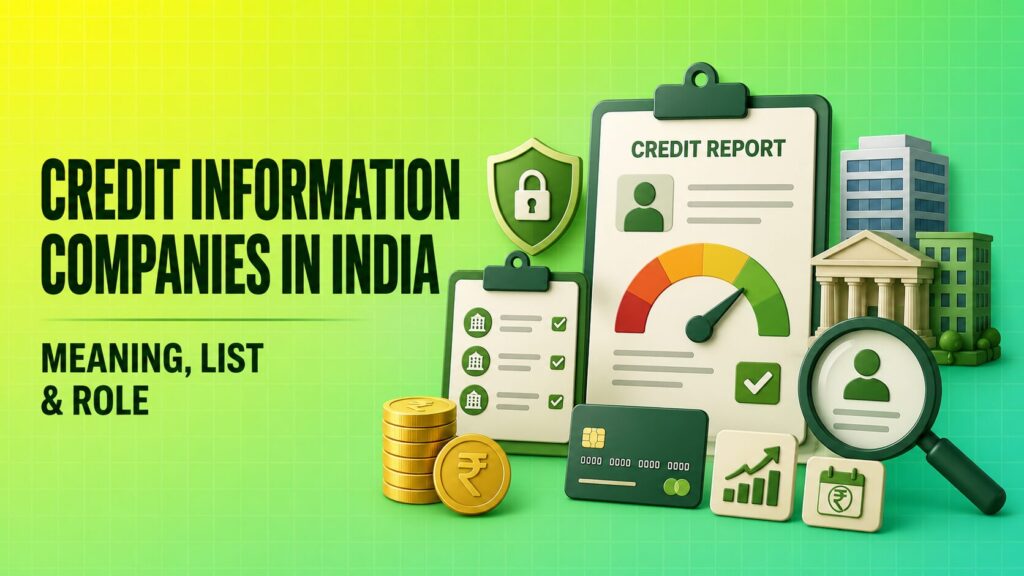
One common reason is your credit report. Banks and NBFCs check your repayment history before approving a loan, credit card, or credit limit. That credit history comes from Credit Information Companies in India.
Credit Information Companies, also called CICs or credit bureaus, collect credit data from banks, NBFCs, credit card companies, and other credit institutions. They create credit reports and credit scores that lenders use during loan approval.
In India, these companies are regulated under the Credit Information Companies (Regulation) Act, 2005. The Act was made to regulate credit information companies and support better credit distribution in the country.
What are Credit Information Companies in India?
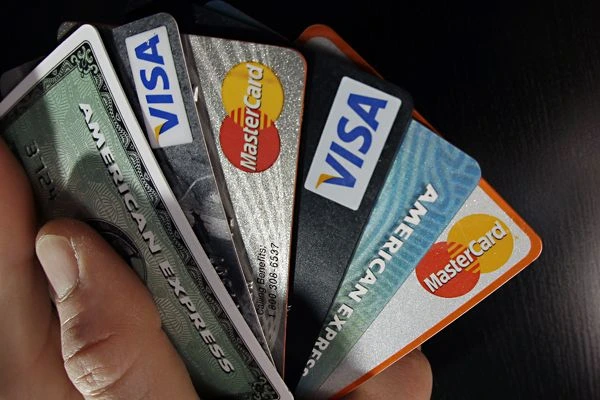
Credit Information Companies in India are RBI-registered companies that collect and maintain borrower credit data.
They record how a person or business handles credit.
This includes:
- personal loans
- home loans
- vehicle loans
- education loans
- credit cards
- business loans
- overdue payments
- loan settlements
- written-off accounts
- credit enquiries
When you apply for a loan, the lender checks your credit report from one or more credit information companies. This report helps the lender understand your repayment behavior.
If you have paid EMIs and credit card bills on time, your credit report usually looks better. If you have missed payments, settled loans, or high credit card dues, lenders may see you as a risky borrower.
People usually call these companies “credit bureaus.” In official RBI language, they are called Credit Information Companies or CICs.
List of Credit Information Companies in India
India has 4 main Credit Information Companies:
| Credit Information Company | Common name | What it is known for |
|---|---|---|
| TransUnion CIBIL | CIBIL | CIBIL score and credit report |
| Experian Credit Information Company of India | Experian | Credit score and credit report |
| Equifax Credit Information Services | Equifax | Individual and business credit reports |
| CRIF High Mark Credit Information Services | CRIF High Mark | Individual, MSME, and microfinance credit reports |
RBI has referred to 4 credit bureaus or Credit Information Companies in India: CIBIL, Equifax, Experian, and CRIF High Mark. These companies are regulated by RBI under the Credit Information Companies (Regulation) Act, 2005.
1. TransUnion CIBIL
TransUnion CIBIL is one of the most commonly known credit bureaus in India.
Many borrowers use the word “CIBIL score” when they talk about credit score. A CIBIL score is one type of credit score. Other credit bureaus also give credit scores.
Lenders may check your CIBIL report while reviewing your loan or credit card application.
2. Experian
Experian is another Credit Information Company in India.
It collects credit data from member banks and lenders and gives credit reports and scores. Some banks and fintech lenders may use Experian report during loan checks.
3. Equifax
Equifax also gives credit reports and scores for individuals and businesses.
It helps lenders check borrower credit behavior before giving loans, credit cards, or other credit products.
4. CRIF High Mark
CRIF High Mark works with individual, business, MSME, and microfinance credit data.
Some lenders use CRIF reports for personal loans, small business loans, and borrower checks in smaller-ticket loan segments.
How Credit Information Companies work
Credit Information Companies do not create your credit history on their own. They receive data from lenders.
Here is the normal process:
- You take a loan or credit card.
- The lender opens your credit account.
- The lender reports your account details to CICs.
- CICs update your credit report.
- Lenders check this report when you apply for new credit.
Example: You take a personal loan of ₹2 lakh. You pay every EMI on time for 12 months. Your lender reports this repayment data to the credit bureau. Your credit report then shows a good repayment record.
Another example: You miss 2 credit card payments. The card issuer reports delayed payment data. Your credit report may show overdue status or DPD, which means days past due.
RBI’s 2025 Credit Information Reporting Directions apply to credit institutions and Credit Information Companies. These directions cover reporting, data quality, customer access to credit information, and complaint handling.
Role of Credit Information Companies in India
Credit Information Companies play a major role in the loan approval system.
They help lenders check whether a borrower has handled past credit responsibly.
They help lenders check creditworthiness
Before giving a loan, lenders want to know 3 things:
- Has this person borrowed before?
- Has this person repaid on time?
- Is this person already carrying too much debt?
A credit report gives answers through repayment history, overdue records, loan accounts, credit card limits, and enquiries.
They reduce lending risk
Banks and NBFCs use credit reports to reduce default risk.
A borrower with repeated late payments, written-off accounts, or loan settlement may get rejected or may get a higher interest rate.
A borrower with stable repayment history may get faster approval or better loan terms.
They help borrowers build a credit profile
A good credit history can support future loan applications.
If you pay EMIs on time, keep credit card dues low, and avoid loan settlement, your credit profile can improve over time.
They make loan approval more structured
Credit reports give lenders a standard way to review borrower history.
Salary, age, job type, and income still matter. Credit history adds another layer to the decision.
They help track credit behavior
Credit reports can show:
- active loans
- closed loans
- credit card accounts
- overdue amount
- EMI payment history
- loan settlement
- written-off status
- guarantor or co-borrower records
- recent lender enquiries
RBI says credit scores should be calibrated from 300 to 900 by all CICs so users can understand scores in a consistent way.
Credit Information Company vs Credit Rating Agency
Credit Information Companies and credit rating agencies sound similar, but they are used for different purposes.
| Point | Credit Information Company | Credit Rating Agency |
|---|---|---|
| Main focus | Borrower credit history | Company or debt instrument rating |
| Used for | Loan and credit card checks | Bond, company, and debt rating |
| Common examples | CIBIL, Experian, Equifax, CRIF High Mark | CRISIL, ICRA, CARE Ratings |
| Output | Credit report and credit score | Credit rating |
| Common user | Individual borrower, bank, NBFC | Investor, company, institution |
A Credit Information Company checks repayment history of borrowers.
A credit rating agency rates companies, bonds, debentures, and debt instruments.
Example: If you apply for a personal loan, the bank may check your CIBIL or Experian report.
If a company issues bonds, investors may check ratings from CRISIL, ICRA, or CARE Ratings.
What information is included in a credit report?
A credit report gives a detailed view of your borrowing history.
It can include:
- name
- date of birth
- PAN
- address
- mobile number
- loan accounts
- credit card accounts
- repayment history
- overdue amount
- days past due
- loan closure details
- settled account status
- written-off status
- credit limit
- current balance
- recent credit enquiries
- co-borrower details
- guarantor details
RBI’s directions say CICs should give one Credit Information Report for one borrower, even if the borrower has more than one address. Unique identifiers such as PAN, passport, voter ID, or driving licence can be used for borrower matching.
Your credit report may also show loan enquiries. These enquiries are created when a lender checks your report for a loan or credit card application.
A large number of enquiries in a short time can make lenders cautious.
Why Credit Information Companies matter for borrowers
Credit Information Companies matter because their reports can affect your access to credit.
If your report is clean, you may get:
- easier loan approval
- faster credit card approval
- better loan amount
- better interest rate
- higher credit card limit
If your report has problems, you may face:
- loan rejection
- credit card rejection
- lower loan amount
- higher interest rate
- more document checks
- guarantor requirement
Example: Two people apply for the same personal loan. Both earn ₹50,000 per month.
Person A has no missed EMI and low credit card usage. Person B has 3 missed payments and one settled loan. The lender may approve Person A faster and charge Person B a higher rate or reject the application.
Credit report errors can also hurt borrowers.
Example: You closed a loan, but the report still shows it as active or overdue. This can affect your next loan application. That is why checking your credit report is useful before applying for a major loan.
Can your credit score be different across CICs?
Yes, your credit score can differ across CIBIL, Experian, Equifax, and CRIF High Mark.
This can happen because:
- each CIC may use its own scoring model
- lender reporting time may differ
- one bureau may receive data earlier
- personal details may match differently
- some lenders may report to one bureau before another
- account updates may happen on different dates
A small difference is normal.
Example: Your CIBIL score may be 760, while Experian may show 748. This does not always mean there is a problem.
Check the full report if the difference is large. Look for wrong overdue amounts, duplicate loan accounts, incorrect settlement status, or loans you never took.
How often do lenders report data to CICs?
Credit institutions report borrower data to Credit Information Companies.
RBI issued Credit Information Reporting Directions in 2025 for banks, NBFCs, asset reconstruction companies, and CICs. These directions created a standard system for credit data reporting and customer complaint handling.
A later RBI amendment says, from July 1, 2026, credit institutions covered by the amendment must submit credit information as on the 9th, 16th, 23rd, and last day of the month to CICs. Full-file reporting is required for the last day of the month, while other dates use incremental account updates.
For borrowers, this means credit report updates can become faster once the new reporting timeline applies.
If you pay an overdue EMI today, it may still take some time to reflect in your credit report. The lender has to update the data, and the CIC has to process it.
RBI directions also say CICs must ingest credit information data received from credit institutions into their databases within 5 calendar days of receipt. If data is rejected, CICs must communicate the rejection reason to the concerned credit institution within 7 calendar days.
How to check your credit report from CICs
You can check your credit report from the official websites of CIBIL, Experian, Equifax, or CRIF High Mark.
A basic process looks like this:
- Visit the official CIC website.
- Choose credit report or free credit report option.
- Enter name, mobile number, email, PAN, and date of birth.
- Complete OTP or identity verification.
- View or download the credit report.
- Check score, loan accounts, credit cards, overdue amount, and enquiries.
RBI says CICs must provide one Free Full Credit Report including credit score, once in a calendar year, to individuals whose credit score is available with them. CICs must show the free report link on their homepage.
Check these items in your report:
- Is your name correct?
- Is your PAN correct?
- Are all loans yours?
- Are closed loans marked closed?
- Is overdue amount correct?
- Is settlement status correct?
- Are credit card limits correct?
- Are there unknown enquiries?
- Is any loan shown that you never took?
If you find a mistake, raise a dispute quickly.
Common mistakes that hurt credit reports
Late EMI payment
Even one delayed EMI can affect your credit report.
Lenders report payment delay through DPD, or days past due. Repeated delays can reduce loan approval chances.
Credit card bill delay
Credit card delay also affects your report.
Pay at least the minimum due before the due date. Paying only the minimum due will not clear the full bill, and interest may apply on the remaining amount.
High credit card utilization
Using most of your credit card limit every month can make you look credit-hungry.
Example: If your credit card limit is ₹1 lakh and your monthly bill is ₹90,000, utilization is high. Try to keep usage controlled if you plan to apply for a loan.
Loan settlement
Loan settlement can hurt your credit report.
Settlement means the lender accepted less than the full payable amount. Future lenders may treat this as a warning sign.
Too many loan applications
Applying to many lenders in a short time can create multiple enquiries.
This can reduce approval chances, especially for unsecured loans like personal loans and credit cards.
Ignoring report errors
Wrong data can damage your credit profile.
Example: A loan closed 6 months ago still shows active. A credit card you never used shows overdue. These issues should be disputed.
Becoming guarantor without care
If you become a guarantor and the borrower defaults, your credit report may be affected.
Sign as guarantor only when you understand the risk.
How to correct errors in credit report
Credit report errors are common enough that every borrower should check reports before applying for a major loan.
Common errors include:
- wrong name
- wrong PAN
- incorrect overdue amount
- closed loan shown as active
- paid EMI shown as missed
- duplicate loan account
- wrong settled or written-off status
- unknown loan account
- unknown credit enquiry
Follow this process:
- Download the latest credit report.
- Mark the wrong account or wrong detail.
- Raise a dispute with the CIC.
- Contact the lender if the lender reported wrong data.
- Keep screenshots, payment receipts, NOC, closure letter, and email records.
- Track dispute status.
- Download a fresh report after correction.
RBI says complainants are entitled to compensation of ₹100 per calendar day if a complaint about delayed update or correction of credit information is not resolved within 30 calendar days from the initial filing date with a credit institution or CIC.
RBI also says the credit institution gets 21 calendar days to send corrected information, and the CIC gets the remaining 9 calendar days for complete resolution.
If compensation is wrongly denied, the complainant can approach the RBI Ombudsman under the Reserve Bank Integrated Ombudsman Scheme, 2021, where applicable.
Conclusion
Credit Information Companies in India record how borrowers use and repay credit.
Banks and NBFCs use credit reports from CIBIL, Experian, Equifax, and CRIF High Mark before approving loans and credit cards. A clean credit report can improve approval chances. A report with late payments, settlement, or wrong data can create problems.
Check your credit report at least once a year. Before applying for a home loan, personal loan, car loan, or credit card, check it again.
Good repayment habits matter. Report errors matter too.
FAQs
What are Credit Information Companies in India?
Credit Information Companies in India are RBI-regulated credit bureaus that collect credit data from banks, NBFCs, credit card issuers, and other credit institutions. They prepare credit reports and credit scores used during loan and credit card approval.
How many Credit Information Companies are there in India?
India has 4 main Credit Information Companies: TransUnion CIBIL, Experian, Equifax, and CRIF High Mark. RBI has referred to these 4 credit bureaus as running in India under the Credit Information Companies (Regulation) Act, 2005.
Is CIBIL a Credit Information Company?
Yes. TransUnion CIBIL is a Credit Information Company in India. It gives credit reports and credit scores that lenders may use while checking loan and credit card applications.
Which credit bureau is used by banks in India?
Banks may use CIBIL, Experian, Equifax, CRIF High Mark, or more than one credit bureau. The exact bureau depends on the lender’s internal policy.
Do all CICs give the same credit score?
Scores can differ across CICs. Each credit information company may use a different scoring model, data update timing, and borrower matching method.
Can I check my credit report for free?
Yes. RBI says CICs must provide one Free Full Credit Report, including credit score, once in a calendar year to eligible individuals.
Can wrong information in credit report be corrected?
Yes. You can raise a dispute with the CIC and contact the lender that reported the wrong data. If the correction complaint is delayed beyond 30 calendar days, RBI’s compensation framework may apply.