Have you ever received your salary, paid your bills, bought a few things and wondered where all your money went? This can happen even when you earn enough to cover your regular expenses. Without a clear plan, everyday spending can leave little money for savings or future goals.
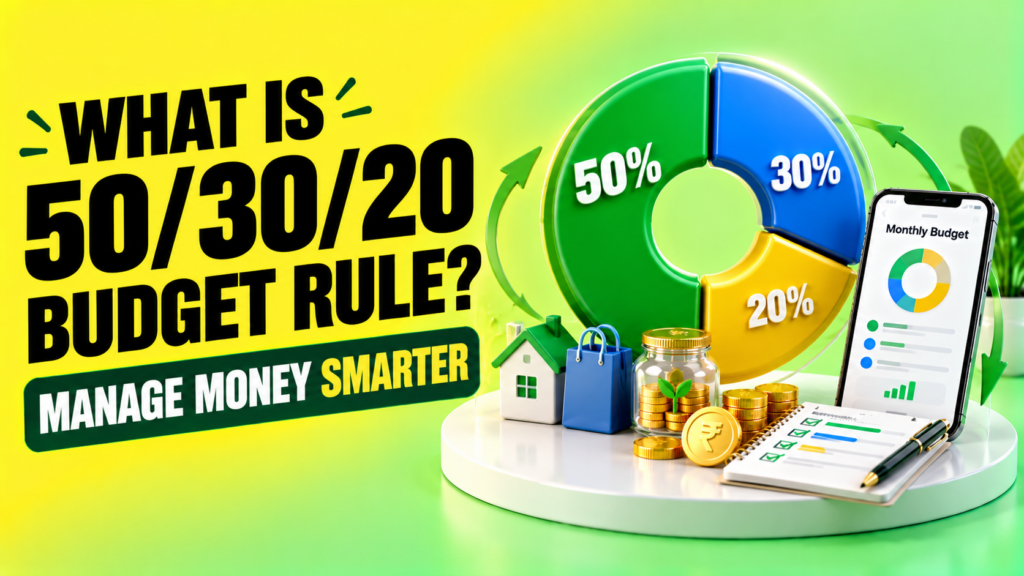
The 50/30/20 budget rule offers a simple way to organise your income. It divides your take-home pay into three categories: 50% for needs, 30% for wants and 20% for savings and extra debt repayment. You do not need complicated spreadsheets or advanced financial knowledge to get started. You only need to understand where your money goes and decide how much to allocate to each category.
What Is the 50/30/20 Budget Rule?
The 50/30/20 rule is a budgeting method that helps you divide your after-tax income into three spending categories.
50% for needs: Essential expenses you must pay to maintain your daily life.
30% for wants: Non-essential purchases and activities that make life more enjoyable.
20% for savings: Money for emergencies, future goals, investments and debt repayment beyond required minimum payments.
The rule became widely known through Elizabeth Warren and Amelia Warren Tyagi’s book All Your Worth: The Ultimate Lifetime Money Plan.
Its main purpose is to create a balance between meeting today’s needs, enjoying your income and preparing for the future. The percentages are guidelines rather than strict rules, so you can adjust them to suit your circumstances.
How Does the 50/30/20 Rule Divide Your Income?
The method becomes easier to understand when you look at what belongs in each category.
Budget category | Income allocation | Common examples |
|---|---|---|
Needs | 50% | Rent, groceries, utilities, essential transport and minimum debt payments |
Wants | 30% | Dining out, entertainment, hobbies, holidays and non-essential shopping |
Savings | 20% | Emergency fund, retirement savings, investments and extra debt payments |
These percentages should be calculated using your take-home income, not your salary before taxes and payroll deductions. This gives you a more realistic amount to work with.
1. Spend 50% on Your Needs
Needs are the expenses you cannot reasonably avoid. They support your basic living requirements and essential responsibilities.
Common examples include:
Rent or mortgage payments
Basic groceries and household supplies
Electricity, water and heating bills
Essential transportation costs
Necessary health insurance and healthcare
Childcare required for work
Minimum payments on loans and credit cards
For example, if you need a reliable internet connection to work remotely, that cost may belong in your needs category. A premium subscription used mainly for entertainment would generally count as a want.
Try to keep essential expenses within 50% of your take-home income. If they exceed that amount, review your common monthly expenses and adjust the percentages rather than skipping essential bills
2. Spend 30% on Your Wants
Wants are purchases you can live without but choose to make because they provide comfort, convenience or enjoyment.
Examples include:
Restaurant meals and food delivery
Streaming services and premium memberships
Holidays and leisure travel
Hobbies and recreational activities
Designer clothing and accessories
Upgrading a working phone or computer
Entertainment and social outings
The purpose of this category is not to eliminate enjoyment. It gives you a clear limit so that lifestyle spending does not take money away from important financial goals.
For instance, buying basic clothes may be a need, while purchasing expensive branded clothing when your current clothes are still usable may be a want.
3. Set Aside 20% for Savings and Debt Repayment
The final 20% is intended to help you prepare for future expenses and improve your financial position.
You can use this portion for:
Building an emergency fund
Saving for retirement
Investing towards long-term goals
Saving for education or a home deposit
Paying off high-interest debt faster
Preparing for planned major purchases
If you do not have emergency savings, building a financial cushion can be a useful first priority. Once you have a suitable reserve, you can allocate more money towards retirement, investments and other goals according to your circumstances.
Remember that investing involves risk. Money you need for immediate expenses should remain accessible rather than being placed entirely in investments that can lose value.
50/30/20 Budget Rule Example
Suppose your monthly take-home income is $4,000. Here is how you would divide it using the 50/30/20 rule.
Needs
Wants
Savings and extra debt repayment
In this example, $2,000 covers essential expenses, $1,200 is available for discretionary spending, and $800 goes towards savings or additional debt repayment.
You can use the same calculation with any income and currency. Simply multiply your monthly take-home income by 0.50, 0.30 and 0.20 to find the three target amounts.
How to Start Following the 50/30/20 Rule
You can put this budgeting method into practice with a few straightforward steps.
Step 1: Calculate Your Take-Home Income
Start with the money you receive after taxes and payroll deductions. If you have more than one reliable income source, include those amounts too.
If your income changes from month to month, use a conservative estimate rather than assuming that every month will be your best earning month.
Step 2: Review Your Spending
Look at your bank statements, receipts, card transactions and recurring payments, or use dedicated apps to track and manage monthly expenses. Reviewing the previous two or three months can help you identify expenses that are easy to forget.
Place each expense into the needs, wants or savings category. Be consistent with your classifications, especially for expenses that can serve different purposes.
Step 3: Compare Spending with the Rule
Calculate your target amounts and compare them with your actual spending.
If you spend more than 50% on needs, check whether you can reduce recurring costs. If wants exceed 30%, look for unused subscriptions, impulse purchases or other expenses you can reduce.
Do not force the numbers to fit if your essential costs are already high. Use the comparison to identify realistic changes.
Step 4: Make Saving a Regular Habit
Decide how much you can set aside each payday. If possible, automate a transfer into a suitable savings account after receiving your income.
Start with an affordable amount if saving 20% is not currently possible. Consistent saving is more useful than setting an unrealistic target and abandoning it.
Step 5: Review Your Budget Every Month
Your expenses may change because of a move, a new job, family responsibilities or an unexpected bill. Review your budget monthly and update your allocations when necessary.
A budget should help you make better decisions, not make everyday life unnecessarily difficult.
What Are the Benefits of the 50/30/20 Budget Rule?
The 50/30/20 rule can be useful for several reasons.
Simple budgeting: Three broad categories make it easier to plan your income without tracking dozens of separate limits.
Better spending awareness: You can identify whether essential costs or discretionary purchases are taking up too much of your income.
Consistent savings: A planned savings allocation encourages you to prepare for emergencies and future goals.
Balanced lifestyle: The method leaves room for personal enjoyment while encouraging financial responsibility.
Flexible planning: You can adjust the percentages when your income, expenses or priorities change.
The rule is especially useful as a starting point for people who want to build a budgeting habit without making the process too complicated.
What Are the Limitations of the 50/30/20 Rule?
The rule is not equally practical for everyone. Your income, housing costs, debt and family responsibilities can affect how much you can allocate to each category.
For example, someone living in an expensive city may spend well over half their income on housing and essential bills. A person with a low or irregular income may also find it difficult to save 20% every month.
Other limitations include:
It may not provide enough detail for people who need close control over individual expenses.
It does not automatically account for every irregular or annual payment.
It may not prioritise high-interest debt appropriately without further planning.
The suggested percentages may not match your short-term or long-term financial goals.
Treat the rule as a framework rather than a test of whether you are managing money correctly. Adjust it to your real circumstances and work towards a more sustainable budget over time.
Is the 50/30/20 Rule Right for You?
The 50/30/20 rule can be a useful choice if you want a simple way to balance essential expenses, lifestyle spending and savings. It works best as a starting point when your income is reasonably predictable and your essential costs are manageable.
If the standard split does not suit you, consider an alternative allocation. For example, a 60/20/20 budget puts more money towards needs while keeping savings at 20%. An 80/20 approach focuses on saving 20% and using the remaining 80% for expenses, with less emphasis on separating needs from wants.
Neither approach is automatically better. Choose a method that reflects your actual financial obligations and integrates smoothly into your broader comprehensive financial planning to make steady progress towards your goals.
Conclusion
The 50/30/20 budget rule gives your income a clear structure: half for needs, nearly a third for wants and the remaining portion for savings and additional debt repayment. It can help you understand your spending, prepare for unexpected costs and work towards future financial goals.
Start by reviewing your income and expenses, then set targets that make sense for your circumstances. You do not need to follow the percentages perfectly. What matters is building a budget you can maintain and reviewing it as your financial situation changes.
Frequently Asked Questions
Q1. What is the 50/30/20 rule in simple terms?
The 50/30/20 rule is a budgeting method that divides take-home income into 50% for needs, 30% for wants and 20% for savings and additional debt repayment. It helps you plan spending while keeping future financial goals in view.
Q2. Is the 50/30/20 rule based on gross or net income?
The rule uses net income, also known as take-home pay. This is the money available after taxes and payroll deductions. Using net income makes it easier to create a realistic monthly budget.
Q3. Is saving 20% of your income enough?
Saving 20% is a useful target, but whether it is enough depends on your goals, age, debt, expenses and financial responsibilities. Some people may need to save more, while others may need to begin with a smaller amount and increase it gradually.
Q4. What should I do if my needs exceed 50% of my income?
Review your essential expenses and look for realistic ways to reduce costs. If those expenses cannot be reduced immediately, adjust the budget percentages and limit discretionary spending where possible. Do not neglect necessary bills simply to meet the suggested allocation.
Q5. Does the 50/30/20 rule include debt payments?
Yes. Minimum required debt payments are generally included under needs. Additional payments towards debt can be allocated from the 20% savings and debt repayment category. This helps you account for repayments without counting them twice.
Q6. Can I use the 50/30/20 rule with an irregular income?
Yes, but you may need to adapt it. Estimate your essential costs first and use a conservative income figure when planning. During higher-income months, consider building a cash reserve to help cover essential expenses during lower-income periods.