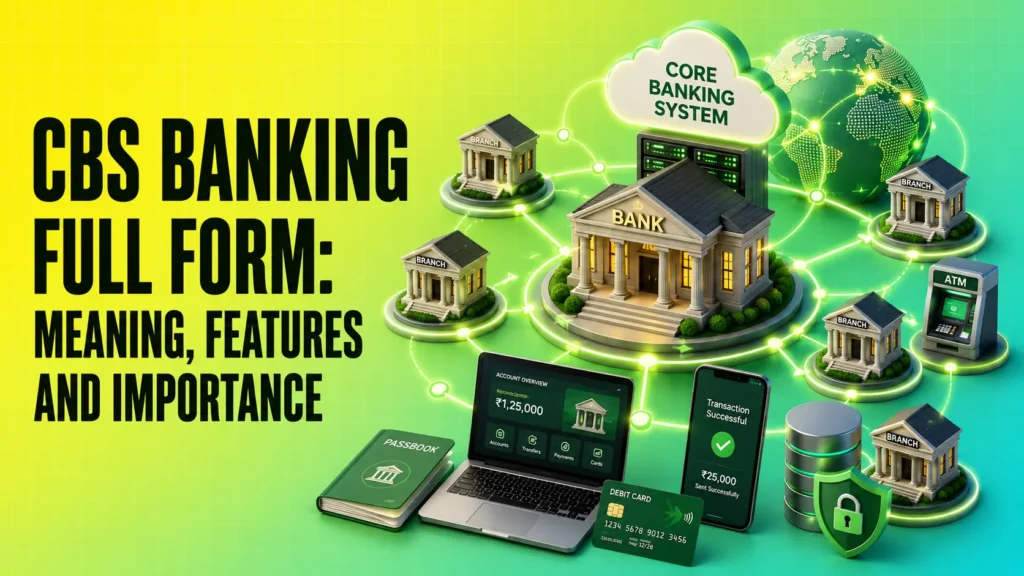
CBS Banking Full Form
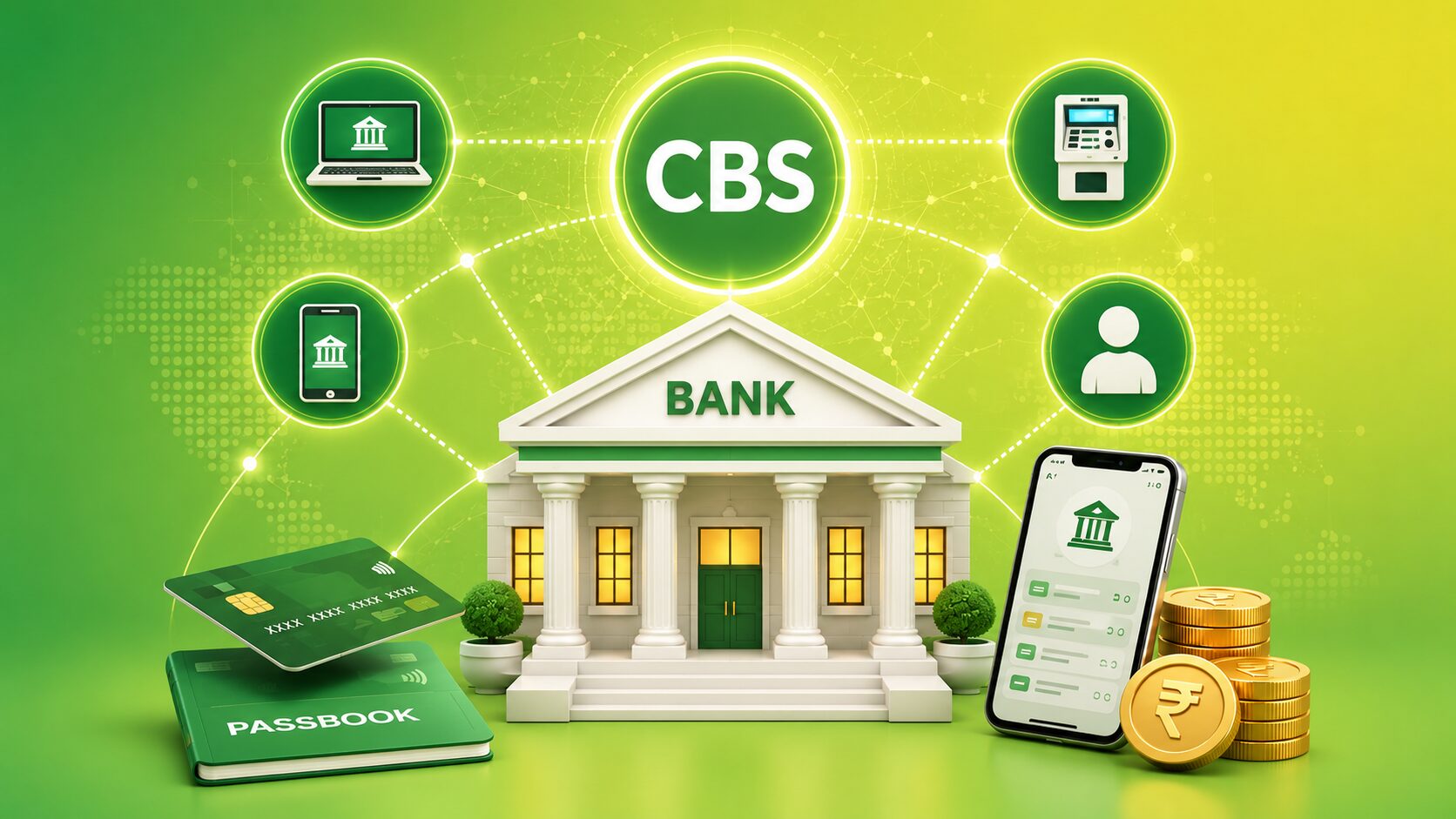
A Core Banking System is a centralized banking platform that allows customers to access banking services from any branch of the same bank. Instead of storing customer data separately at each branch, CBS keeps all account information in a central database. Every transaction is processed and updated instantly, ensuring that customers receive the same banking experience regardless of which branch they visit.
Because of this centralized approach, CBS has become the backbone of modern banking and supports digital services such as internet banking, mobile banking, ATM transactions, UPI integration, loan processing, and account management.
What Is CBS in Banking?
A Core Banking System (CBS) is an integrated software solution used by banks to manage their daily operations from a single centralized platform. It connects every branch, ATM, digital banking channel, and customer account into one secure network.
Whenever a customer performs a transaction—whether depositing cash, transferring money, paying bills, or checking their account balance—the request is processed through the CBS platform. The system immediately updates the customer’s account across all banking channels.
This means your account information remains synchronized whether you use:
- A bank branch
- Internet banking
- Mobile banking app
- ATM
- UPI-enabled applications
- Debit card or credit card services
Instead of maintaining separate records for each branch, banks rely on CBS to provide accurate, real-time customer data across the entire organization.
Advantages of CBS
Key Features of CBS Banking
One of the biggest reasons banks adopted Core Banking Systems is their ability to simplify banking while improving security and operational efficiency.
The most important features include:
Centralized Database
All customer information is stored in one secure database instead of individual branch servers. This eliminates duplicate records and improves data accuracy.
Anywhere Banking
Customers can access their accounts from any branch of the same bank without visiting their home branch.
Real-Time Transaction Processing
Every deposit, withdrawal, transfer, or payment updates instantly across all banking channels.
24×7 Digital Banking
CBS supports internet banking, mobile banking, UPI services, ATMs, and online fund transfers around the clock.
Multi-Channel Banking
Customers can perform transactions using branches, ATMs, mobile apps, websites, debit cards, or self-service kiosks.
Secure Data Management
Modern Core Banking Systems use multiple layers of encryption, authentication, and cybersecurity controls to protect customer information.
Faster Customer Service
Since customer information is available instantly, bank employees can resolve requests much faster than traditional banking systems.
Automated Banking Operations
Routine banking activities such as interest calculation, EMI deductions, account statements, and transaction records are handled automatically, reducing manual work and minimizing errors.
Why Is CBS Important in Banking?
The Core Banking System has become an essential part of the modern banking ecosystem because it enables banks to deliver faster, more secure, and customer-friendly services. Without CBS, customers would still depend on a single branch for most banking activities, making transactions slower and less convenient.
CBS allows banks to operate efficiently by centralizing customer data, reducing operational costs, minimizing manual errors, and improving service quality. It also supports the rapid growth of digital banking by integrating mobile banking, internet banking, ATMs, and payment systems into one unified platform.
For customers, CBS means greater flexibility, real-time account access, and the ability to perform banking transactions anytime and from almost anywhere. For banks, it enhances productivity, strengthens security, and helps meet the growing demand for seamless digital financial services.
In today’s banking environment, where speed, accuracy, and convenience are critical, CBS serves as the technological foundation that powers nearly every modern banking service.
Benefits of CBS Banking
The Core Banking System (CBS) makes banking faster, more secure, and convenient for both customers and banks. It connects all branches through a centralized system, allowing banking services to be accessed anytime and from almost anywhere.
Key Benefits of CBS Banking
- Anywhere Banking: Access your bank account and services from any branch of the same bank.
- Real-Time Transactions: Deposits, withdrawals, and fund transfers are updated instantly.
- 24×7 Digital Banking: Use internet banking, mobile banking, ATMs, and UPI anytime.
- Faster Customer Service: Centralized customer data helps banks resolve requests quickly.
- Improved Security: Advanced encryption and authentication protect customer information.
- Automated Banking Operations: Interest calculation, account updates, and transaction records are processed automatically.
- Reduced Manual Errors: Centralized data management improves accuracy and minimizes duplication.
- Better Banking Experience: Customers enjoy faster, seamless, and hassle-free banking services across multiple channels.
CBS vs Traditional Banking
Traditional banking systems stored customer records separately at each branch. As a result, customers had to visit their home branch for many banking activities, and transactions often took longer to process.
CBS completely changed this model by introducing centralized banking.
| Feature | Traditional Banking | CBS Banking |
|---|---|---|
| Customer Records | Stored branch-wise | Stored centrally |
| Banking Access | Home branch only | Any branch |
| Transaction Speed | Slower | Real-time |
| Internet Banking | Limited | Fully supported |
| Mobile Banking | Limited | Fully integrated |
| ATM Services | Basic | Nationwide access |
| Data Synchronization | Manual | Automatic |
| Customer Experience | Limited | Fast and convenient |
Common CBS Software Used in the Banking Sector
Conclusion
The Core Banking System (CBS) has become the backbone of modern banking by replacing branch-specific operations with a centralized, technology-driven platform. It enables customers to access banking services from virtually any branch, complete transactions in real time, and use digital banking channels such as mobile apps, internet banking, ATMs, and UPI with ease.
For banks, CBS improves operational efficiency, automates routine processes, strengthens security, and supports regulatory compliance. For customers, it offers convenience, speed, and seamless access to financial services anytime and anywhere.
As digital banking continues to evolve, the importance of CBS will only increase. It remains a critical technology that helps banks deliver secure, reliable, and customer-focused banking services in today’s connected financial ecosystem.