
Many people use the terms mortgage and collateral interchangeably, especially when discussing loans. Although they are closely related, they do not mean the same thing. Understanding the Difference Between Mortgage and Collateral is important before applying for a home loan, a loan against a property, or any other secured loan.
This guide explains both terms in simple language, highlights their key differences, and shows how they work together using practical examples.
What Is a Mortgage?
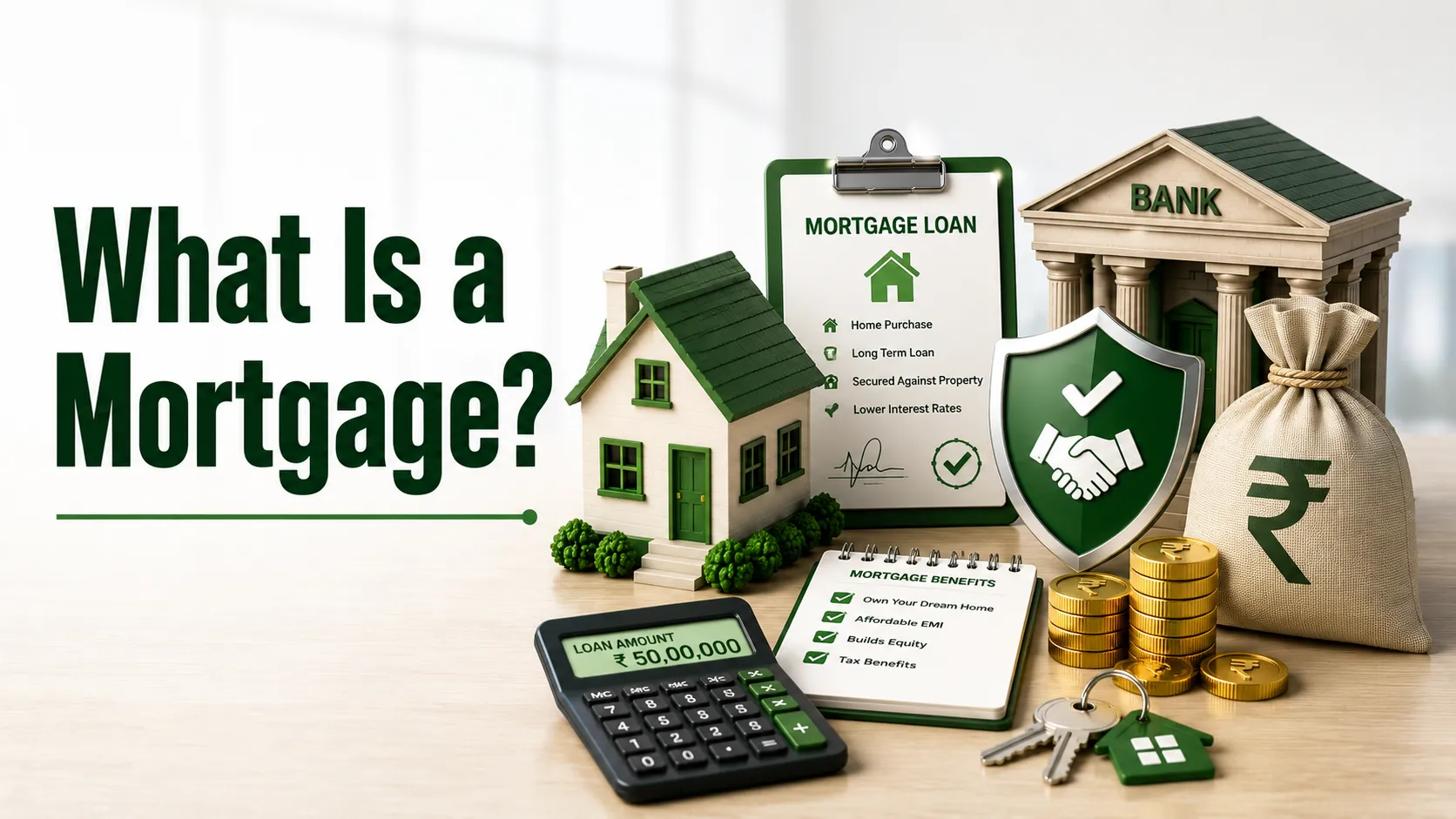
A mortgage is a legal agreement in which a borrower pledges immovable property, such as a house, apartment, or land, to secure a loan. If the borrower fails to repay the loan according to the agreed terms, the lender may have the legal right to recover the outstanding amount by taking action against the mortgaged property, subject to the applicable laws.
Key Features of a Mortgage
- It is used mainly for property-related loans.
- The property acts as a security for the lender.
- Ownership generally remains with the borrower unless there is a default on the loan.
- It is commonly used for home loans and loans against property.
What Is Collateral?

Collateral is a valuable asset pledged as security for a secured loan. It reduces the lender’s risk because the asset may be used to recover losses if the borrower defaults on the loan. Unlike mortgages, collateral is a broader concept that can include different types of assets.
Examples of collateral include
- Residential property
- Commercial property
- Gold
- Fixed Deposits (FDs)
- Vehicles
- Investments or securities (where accepted by the lender)
Difference Between Mortgage and Collateral
The Difference Between Mortgage and Collateral becomes easier to understand when both terms are compared side by side.
| Feature | Mortgage | Collateral |
|---|---|---|
| Meaning | A legal arrangement securing a loan using immovable property. | Any asset pledged to secure a loan. |
| Scope | Specific to property-based security. | A broad term covering different assets. |
| Asset Type | Land, house, apartment, or other immovable property. | Property, gold, vehicles, FDs, investments, and more. |
| Purpose | Secures loans involving real estate. | Secures various types of secured loans. |
| Legal Nature | A legal charge over property. | The asset offered as security. |
Mortgage vs Collateral: Simple Example

Suppose a person buys a house using a home loan.
- The bank provides loans.
- The house becomes the loan security.
- A mortgage is a legal arrangement between a borrower and a lender.
- The house itself serves as collateral.
This means that the property is the collateral, while the mortgage is the legal agreement created over that property.
How Mortgage and Collateral Work Together
Mortgage and collateral often work together during secured lending.
The process generally looks like this:
- A borrower applies for a secured loan.
- The lender evaluates the asset offered as security.
- If the asset is immovable property, a mortgage is created.
- The borrower receives the loan.
- Once the loan is repaid, the mortgage is released according to the lender’s process.
Also Read: Home Loan Insurance Plans
Types of Assets That Can Be Used as Collateral
Different lenders accept different assets depending on the loan product.
Common examples include:
- Residential property
- Commercial property
- Agricultural land (subject to lender policy)
- Gold jewellery
- Fixed Deposits
- Insurance policies (where applicable)
- Marketable securities
Not every collateral requires a mortgage. For example, gold pledged for a gold loan is collateral but is not mortgaged.
Benefits of Using Collateral
Providing collateral may offer several advantages.
- Higher loan eligibility
- Lower interest rates compared to many unsecured loans
- Longer repayment tenure
- Better approval chances
- Access to larger loan amounts
The exact benefits depend on the lender’s policies and the value of the pledged asset.
When Is a Mortgage Required?
A mortgage is generally required when:
- Purchasing a house through a home loan
- Taking a loan against property
- Using real estate to secure a business loan
Loans secured by gold, fixed deposits, or vehicles usually involve collateral but not a mortgage.
Common Misconceptions
- Mortgage and collateral are the same.
No. A mortgage is a legal agreement, while collateral is the asset pledged as security. - Every collateral is a mortgage.
No. Assets like gold, fixed deposits, and vehicles can be used as collateral without creating a mortgage. - A mortgage means losing ownership.
No. Borrowers generally keep ownership of the property as long as they repay the loan according to the agreed terms.
Which One Is More Important?
Neither is more important because they serve different purposes.
- Collateral protects the lender by providing security.
- Mortgage creates the legal right over immovable property used as collateral.
Both play an important role in secured lending.
Final Thoughts
Understanding the Difference Between Mortgage and Collateral helps borrowers make informed financial decisions. While collateral refers to the asset offered as security for a loan, a mortgage is the legal arrangement created when immovable property is used to secure that loan. Knowing this distinction can help borrowers better understand loan agreements, compare borrowing options, and choose the right type of secured financing based on their needs.