What is the Full Form of LTV in Banking?
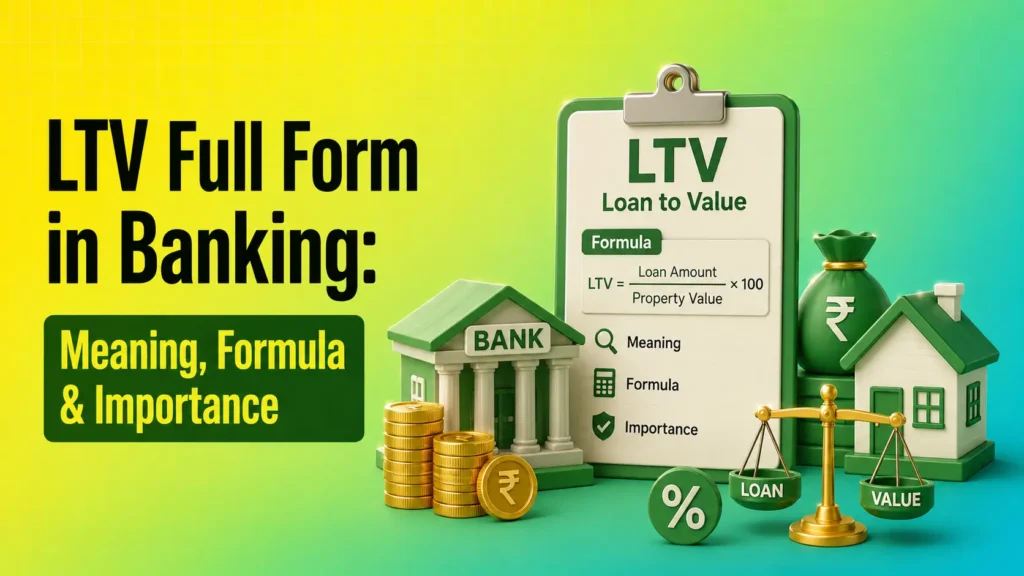
LTV Full Form in Banking stands for Loan-to-Value Ratio.
It is a financial ratio used by banks and NBFCs to compare the loan amount with the market value of the property offered as collateral.
In simple words, the LTV ratio shows what percentage of a property’s value a lender is ready to finance.
For example, if your property is worth ₹50 lakh and the lender approves a loan of ₹40 lakh, the LTV ratio is 80%.
Raed Also: MODT Full Form
What is LTV (Loan-to-Value) Ratio?
The Loan-to-Value (LTV) ratio helps lenders measure the lending risk before approving a secured loan.
A higher LTV ratio means the lender is financing a larger portion of the property’s value, while a lower LTV ratio means the borrower is contributing a higher down payment.
Banks use this ratio to determine:
- Loan eligibility
- Maximum loan amount
- Down payment requirement
- Lending risk
The LTV ratio is mainly used for:
- Home Loans
- Loan Against Property (LAP)
- Mortgage Loans
LTV Formula
The Loan-to-Value ratio is calculated using a simple formula:
| Formula |
|---|
| LTV Ratio = (Loan Amount ÷ Property Value) × 100 |
This formula helps lenders calculate what percentage of the property’s value is being financed.
Example of LTV Calculation
Let’s understand the formula with a simple example.
| Property Value | Loan Amount | LTV Ratio |
|---|---|---|
| ₹40,00,000 | ₹30,00,000 | 75% |
| ₹50,00,000 | ₹40,00,000 | 80% |
| ₹80,00,000 | ₹60,00,000 | 75% |
| ₹1,00,00,000 | ₹75,00,000 | 75% |
Example
Suppose:
- Property Value = ₹60 lakh
- Loan Amount = ₹48 lakh
Calculation:
LTV = (48,00,000 ÷ 60,00,000) × 100
LTV = 80%
This means the lender is financing 80% of the property’s value, while the borrower must arrange the remaining 20% as the down payment.
Why is the LTV Ratio Important?
The LTV ratio plays an important role for both lenders and borrowers.
For Lenders
Banks use the LTV ratio to assess the level of lending risk. A lower LTV generally means lower risk because the borrower has invested more of their own money in the property.
For Borrowers
The LTV ratio helps borrowers understand:
- Maximum loan amount they may receive
- Required down payment
- Overall borrowing capacity
Knowing the LTV ratio in advance can make loan planning easier.
Importance of LTV in Banking
The Loan-to-Value ratio is one of the key factors considered during the loan approval process.
Its importance includes:
Read Also: Retail Loan
Determines Loan Eligibility
Banks calculate the LTV ratio before deciding how much loan they can approve.
Helps Calculate Down Payment
The higher the LTV, the lower the borrower’s initial contribution. Conversely, a lower LTV requires a higher down payment.
Assesses Lending Risk
The ratio helps financial institutions estimate the risk associated with the loan.
Supports Responsible Lending
Using the LTV ratio allows lenders to maintain balanced lending practices while reducing financial risk.
How Does the LTV Ratio Affect Home Loans?
In home loans, lenders usually do not finance the entire property value.
Instead, they approve a loan based on the applicable LTV ratio.
For example:
| Property Price | LTV | Maximum Loan |
|---|---|---|
| ₹50 lakh | 80% | ₹40 lakh |
| ₹70 lakh | 75% | ₹52.5 lakh |
| ₹1 crore | 75% | ₹75 lakh |
The remaining amount must generally be paid by the borrower as the down payment.
Factors That Affect the LTV Ratio
Several factors influence the Loan-to-Value ratio, including:
- Market value of the property
- Loan amount requested
- Property type
- Lender’s internal lending policy
- Borrower’s financial profile
Each lender may have different eligibility criteria while determining the final loan amount.
Benefits of LTV Ratio
Understanding the LTV ratio offers several advantages.
| Benefit | Description |
|---|---|
| Better Loan Planning | Helps estimate loan eligibility before applying. |
| Financial Awareness | Gives a clear understanding of financing and down payment requirements. |
| Easy Comparison | Allows borrowers to compare loan offers from different lenders. |
| Risk Assessment | Helps lenders evaluate lending risk efficiently. |
Things Borrowers Should Know
Before applying for a home loan, borrowers should remember:
- A property’s market value affects the loan amount.
- A higher property value does not always guarantee a higher loan.
- The lender calculates the final loan amount after evaluating the property.
- The borrower usually needs to arrange the remaining amount as the down payment.
Understanding these points can help avoid surprises during the loan approval process.
Conclusion
The LTV full form in banking is Loan-to-Value Ratio, an important financial metric used by banks to determine the loan amount they can provide against a property’s value. By understanding the LTV ratio, its formula, calculation, and importance, borrowers can better estimate their loan eligibility, prepare the required down payment, and make informed borrowing decisions. Whether you are applying for a home loan or a loan against property, knowing how the LTV ratio works can help you plan your finances with greater confidence.