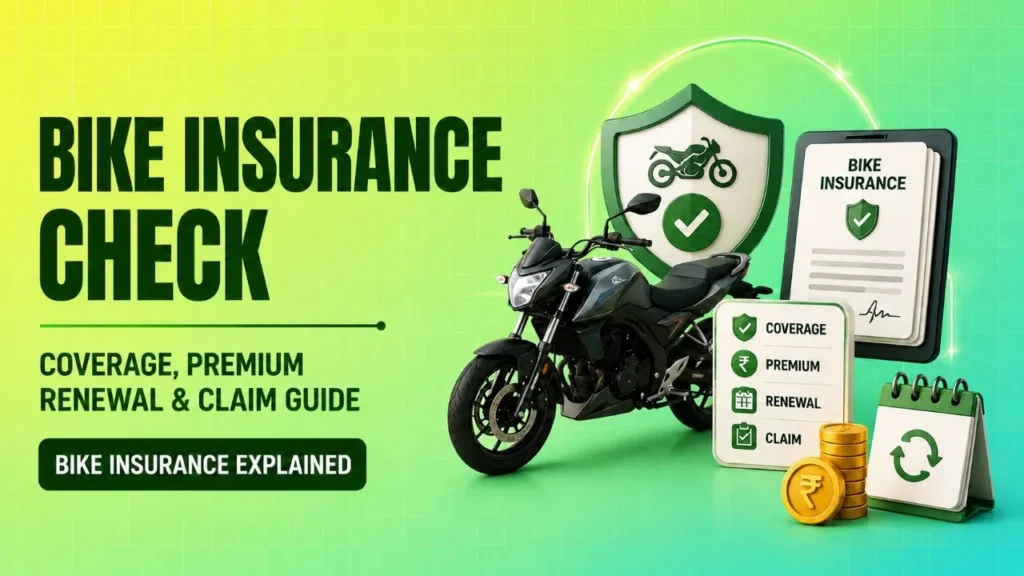
Keeping your bike insurance active is not just about paperwork. Under Indian motor vehicle rules, riding without valid insurance can lead to fines, legal trouble, and a rejected claim when you need help the most. The good news is that a bike insurance check usually takes only a couple of minutes if you know where to look.
Whether you have misplaced your policy copy, forgot the renewal date, or want to confirm what your coverage actually includes, this guide walks you through the full policy lifecycle: checking status, understanding coverage, renewing on time, and filing a claim when needed. For any changing rules or policy-specific terms, always verify the latest details on your insurer’s website, IRDAI guidance, or the Parivahan portal.
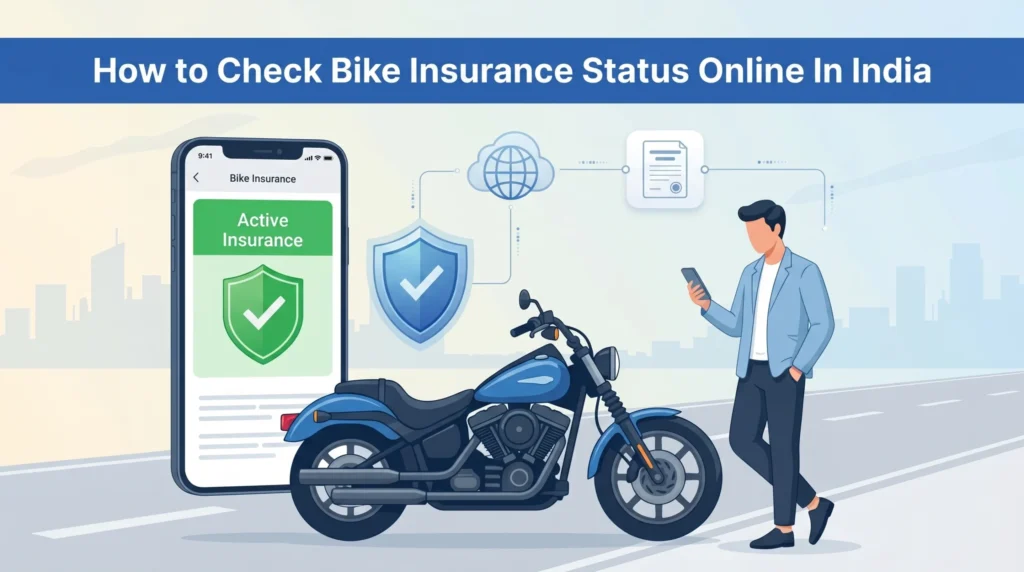
How to Check Your Bike Insurance Status Online
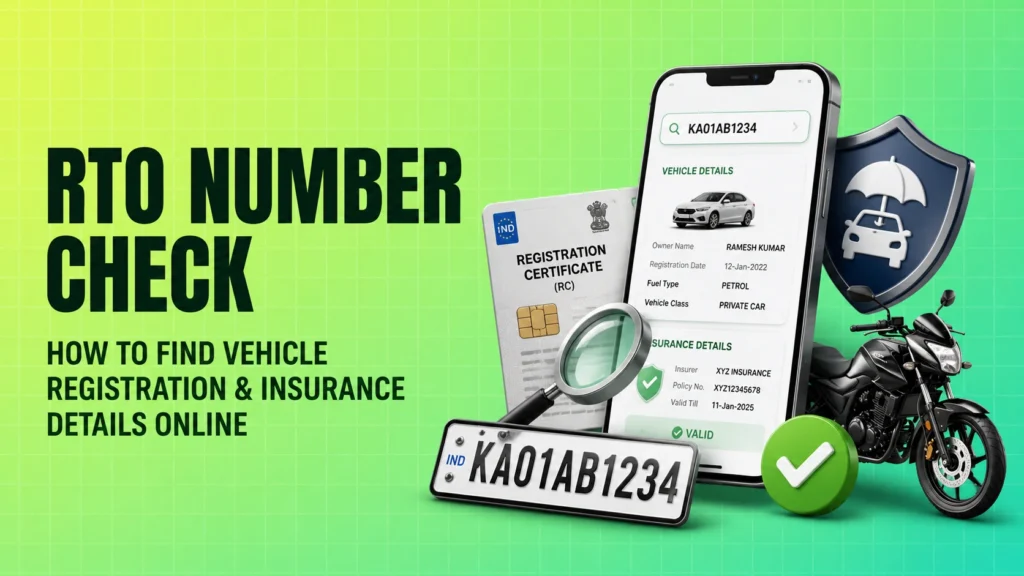
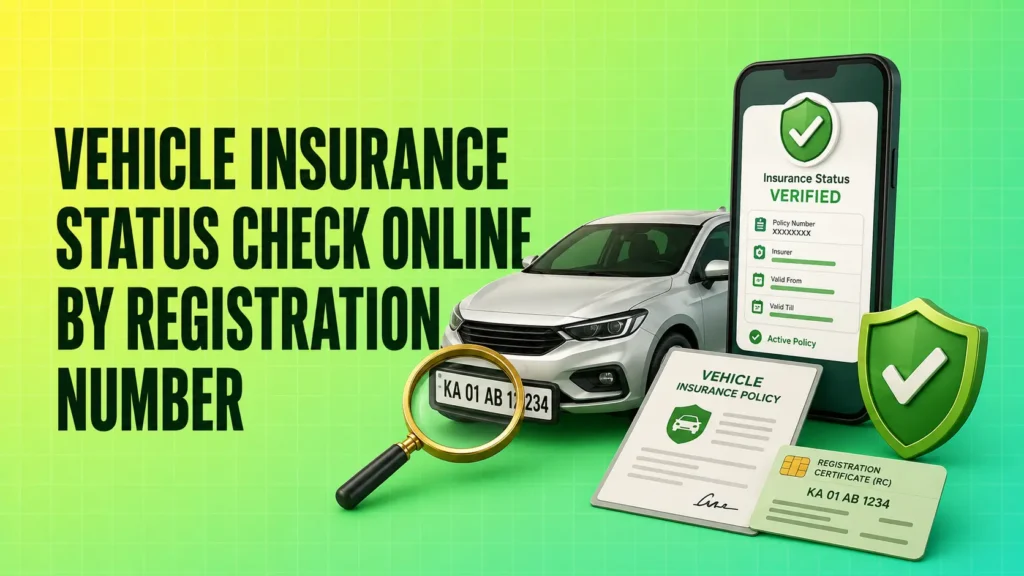
If you are unsure whether your policy is active, do a quick bike insurance check through any of these reliable methods: the Parivahan/Vahan portal, your insurer’s official website, or the mParivahan app. These sources are useful when you have lost the physical policy document or are buying a used bike and want to confirm whether insurance is still valid.
Checking via Parivahan/Vahan Portal
The Vahan database maintained by the Ministry of Road Transport and Highways is one of the easiest ways to verify vehicle-related details in India. It can help you confirm whether a policy record exists against your registration number.
- Open the official Parivahan website and go to the vehicle-related services or Vahan section.
- Select the option for checking vehicle details or insurance status.
- Enter your bike’s registration number carefully, along with any required verification code.
- Submit the form and review the available details, such as registration and policy-linked information if shown.
If the portal does not display the latest insurance record, do not assume the policy is inactive. Sometimes there is a delay in data updates, or your insurer may have issued the policy recently. In that case, cross-check directly with the insurer.
Checking via Insurance Provider Portal
Your insurer’s website or mobile app is usually the most direct way to check your policy status. Most insurers allow you to search using a policy number, vehicle registration number, chassis number, or registered mobile number.
- Visit the insurer’s official website or app.
- Log in with your registered mobile number, email, or policy details.
- Open the policy section and look for the active policy copy, renewal date, and coverage type.
- Download the latest policy document and save it on your phone or email.
This method is especially helpful if you need to verify add-ons, IDV, or insurer-specific terms before renewal or claim filing. If you lost the policy copy, the portal usually lets you download it again.
Checking via mParivahan App
The mParivahan app is another convenient option for quick vehicle information checks. It is useful when you want a record on your phone without carrying a physical copy everywhere.
- Download the official mParivahan app from a trusted app store.
- Register or log in using your mobile number.
- Search using the bike registration number.
- Check the available vehicle details and linked records.
For legal and claim purposes, always prefer the latest policy document from your insurer as the final reference. Government databases are helpful, but the insurance policy wording is the real contract.
Bike Insurance Status & Renewal Checklist
This simple checklist can help you keep track of your renewal and claim-readiness documents. It is for personal record keeping only. Always verify specific terms with your insurance provider.
| Item | Have it Ready? | Why It Matters |
|---|---|---|
| Bike registration number | Yes / No | Needed to check policy status and renew online |
| Policy document | Yes / No | Shows coverage type, expiry date, and add-ons |
| Registered mobile number | Yes / No | Used for login, OTP verification, and alerts |
| Driving licence | Yes / No | Often required during claim processing |
| RC copy | Yes / No | Useful for renewal and claim verification |
| FIR copy, if needed | Yes / No | Required for theft or third-party injury cases |
| Photos of damage | Yes / No | Helps support the claim survey |
| Repair estimate or workshop details | Yes / No | Useful for claim assessment and approval |
If most of these items are ready, you will usually find renewal and claims much smoother. If not, keep them in one digital folder on your phone or cloud storage so you can access them quickly during an emergency.
Understanding Your Bike Insurance Coverage
Before you renew or claim, it helps to know what your policy actually covers. In India, bike insurance generally falls into two broad types: third-party liability insurance and comprehensive insurance. The right choice depends on your legal requirement, your bike’s value, and how much financial protection you want.
| Coverage Type | What It Covers | Is It Mandatory? | What to Check |
|---|---|---|---|
| Third-Party | Legal liability for injury, death, or property damage to another person | Yes | Expiry date and policy continuity |
| Comprehensive | Third-party liability plus damage to your own bike from accident, theft, fire, flood, or similar covered events | No | IDV, exclusions, and add-ons |
Third-party insurance is mandatory under Indian law for all vehicles. It protects you if you cause damage to someone else’s life or property. It does not usually pay for your own bike’s repair or replacement.
Comprehensive insurance includes third-party cover and also protects your own vehicle from many common risks. If your bike is new, financed, or expensive to repair, comprehensive cover is often more useful. Still, the exact coverage depends on policy terms, exclusions, and add-ons.
While checking your policy, pay close attention to these points:
- Expiry date: Make sure the policy is still active.
- IDV: The Insured Declared Value is the insured value of your bike for own-damage claims.
- Add-ons: Check if you have zero depreciation, roadside assistance, engine protect, or other extras.
- Exclusions: Read what the policy does not cover, such as regular wear and tear or some types of misuse.
The Bike Insurance Renewal Process
Renewing on time is usually cheaper and simpler than renewing after a lapse. When your policy is active, renewal is often done without inspection and with fewer checks. It also helps you avoid legal issues and the stress of losing continuous coverage.
Most insurers allow online renewal in a few steps:
- Log in to the insurer’s website or app.
- Enter your bike registration number or policy number.
- Review the current cover, expiry date, and claim history.
- Select or remove add-ons based on your needs.
- Check the IDV and choose a suitable value.
- Pay the premium online and download the renewed policy copy.
Before payment, compare the policy details carefully. Even a small change in IDV or add-ons can affect the premium and claim amount later. If you are renewing an old policy, make sure the registration number, engine number, name, and contact details are correct.
If you are eligible to renew early, doing so can protect you from accidental lapses. Many riders forget the date because they do not get paper reminders anymore, so keeping a renewal alert on your phone is a practical habit.
What Happens if Your Policy Lapses?
If your bike insurance policy expires and remains unpaid for some time, the renewal process can become more complicated. The insurer may ask for a vehicle inspection before issuing a fresh policy, especially if the gap is significant.
This inspection helps the insurer assess the bike’s current condition and risk before starting coverage again. The exact process can vary by insurer, so check their rules before assuming you can renew instantly.
Once a policy lapses, you may also lose continuity benefits such as a no claim bonus on some policies, and your bike may be uninsured during the gap. That means you can face penalties and also pay repair costs yourself if something goes wrong during that period.
If your policy has expired, the safest approach is to renew it immediately and follow the insurer’s inspection or document requirements. Do not delay, because an expired policy creates both legal and financial risk.
Step-by-Step Guide to Filing an Insurance Claim
If your bike is damaged or stolen, the claim process becomes much easier when you act quickly and keep your documents ready. A delayed intimation is one of the common reasons claims get complicated, so inform the insurer as soon as possible.
- Inform the insurer immediately. Call the claims helpline or use the insurer’s app or website.
- Note the incident details. Record the time, place, people involved, and what happened.
- File an FIR where required. For theft, third-party injury, major accidents, or cases involving police action, an FIR is often necessary.
- Get the survey done. The insurer may assign a surveyor to inspect the damage before repairs start.
- Submit the documents. Share the policy copy, driving licence, RC, claim form, FIR if applicable, photos, and repair estimate.
- Follow workshop or reimbursement instructions. Depending on your policy and insurer process, you may use a network garage or pay first and claim later.
Keep your language factual when speaking to the insurer. Do not hide details or guess about the cause of damage. Claims are assessed based on policy terms, actual loss, exclusions, and supporting documents. If the details do not match, processing can be delayed or rejected.
Useful document checklist for claims:
- Valid driving licence
- RC copy
- Active policy document
- FIR copy, if applicable
- Photos of the damage or theft scene
- Repair estimate or workshop invoice details
- Claim form and insurer-specific documents
For theft claims, you may also need additional documents such as a no-trace certificate or police closure report, depending on the insurer and local process. Always check the exact list with your insurer.
Common Mistakes to Avoid
A lot of claim problems start with small mistakes made during renewal or policy checks. Avoiding them can save time, money, and stress later.
- Ignoring the expiry date: Letting the policy lapse can lead to inspection requirements and possible loss of continuity benefits.
- Choosing the wrong IDV: A very low IDV may reduce your premium but can also reduce claim value.
- Forgetting add-ons: If you rely on zero depreciation or roadside assistance, make sure they are included during renewal.
- Giving wrong details: Incorrect name, contact number, or vehicle details can create claim and renewal issues.
- Using fake or suspicious sites: A very cheap policy from an unknown source can be risky. Always use the insurer’s official website, app, or a trusted aggregator.
- Not keeping copies: Save your policy, RC, and claim documents digitally so you are not stuck if the physical copy is lost.
Also remember that insurance policies are legal contracts. Read the wording carefully, especially the exclusions and claim conditions. If something is unclear, ask the insurer before you pay the renewal premium.
Frequently Asked Questions
Is it legal to ride a bike with an expired insurance policy?
No. Riding with expired insurance is not legal, and you can face fines and other penalties. It also creates a high risk of claim rejection because the vehicle is not covered at the time of loss.
Can I change my insurance provider during renewal?
Yes. Renewal is a common time to switch insurers if you want different coverage, add-ons, service experience, or premium terms. Compare policy wording carefully before moving.
What is IDV and why does it matter?
IDV means Insured Declared Value. It is the insured value of your bike and is important because it affects your premium and the amount you may receive in a theft or total loss claim.
Is it necessary to file an FIR for every insurance claim?
No. An FIR is usually needed for theft, third-party injury, major accidents, or other cases where police involvement is required. For small damage-only claims, it may not always be necessary, but check with your insurer.
Can I get a copy of my policy if I lost it?
Yes. You can usually download a duplicate copy from the insurer’s website or app using your policy number, registration number, or registered mobile number.