
What is the Full Form of NPA?
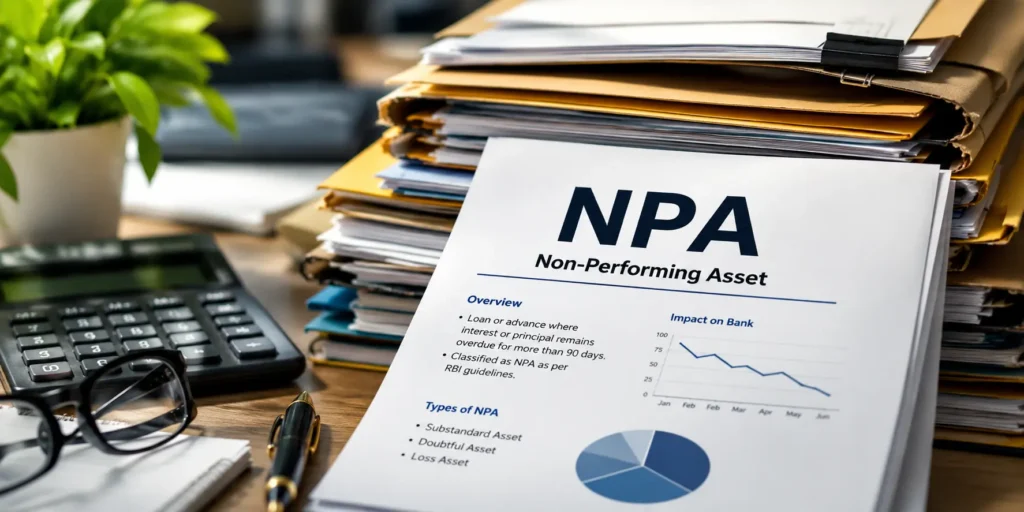
NPA Full Form: Non-Performing Asset
A Non-Performing Asset (NPA) is a loan or advance on which the borrower has failed to pay the principal amount or interest for more than 90 days. According to the Reserve Bank of India (RBI), once this period is crossed, the loan is generally classified as an NPA because it is no longer generating income for the bank.
Simply put, if a borrower continuously misses loan repayments for over 90 days, the account may become a Non-Performing Asset.
What Does NPA Mean in Banking?
Banks earn a large part of their revenue through the interest charged on loans. When borrowers repay their EMIs on time, the loan remains a performing asset.
However, if the borrower stops making repayments and the dues remain unpaid beyond the prescribed period, the loan stops generating regular income. At this stage, it is treated as a Non-Performing Asset.
The NPA classification allows banks to identify risky loans, monitor credit quality, and make appropriate financial provisions against possible losses.
Also Read: CLG Full Form
How Does an NPA Work?
The process is straightforward:
- A borrower takes a loan from a bank.
- The borrower regularly pays EMIs consisting of principal and interest.
- Due to financial difficulties or other reasons, repayments stop.
- If the overdue amount remains unpaid for more than 90 days, the loan is classified as an NPA.
- After classification, the bank begins recovery measures and also sets aside funds (known as provisioning) to cover possible losses.
The longer the loan remains unpaid, the greater the financial risk for the lender.
Types of Non-Performing Assets (NPA)
Banks generally classify NPAs into three categories depending on the recovery status.
1. Substandard Assets
A Substandard Asset is a loan that has remained an NPA for up to 12 months.
Although repayments have stopped, there is still a reasonable possibility that the borrower may recover financially and repay the loan.
2. Doubtful Assets
If a Substandard Asset continues to remain unpaid for more than 12 months, it becomes a Doubtful Asset.
At this stage, recovering the outstanding amount becomes more uncertain, and banks may need to increase provisions against the loan.
3. Loss Assets
Loss Assets are loans where the bank or auditors conclude that recovery is highly unlikely.
Even if some legal recovery process continues, these assets are generally considered unrecoverable and may eventually be written off according to regulatory guidelines.
Why Are NPAs Important?
Non-Performing Assets play an important role in measuring the financial health of banks.
Some of the major reasons include:
Indicates Asset Quality
A lower NPA level usually reflects better loan management and healthier lending practices.
Affects Bank Profitability
Banks earn interest income from loans. Once a loan becomes an NPA, the expected income reduces while additional provisions must be created, lowering profitability.
Influences Lending Capacity
Higher NPAs reduce the funds available for fresh lending because banks must reserve money to cover potential losses.
Builds Investor Confidence
Investors often review a bank’s NPA levels before making investment decisions. Lower NPAs generally indicate stronger financial stability.
Gross NPA vs Net NPA
Two important banking terms related to NPAs are Gross NPA and Net NPA.
Gross NPA
Gross NPA represents the total value of all loans classified as Non-Performing Assets before deducting any provisions.
It provides an overall picture of the bank’s bad loans.
Net NPA
Net NPA is calculated after subtracting the provisions made by the bank for possible loan losses.
It reflects the actual financial burden of bad loans on the bank’s balance sheet.
Common Reasons Why Loans Become NPAs
Several factors can lead to loan defaults, including:
- Loss of employment or business income
- Poor financial planning
- Economic slowdown
- Business failure
- Natural disasters or unexpected emergencies
- Weak repayment discipline
Not every delayed payment immediately becomes an NPA. The classification usually happens only after the overdue period crosses the regulatory limit.
Also Read: TAT Full Form
How Do Banks Manage NPAs?
Banks use multiple methods to reduce Non-Performing Assets.
These include:
- Regular monitoring of loan accounts
- Communicating with borrowers for repayment
- Loan restructuring in eligible cases
- Recovery proceedings under applicable laws
- Selling stressed assets to Asset Reconstruction Companies (ARCs) when appropriate
India also has legal frameworks such as the SARFAESI Act that allow banks to recover eligible secured loans without lengthy court procedures in many cases.
How Can Borrowers Avoid NPA Classification?
Borrowers can reduce the risk of their loan becoming an NPA by following simple financial practices:
- Pay EMIs before the due date.
- Avoid missing multiple monthly payments.
- Contact the lender immediately if facing financial difficulties.
- Request loan restructuring if eligible.
- Monitor loan statements regularly.
Early communication with the lender often helps prevent the situation from becoming more serious.
Conclusion
The NPA full form is Non-Performing Asset, which refers to a loan that stops generating income because repayments remain overdue for more than 90 days. NPAs are one of the most important indicators of a bank’s financial health, as they directly affect profitability, lending capacity, and overall financial stability.
Understanding the meaning, types, and importance of NPAs helps borrowers manage their loans responsibly while giving investors and banking professionals better insight into the strength of a financial institution.