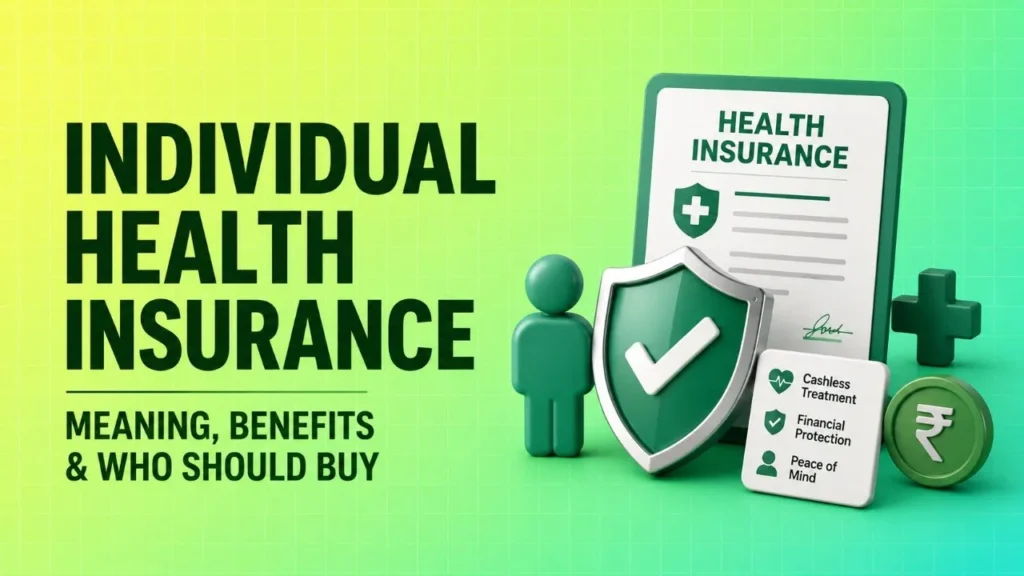
Individual health insurance is a policy that covers one person and gives that person a separate sum insured. If the insured person makes a claim, the coverage of other family members does not get reduced because each insured person has their own limit. For many Indian buyers, that makes it a practical option when personal health protection needs to be kept separate and clearly defined.
It can work as a stand-alone policy or as a supplement to employer cover or a family floater. The right choice depends on age, health history, family structure, and how much financial protection you want for one person. As with all insurance, the final decision should be based on the product brochure and policy wording, not just a brochure headline.

What is Individual Health Insurance?
Individual health insurance is a medical insurance policy that covers a single insured person. The insurer sets a sum insured for that person, and eligible hospitalisation expenses are paid up to that limit, subject to the policy terms, waiting periods, exclusions, and sub-limits.
In simple terms, the policy’s coverage belongs only to the insured person. If the sum insured is ₹5 lakh, that amount is available for that person’s claims during the policy year, depending on the policy rules. This is different from a family floater, where one shared sum insured is used for all covered family members.
For Indian policyholders, this structure matters because medical costs can be large and unpredictable. A dedicated policy gives clearer protection for the insured person, especially when they have higher health risks or need a more stable cover amount that is not shared with others.
Key Benefits of Choosing an Individual Policy
Individual health insurance offers a few clear advantages that make it attractive for certain buyers. The biggest benefit is that the sum insured is dedicated to one person and is not shared with others.
- Dedicated sum insured: The full coverage amount is assigned to one insured person, so there is no internal sharing of benefits with other family members.
- No impact on others’ coverage: If the policyholder uses the cover for a hospitalisation claim, another family member’s cover is not affected because they are not on the same pool.
- Personalised premium: Premium is usually based on the age, health status, location, and chosen cover of that one person, which can make pricing more specific and transparent.
- Better for higher-risk needs: It can suit people who need stronger or more predictable protection because of age, existing health concerns, or a need for higher sum insured.
- Easy to understand: Since one policy covers one person, many buyers find it simpler to track coverage, renewal, and claims.
That said, personalised pricing can also mean the premium is higher for older applicants or people with health issues. A dedicated policy is not automatically cheaper; it is simply structured around one person’s risk profile and coverage needs.
Individual vs. Family Floater: Which One Do You Need?
The right plan depends on whether you want separate protection for one person or a shared pool for the whole family. A family floater can work well for a young family with limited claims, while an individual policy often makes more sense when one person has a higher chance of using the cover heavily.
| Feature | Individual Plan | Family Floater | Why It Matters |
|---|---|---|---|
| Coverage structure | Separate sum insured for one person | One shared sum insured for all members | Decides whether one claim affects only one person or the whole pool |
| Impact of a claim | No impact on other family members’ cover | One member’s claim reduces the shared limit | Important when one member may need frequent or expensive treatment |
| Premium pattern | Based on the individual’s age and health profile | Based on the age and risk profile of the insured family members | Helps compare pricing fairness and future premium changes |
| Sum insured availability | Full amount available for that person | Shared among family members as needed | Useful when one person needs non-depleting protection |
| Best suited for | Senior citizens, high-risk individuals, or people wanting dedicated cover | Young families with low claim frequency and broadly similar health needs | Helps match the plan to real-life use |
For many households, the choice is not either-or. Some families use a family floater for general protection and buy individual policies for older parents or for a member who needs separate cover.
When Individual Health Insurance is the Better Choice
Individual health insurance is usually the better fit in situations where one person needs stronger, separate, and non-depleting protection. It is often considered by buyers in the following cases:
- Senior citizens in the family: Older adults are more likely to need medical care, so a separate cover can prevent one person’s claim from reducing coverage for everyone else.
- People with specific health conditions: Someone with a higher medical risk may benefit from their own sum insured instead of sharing a common pool.
- People who want higher control: If you prefer clarity around one person’s coverage, renewal, and claims, an individual plan is easier to manage.
- Supplementing a family floater: A separate policy can add another layer of protection when the family floater limit may not be enough.
- Adults living independently: A single working person or a person living away from family may find an individual policy more suitable than a shared plan.
For example, if a family floater of ₹10 lakh is already being used for parents, adding an individual policy for one parent can help preserve the floater for the rest of the family. This is only an example, and actual suitability depends on the insurer’s product terms and the family’s health needs.
Who Should Buy Individual Health Insurance?
A practical way to decide is to check whether your situation fits one or more of the points below. If several of them apply, an individual health insurance policy may be worth considering.
- You are above 45 or 50 and want a separate health cover that does not depend on other family members.
- You have a known medical history or a higher chance of hospitalisation compared with others in the family.
- You live alone, stay away from your parents, or manage your own finances independently.
- Your employer’s group health insurance is limited and may not be enough for major hospital bills.
- You already have a family floater, but you want additional protection for one member without reducing the family pool.
- You want a policy with a clear dedicated sum insured for easier planning and claim tracking.
If you are young, healthy, and the whole family has similar health needs, a family floater can still be efficient. But if one member is likely to need more care, an individual plan often gives better control over coverage allocation.
Essential Things to Check Before You Buy
Before buying any individual health insurance policy, read the policy wording carefully. This is not a formality. The brochure may highlight benefits, but the policy wording explains what is covered, what is excluded, how claims are handled, and when waiting periods apply.
Also remember that IRDAI-regulated health insurance products follow standard disclosure and customer protection norms, but each insurer’s product can still differ. So always check the exact terms of the product you are buying, and verify the latest rules or circulars on the official IRDAI website if needed.
- Pre-existing disease waiting periods (PED): A pre-existing disease is a condition that existed before the policy started, such as diabetes, hypertension, asthma, or a past surgery-related condition. Insurers usually apply a waiting period before such conditions are covered. The length can vary by product, so do not assume all policies are the same.
- Co-payment clauses: Some policies require you to pay a fixed percentage of the claim amount from your pocket. This can increase your out-of-pocket cost, especially for large hospital bills.
- Sub-limits: Some plans cap expenses such as room rent, ICU charges, cataract treatment, or specific procedures. A higher sum insured does not always mean full freedom if sub-limits apply.
- Network of cashless hospitals: Cashless treatment depends on the insurer’s network hospitals and claim approval based on policy terms. Check whether reputable hospitals near you are included.
- Exclusions: Read what is not covered, including certain procedures, non-medical items, cosmetic treatment, or treatment outside the policy scope.
- Renewability and age limits: Check how long the policy can be renewed and whether entry age or renewal age matters for your long-term plans.
One common mistake is to buy only by comparing premium. A low premium can sometimes mean stricter exclusions, higher waiting periods, or more sub-limits. The cheaper policy is not always the better policy.

Health insurance claims are usually processed in two main ways: cashless and reimbursement. In a cashless claim, the hospital and insurer coordinate as per the policy process, and eligible bills are settled directly subject to approval. In a reimbursement claim, you first pay the hospital and then submit the documents for repayment, again subject to policy terms.
Neither process means automatic approval. Claim settlement depends on the policy wording, documents submitted, treatment covered, waiting periods, exclusions, hospitalisation rules, and the insurer’s claim assessment. If the condition is excluded, within a waiting period, or unsupported by documents, the claim can be delayed, partly paid, or rejected according to the contract.
This is why truthful disclosure matters. If you have a pre-existing condition, declare it honestly at the time of purchase. Hiding it can create problems later during claim verification and can affect the claim outcome under the policy terms. A health insurance policy is a contract, so accuracy at the time of purchase is essential.
Practical claim tip: keep hospital bills, discharge summary, prescriptions, diagnostic reports, and insurer communication neatly filed. If the policy requires pre-authorisation for cashless treatment, follow that process on time.
Helpful Interactive Tool: Individual vs. Family Floater Comparison
This simple decision matrix can help you understand which option may suit your situation better. It is for educational purposes only. Always review the product brochure and policy wording of specific insurers before purchasing.
| Feature | Individual Plan | Family Floater | Why It Matters |
|---|---|---|---|
| Coverage use | One person uses one dedicated sum insured | All covered members share one sum insured | Shows whether coverage is protected from family-wide usage |
| Premium stability | Linked mainly to one person’s age and health risk | Linked to the family’s combined risk profile | Helps you estimate how premium may behave over time |
| Claim sharing | No sharing with others | One claim can reduce the balance for everyone | Important when one member may need repeat care |
| Best use case | Single adults, senior citizens, or high-risk members | Young families with similar health needs | Helps match the policy to life stage and medical risk |
A useful way to think about it is this: if one person needs independent protection, choose an individual plan. If the family is young and no member is likely to use a large share of the coverage soon, a floater can still be cost-effective.
Frequently Asked Questions
Does my company’s group health insurance cover everything?
No. Employer group health insurance is helpful, but it often has limits such as lower sum insured, restricted room categories, exclusions, or coverage only while you remain employed. If you leave the job, retire, or the company changes the policy, the cover may reduce or end. That is why many people keep a separate individual health insurance policy as backup.
Can I have both an individual policy and a family floater?
Yes. Many people keep both. A family floater can cover day-to-day family needs, while an individual policy can protect one member who has higher medical risk or needs a separate sum insured. This combination can improve flexibility, but you should compare the total premium and policy terms before buying.
How does age affect my individual health insurance premium?
Age affects premium because insurers usually price health insurance based on risk. As age rises, the likelihood of hospitalisation and claims generally rises too, so premiums may increase. Premiums can also be affected by health history, city of residence, cover amount, waiting periods, and add-ons. Actual pricing depends on the insurer’s rules.
What happens if I don’t make a claim in a year?
Many policies offer a No Claim Bonus or Cumulative Bonus if you do not make a claim during the policy year. This may increase the sum insured or provide another benefit as per the policy terms. The bonus structure is not the same across insurers, so check whether the increase is in cover, discount, or another format.
Are all hospital expenses covered in an individual plan?
No. Coverage depends on the policy wording. Some plans have sub-limits, room-rent caps, exclusions, co-payment clauses, and non-medical items that are not covered. Even in a good policy, not every expense will be paid. Always read the exact list of inclusions and exclusions before buying.