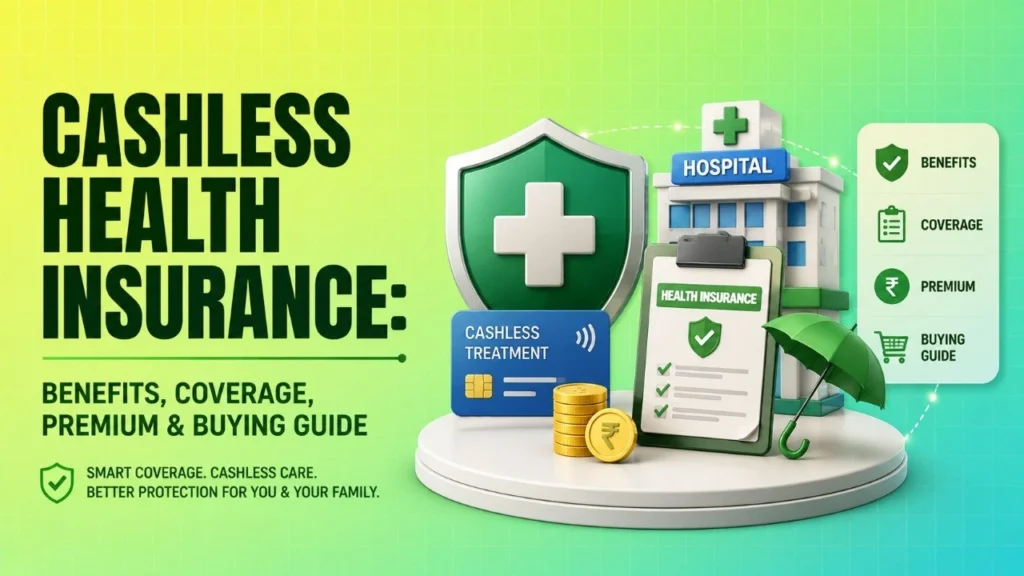
Cashless health insurance lets you get treated at a network hospital without paying the covered hospital bill upfront, as long as the claim is approved under your policy terms. The insurer or its claims partner settles the eligible expenses directly with the hospital, so you do not have to arrange a large amount of cash during an emergency.
That said, cashless does not mean everything is free. Your policy may still have co-payment, deductibles, room-rent limits, waiting periods, and non-medical exclusions. In India, the real usefulness of cashless health insurance depends on how wide the insurer’s hospital network is, how clear the policy wording is, and how smoothly the pre-authorization process works.
How Cashless Health Insurance Actually Works
The cashless process usually moves through four parties: you, the network hospital, the claims desk at the hospital, and the insurer or its Third Party Administrator (TPA). A TPA is an outside service provider that helps process claims for some insurers. It does not insure you; the insurer remains responsible for the policy and the final claim decision.
Here is the basic flow. You go to a network hospital, show your health card or policy details, and the hospital’s insurance helpdesk sends a pre-authorization request to the insurer or TPA. The insurer checks whether the treatment is covered, whether the waiting period is over, whether the sum insured is sufficient, and whether any exclusion applies. If the request is approved, the hospital can treat you under cashless settlement for eligible expenses. If it is denied, you may have to pay first and then explore reimbursement, depending on the reason.
Cashless is not money-free because the policy may still exclude some items. A common real-world surprise is the hospital billing counter adding small but frequent charges such as consumables, PPE-related items, gloves, masks, syringes, and other non-payable expenses. These may not be covered in full depending on the policy wording and the latest standardised exclusions used by insurers. Always read the policy schedule and exclusions carefully.
Cashless vs. Reimbursement
Many buyers confuse cashless treatment with reimbursement. The difference is simple: in cashless treatment, the insurer settles eligible bills directly with the network hospital; in reimbursement, you pay the bill first and later file a claim to get the eligible amount back. Cashless is usually easier during emergencies, but reimbursement may still be needed when the hospital is not in the insurer’s network or the cashless request is rejected.
| Factor | Cashless Treatment |
|---|---|
| Process | Insurer or TPA pays the network hospital for eligible expenses after approval. |
| Out-of-pocket expense | Lower for covered items, but you may still pay for exclusions, co-pay, or policy limits. |
| TPA involvement | Often involved in checking documents and processing pre-authorization or claim communication. |
| Document burden | Usually lighter at discharge than reimbursement, but paperwork still matters at admission and approval stages. |
Always verify the latest policy wording because cashless terms, exclusions, and process steps can vary by insurer.
Key Benefits of Opting for Cashless Policies
The biggest advantage of cashless health insurance is convenience. During a medical emergency, arranging money quickly can be stressful. Cashless treatment reduces that burden because the hospital and insurer coordinate the eligible payment directly.
Another major benefit is speed at the hospital desk. In a well-run network hospital, the insurance counter already knows the insurer’s process, which saves time and avoids confusion. This can matter a lot during planned surgeries, day-care procedures, or emergency admissions where family members may be anxious and dealing with paperwork is the last thing they want.
Cashless policies also bring better coordination through the TPA or insurer claims team. They review the request, ask for missing documents if needed, and communicate the decision to the hospital. For many policyholders, this is easier than collecting every bill and running a full reimbursement file later.
There is also a psychological benefit. When the policy is strong and the hospital is in-network, people feel more confident that they can access treatment without worrying about the entire bill on day one. That peace of mind is often the practical reason families buy health insurance in the first place.
The Reality of Coverage: What to Expect
Cashless health insurance sounds simple on paper, but claim settlement depends on the policy terms. Three things often surprise first-time buyers: room rent capping, co-payment clauses, and non-payable items.
Room rent capping means the insurer may limit how much it will pay per day for the room. If you choose a higher-category room, some insurers may reduce the payable amount across connected charges too, depending on the policy wording. This can increase your out-of-pocket cost even when the admission is otherwise cashless.
Co-payment means you share part of the claim with the insurer. For example, if a policy has a 20% co-pay, you may have to pay 20% of the approved claim amount from your pocket. Co-pay clauses are common in some policies, especially for senior citizens or specific conditions.
Non-medical expenses are another common pain point. These may include items such as registration charges, administrative fees, PPE-related items, consumables, gloves, masks, and other small hospital charges that are not part of the core medical treatment. IRDAI has worked toward standardising exclusions and disclosure practices, but you should still check the insurer’s latest list of non-payable items before buying.
Understanding Network vs. Non-Network Hospitals
A network hospital is one that has a cashless arrangement with the insurer, directly or through its service partner. A non-network hospital does not have that arrangement. This difference matters because cashless health insurance is usually available only in network hospitals.
Do not rely only on a hospital’s “we accept all insurance” statement at the reception. Before a medical emergency, verify the hospital’s name on the insurer’s official website or app. It is also wise to check the exact branch or location, because one branch of a hospital group may be in-network while another may not be.
This verification step becomes even more important in a city with multiple branches, franchise-style hospital names, or changing tie-ups. If you are buying a policy for family coverage, check whether the insurer has enough network hospitals near your home, office, and preferred doctors. Network density is more useful than a long list of hospitals in faraway locations.
Step-by-Step: The Cashless Claim Process
There are two common workflows: planned hospitalization and emergency hospitalization. The steps are similar, but the timing is different. In both cases, the hospital’s insurance desk or TPA desk is your first practical point of contact after admission formalities.
Planned Hospitalization: Pre-authorization Before Admission
For planned procedures such as a scheduled surgery, the hospital usually asks for pre-authorization in advance. In many cases, the request is sent about 48 hours before admission, though the exact timeline can vary by insurer and hospital policy. This gives the insurer time to review the case.
At the hospital TPA desk, the staff may ask you to fill a pre-authorization form and submit documents. If the case needs more details, the insurer may ask for clarification from the doctor or hospital. Approval is usually for the estimated treatment cost that appears eligible under the policy.
| Step | Action | Timing | What to Carry |
|---|---|---|---|
| 1 | Visit the network hospital and go to the insurance/TPA desk. | Before admission | Health card or policy details, ID proof |
| 2 | Fill the pre-authorization form with hospital help. | Usually around 48 hours before planned admission | Doctor’s advice, diagnostic reports if asked |
| 3 | Hospital sends request to insurer/TPA for review. | Same day or as per hospital process | Signed form, patient details |
| 4 | Insurer approves, queries, or denies the request. | Depends on case complexity | Keep contact details active for updates |
| 5 | Proceed with admission if approved. | At admission | ID proof, health card, policy number |
Emergency Hospitalization: Intimation After Admission
In an emergency, treatment comes first. The hospital’s helpdesk usually sends the cashless request after admission, and the insurer should be informed quickly. Many policies require intimation within 24 hours, but this time limit can differ, so check your policy wording.
In emergency cases, families often hand over whatever documents they have at the time of admission, then provide missing records later. Keep the health card, a government ID, and policy details accessible in your phone. A small preparation step like storing the insurer helpline and policy number can save a lot of stress.
At discharge, the hospital may still collect the non-payable amount, co-pay, or expenses beyond policy limits. That is normal in many cashless claims. The final settlement depends on what the insurer approves after reviewing the bill, diagnosis, and documents.
Common Pitfalls and How to Avoid Them
Cashless claims can fail or get delayed for reasons that are often preventable. One common issue is waiting periods. Many policies do not cover pre-existing diseases immediately, and some specific conditions have separate waiting periods. If the treatment falls within that period, cashless may be denied even if the hospital is in the network.
Another frequent problem is incorrect disclosure in the proposal form. If you hide an existing illness, past surgery, or ongoing treatment, the insurer may question the claim later. In insurance, accurate disclosure matters. A mismatch between medical history and policy application can lead to claim complications.
Policy exclusions are another reason for rejection. A treatment may be medically necessary, but if the policy wording excludes it, the insurer may not pay. That is why buying purely on premium can be risky. A cheaper premium with stricter exclusions may cost more during hospitalization.
To reduce surprises, keep these habits in mind:
- Read the policy wording, not just the brochure.
- Check waiting periods for pre-existing illnesses and specific treatments.
- Confirm whether your preferred hospital is truly in the network.
- Ask the hospital billing desk about expected non-medical charges.
- Keep copies of reports, discharge summaries, and prescriptions.
How to Choose the Right Cashless Health Insurance
Choosing cashless health insurance is not just about the cheapest premium. A low premium can look attractive, but it may come with a smaller hospital network, stricter room-rent limits, or a higher co-payment clause. Those details matter far more at claim time than the monthly premium difference.
Use this checklist before buying:
- Network hospital density in your city and nearby areas, not just the total number nationwide.
- Official hospital verification on the insurer’s app or website before purchase and before any admission.
- Claim settlement ratio as one of several indicators, not the only decision factor.
- Room rent rules and whether they affect other charges.
- Co-payment clauses, especially for older buyers or specific covers.
- Waiting periods for pre-existing diseases, maternity, and named treatments.
- Transparency of exclusions, including non-medical items and procedure-specific limits.
- Pre-authorization process and how responsive the insurer or TPA is in practice.
Also check the insurer’s claim support process. A strong cashless policy is not only about having many hospitals listed. It is also about how smoothly the insurer or TPA communicates with the hospital, how quickly they respond to queries, and how clearly they explain approval or denial reasons.
If you ever face a dispute, keep the paperwork and communication trail ready. You can also check consumer grievance channels through the insurer and the official IRDAI grievance portal. IRDAI is the regulator for insurance in India, so its guidance and complaint process are important reference points if something goes wrong.
A Simple Checklist Before You Buy
Before you finalize a cashless health insurance policy, run through this quick checklist and make sure the policy fits your real-life needs.
| Checkpoint | What to Verify |
|---|---|
| Hospital network | Are good hospitals near your home and office in-network? |
| Room coverage | Is there a room rent cap or category restriction? |
| Co-pay | Do you have to pay a fixed percentage of every claim? |
| Non-medical items | Which consumables and hospital charges are excluded? |
| Waiting periods | How long before pre-existing diseases and specific illnesses are covered? |
| Claims support | Does the insurer or TPA have a clear process for pre-authorization and queries? |
| Policy wording | Are exclusions, sub-limits, and conditions easy to understand? |
Use this checklist with the policy document and the insurer’s official network hospital search. If any term is unclear, ask for written clarification before buying. Policy rules and charges can change, so the latest official wording should always be your final reference.
FAQ
1. Is cashless treatment available in all hospitals?
No. Cashless treatment is usually available only in network hospitals that have a cashless arrangement with the insurer or its service partner.
2. What if my hospital is not in the network?
If the hospital is not in the insurer’s network, you usually have to pay the bill first and later apply for reimbursement, subject to policy terms.
3. Do I need to pay anything at all?
Yes. You may still have to pay for non-medical items, co-payment, deductibles, room-rent excess, or any amount not covered under the policy.
4. Can my cashless claim be rejected?
Yes. A cashless claim can be rejected or partially approved if the treatment is excluded, waiting periods apply, documents are incomplete, or the policy details were not disclosed correctly.
5. What is the role of a TPA?
A TPA acts as an intermediary that helps process health insurance claims, pre-authorization requests, and hospital communication on behalf of the insurer.
6. How do I find my nearest network hospital?
Check the insurer’s official app or website, or use the network hospital search tool provided by the insurer before you buy the policy and before you need treatment.