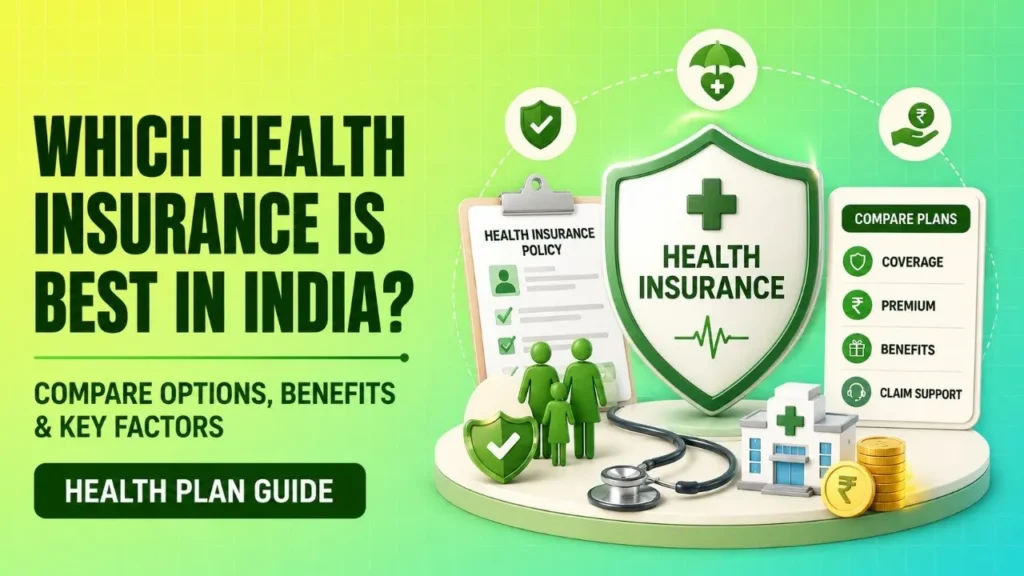
There is no single answer to which health insurance is best in India. The right policy depends on your age, family size, medical history, city of residence, and budget. A plan that works well for a 25-year-old single person may be a poor fit for a family with parents, or for someone with diabetes and regular doctor visits.
So instead of looking for the “best brand,” it is smarter to compare the policy features that actually affect your hospital bill, claim experience, and out-of-pocket खर्च. In health insurance, the cheapest premium is not always the best value, and the highest sum insured is not always enough either. The real goal is to find a policy that gives practical protection, clear terms, and fewer surprises at claim time.

Understanding What Makes a Health Insurance Plan ‘Best’
A good health insurance plan is one that matches your real medical risk and has simple, fair terms. For most people, that means enough cover for hospitalisation, access to a strong network hospital list for cashless claims, reasonable waiting periods, and no hidden limits that can shrink the benefit during a real emergency.
IRDAI rules and insurer policy wordings matter here. Insurance products are regulated, but each insurer still designs its own plan features, exclusions, and add-ons. That is why two policies with the same premium can feel completely different when you file a claim.
Why ‘Sum Insured’ is Not the Only Metric
Sum insured is the maximum amount the insurer may pay during the policy period. It matters, but it is only one part of the picture. A policy with a ₹10 lakh sum insured may still be weak if it has a low room rent cap, strict co-payment, or large sub-limits on surgeries.
For example, if your plan allows only a single private room up to a small daily limit, but the hospital charges more, you may need to pay the difference yourself. Similarly, some plans cap doctor fees, ICU charges, or specific procedures. In that case, a high sum insured does not fully protect you.
When comparing policies, look at the structure of the cover, not just the headline amount. A balanced plan with fewer restrictions may be more useful than a flashy high-cover plan with many exclusions.
The Critical Role of Claim Settlement Ratio (CSR) vs. Service Quality
Claim Settlement Ratio, or CSR, tells you the percentage of claims settled by an insurer over a period. It is a useful indicator, but it does not guarantee that your claim will be approved. Your own claim success still depends on policy terms, documents, waiting periods, exclusions, and disclosures made at the time of buying the policy.
Service quality also matters. Some insurers process claims through a third-party administrator, or TPA, while others handle claims in-house. A TPA model is not automatically bad, and in-house processing is not automatically better. What matters is how fast the claim is handled, how clearly queries are raised, and how smoothly the cashless process works at network hospitals.
Before buying, check whether the insurer has a simple claim process, responsive support, and a strong hospital network in your city. A high CSR with poor service can still be frustrating during a hospital emergency.
Key Factors to Compare When Choosing Your Policy
If you want to compare health insurance policies properly, read the policy wording and compare the features that affect both coverage and claim payout. The table below can help you shortlist plans in a practical way.
| Feature | What It Means | Why It Matters | What to Check |
|---|---|---|---|
| Sum insured | Total cover available for hospital expenses during the policy term | Decides how much financial protection you get | Choose a cover that matches city-level hospital costs and family needs |
| Room rent limit | Cap on room charges covered by the insurer | Can affect the entire claim amount in some policies | Check whether it is capped as a fixed amount, percentage, or no limit |
| Co-payment | Portion of the claim you must pay yourself | Increases your out-of-pocket cost | Look for plans with low or no co-payment, especially for older buyers |
| Waiting period | Time before certain illnesses or pre-existing diseases are covered | A claim can be denied if treatment happens during the waiting period | Check PED waiting period, specific disease waiting periods, and initial waiting period |
| Pre-existing disease cover | Coverage for illnesses you already had before buying the policy | Very important if you have diabetes, hypertension, asthma, or similar conditions | See how long the insurer waits before covering PED-related claims |
| Restoration benefit | Refills the sum insured after it gets used up | Useful if there is more than one hospitalisation in a year | Check whether it applies once or multiple times, and for same or different illnesses |
| Day care procedures | Treatments that do not need 24-hour hospitalisation | Many modern treatments are done as day care | Check the insurer’s day care list and whether it is comprehensive |
| OPD coverage | Coverage for doctor consultations, tests, and medicines outside hospitalisation | Helpful for families, seniors, and people with regular follow-ups | See limits, exclusions, and whether OPD is an add-on or built-in benefit |
| Maternity cover | Coverage for pregnancy-related expenses | Useful for young couples planning a family | Check waiting period, newborn cover, and sub-limits |
| Cashless hospital network | Hospitals where insurer may settle bills directly with the hospital | Reduces upfront payment pressure | Confirm network hospitals in your city and preferred hospitals |
| Ambulance and pre/post-hospitalisation | Transport and expenses before and after admission | These costs can add up quickly | Check number of days covered and limits on ambulance charges |
One practical tip: compare not only what is covered, but also the limits inside the cover. A policy can appear generous on paper and still be restrictive in real life because of sub-limits, co-payment, or narrow definitions.
Health Insurance Coverage Checklist and Priority Selector
Use this simple checklist to understand what type of policy may suit you. This helps you identify your needs; please consult the policy document for specific insurer terms.
| Priority | Check if this matters to you | What to look for in a policy |
|---|---|---|
| Restoration | Yes / No | Look for a plan with restoration benefit, ideally applicable for future hospitalisations after the sum insured is exhausted |
| OPD | Yes / No | Choose a policy that includes OPD cover or a suitable add-on, especially if you have frequent consultations |
| Maternity | Yes / No | Check maternity waiting period, newborn cover, and delivery-related sub-limits |
| Room rent limit | Strict preference / Flexible | Prefer plans with no room rent cap or at least a higher limit if you want fewer claim deductions |
How to read the result:
- If you select Restoration, focus on plans that refill cover for repeated hospital stays.
- If you select OPD, compare whether OPD is included, capped, or only available as an add-on.
- If you select Maternity, check the waiting period early, because this benefit usually cannot be used immediately after buying the policy.
- If you select Room rent limit as a strict preference, avoid policies with low room rent caps that may reduce your claim payout.
Common Traps That Lead to Claim Rejection
Many claim problems happen not because the insurer is refusing everything, but because the policyholder missed an important condition. The biggest mistakes are non-disclosure of health history, not understanding waiting periods, and assuming every treatment is covered.
Insurance claims depend on policy wording. If a treatment, medicine, test, or hospital stay falls outside the terms, the insurer can reject or reduce the claim. That is why it is important to read the exclusions section, not just the brochure.
Pre-existing Disease Waiting Periods
Pre-existing diseases, or PEDs, are medical conditions you had before buying the policy. Common examples include diabetes, hypertension, thyroid issues, asthma, and heart-related conditions. Many policies have a waiting period before PED-related claims become eligible.
IRDAI has capped the waiting period for pre-existing diseases in standard retail health insurance policies at a maximum of 3 years, subject to policy terms and category of product. Still, you should verify the latest rules and the exact wording in the policy document, because coverage structure and exclusions can vary.
This point matters when switching insurers. If you move from one insurer to another, the new policy may not give immediate cover for existing conditions unless portability or continuity benefits apply in the specific way allowed by the policy and rules. Always check whether the waiting period credit, if any, is recognized during porting.
Room Rent Sub-limits & Co-payment Clauses
Room rent sub-limits can create a chain reaction. If the policy caps room rent below the hospital room charge you choose, some insurers may proportionately reduce other expenses too. That can turn a small pricing gap into a larger claim reduction.
Co-payment means you share part of the bill. For example, if a policy has a 20% co-payment on a ₹2 lakh bill, you may have to pay ₹40,000 from your pocket, subject to terms and exclusions. This is especially important for senior citizens and buyers with medical conditions, because the premium may look affordable while the actual claim burden becomes high.
Also check for sub-limits on disease-wise treatments, cataract, knee replacement, and other procedures. These small lines in the policy wording often decide how much cashless support you really get.
When Should You Review or Upgrade Your Health Insurance?
A policy bought at age 25 may not remain the best policy at age 45. Your health risks, family responsibilities, and spending power change over time, and medical inflation also makes old coverage look smaller every year. A policy that once felt adequate may become too limited later.
Review your health insurance when any of these happen:
- You get married or have children
- Your parents become financially dependent on you
- You develop a chronic condition that needs regular care
- You move to a city with higher hospital costs
- Your employer-provided cover changes or ends
- Your sum insured no longer feels enough for major surgery in a private hospital
When upgrading, check whether the new cover will respect continuity benefits, waiting periods, and portability rules as applicable. Do not assume a fresh policy will instantly replace the old one with the same protection. The policy wording and insurer conditions decide the actual result.
It is also wise to revisit your cover after salary growth. A higher premium may be acceptable if the policy gives meaningful protection, but only if the benefits are relevant to your stage of life. For many families, the best policy is not the one with the most features; it is the one that removes the biggest financial risks at a fair cost.
The most practical way to answer which health insurance is best in India is to match the policy with your needs. Look at sum insured, waiting periods, room rent rules, restoration, co-payment, OPD, maternity, and the hospital network in your city. Then read the policy wording carefully before buying.
Also remember that cashless treatment depends on the insurer’s network hospital list and approval at the time of admission. Even a strong plan can create stress if your preferred hospital is not in-network or if a claim condition is missed. Verification before purchase is far easier than fixing a denial after hospitalisation.
FAQ
Is it better to buy health insurance from a bank or an insurance company?
It is usually better to compare the actual policy terms rather than the sales channel. A bank may sell an insurance policy as a distributor, but the claim, coverage, and servicing are governed by the insurer’s policy wording. Check the insurer, benefits, exclusions, and claim process before buying.
Does my company-provided group insurance cover all my needs?
No, not always. Employer group insurance is useful, but the sum insured may be limited and the cover may stop when you leave the job. Many people keep a separate personal health insurance policy so they do not depend only on employer cover.
What happens if I don’t disclose my medical history?
Non-disclosure can lead to claim rejection, policy cancellation, or disputes later. Always disclose pre-existing diseases, past surgeries, ongoing medication, and other asked details honestly. The insurer decides the premium and waiting period based on the information you provide.
Can I have two health insurance policies at the same time?
Yes, you can hold more than one health insurance policy at the same time. At claim time, you can usually choose how to use them according to policy rules and coordination of benefits. Read both policies carefully because settlement order and documentation requirements matter.
What is the difference between ‘Restoration’ and ‘Reload’ benefits?
Restoration usually means the insurer refills the sum insured after it is used up, subject to policy terms. Reload is often used as a marketing term, and the exact meaning can vary by insurer. Always check the policy wording to see when the refill applies, how many times it works, and whether it covers the same illness or a different one.