A term plan with maturity benefit gives you life insurance protection during the policy term and may return eligible premiums if you survive until the policy ends. In simple terms, your family receives financial support if you die during the policy period, while you may receive a maturity benefit if you outlive the policy.
In India, this type of plan is commonly known as Term Return of Premium (TROP) insurance. However, the insurer may not return the complete amount paid by you. GST, rider premiums, additional premiums and certain policy charges may be excluded from the maturity benefit. Therefore, always check the policy document and benefit illustration to understand exactly how much you may receive.
Before choosing a term plan, understand how a life insurance policy works, including its benefits, premium and tax considerations.
Quick Answer
A term plan with maturity benefit works in two ways:
- If the policyholder dies during the policy term, the nominee may receive the death benefit.
- If the policyholder survives the complete policy term, the insurer may return the eligible base premium as a maturity benefit.
The policy must remain active, and all applicable conditions must be fulfilled to receive the benefit.
What Is a Term Plan with Maturity Benefit?
A normal term insurance plan provides life cover for a fixed period. If the policyholder dies during that period, the nominee receives the sum assured. If the policyholder survives, a regular term plan usually does not pay a maturity amount.
A term plan with maturity benefit adds a survival benefit to the policy. If the policyholder survives until the end of the policy term, the insurer may return the eligible premium paid during the policy period.
This benefit is generally available through Term Return of Premium plans. However, not every amount paid with the policy is necessarily returned.
The maturity benefit may exclude:
- GST and other applicable taxes
- Premiums paid for riders
- Additional premium due to health or occupation
- Fees and charges
- Premiums paid after policy modification
- Amounts excluded under the policy conditions
The exact calculation should always be checked in the official policy document and benefit illustration.
How Does a Term Plan with Maturity Benefit Work?
The process is as follows:
- You select the sum assured, policy term and premium payment frequency.
- You pay the required premiums according to the policy schedule.
- The policy provides life insurance protection during the policy term.
- If the policyholder dies while the policy is active, the nominee may receive the death benefit.
- If the policyholder survives the entire term, the insurer may pay the eligible maturity benefit.
- After the maturity benefit is paid, the policy normally ends.
For example, suppose you purchase a 30-year TROP policy with an eligible annual base premium of ₹20,000.
The eligible base premium paid over 30 years would be:
₹20,000 × 30 = ₹6,00,000
The policy may return this eligible base premium at maturity. However, the actual amount can be different if the policy excludes GST, rider premiums, additional premiums or other charges.
What Is Returned at Maturity?
The maturity benefit varies from one policy to another. Some plans may return the total eligible base premium paid during the policy term, while others may calculate the benefit differently.
Before buying the policy, check whether the maturity benefit includes:
- Base life insurance premium
- Premium paid after discounts
- Premium for optional riders
- GST
- Additional premium
- Extra charges
- Premiums paid during a policy revival
Do not assume that the complete amount deducted from your bank account will be returned. The insurer’s official benefit illustration should clearly show the total premium and expected maturity benefit.
Is the Full Premium Returned?
Not necessarily.
In many term plans with maturity benefits, the insurer returns only the eligible base premium. The following amounts may not be included:
- GST
- Rider premiums
- Premium loading due to medical or occupational risk
- Administrative charges
- Other policy-related fees
For this reason, compare the following figures before purchasing:
- Total amount paid
- Eligible premium
- Amount excluded from refund
- Maturity benefit
- Death benefit
- Premium payment term
The phrase “premium return” should not automatically be interpreted as “complete refund of every payment.”
Is GST Returned in a Term Plan with Maturity Benefit?
GST is generally shown separately from the base insurance premium. Whether GST is included in the maturity benefit depends on the specific policy terms.
Do not assume that GST will be refunded. Ask the insurer for a written explanation showing:
- Base premium
- GST
- Rider premium
- Additional premium
- Total amount payable
- Eligible premium returned at maturity
The amount stated in the policy document should be considered more reliable than a verbal explanation or promotional statement.
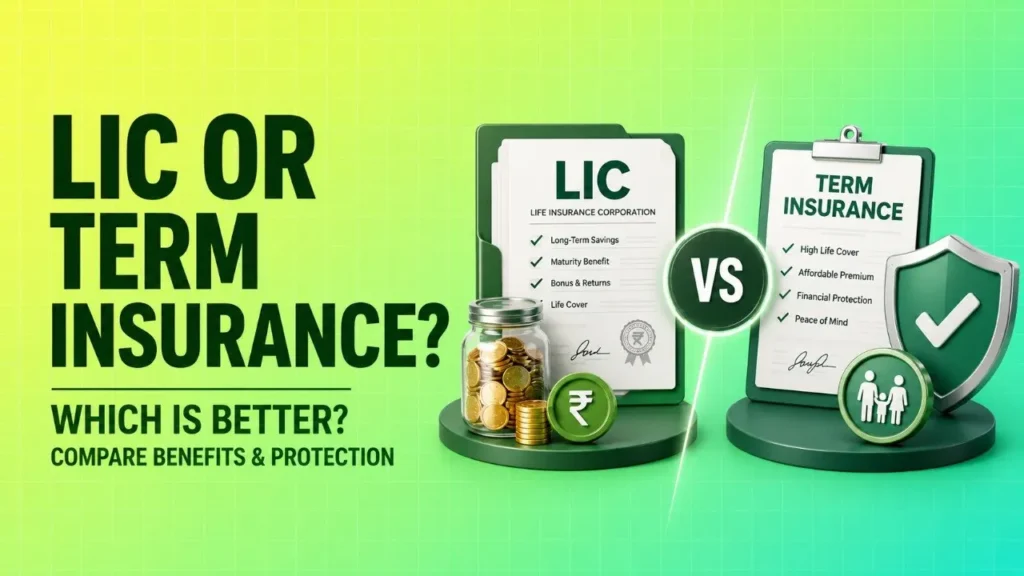
Term Plan with Maturity Benefit vs Regular Term Plan
| Feature | Regular Term Plan | Term Plan with Maturity Benefit |
|---|---|---|
| Main purpose | Financial protection | Financial protection with a premium-return feature |
| Premium | Usually lower | Usually higher |
| Death benefit | Payable during the policy term, subject to conditions | Payable during the policy term, subject to conditions |
| Maturity benefit | Usually not available | Eligible amount may be paid on survival |
| Refundable amount | Not applicable | Depends on the policy terms |
| GST and rider premium | No maturity refund applies | May not be included in the maturity benefit |
| Investment return | No maturity value | Premium return does not necessarily mean investment profit |
| Suitable for | People seeking affordable and high life cover | People who prefer a premium-return feature and can afford the higher premium |
The comparison should be made using policies with similar:
- Sum assured
- Policy term
- Premium payment term
- Rider benefits
- Medical and lifestyle conditions
Is a Term Plan with Maturity Benefit Better Than a Regular Term Plan?
It depends on your financial needs.
A regular term plan generally offers a higher life cover at a lower premium. This can be useful if you have dependants, loans or a limited insurance budget.
A term plan with maturity benefit usually costs more because it includes a survival benefit. It may be suitable if you prefer to receive eligible premiums back at the end of the policy term and can comfortably pay the higher premium.
A maturity benefit does not automatically make the policy better. Consider:
- Whether the life cover is sufficient
- Whether the premium fits your budget
- Whether the policy term is appropriate
- Whether the maturity amount is guaranteed
- What portion of the premium is refundable
- What happens if the policy is surrendered or discontinued
- Whether the returned amount will retain its purchasing power after inflation
Your first priority should be adequate life insurance protection. The maturity feature should be considered only after confirming that the life cover is sufficient.
Advantages of a Term Plan with Maturity Benefit
- Premium return: If you survive the policy term and meet all conditions, you may receive the eligible premium at maturity.
- Life cover: Your nominee may receive the death benefit if you die during the policy term.
- Suitable for conservative buyers: It may appeal to people who prefer a premium-return feature.
- Long-term protection: The policy can provide life cover during your important earning years.
- Clear benefit structure: If the maturity benefit is guaranteed, the amount and conditions are mentioned in the policy document.
Example of a Term Plan with Maturity Benefit
The following example is for explanation only. Actual premiums and benefits vary according to age, health, smoking status, sum assured, policy term, riders and insurer.
| Particular | Regular Term Plan | Term Plan with Maturity Benefit |
|---|---|---|
| Life cover | ₹1 crore | ₹1 crore |
| Policy term | 30 years | 30 years |
| Illustrative annual premium | ₹12,000 | ₹22,000 |
| Total illustrative premium | ₹3,60,000 | ₹6,60,000 |
| Death benefit during the term | Subject to policy conditions | Subject to policy conditions |
| Maturity benefit on survival | Usually not available | Eligible premium may be returned |
| Difference in total premium | — | ₹3,00,000 more |
The higher premium for the TROP plan should be evaluated against the actual maturity benefit. A plan should not be selected only because it offers a refund.
Does a TROP Plan Give Investment Returns?
A TROP plan is primarily an insurance product, not a conventional investment product.
If eligible premiums are returned at maturity, the amount may help recover part of the money paid for the policy. However, this does not necessarily mean that the policy has generated an investment return.
For a long-term policy, consider:
- Total premium paid
- Maturity amount
- Policy duration
- Inflation
- Life cover received
- Cost difference compared with regular term insurance
For example, receiving ₹6,00,000 after 30 years may appear attractive today, but its purchasing power will be lower in the future because of inflation.
Tax Treatment of Term Plans with Maturity Benefits
The tax treatment depends on the policy structure, policy issue date, premium amount, applicable tax provisions and the taxpayer’s selected tax regime.
Premium deductions may be available if the policy satisfies the applicable conditions. The availability of a deduction can also depend on whether the taxpayer uses the old or new tax regime.
The maturity and death benefits may receive different tax treatment. Exemptions are subject to applicable conditions and limits. Therefore, every maturity benefit should not be described as automatically tax-free.
Before purchasing a policy, verify:
- Whether the premium qualifies for a deduction
- Whether the policy satisfies the applicable eligibility conditions
- Whether the maturity benefit qualifies for exemption
- Whether premium limits affect the tax treatment
- Whether the current rules apply to your policy
Tax provisions can change. Check the latest rules with the insurer, official tax guidance or a qualified tax professional.
Who Should Consider a Term Plan with Maturity Benefit?
This type of plan may be considered by people who:
- Want life insurance protection for their family
- Prefer a premium-return feature
- Can comfortably pay a higher premium
- Have a stable source of income
- Plan to continue the policy until maturity
- Understand the policy’s lapse, surrender and paid-up rules
- Prefer a conservative insurance structure
The plan may not be suitable if you are struggling to afford adequate life cover. In that situation, a lower-cost regular term plan may provide better protection.
Who May Prefer a Regular Term Plan?
A regular term plan may be more suitable if you:
- Have a limited insurance budget
- Need a high sum assured
- Have outstanding loans
- Have multiple financial dependants
- Want to keep the insurance product simple
- Prefer to invest the premium difference separately
- Do not need a maturity benefit
A regular term plan and a separate investment strategy may offer more flexibility, but the right choice depends on your goals, risk tolerance and financial situation.
What Happens If You Stop Paying Premiums?
If you stop paying premiums, the policy may enter a grace period. If the premium is not paid within the applicable period, the policy may lapse or become paid-up, depending on the policy terms.
The consequences may include:
- Reduction in death benefit
- Reduction or loss of maturity benefit
- Loss of rider benefits
- Requirement to revive the policy
- Medical underwriting during revival
- Payment of outstanding premiums and interest
- A reduced surrender value
Before discontinuing the policy, check the policy document for its grace period, revival rules, surrender value and paid-up benefits.
Important Things to Check Before Buying
Check the following details before purchasing a term plan with maturity benefit:
- Exact death benefit payable to the nominee.
- Exact maturity amount payable on survival.
- Whether the maturity amount is guaranteed.
- Which part of the premium is refundable.
- Whether GST is included or excluded.
- Whether rider premiums are refundable.
- Premium payment term and policy term.
- Grace period for missed premiums.
- Lapse, revival and paid-up rules.
- Surrender value and early-exit conditions.
- Policy exclusions.
- Claim settlement process and required documents.
- Rider costs and benefits.
- Tax treatment under applicable rules.
- Whether the policy meets your family’s actual financial needs.
Do not rely only on an advertisement, phone call or sales illustration. Read the official policy wording before making the final decision.
The nominee should also understand the insurance claim process and keep the required policy and nominee documents ready.
How Much Life Cover Should You Choose?
There is no universal amount of life cover that works for everyone.
Your cover should consider:
- Annual income
- Outstanding loans
- Number and age of dependants
- Children’s education expenses
- Future household expenses
- Existing investments and insurance
- Inflation
- Retirement needs of your family
The commonly used 10–15 times annual income rule can be used only as an initial estimate. It should not be treated as a fixed recommendation for every person.
Final Takeaway
A term plan with maturity benefit provides life insurance protection and may return eligible premiums if you survive the policy term. In India, this feature is commonly available through TROP plans.
However, the complete amount paid may not be refundable. GST, rider premiums, additional premiums and other charges may be excluded. The plan also generally costs more than a regular term insurance policy.
If your priority is high life cover at an affordable premium, compare regular term insurance first. If you specifically want a premium-return feature and can afford the higher cost, compare TROP plans carefully.
Before buying, verify the maturity benefit, refundable premium, GST treatment, exclusions, surrender rules, tax conditions and death benefit in the official policy document.
Frequently Asked Questions
What is a term plan with maturity benefit?
A term plan with maturity benefit provides life insurance protection during the policy term and may return eligible premiums if the policyholder survives until maturity. In India, these plans are commonly known as Term Return of Premium (TROP) plans.
How does a term plan with maturity benefit work?
You pay premiums for a fixed policy term. If you die during the term, your nominee may receive the death benefit. If you survive the entire term, the insurer may pay the eligible maturity benefit mentioned in the policy document.
Is the full premium returned at maturity?
Not always. The insurer may return only the eligible base premium. GST, rider premiums, additional premiums and certain policy charges may not be included in the maturity benefit.
Is a term plan with maturity benefit better than a regular term plan?
It depends on your needs. A regular term plan usually offers a higher life cover at a lower premium, while a TROP plan may return eligible premiums but generally costs more.
What happens if I stop paying premiums?
The policy may lapse, become paid-up or acquire a surrender value, depending on its terms. Stopping premiums can reduce or cancel the policy’s death and maturity benefits.
Is the maturity benefit taxable?
The tax treatment depends on the policy details, applicable tax rules, premium limits and the taxpayer’s selected tax regime. Do not assume that every maturity benefit is automatically tax-free. Check the latest applicable rules before purchasing.