Credit cards have become an essential financial tool for millions of Indians, offering convenience, rewards, and a short term credit option. However, with rising usage, there has also been an increase in fraud, overspending, and regulatory concerns. To address these issues, major credit card rules in India have been updated in 2026.
These changes are driven by new guidelines from the Reserve Bank of India (RBI) and updates from the Income Tax Department. Most of these rules came into effect from April 1, 2026, and impact everything from transaction security to tax reporting and reward benefits.
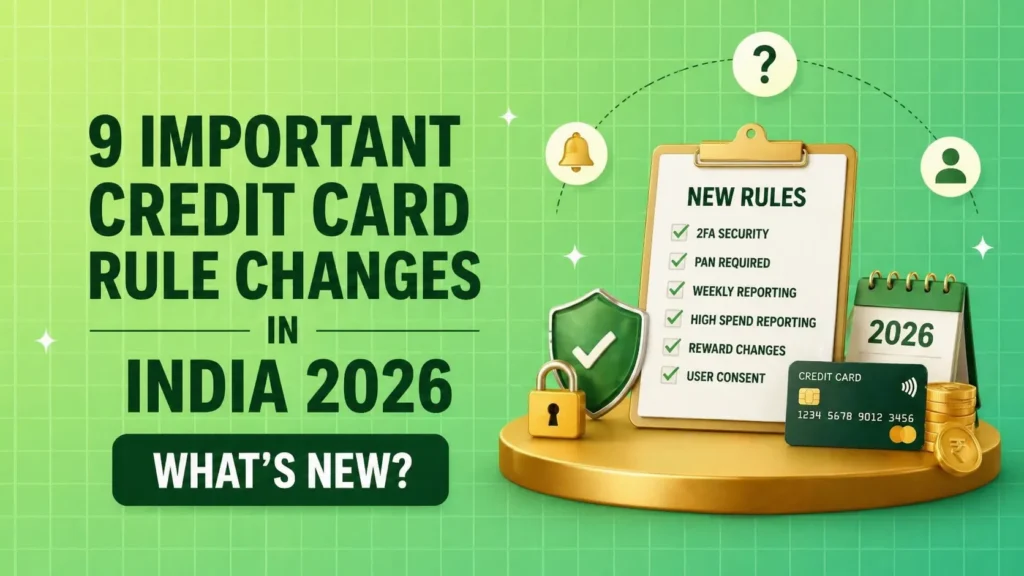
In this article, we’ll break down the 9 most important credit card rule changes in 2026 and explain how they affect you.
1. Mandatory Two-Factor Authentication (2FA) for All Transactions
One of the biggest updates in 2026 is the mandatory implementation of two-factor authentication (2FA) for all credit card transactions.
This means every transaction—whether online or at a point-of-sale (POS) terminal—must go through two levels of verification. Typically, this includes:
- Something you know (PIN or password)
- Something you receive (OTP) or are (biometric)
This rule significantly reduces unauthorized transactions and protects users from fraud. Even smaller transactions may require authentication, although low-risk payments may have limited exemptions.
2. High Credit Card Spending Now Reported to Income Tax
If you’re a high spender, this rule directly affects you.
Under the updated reporting framework, annual credit card spending above ₹10 lakh is now reported to the Income Tax Department through the Statement of Financial Transactions (SFT).
This means:
- Your spending is tracked more closely
- Any mismatch between your income and expenses may trigger scrutiny
This move improves transparency but also means users should ensure their spending aligns with declared income.
3. PAN Card Mandatory for Credit Card Applications
Getting a new credit card is no longer possible without a Permanent Account Number (PAN).
This rule ensures:
- Proper identity verification
- Direct linkage between your credit card and tax profile
- Reduced chances of fraud or duplicate identities
It also strengthens financial tracking across banking and taxation systems.
4. Weekly Credit Bureau Reporting (Faster Credit Score Impact)
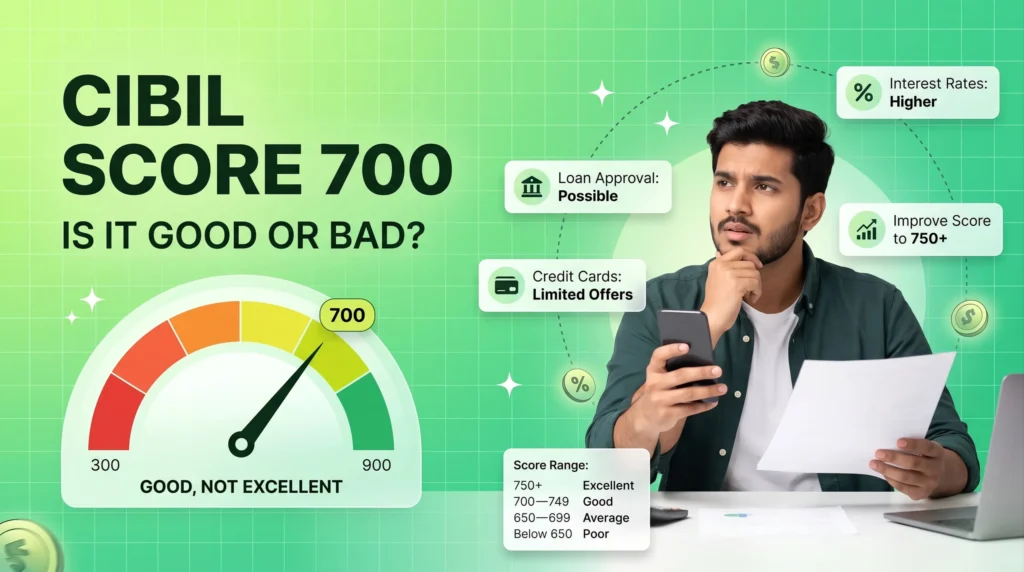
Earlier, banks reported your credit card activity to bureaus every 15–30 days. Now, this has been reduced to every 7 days.
Major credit bureaus like TransUnion CIBIL update your CIBIL score more frequently.
What this means:
- Late payments affect your score much faster
- Timely payments improve your score quickly
- Credit utilization changes reflect almost in real-time
This rule makes it more important than ever to pay at least the minimum due on time.
5. Personal Use of Corporate Credit Cards Now Taxable
If you use a company-issued credit card for personal expenses, be careful.
Under updated tax rules:
- Personal expenses made on corporate cards are treated as taxable perquisites
- These must be declared in your income
Failure to do so can lead to penalties or notices from tax authorities.
This rule mainly affects salaried professionals and corporate employees.
6. Credit Card Statement Accepted as Address Proof for PAN
In a move to simplify documentation, credit card statements are now accepted as valid address proof when applying for or updating PAN.
Benefits:
- Faster verification process
- Reduced paperwork
- Easier PAN application or correction
However, it also strengthens the link between your credit activity and tax identity.
7. Income Tax Payments Allowed via Credit Cards
A major convenience update in 2026 is that taxpayers can now pay income tax using credit cards.
Why this matters:
- Improves liquidity management
- Useful during cash flow shortages
- Enables reward earning on tax payments (in some cases)
But be careful:
- Interest charges apply if the bill isn’t paid on time
- Some banks may charge transaction fees
So, this option should be used wisely.
8. Changes in Rewards, Cashback & Benefits
Credit card rewards have undergone significant changes in 2026.
Major banks like HDFC Bank, SBI Card, and ICICI Bank have revised their reward systems.
Key changes include:
- Lower reward rates on general spending
- Cashback caps introduced
- Lounge access linked to minimum spending thresholds
- New charges on:
- Rent payments
- Wallet loading
- Online gaming
Trend shift:
Banks are moving toward a “behavior-based rewards system”, where benefits depend on how and how much you spend.
9. User Consent Mandatory for Limits & Card Changes
Earlier, banks could automatically increase your credit limit or upgrade your card. That’s no longer allowed.
Now, explicit user consent is required for:
- Credit limit increases
- Card upgrades
- Add-on services
- Reactivation of inactive cards
Why this is important:
- Prevents unwanted debt
- Improves transparency
- Gives users full control over their credit
Why These Credit Card Rules Matter in 2026
These updates are not just regulatory changes—they directly impact how you use your credit card.
Key benefits:
- Stronger fraud protection through 2FA
- Better financial discipline due to faster reporting
- Increased transparency in fees and charges
- Improved tax compliance
Overall, the system is becoming more secure, structured, and user-focused.
Smart Tips to Adapt to New Credit Card Rules
To make the most of these changes, follow these practical tips:
- Always pay on time – weekly reporting leaves no room for delay
- Track your spending – especially if nearing ₹10 lakh annually
- Avoid mixing personal and corporate expenses
- Review reward structures before choosing or using a card
- Use tax payment option carefully to avoid interest
Being proactive can help you avoid penalties and maintain a strong credit profile.
Conclusion
The credit card rules in India (2026) mark a significant shift toward better security, transparency, and financial accountability. From mandatory 2FA to tax reporting and reward restructuring, these changes affect every credit card user.
While some updates may feel restrictive, they ultimately promote responsible usage and protect consumers in the long run.
Staying informed and adapting your habits is the key to making the most of your credit card in 2026 and beyond.
FAQs: About Credit Card Rules in India (2026)
What are the latest credit card rules in India (2026)?
The latest credit card rules in India (2026) include mandatory two-factor authentication for transactions, weekly credit bureau reporting, PAN requirement for new cards, high-spend reporting to the Income Tax Department, and changes in rewards and user consent policies. These updates focus on improving security, transparency, and financial tracking.
Is 2FA mandatory for all credit card transactions?
Yes, most credit card transactions now require two-factor authentication, including online and many offline payments. This usually involves an OTP, PIN, or biometric verification, making transactions safer and reducing the risk of unauthorized usage.
Are credit card expenses reported to Income Tax?
Yes, if your annual credit card spending exceeds ₹10 lakh, it is reported to the Income Tax Department under the Statement of Financial Transactions (SFT). This helps authorities monitor high-value transactions and ensure they match your declared income.
How does weekly reporting affect my CIBIL score?
With weekly reporting to bureaus like TransUnion CIBIL, your credit score now updates much faster than before. This means both positive actions like timely payments and negative actions like missed dues reflect quickly, making it important to stay consistent with repayments.
Can I pay income tax using a credit card?
Yes, taxpayers can now pay income tax using a credit card, which can be helpful for managing short-term cash flow. However, if the outstanding amount is not cleared within the billing cycle, interest charges may apply, so it should be used carefully.