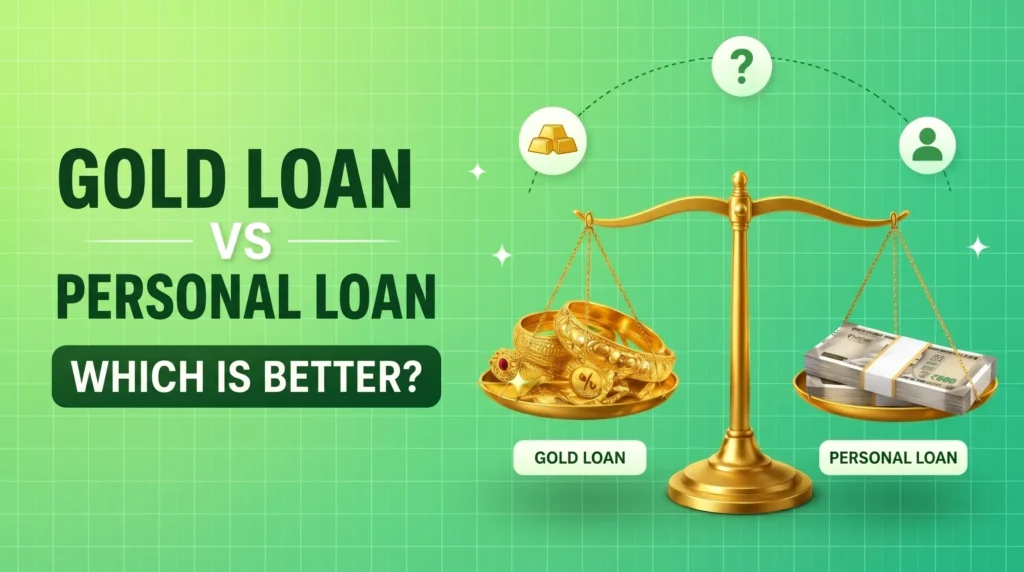
Need urgent money but unsure which loan to choose? The comparison of Gold Loan vs Personal Loan is one of the most common financial decisions borrowers face today. Both gold loans and personal loans are widely used, but they serve very different purposes and suit different financial situations.
In 2026, this choice has become even more important. With updated RBI regulations allowing higher loan-to-value (LTV) ratios for gold loans and the rapid growth of instant digital personal loans, borrowers now have more flexible and faster options than ever before.
Gold loans are becoming increasingly popular due to their lower interest rates and quick disbursal, while personal loans remain a preferred option for those who do not want to pledge assets and need larger loan amounts.
By the end of this article, you will clearly understand the difference between a gold loan and a personal loan and be able to decide which one is better for your needs.
What is a Gold Loan?
A gold loan is a secured loan where you pledge your gold jewellery or coins as collateral to borrow money from a bank or financial institution.
The loan amount depends on the value of your gold. In 2026, lenders typically offer up to 75%–85% of the gold’s market value, depending on regulatory guidelines and loan size. To understand how lenders calculate your eligible loan amount, read our detailed guide on margin money and loan calculation.
Key Features of Gold Loans:
- Interest rates range from 7% to 15% per annum
- Loan tenure is usually 3 months to 3 years
- Approval is often same-day
- No strict credit score requirement
A key development in 2026 is the use of advanced digital gold testing technology, which enables faster and more accurate valuation.
Gold loans are ideal for short-term financial needs and provide one of the quickest ways to access funds.
What is a Personal Loan?
A personal loan is an unsecured loan, meaning you do not need to provide any collateral. It is approved based on your income, employment status, and credit score.
In 2026, borrowers can get personal loans of up to ₹50 lakh, with interest rates typically ranging from 10% to 20% per annum .
Key Features of Personal Loans:
- No collateral required
- Requires a good credit score (700 or above)
- Loan tenure ranges from 1 to 5 years
- Approval usually takes 2 to 7 days
With the rise of fintech platforms, many lenders now offer instant digital personal loans, sometimes disbursed within hours for pre-approved customers.
Personal loans are best suited for planned expenses or higher borrowing needs.
Gold Loan vs Personal Loan Comparison
| Parameter | Gold Loan | Personal Loan |
|---|---|---|
| Type | Secured | Unsecured |
| Interest Rate | 7%–15% per annum | 10%–24% per annum |
| Loan Amount | Up to 85% of gold value | Up to ₹50 lakh |
| Tenure | 3 months – 3 years | 1 – 5 years |
| Approval Time | Same day | 2–7 days |
| Credit Score | Not required | 700+ preferred |
| Collateral | Gold jewellery | None |
| Risk on Default | Gold may be auctioned | Credit score damage + legal action |
EMI Example (₹5 Lakh Loan for 3 Years):
- Gold loan at 12%: approximately ₹16,600 EMI
- Personal loan at 16%: approximately ₹18,100 EMI
This results in paying around ₹27,000 more with a personal loan over the same period.
Advantages and Disadvantages
Gold Loan — Advantages
- Lower interest rates
- Quick disbursal
- Minimal documentation
- No dependency on credit score
- Flexible repayment options
Gold Loan — Disadvantages
- Risk of losing gold if repayment fails
- Shorter loan tenure
- Loan amount depends on gold value
Personal Loan — Advantages
- No asset risk
- Higher loan amounts available
- Longer repayment tenure
- Flexible usage
Personal Loan — Disadvantages
- Higher interest rates
- Strict eligibility requirements
- Strong impact on credit score in case of default
- Processing fees and penalties
When Should You Choose a Gold Loan?
A gold loan is a better choice if:
- You need immediate funds
- Your credit score is low or not established
- You want a low-interest loan
- Your requirement is short-term (under 2–3 years)
- You have unused gold assets
Example:
If you need ₹3 lakh for a medical emergency, a gold loan is ideal due to its speed and lower cost.
When Should You Choose a Personal Loan?
A personal loan is more suitable if:
- You do not want to pledge your gold
- You need a larger loan amount (₹10 lakh or more)
- You want a longer repayment period (3–5 years)
- You have a strong credit score (700+)
- The expense is planned (such as home renovation or a wedding)
Example:
For an ₹8 lakh home renovation over 5 years, a personal loan provides manageable EMIs and flexibility.
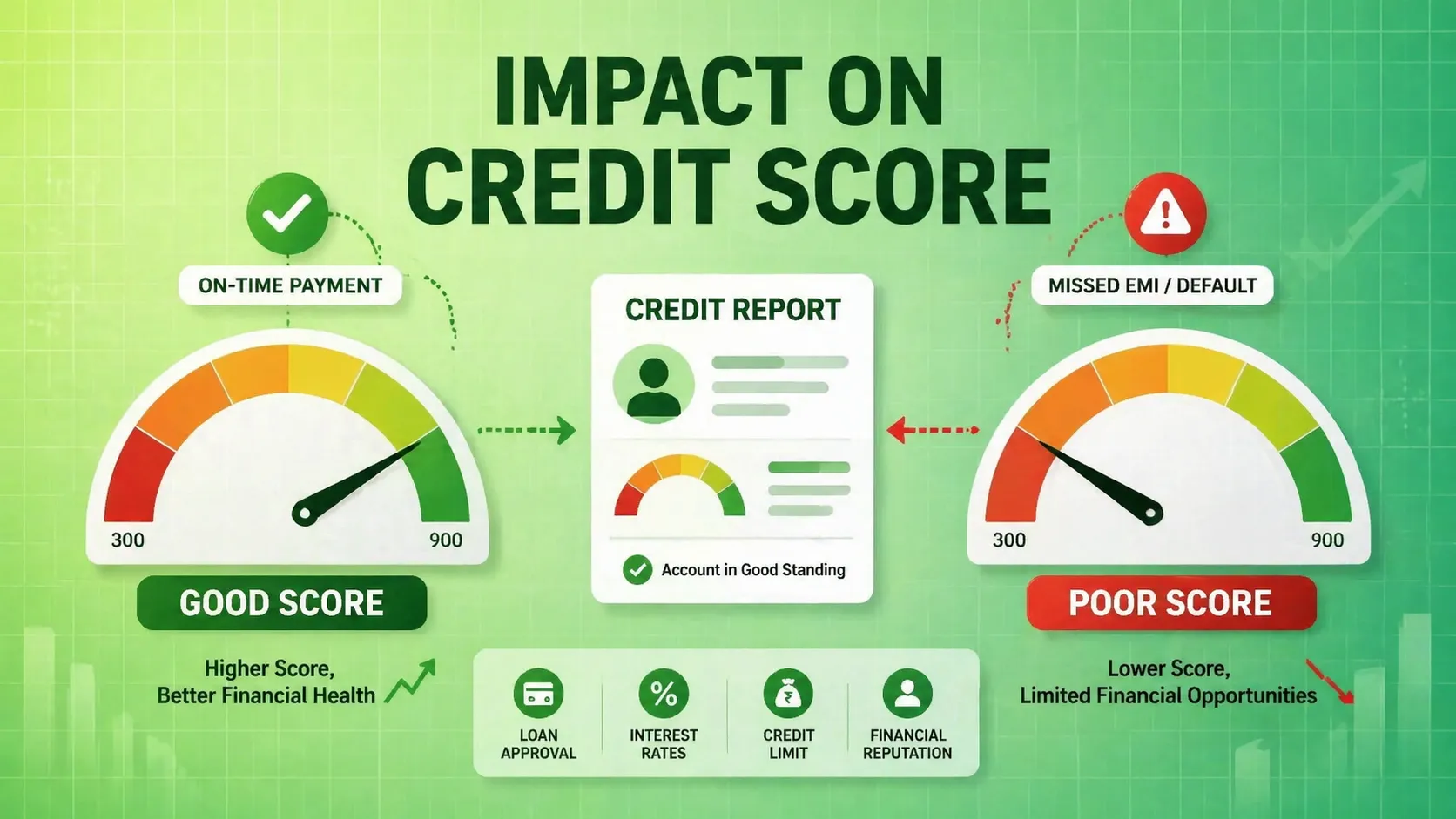
Impact on Credit Score — What Happens if You Default?
| Scenario | Gold Loan | Personal Loan |
|---|---|---|
| On-time repayment | Improves credit score | Improves credit score |
| Default | Gold is auctioned | Major credit score damage |
| Missed EMI | Grace period may apply | Penalty + negative credit report |
Gold loan defaults typically result in loss of the pledged asset, while personal loan defaults can significantly damage your credit score and may lead to legal recovery actions. If you’ve already defaulted on a loan, it’s important to understand loan settlement in India and how it impacts your CIBIL score before taking a new one.
2026 Key Updates You Must Know
Several important updates in 2026 impact loan decisions:
- RBI allows up to 85% loan-to-value (LTV) for certain gold loans
- Rising gold prices increase borrowing capacity
- Digital gold loan platforms enable same-day disbursal without branch visits
- Personal loan providers are offering competitive rates through fintech apps
- Increased focus on borrower-friendly policies
These changes make gold loans more attractive for short-term financing.
Gold Loan vs Personal Loan — Quick Decision Checklist
Answer the following:
- Do you own gold worth ₹1 lakh or more? → Consider a gold loan
- Is your credit score below 700? → Gold loan is easier to obtain
- Do you need funds for more than 3 years? → Personal loan is better
- Do you need ₹10 lakh or more? → Personal loan is suitable
- Do you need funds urgently? → Gold loan is faster.