Table of Contents
Credit cards allow users to make purchases without paying immediately. However, if the full outstanding balance is not paid by the due date, the bank may charge interest. Understanding how credit card interest rates are calculated can help users manage payments and avoid additional charges.
What Is a Credit Card Interest Rate?
A credit card interest rate is the amount charged by a bank when a cardholder does not pay the full outstanding balance by the payment due date.
In India, credit card interest rates are generally expressed as monthly rates. The rate varies depending on the bank and the type of credit card.
How Are Credit Card Interest Rates Calculated?
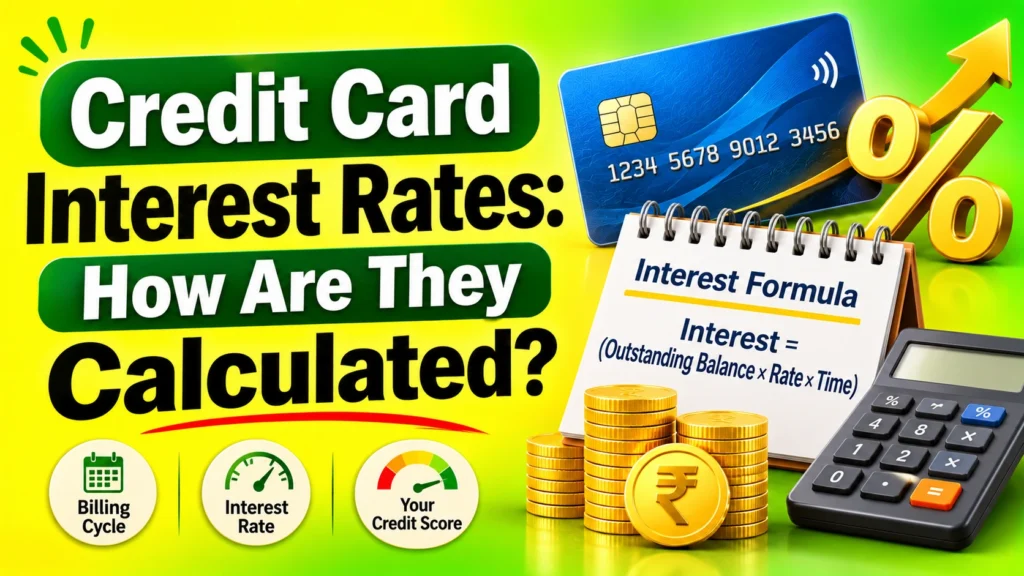
Banks generally calculate credit card interest based on the outstanding balance and the applicable interest rate. The calculation may be done daily, depending on the bank’s terms and conditions.
Example:
Suppose your credit card has the following details:
Outstanding balance: ₹10,000
Monthly interest rate: 3%
Period: 1 month
Interest = ₹10,000 × 3% = ₹300
In this simplified example, the interest is ₹300 for one month. The actual amount may vary depending on daily calculations, payment dates, taxes and other applicable charges.
Also read: What Is Finance Charges in Credit Cards
Factors That Affect Credit Card Interest
Several factors determine how much interest you may have to pay:
Outstanding Balance: A higher unpaid balance can result in higher interest charges.
Interest Rate: Each bank sets its own credit card interest rate.
Payment Due Date: Missing the due date may lead to interest and other applicable charges.
Payment Amount: Paying only the minimum amount does not clear the remaining balance.
New Transactions: New purchases may also attract interest when the interest-free period is lost.
How to Reduce Credit Card Interest Charges
You can manage credit card interest by following these simple practices:
Pay the Full Bill: Clear the total outstanding amount by the due date.
Avoid Minimum-Only Payments: Pay more than the minimum amount whenever possible.
Track Your Spending: Review your transactions regularly.
Pay on Time: Set reminders to avoid missing payment deadlines.
Check Bank Charges: Read your credit card’s interest rates and fee details.
What Happens If You Pay Only the Minimum Amount?
The minimum amount due is the smallest amount you need to pay by the due date to keep your account from being treated as unpaid under the bank’s terms.
However, paying only the minimum amount does not clear the entire outstanding balance. The remaining amount can continue to attract interest. New purchases may also lose their interest-free period until the outstanding balance is cleared, depending on the bank’s terms.
Also read: What Is a Credit Card?
Credit Card Interest Rate vs. Annual Percentage Rate (APR)
Credit card interest rates and APR are related, but they are not exactly the same.
Credit Card Interest Rate: The rate used to calculate interest on an unpaid balance. It may be expressed monthly or annually.
Annual Percentage Rate (APR): An annualised rate that helps explain the yearly cost of borrowing. Its calculation and included charges depend on the issuer’s disclosure.
Also read: Best Credit Cards in India: 7 Types You Should Compare
Conclusion
Understanding how credit card interest rates are calculated helps you make informed payment decisions. Paying the full outstanding amount on time is one of the simplest ways to avoid interest charges and manage credit card expenses responsibly.
Frequently Asked Questions
1. How is credit card interest calculated in India?
Banks generally calculate interest on the outstanding balance using the applicable rate and billing method. The final amount depends on the bank’s terms and payment dates.
2. Is credit card interest charged every month?
Interest may be charged when the full outstanding amount is not paid by the due date. The amount depends on the unpaid balance and applicable rate.
3. Does paying the minimum amount avoid interest?
No. Paying only the minimum amount does not usually stop interest from being charged on the remaining balance.
4. How can I avoid credit card interest?
Pay the full outstanding amount by the due date. Regularly check your credit card statement to track payments and charges.
5. Do all banks charge the same credit card interest rate?
No. Interest rates vary across banks and credit cards. Check your card’s terms and conditions to know the exact rate.