Table of Contents
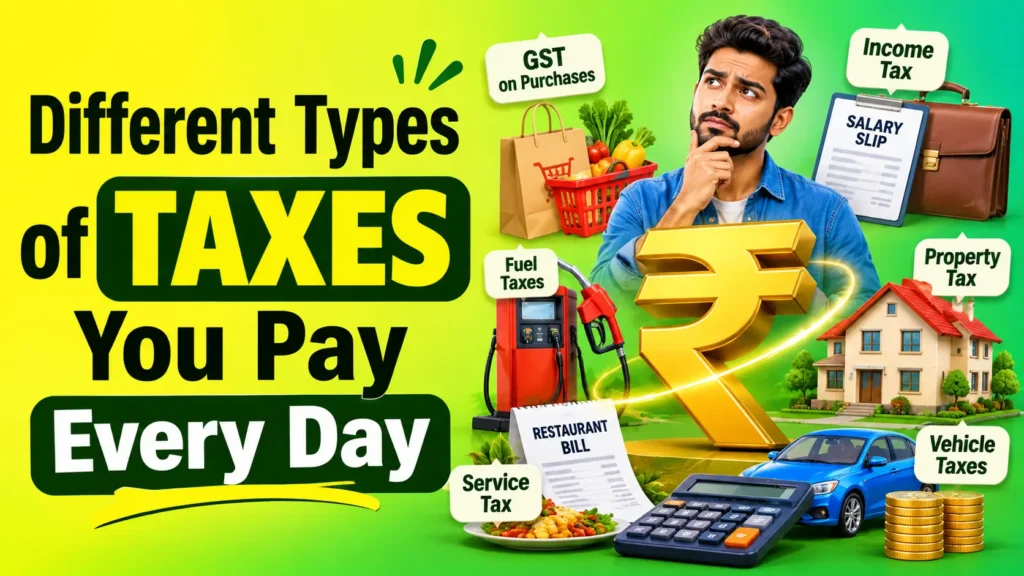
Taxes are not limited to your salary. You also pay them when you order food, shop online, invest in shares or buy a car. But do you know which taxes are included in these everyday activities? Let’s understand 7 different types of taxes and see when you pay them.
Direct Taxes vs Indirect Taxes
Before understanding the seven taxes, know these two basic terms:
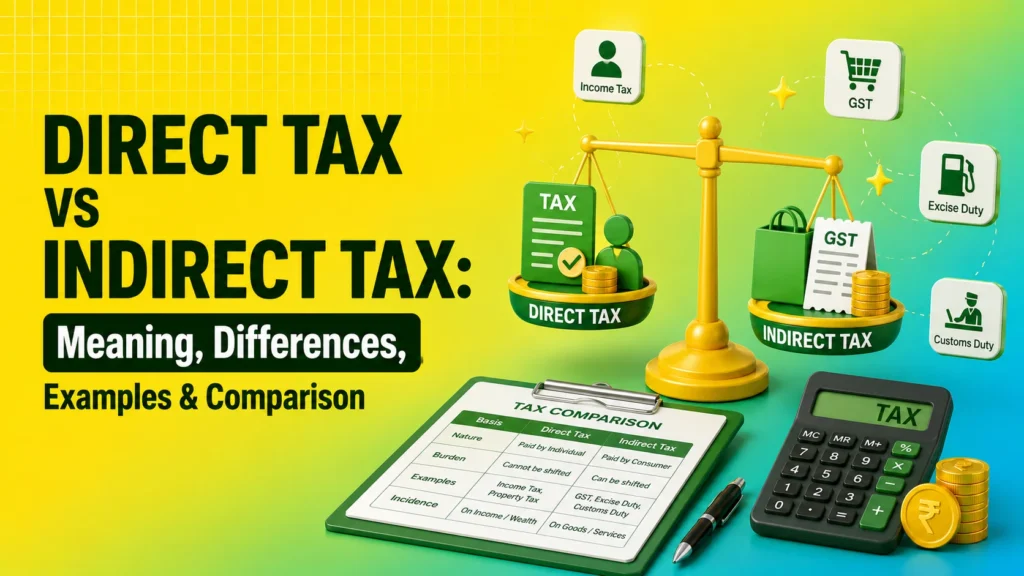
- Direct Tax: You pay this tax directly to the government. Income tax is one example.
- Indirect Tax: You pay this tax when buying certain goods or services. GST is a common example.
In simple words, direct tax is linked to what you earn, while indirect tax is often linked to what you spend.
Also read: Direct Tax vs Indirect Tax
7 Different Types of Taxes You Pay in Everyday Life
1. Income Tax
If you earn money through a salary or other taxable sources, you may have to pay income tax.
The amount depends on your taxable income and the tax regime you choose.
For example, under the new tax regime, eligible taxpayers can get a rebate that makes tax payable nil on normal income up to ₹12 lakh. Salaried taxpayers may have a nil-tax limit of up to ₹12.75 lakh after the standard deduction, subject to conditions.
Also read: Income Tax Return filing
2. Goods and Services Tax (GST)
Have you ever ordered a burger or purchased something online? You may have paid GST.
GST is an indirect tax charged on the supply of goods and services. Businesses collect it from customers and deposit it with the government.
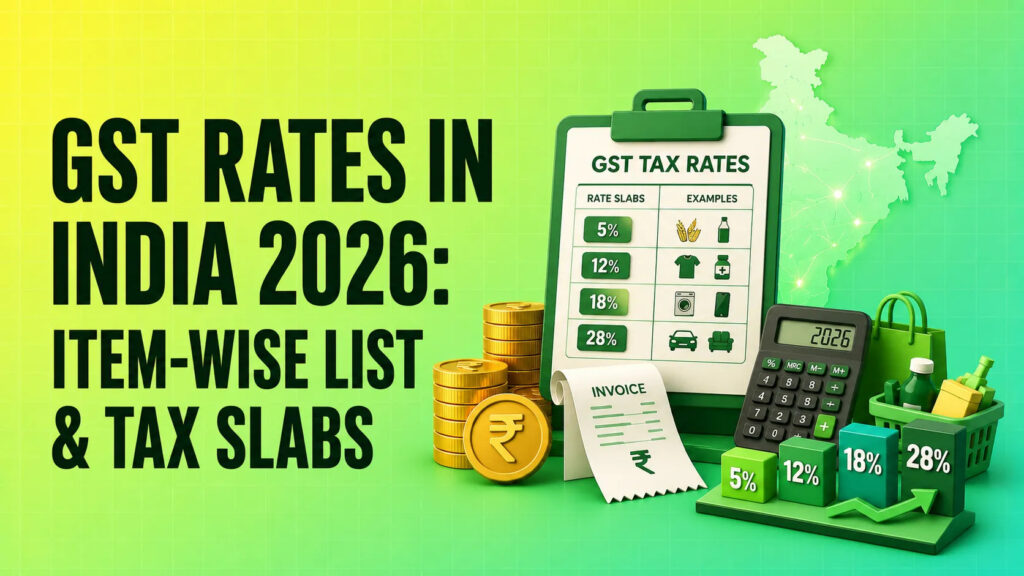
Under the revised GST structure, common rates include 5% and 18%, while a special 40% rate applies to selected goods and services. The rate depends on what you purchase.
Also read: GST rates in India
3. Tax Deducted at Source (TDS)
TDS means Tax Deducted at Source.
Suppose you work in a company. Your employer may deduct TDS from your salary before paying it to you.
TDS can also apply to certain bank interest payments, professional fees and other specified transactions.
If more tax is deducted than your actual tax liability, you may claim the eligible refund by filing your Income Tax Return (ITR).
4. Tax Collected at Source (TCS)
TCS means Tax Collected at Source.
In this case, the seller collects tax from the buyer on certain transactions and deposits it with the government.
For example, TCS may apply to specified overseas tour packages and the purchase of a motor vehicle costing more than ₹10 lakh.
You can check the eligible TCS credit in your tax records and adjust it against your tax liability.
5. Capital Gains Tax
Suppose you purchase shares for ₹10,000 and later sell them for ₹15,000.
Your profit of ₹5,000 is called a capital gain.
Tax on this profit is known as capital gains tax. It can apply when you sell shares, mutual funds, property, gold and other capital assets.
For eligible listed equity shares and equity-oriented mutual funds, the applicable rates include:
- Short-Term Capital Gains (STCG): 20% in specified cases.
- Long-Term Capital Gains (LTCG): 12.5% on eligible gains exceeding the annual ₹1.25 lakh exemption.
The holding period and applicable tax rules determine how the gain is taxed.
6. Stamp Duty
Planning to buy a house or land? You may have to pay stamp duty during property registration.
Stamp duty is a government charge on certain legal documents and property transactions.
Its rate depends on the state and property value. Some states also offer stamp duty concessions to women buyers.
So, always check the applicable charges before purchasing a property.
Also read: stamp duty and registration charges
7. Road Tax
When you purchase a bike or car, you may also have to pay road tax during vehicle registration.
Road tax is collected by state governments. The amount can depend on factors such as:
- Vehicle price
- Engine capacity
- Vehicle type
- State registration rules
For this reason, road tax on the same vehicle can differ from one state to another.
How Do These Taxes Affect Your Daily Life?
You may not notice every tax separately, but they affect your income and spending in different ways.
| Everyday Activity | Tax You May Encounter |
|---|---|
| Earning a salary | Income Tax and TDS |
| Ordering food | GST |
| Earning bank interest | TDS, where applicable |
| Buying shares and selling at a profit | Capital Gains Tax |
| Purchasing a property | Stamp Duty |
| Buying a car or bike | Road Tax and applicable taxes |
Conclusion
Understanding taxes does not have to be complicated. Income tax affects your earnings, GST affects your purchases, and stamp duty and road tax apply to specific transactions.
Knowing these seven common taxes can help you understand where your money goes whenever you earn, spend, invest or buy something.