Table of Contents
Choosing a credit card is not just about getting the highest cashback or the most reward points. The right card depends on where you spend your money. If you shop online regularly, a shopping or cashback card may be useful. If you travel often, a travel card with low foreign currency charges may offer more value.
In India, credit cards are available for different spending needs, including fuel, shopping, dining, travel and everyday expenses. Some cards have no joining or annual fees, while premium cards offer additional benefits at a higher cost.
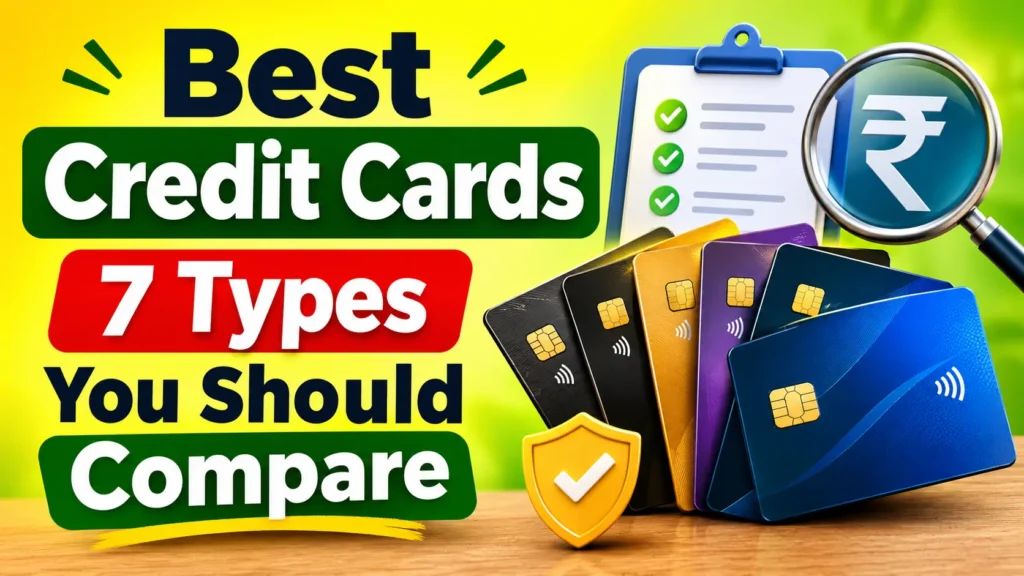
Here are seven types of credit cards you should compare before choosing one.
1. Lifetime-Free Credit Cards
A lifetime-free credit card does not have a joining fee or annual renewal fee. It can be a practical option if you want to avoid fixed card costs.
Examples to compare:
- Amazon Pay ICICI Bank Credit Card: Offers cashback on eligible Amazon purchases and other spends. ICICI Bank lists no joining or annual fee. Amazon purchases earn 5% cashback for Prime members and 3% for non-Prime members, subject to terms.
- IndusInd Tiger Credit Card: Another card to compare in this category. Check its current fee structure and benefits before applying.
Who should consider it?
First-time credit card users and people who want a card for occasional purchases may prefer a lifetime-free option. However, do not choose a card only because it has no annual fee. Check whether its rewards match your spending.
Also read: best free credit cards in India
2. Cashback Credit Cards
Cashback cards return a part of your eligible spending as money credited to your card account or statement. They can be useful for people who regularly shop online, order food or make everyday purchases.
Examples to compare:
- CASHBACK SBI Card: Offers 5% cashback on eligible online spends and 1% on eligible offline spends. From April 1, 2026, the maximum cashback is ₹2,000 each for online and offline spends, with a combined monthly statement-cycle limit of ₹4,000. Several categories, including fuel, rent, utilities and insurance, are excluded.
- HSBC Live+ Credit Card: A card to compare if a large part of your spending is on food, dining and eligible everyday categories. Check the current cashback rate, monthly cap and category conditions on HSBC’s official website before applying.
Who should consider it?
Choose a cashback card if you spend regularly in the categories it rewards. Compare the cashback you can realistically earn with the annual fee. A high advertised cashback rate may not be useful if you frequently reach the monthly cap or spend mostly in excluded categories.
Also read: Best Credit Cards in India: Cashback, Travel, Rewards & Lifetime Free Cards
3. Fuel Credit Cards
Fuel credit cards are designed for people who regularly spend on petrol or diesel. Depending on the card, benefits may include fuel rewards, a fuel surcharge waiver or discounts at selected petrol pumps.
Examples to compare:
- HDFC IndianOil Credit Card: Offers Fuel Points on eligible IndianOil fuel transactions and selected other spending categories. The bank also sets monthly earning limits, so check the current reward caps.
- IndianOil Axis Bank Credit Card: Offers accelerated rewards at eligible IndianOil outlets. Axis Bank lists 4% value back on eligible fuel transactions, subject to transaction limits and terms.
Who should consider it?
A fuel card may suit people who use their vehicles regularly and spend a significant amount at the petrol pump. Check whether the card rewards purchases at your usual fuel station. Also compare the surcharge waiver limit, eligible transaction amount and annual fee.
4. Shopping and UPI Credit Cards
Shopping credit cards offer rewards or discounts on online purchases and selected partner brands. UPI credit cards allow eligible RuPay credit cards to be linked to supported UPI apps for merchant payments.
Examples to compare:
- Tata Neu Infinity HDFC Bank Credit Card: Offers NeuCoins on eligible Tata brand purchases and other transactions. Its RuPay variant also provides NeuCoins on eligible UPI merchant payments, subject to limits and exclusions.
- YES BANK-Kiwi RuPay Credit Card: A UPI-focused option to compare if you regularly make merchant payments through UPI. Check the current cashback structure, eligibility and transaction conditions.
Who should consider it?
Choose a shopping card if you regularly buy from the brands or platforms where it offers rewards. A UPI credit card may be useful if you want to make eligible merchant payments through UPI using your credit limit.
Remember that linking a credit card to UPI does not make every UPI payment eligible. RuPay credit card on UPI is generally meant for merchant payments, not person-to-person transfers.
Also read:RuPay vs Visa vs Mastercard
5. Travel Credit Cards
Travel credit cards are designed for people who frequently book flights, hotels or other travel services. Depending on the card, benefits may include travel rewards, airport lounge access, hotel privileges and lower foreign currency transaction charges.
Examples to compare:
- Scapia Federal Credit Card: A travel-focused card associated with Scapia and Federal Bank. Check the current card variant and terms for travel rewards, forex charges and eligibility.
- IDFC FIRST WOW Credit Card: A secured credit card option to compare. Check its current foreign currency markup and other charges rather than assuming every international transaction is free of extra fees.
- Axis Bank Atlas Credit Card: A travel-focused rewards card with benefits linked to eligible travel spending.
- HDFC Regalia Gold Credit Card: Offers travel and lifestyle benefits. HDFC Bank’s published fee schedule lists an annual fee of ₹2,500, subject to the applicable offer and card terms.
One important point: zero forex markup and airport lounge access are different benefits. Zero forex markup can reduce the bank’s foreign currency markup on eligible international transactions. Lounge access allows eligible cardholders to use selected airport lounges, subject to access rules.
For example, Axis Bank’s Scapia card page lists zero joining and annual fees and zero forex markup. Always confirm the issuing bank, card variant and latest terms before applying.
Who should consider it?
Frequent travellers may benefit from travel cards. Compare the value of travel rewards, lounge access, forex charges and annual fees. If you travel only once or twice a year, a high-fee card may not be worth the cost.
6. Entertainment and Dining Credit Cards
These cards offer discounts or rewards on restaurant bills, food delivery, movie tickets and other lifestyle expenses. Offers may be available only on selected platforms or partner outlets.
Examples to compare:
- Axis Bank Neo Credit Card: Lists offers on food delivery, shopping and movie tickets. These benefits have minimum-spend requirements, monthly limits or other conditions.
- EazyDiner IndusInd Bank Credit Card: A card to compare if you frequently dine at participating restaurants. Check the current restaurant network, discount conditions and annual fee.
Who should consider it?
This category may suit people who regularly spend on restaurants, food delivery and entertainment. Before choosing a card, check whether the restaurants and platforms you use are included in its offers.
7. Premium Credit Cards
Premium credit cards target customers who want higher-end travel, lifestyle and reward benefits. They may offer airport lounge access, hotel privileges, concierge services, reward points and exclusive experiences.
Examples to compare:
- HDFC Infinia: A premium card with travel and lifestyle benefits. HDFC Bank’s published schedule lists a ₹10,000 annual fee for the standard Infinia variant and ₹12,500 for the Metal Edition, with different spend-based fee-waiver conditions.
- Axis Bank Magnus Burgundy: A premium card associated with Axis Bank’s Burgundy banking relationship. Check its current eligibility, fees and benefits.
- American Express Platinum Card: Offers premium travel and lifestyle privileges. American Express lists an annual fee of ₹66,000 plus applicable taxes.
Who should consider it?
Premium cards may suit people who can use their benefits regularly and meet the eligibility requirements. Do not choose one just because it offers luxury privileges. Calculate whether the benefits you will actually use justify the annual fee.
Comparison of the 7 Credit Card Categories
| Credit card type | Main purpose | What to compare |
|---|---|---|
| Lifetime-free | Avoid annual fees | Actual rewards and conditions |
| Cashback | Save on regular spending | Cashback rate, cap and exclusions |
| Fuel | Reduce fuel expenses | Fuel rewards and surcharge waiver |
| Shopping and UPI | Online shopping and UPI payments | Partner offers and eligible UPI spends |
| Travel | Flights, hotels and international spending | Travel rewards, lounge access and forex charges |
| Entertainment and dining | Restaurants, food and movies | Partner outlets and offer limits |
| Premium | High-end lifestyle and travel benefits | Annual fee, eligibility and usable benefits |
How to Choose the Best Credit Card in India
The best credit card depends on your spending pattern and financial needs. Compare these points before making a decision:
- Identify your main spending category: Check whether you spend more on shopping, fuel, travel, dining or everyday purchases.
- Compare annual fees: Calculate whether the rewards and benefits can cover the card’s yearly cost.
- Check reward limits: Cashback and reward points may have monthly or transaction-wise caps.
- Read exclusions: Some cards do not provide rewards on fuel, rent, wallet loads, insurance or other categories.
- Check redemption rules: Understand how to redeem points and whether they have an expiry date.
- Review eligibility: Income, credit score and existing banking relationships may affect approval.
Do not select a card only because its advertisement shows a high reward rate. Focus on the benefits you can actually use.
Which Credit Card Should Beginners Choose?
If you are applying for your first credit card, start by comparing lifetime-free and simple cashback options. These can be easier to manage than premium cards with high annual fees and complex reward structures.
Choose a card based on your regular expenses. For example, someone who shops frequently online may prefer a shopping or cashback card. Someone who spends more on fuel may compare fuel cards.
Most importantly, pay the total amount due by the payment due date. Paying only the minimum amount due can leave an outstanding balance on which interest and other charges may apply. Avoid spending more just to earn rewards.
Also Read:What Is a Credit Card?
Important Things to Check Before Applying
Before submitting a credit card application, read the bank’s latest Most Important Terms and Conditions (MITC) and fee schedule.
Pay attention to:
- Joining and annual renewal fees.
- Interest rate and late payment charges.
- Cashback and reward-point limits.
- Excluded spending categories.
- Foreign currency markup.
- Lounge access conditions.
- Reward redemption and expiry rules.
Card benefits can change, and the same card may have different offers for different applicants. Confirm the latest terms on the issuer’s official website.
Frequently Asked Questions
1. Which type of credit card is best for beginners in India?
A lifetime-free or simple cashback credit card can be a practical starting point. Compare its fees, spending benefits and repayment terms before choosing one.
2. Are lifetime-free credit cards really free?
A lifetime-free card generally has no joining or annual renewal fee. However, other charges, such as interest, late payment fees, cash withdrawal fees and applicable taxes, may still apply.
3. Which credit card is best for cashback in India?
The right cashback card depends on where you spend. Compare cards such as CASHBACK SBI Card and HSBC Live+ based on eligible categories, cashback limits, exclusions and annual fees.
4. What is the difference between a cashback and a rewards credit card?
A cashback card returns a portion of eligible spending as cashback. A rewards credit card gives points that can be redeemed for products, vouchers, travel or other benefits, depending on the card’s rules.
5. Is it better to choose a credit card based on rewards or annual fees?
Consider both. A card with a high annual fee may offer valuable benefits, but only if you use them regularly. Compare the actual rewards you can earn with the total cost of keeping the card.